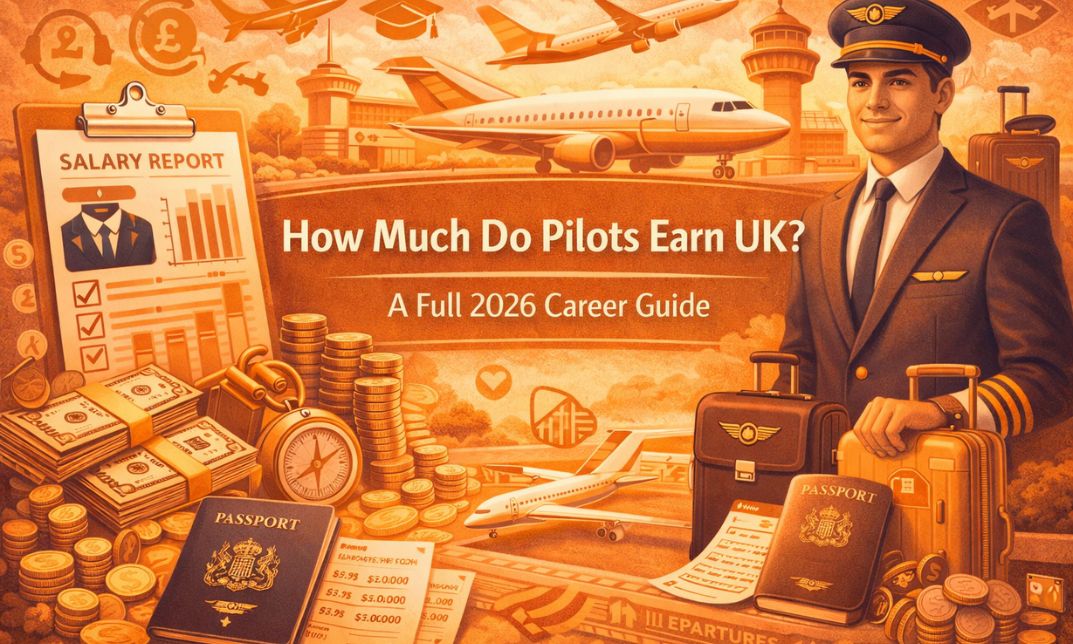
Everyone dreams of becoming an airline pilot. Flying above the clouds, visiting new cities, and earning a lot of money sounds exciting. Movies and social media make flying look glamorous. That’s why most people think pilots always earn six-figure salaries. Reality doesn’t always match what most people think. So, what is the real number? What is the average pay for airline pilot in the UK?
The answer depends on experience, airline, flight routes, and extra benefits. A pilot’s pay is not just the basic salary. Allowances, bonuses, and overnight payments can significantly increase total earnings. For example, newly trained pilots usually earn £24,000 to £35,000 a year. First officers earn £40,000 to £60,000. Senior first officers can earn up to £85,000. Experienced captains at big airlines can earn £100,000 to £178,000. To become a pilot, you need GCSEs, A-levels, and an ATPL licence. Training usually costs £80,000 to £90,000.
Now let’s take a closer look and find out the real numbers.

Average Pay for Airline Pilot in the UK (2026)
The real story behind the average UK pilot salary depends on your rank, experience, and airline. On average, a pilot in the UK makes between £52,000 and £64,000 a year. New pilots usually start with £24,000 to £35,000 a year. With some experience, first officers can earn between £40,000 and £60,000. Senior first officers may reach £85,000, and experienced captains at big airlines, especially in London, can earn £100,000 to £178,000 or more. Long-haul pilots usually earn more than short-haul pilots because they fly longer routes. Some pilots and flight instructors are paid by the hour, which can change their total pay depending on how much they work.
The basic salary is not the whole story. Pilots also receive extra compensation for overnight stays, per diem, duty pay, and special roles. These extras can significantly increase total pay. In the end, how much a pilot earns depends on experience, airline, flight routes, and added perks. Knowing all these details helps you understand the real pay and plan a career as a UK pilot.
If you’re looking for detailed UK pilot pay information, read our full guide: “How Much Do Aircraft Pilots Make?“
How Pilot Pay Changes with Experience and Rank
Pilot pay goes up as you get more experience and move up in rank. For example, new First Officers usually earn between £30,000 and £50,000. Mid-career First Officers can make up to £85,000. Then Senior First Officers earn between £85,000 and £100,000. So, as you gain experience, your pay grows quickly.
Captains earn the most, but it depends on the airline and where you are based. Captains at medium-sized airlines make £55,000 to £75,000. However, major airlines, especially in London, pay £100,000 to £178,000 or more. This is because London jobs often have busier schedules and higher living costs. In short, your pay fully depends on the airline, airport, experience, and rank. Knowing this helps pilots aim for roles that pay more.
Long-Haul vs Short-Haul Pilot Salaries
Long-haul pilots earn more because their flights are longer, planes are bigger, and they get extra pay for overnight stays. These perks, plus bonuses, can make their total pay much higher. For example, long-haul captains in the UK can earn £100,000 to £150,000 or more, depending on the airline and experience.
Short-haul pilots earn less, but they have more take-offs and landings. Usually, short-haul captains make £55,000 to £75,000 a year. Even with lower pay, these flights often give a steadier schedule and more trips. Being aware of the differences helps pilots pick the best path for both money and lifestyle.
What Affects a Pilot’s Pay
Here’s what shapes the average pay for airline pilot:
- Airline type: Big airlines and long-haul flights pay more than budget or short flights.
- Experience: The more hours you fly, the higher your pay.
- Plane size: Bigger planes usually come with bigger salaries.
- Routes and timing: International trips, night stops and odd hours add extra pay.
- Extra money: Bonuses, allowances, per diems and overnight pay increase total earnings.
- Rank matters: Moving from first officer to captain can double or triple your income.
- Location: Working from London or big airports often gives extra pay.
- Hourly pay: Flight instructors and some pilots are paid per hour which can increase total pay.
- Long-haul vs short-haul: Long flights earn more because of extra hours and perks.
Training Costs and Qualifications for UK Pilots
Becoming a pilot in the UK takes time and money. First, integrated ATPL training usually costs between £80,000 and £130,000. If you prefer, modular training lets you pay in parts, making it easier to manage. At the start, every pilot gets a Frozen ATPL after finishing theory lessons and flight hours. After that, they move on to a full ATPL. Some pilots begin with a PPL (Private Pilot Licence) or an MPL (Multi-Crew Pilot Licence). Degrees can help, but they are not needed.
Next, pilots need a CAA Class 1 medical check to make sure they are healthy to fly. They also have to pass exams and log enough flight hours. By doing each step carefully, you save time and money. Finally, when all training and checks are done, you are ready to start your career as a UK pilot.
Allowances, Bonuses and Extra Pay for UK Pilots
How allowances and bonuses lift the salary of a pilot:
- Flight legs pay: Each flight adds extra money. The more flights you do, the more you earn.
- Overnight perks: Meals and hotels are covered when you stay away from home.
- Time Away From Base: Extra pay for nights, odd hours, or long trips.
- Extra duties pay: Training, teaching, or checking other pilots earns extra money.
- Housing & education help: Some airlines give money for living costs or school fees, mostly for senior pilots.
- Tax reliefs: Travel and hotel perks help reduce taxes and increase take-home pay.
- Rank pay boost: First officers who become captains get much higher pay.
- Long-haul flights: Longer trips usually come with bigger allowances and extra pay.
- Special flights: Busy or important flights can give extra money.
- Total package: Your base pay plus all extras shows the real average UK pilot salary.
Pilot Career Progression and Its Impact on Pay
Pilots have a clear career path. They usually start as a Second Officer, then move to First Officer, Senior First Officer, and finally Captain. Some go on to become Training Captains or Type Rating Instructors. Each step brings more responsibility and a higher salary of a pilot.
Career growth also opens up new opportunities. Pilots can move into management roles, become instructors, or fly bigger planes. Flying long-haul routes usually pays more than short-haul flights. Overall, moving up in a pilot career increases pay, perks, and experience in the UK aviation industry.
Dreaming of life in the airline world? Begin your journey with the Diploma in Air Cabin Crew Course at Unified Course today!
Pilot Professional Development & Continuing Education
Here’s what pilots do to stay at the top of their game:
- Type-rating courses: Pilots learn to fly new planes, which keeps their skills fresh. This also helps them safely manage larger planes.
- Simulator checks every six months: Pilots practice emergencies in simulators to stay confident. It also improves their decision-making under pressure.
- Annual Class 1 medical exams: Pilots have yearly health checks to make sure they are fit to fly. These exams keep both pilots and passengers safe.
- Skills upgrades: Pilots continue to improve navigation, safety, and emergency skills. Regular practice makes them better at their job.
- Airline-specific training: Every airline has its own rules and routines. Pilots learn these to work quickly and avoid mistakes.
- Career growth: Training and learning new skills can lead to promotions, higher pay, or specialist roles. Pilots who keep learning move up faster.
Final Thoughts on the Average Salary of Airline Pilot
So, now it’s easier to understand pilot salaries in the UK. The average pay for airline pilot starts around £52,000–£64,000 per year. For senior Captains at big airlines, pay can go over £100,000, including bonuses, allowances, and long-haul flight pay. Also, moving up from First Officer to Captain or specialist roles usually brings higher salaries and extra perks.
Over time, your earning potential grows with experience and seniority. Pilots who keep training, take on extra duties, and fly longer routes can significantly increase their pay. At the same time, a pilot’s career is not just about money. You also need to consider your lifestyle, training costs, and opportunities to grow in your job. By looking at all these factors, you can make a smart choice and build a rewarding aviation career.
FAQs about Average Pay for Airline Pilots
How much do UK pilots earn?
- Most UK pilots earn about £52,000–£64,000 a year. Captains at big airlines can earn over £100,000.
Do pilots make 700k?
- Only a few very senior pilots at top airlines with extra bonuses make £700,000 or more. It’s rare.
What do Ryanair pilots earn?
- Ryanair First Officers earn around £35,000–£50,000. Captains can earn £90,000–£120,000 depending on experience.
What does an easyJet pilot earn?
- easyJet First Officers earn £30,000–£50,000. Captains can earn £80,000–£120,000, plus extra for long flights.
How much is a Jet2 pilot paid?
- Jet2 First Officers earn about £30,000–£45,000. Captains can earn £70,000–£100,000 or more with experience.
Which airline has the highest paid pilots?
- Airlines like British Airways, Emirates, and Qatar Airways pay the most, especially for long-haul Captains.
Can an airline pilot be a millionaire?
- Yes, but usually only senior Captains with years of experience, extra duties, and smart money choices reach millionaire status.