Becoming an airline pilot is a respected and exciting career. It offers travel, responsibility and strong long-term earning potential. However, it also requires years of training and a major financial commitment. For this reason, many people research the average salary of airline pilot roles before starting their journey.
In the UK, pilots typically earn between £24,000 and £150,000+ per year, depending on rank and airline. Newly qualified First Officers usually start on £30,000 to £45,000. Experienced First Officers earn around £60,000 to £100,000. Meanwhile, Captains often earn £100,000 to £180,000 or more. A pilot’s average wage in the UK is affected by their experience, the aircraft they are qualified to fly, and additional payments.
Now, let’s look at how much a pilot can earn each year and how their salary increases over time with experience.
What Is the Average Salary of Airline Pilot Roles in the UK Right Now?
As of early 2026, the average airline pilot salary in the UK is about £52,000 to £75,000+ a year. However, pay depends on experience, rank, and airline. New pilots earn less at the start. Meanwhile, senior pilots earn much more over time.
Here is a simple salary guide for UK pilots (2025–2026):
- Newly Qualified First Officer: £24,000 to £40,000+ a year
- Experienced First Officer: £50,000 to £90,000+ a year
- Senior First Officer: £75,000 to £120,000+ a year
- Captain (Low-Cost or Medium Airline): £55,000 to £120,000 a year
- Major or Long-Haul Airline): £100,000 to £178,000 a year
Overall, pilots earn more as they gain experience. Therefore, captains usually earn the highest pay. Also, big airlines often pay more than smaller ones.
Base Salary vs Total Package
Pilot compensation often includes:
- Base salary
- Sector pay (per flight/leg)
- Flying hours pay
- Overnight allowances
- Pension contributions
- Bonuses or profit share
Two pilots with the same “salary” can still earn different total amounts. This is because their final pay depends on factors like flight hours, type of aircraft, and their monthly roster. A pilot flying more hours or operating long-haul routes may receive extra allowances and payments. Meanwhile, another pilot on a different fleet or schedule may earn less overall. So, the base salary may be the same, but total yearly income can vary.
How Much Extra Money Can a Pilot Earn in the UK?
UK pilots can earn extra money on top of their basic salary in different ways. One common way is through extra flying hours. The more they fly, the more they can earn.
Pilots who fly long-haul routes often get extra payments for overnight stays, meals, and time spent away from home. They may also earn bonuses or overtime pay. They may also receive bonuses, overtime pay, and additional payments for training or examiner duties. Some Captains and Senior First Officers earn extra by taking on leadership or mentoring roles. The exact amount of extra income depends on the airline, aircraft type, and flying schedule, but it can significantly increase a pilot’s total yearly earnings.
What Skills and Qualifications Are Required to Become a Pilot?
To become a pilot in the UK, you need the right training, licences, and personal skills. First, you must complete professional flight training at an approved flight school. After training, you need to gain a Commercial Pilot Licence (CPL) and pass all the required exams. You must also pass a strict medical test to show you are healthy and fit to fly.
Good pilots need strong communication skills because they speak regularly with cabin crew and air traffic control. They must be able to stay calm under pressure and make clear decisions, especially in unexpected situations.
Other important skills include teamwork, responsibility, confidence, and good attention to detail. Pilots must also be willing to keep learning throughout their career, as aviation rules and technology can change over time.
Headline Salary Ranges at Major UK Airlines
Salaries vary depending on experience, aircraft type, and flight hours. At major UK airlines such as British Airways, easyJet, Ryanair, and Jet2.com, pilot salaries are generally competitive and increase with experience. First Officers usually earn less than Captains because they have less responsibility and seniority. Captains receive higher pay due to their leadership role and greater flight experience. Pay can also depend on the type of aircraft flown and whether the pilot operates short-haul or long-haul routes.
British Airways
- First Officer: £35,000 to £90,000+
- Captain: £120,000 to £170,000+
Virgin Atlantic
- First Officer: £60,000 to £95,000+
- Captain: £130,000 to £180,000+
easyJet
- First Officer: £65,000 to £95,000
- Captain: £150,000 to £200,000+
Ryanair (UK bases)
- First Officer: £70,000 to £90,000+
- Captain: £140,000 to £160,000+
Regional and charter airlines typically sit lower than legacy long-haul carriers.
What Are the Main Roles and Duties of a Pilot in the UK?
Pilots fly planes safely and check the aircraft before every flight. They plan routes, talk to air traffic control, and lead the crew. They handle problems calmly and make quick decisions. Flying can be exciting, but it comes with long hours and time away from home.
- First of all, pilots fly planes safely from one airport to another.
- Next, they check the aircraft before every flight to make sure everything works properly.
- Then, they plan the route, checking weather, fuel, and air traffic.
- During the flight, pilots control the plane, talk to air traffic controllers, and keep passengers safe.
- Also, they work closely with the crew, leading the team but listening to cabin staff and engineers.
- In addition, pilots handle emergencies calmly, staying focused during bad weather or technical issues.
- Finally, they enjoy seeing new places and meeting different people.
- At the same time, pilots manage long hours, jet lag, and being away from home.
How Much Do UK Airline Pilots Earn at Different Career Stages?
In the UK, pilot pay is different depending on experience and airline. For example, a new First Officer can earn £24,000 to £58,000. Meanwhile, experienced captains at big airlines can earn £100,000 to £178,000 or more. Pilots can also get extra pay for long flights, overnight stays, and working near London. Therefore, the more experience you have, the more you can earn. In addition, here is a simple guide for 2026:
- Trainee / Cadet Pilot: £20,000–£30,000 (usually pays for their own training).
- New First Officer: £24,000–£58,000 (depends on the airline).
- Experienced First Officer: £55,000–£85,000.
- Captain (Medium / Low-Cost Airline): £55,000–£100,000.
- Captain (Major / Long-Haul Airline): £100,000–£178,000+.
Senior First Officer and Captain Salaries in the UK
Senior First Officers and Captains earn higher pay because of their experience and responsibilities. Moreover, their salaries increase as they gain more years in the job. At major UK airlines like British Airways, easyJet, and Jet2.com, a Senior First Officer (SFO) usually earns between £90,000 and £130,000 per year. The exact pay depends on the airline, type of aircraft, and how many years of experience they have. SFOs earn more than regular First Officers because they have more responsibility and experience. However, they usually earn less than Captains. SFOs often help train new pilots and take command if needed during a flight.
Captain Earnings
- Short-Haul Captain: £100,000 to £150,000
- Long-Haul Captain: £140,000 to £180,000+
Long-haul Captains usually earn more because they fly bigger planes and handle longer, more complex flights. Captains are fully in charge of the flight and the crew, and they make key decisions for safety and smooth operations. In addition, they often get extra pay for night flights, long trips, and flying near London airports.
How Do Location Affect Pilot Pay?
In the UK, pilot pay depends on location. For example, pilots at big London airports usually earn more. This is because living costs are high. Also, long flights are common there. Regional airports pay well, too. However, pay is usually a bit lower than in London.
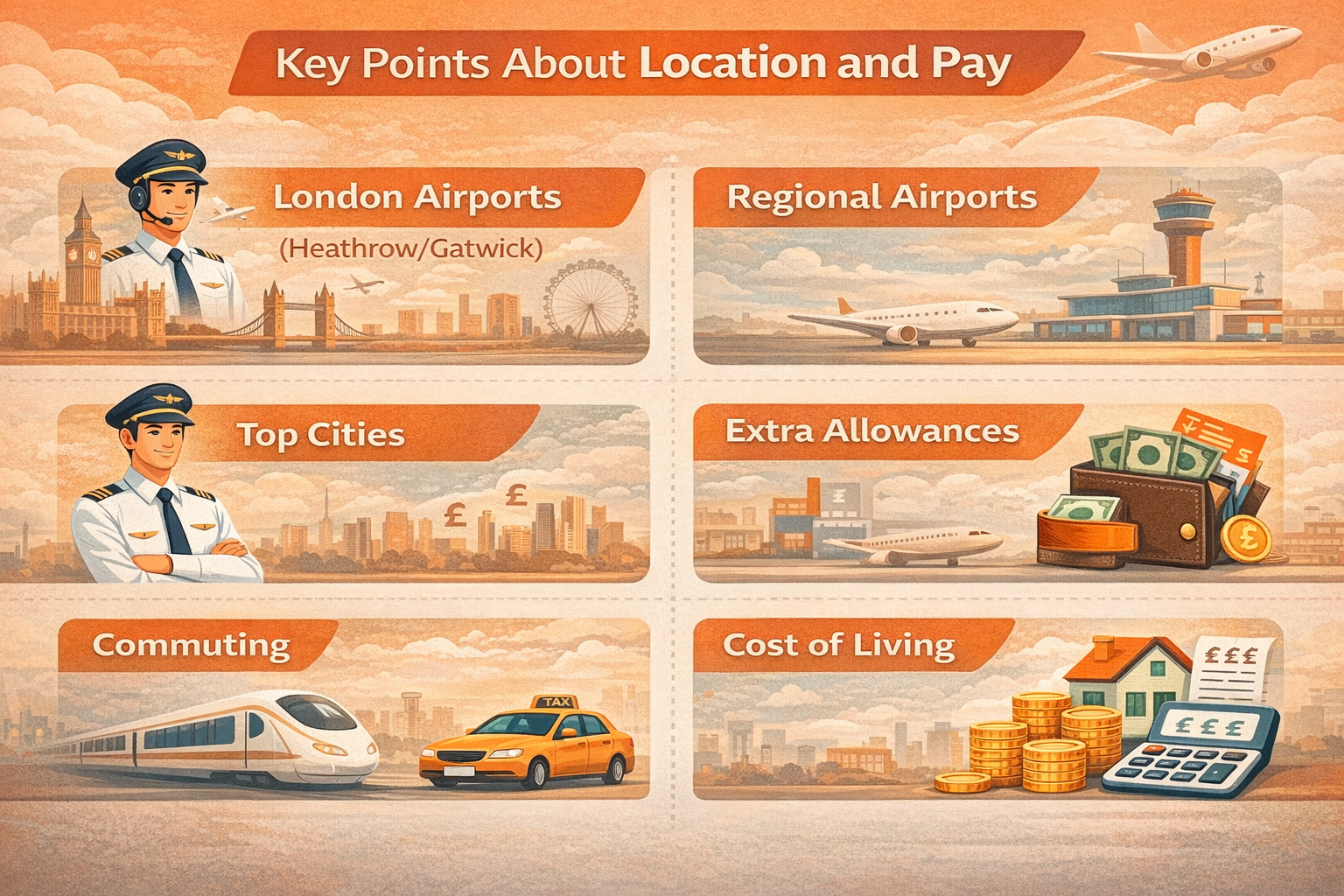
Key Points About Location and Pay:
- London Airports (Heathrow/Gatwick): Highest pay. Experienced pilots can earn £100,000 or more. In addition, extra pay covers high living costs and busy flights.
- Regional Airports: Airlines like Jet2 and TUI pay well too. Experienced pilots can earn about £100,000. Similarly, some top regional airports offer bonuses for experience.
- Top Cities: In 2025, top cities were Bristol (£104,914), Cambridge (£62,224), Exeter (£44,381), and London (£39,125).
- Extra Allowances: Pilots may get extra money for travel or staying near their airport. Meanwhile, commuting rules can change based on the airline.
- Commuting: Long-flight pilots can live farther from their base. Short-flight pilots usually live close.
- Cost of Living: London pay is higher, yet rent and travel are also higher.
What Factors Impact a UK Airline Pilot’s Salary Most?
Several key factors strongly influence how much a UK airline pilot earns:
- Airline Type & Business Model
- Legacy carriers often offer higher long-term pay
- Low-cost carriers may offer strong sector pay
- Regional airlines usually pay less
- Short-Haul vs Long-Haul
Long-haul pilots often earn more, especially Captains. For example, they fly bigger planes and travel long distances. These flights need more training and responsibility. As a result, they usually receive higher pay. Short-haul pilots fly shorter trips. They complete more flights in one day. On the other hand, they can still earn good total pay with extra sectors and bonuses. - Seniority & Union Agreements
Experience plays a big role in pay. Over time, pilots earn more as they stay longer with one airline. Airlines follow clear pay scales. In fact, unions like the British Airline Pilots’ Association help agree on salaries and work rules. This gives pilots job security and clear career steps. - Base Location & Tax
Where a pilot is based also affects income. London-based jobs often offer higher salaries. However, rent and daily costs are much higher there. Regional bases may pay a little less, but living costs are lower. Taxes and travel expenses also change how much money a pilot keeps each month.
Additional Benefits Beyond Salary
Pilot total reward often includes:
- Flight sector pay
- Overnight allowances
- Pension schemes
- Profit share
- Staff travel perks
- Loss-of-licence insurance
- Paid recurrent simulator training
Lifestyle factors, such as rosters, days off, and long layovers, are highly valued parts of the package.
Stability of UK Pilot Salaries
Impact of COVID-19
The COVID-19 pandemic had a major impact on the UK aviation industry. Airlines such as British Airways and Virgin Atlantic were badly affected as travel restrictions reduced passenger numbers. As a result, many pilots experienced temporary pay cuts, unpaid leave or redundancy. Career progression slowed down, and upgrades to Captain were delayed in many cases. It was a difficult and uncertain period for pilots across the UK.
Current Market
Since 2022, the market has improved significantly. Travel demand has returned, and many UK airlines are hiring again to deal with pilot shortages. This has led to more competitive salaries and better job opportunities. However, aviation is still a cyclical industry, meaning it has good and bad periods. Economic challenges or global events can still slow recruitment and delay promotions, so long-term stability can vary over time.
Is an Airline Pilot’s Salary in the UK Worth the Journey?
For many people, the answer is yes. Pilots in the UK can earn good money, especially after gaining experience and becoming a Captain. Over time, the salary can be very rewarding.
However, training is expensive, and the early years can be financially challenging. It can take time to repay training costs and move up the career ladder. In the end, it is worth it for people who truly love flying and are ready to work hard and plan their finances carefully.
Key Takeaways
- Entry salaries are modest compared to training debt.
- Mid-career pay exceeds the UK average comfortably.
- Captain salaries remain among the highest in UK operational roles.
- Earnings vary widely by airline, fleet and seniority.
Balancing Passion vs Pay
Being a pilot is an exciting and respected job. It allows you to travel, see new places, and feel proud of flying a plane. But the job also takes hard work and strong commitment. Training is expensive, and the aviation industry can change quickly. There are good and bad times in aviation, so pilots need to be prepared for challenges. In the end, being a pilot means balancing your love of flying with careful money planning and patience.
Next Steps for Aspiring UK Pilots
- Research airline-specific pay scales.
- Understand training finance options.
- Compare sponsored vs self-funded pathways.
- Speak with current line pilots.
- Consider a long-term lifestyle, not just salary.
How Can Pilots Increase Their Earnings?
Pilots can earn more money in several simple ways. First, they can complete a type rating, which is special training to fly specific aircraft such as the Boeing 787 or Airbus A350. Airlines often pay more to pilots who are qualified to fly larger or more advanced planes. Second, flying long-haul routes can increase pay. These flights are longer and more demanding, so pilots usually receive extra pay and allowances for meals and overnight stays. Pilots can also earn more by moving into leadership roles, such as becoming a Captain or Senior First Officer. These positions come with greater responsibility but also higher salaries. Overall, by gaining experience, learning new skills and taking on more responsibility, pilots can steadily increase their earnings over time.
Final Thoughts
Airline pilots in the UK generally earn good salaries compared to many other careers, especially once they become Captains. In the early stages, pay can seem modest because of the high cost of training and loan repayments. It may take several years to feel financially secure. However, as pilots gain experience and move up in rank, their earnings usually increase steadily.
Over time, a career can provide strong financial stability and professional pride. For those who truly love flying, it can be a rewarding path, but it requires patience, commitment, and careful financial planning.
Frequently Asked Questions (FAQs)
1. How Much Do UK Airline Pilots Earn?
- UK airline pilots earn between £30,000 and £180,000+ per year. Pay depends on experience and airline. Most pilots earn around £70,000 to £80,000 a year.
2. What Is the Realistic Pay for a Pilot?
- A new First Officer usually earns £30,000 to £45,000. Pay increases with time and experience. Experienced Captains can earn over £100,000.
3. How Much Do Jet2 Pilots Earn?
- Jet2 First Officers earn about £60,000 to £90,000. Captains can earn £130,000 to £170,000 or more.
4. What Is the Retirement Age for Pilots?
- Pilots in the UK must stop commercial flying at age 65. Many later work as trainers or managers.
5. Do British Airways Pilots Get Paid Well?
- Yes, they earn good salaries. Long-haul Captains often earn £130,000 to £170,000+.
6. Are Pilots Usually Happy With Their Career?
- Many pilots enjoy their job. They like flying and travelling. However, long hours can be tiring.
7. Is Being a Pilot Really Worth It?
- If you love flying, it can be a great career. It pays well over time. But training is expensive.
8. Do Pilots Pay for Their Own Hotels?
- No, airlines pay for hotels and transport. Pilots also get money for meals.
9. How Much Does an easyJet Pilot Earn?
- At easyJet, First Officers earn good five-figure pay. Captains can earn over £120,000.