British Airways pilots fly planes and help people travel safely across the UK and around the world. They check the plane before each flight, follow the flight plan, watch the weather, and talk to air traffic control. Many people also want to know the British Airways pilot salary before choosing this job.
British Airways pilot salaries range from £40,000 to over £200,000 a year. The amount depends on the pilot’s job, experience, and the type of plane they fly. Pilots also get extra pay, a pension, and other benefits.
This guide explains the latest salary, pay scale, benefits, and career growth at British Airways.
What total income can a British Airways pilot expect annually?
A pilot at British Airways typically earns between £40,000 and £246,000 per year. This wide range depends on their specific rank and how many years they have served. Newer pilots start at the lower end, while experienced Captains earn the top figures. This total includes basic pay and extra money for every hour spent flying.
Why does British Airways offer such competitive wages for its flight crew?
British Airways pays good salaries to attract and keep skilled pilots. Flying a passenger plane is a big job with a lot of responsibility. Pilots spend many years learning and training before they can fly. They also make important decisions to keep every flight safe. Because of this, British Airways offers high pay and good benefits to reward its hard work and experience.
What is the base salary for a newly hired First Officer?
A newly hired First Officer at British Airways starts with a basic salary of approximately £74,930. This is the guaranteed amount they receive before any bonuses or flying pay. Most new pilots take home much more than this in their first twelve months. It is common for their total earnings to exceed £100,000 very quickly.
How does the annual pay growth work for flight crew?
The British Airways pilot’s salary increases every year based on a system called seniority. There is a 34-point pay scale that every pilot moves up automatically. Each year, a pilot stays with the company, and they move to the next point. This ensures that their wages grow steadily throughout their entire professional career.
What factors determine the final monthly take-home pay?
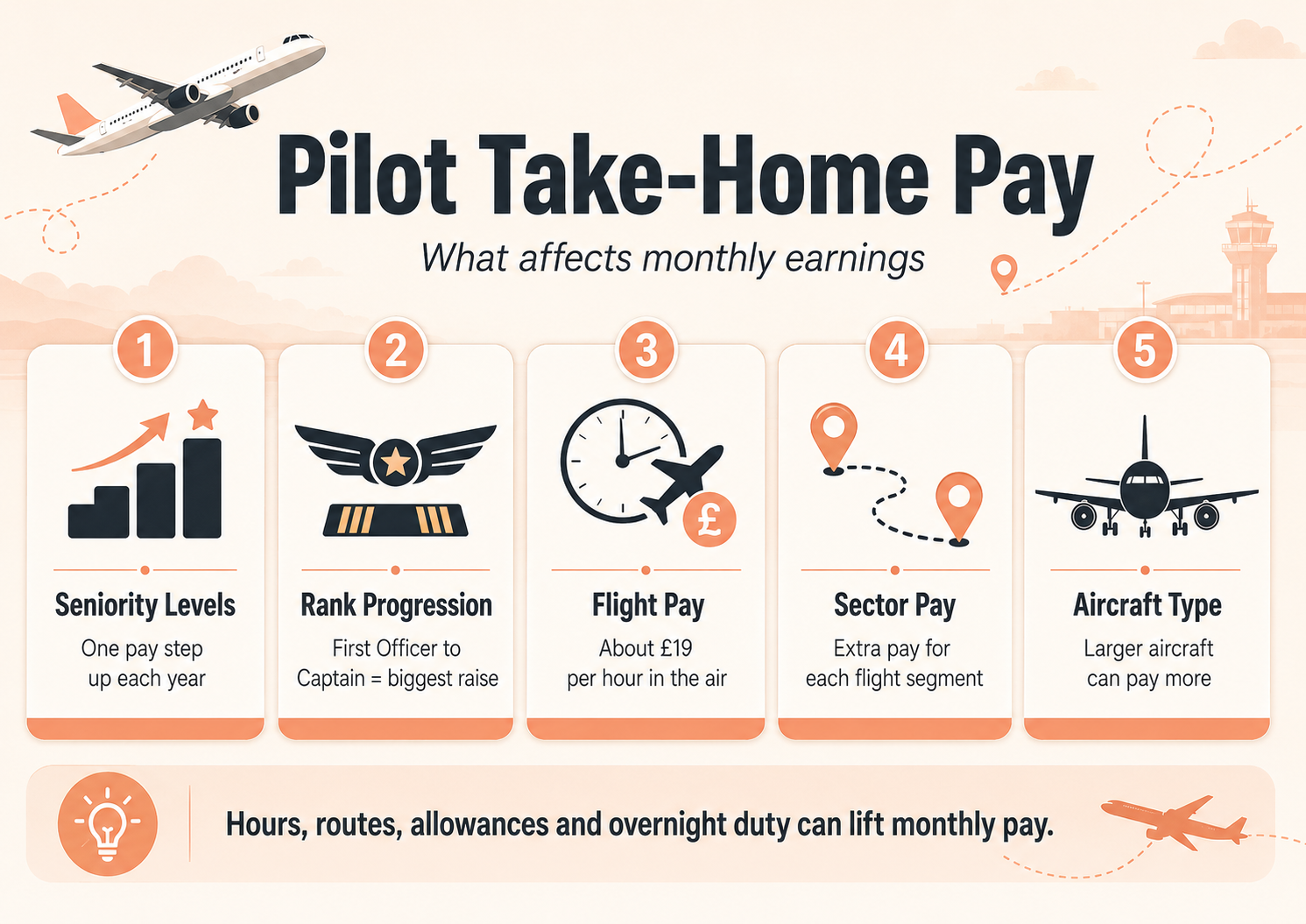
Several factors influence the final amount a pilot sees on their monthly payslip. These include the number of hours flown and the type of routes completed. Long-distance flights often pay more in allowances than short flights within the United Kingdom. Bonuses for flight duty and overnight stays also add a significant amount to the basic salary.
- Seniority Levels: Pilots move up one pay step every single year.
- Rank Progression: Moving from First Officer to Captain offers the biggest raise.
- Flight Pay: Pilots earn roughly £19 for every hour they are in the air.
- Sector Pay: Extra money is paid for each individual flight segment completed.
- Aircraft Type: Flying larger planes like the Airbus A380 often results in higher earnings.
What is the starting salary for a British Airways Second Officer?
A Second Officer usually earns £60,000 to £65,000 a year when they start. This is the first pilot role at the airline. They work with experienced pilots and learn how British Airways operates. They also learn the airline’s safety rules and build their flying skills. This stage helps new pilots gain the experience they need before moving to a higher pilot role.
How much does an experienced First Officer earn?
An experienced First Officer can earn up to £167,493 annually at the top of their pay scale. This role involves assisting the Captain and sharing the flying duties during the journey. As they gain more years of service, their basic pay increases significantly. They are highly trained professionals who are capable of handling all aspects of the flight.
What is the initial salary for a British Airways Captain?
A pilot who is promoted to Captain starts with a basic salary of about £99,905. This rank carries the highest level of responsibility on the aircraft. The Captain is the ultimate leader of the flight deck and the cabin crew. Their pay reflects the leadership skills required to manage a large jet and its passengers safely.
What is the maximum salary for a Senior Captain?
The most experienced British Airways Captains can earn a basic salary of up to £223,326 a year. With flight allowances and bonuses, their total yearly pay can be more than £246,000. These pilots fly large long-haul planes on international routes. Most of them have worked at British Airways for many years and have a lot of flying experience.
How do flight hours impact the British Airways pilot’s salary?
Pilots earn extra money for every hour they spend operating the aircraft in the sky. This “flying pay” is currently set at approximately £19 per hour. A pilot who flies more hours will naturally see a higher total income at the end of the month. This system rewards those who are active and complete many flight missions throughout the year.
- Second Officer Pay: Entry-level pilots start around £60,000.
- Captain Minimum: New Captains begin their rank at nearly £100,000 basic.
- Maximum Potential: Senior long-haul Captains can reach over £246,000 total.
- Hourly Rates: Flying pay adds a consistent boost to the monthly paycheque.
- Guaranteed Raises: The 34-point scale ensures pay never stays flat for long.
What extra bonuses do British Airways pilots receive?
Most pilots at the airline receive an annual flying pay bonus of roughly £14,161. This is a standard payment given to those who meet their flight duty requirements. It provides a significant boost to the total British Airways pilot salary every year. This bonus is paid in addition to the hourly flying pay and the basic salary.
What are the subsistence allowances for international flights?
Pilots receive tax-free allowances to cover the cost of food and drinks while away. This money is provided for every hour a pilot spends away from their home base. If a pilot stays in a hotel in Singapore, the airline pays for their expenses. These small payments add up to hundreds of pounds for each international trip.
How does the airline support pilot retirement?
The pension scheme at British Airways is one of the most generous in the UK. The airline contributes 15% of the pilot’s salary into their pension fund every month. This helps pilots build a very large savings pot for when they stop flying. It ensures a high standard of living even after they leave the flight deck.
What holiday benefits are provided to the flight crew?
British Airways pilots enjoy six weeks of paid annual leave every year. This generous time off allows them to recover from the physical demands of flying. It also gives them quality time to spend with their families and friends. The airline understands that well-rested pilots are much safer and more productive in their roles.
What are the “Golden Days” in a pilot’s schedule?
Golden Days are specific days off that are guaranteed by the airline’s contract. The company cannot change these days once they are placed on a pilot’s roster. This allows pilots to plan for important life events like birthdays or school plays. It provides a level of certainty that is often rare in the aviation industry.
- Annual Bonus: A fixed payment of £14,161 for flight duties.
- Pension: The airline contributes 15% of salary toward retirement.
- Leave: Six weeks of paid holiday are provided annually.
- Stability: Golden Days protect the pilot’s personal time from changes.
- Daily Cash: Subsistence pay covers all food costs during global travels.
What travel perks do British Airways pilots enjoy?
Pilots and their families have access to heavily discounted flight tickets across the globe. They can travel to any destination on the British Airways network for a small fee. This allows pilots to enjoy luxury holidays during their time off. It is one of the most popular benefits of working for the national carrier.
How does the airline protect pilot health?
British Airways provides comprehensive private medical insurance to all of its pilots. This ensures they receive fast and high-quality healthcare whenever it is needed. Pilots must pass strict medical exams every year to keep their flying licenses. The airline’s health benefits help them stay in peak physical condition for their jobs.
What are the requirements to join the flight deck?
Candidates must hold a valid UK CAA pilot licence and a Class 1 medical certificate. They also need the legal right to live and work in the United Kingdom. British Airways looks for individuals with strong leadership and communication skills. Many roles also require a specific number of flying hours on modern jet aircraft.
How does the pilot recruitment process work?
The recruitment process involves several stages of testing and interviews. Applicants must pass math and logic tests to show they can handle complex calculations. They also attend an assessment centre to demonstrate their ability to work in a team. Finally, senior managers and pilots conduct a formal interview to select the best candidates.
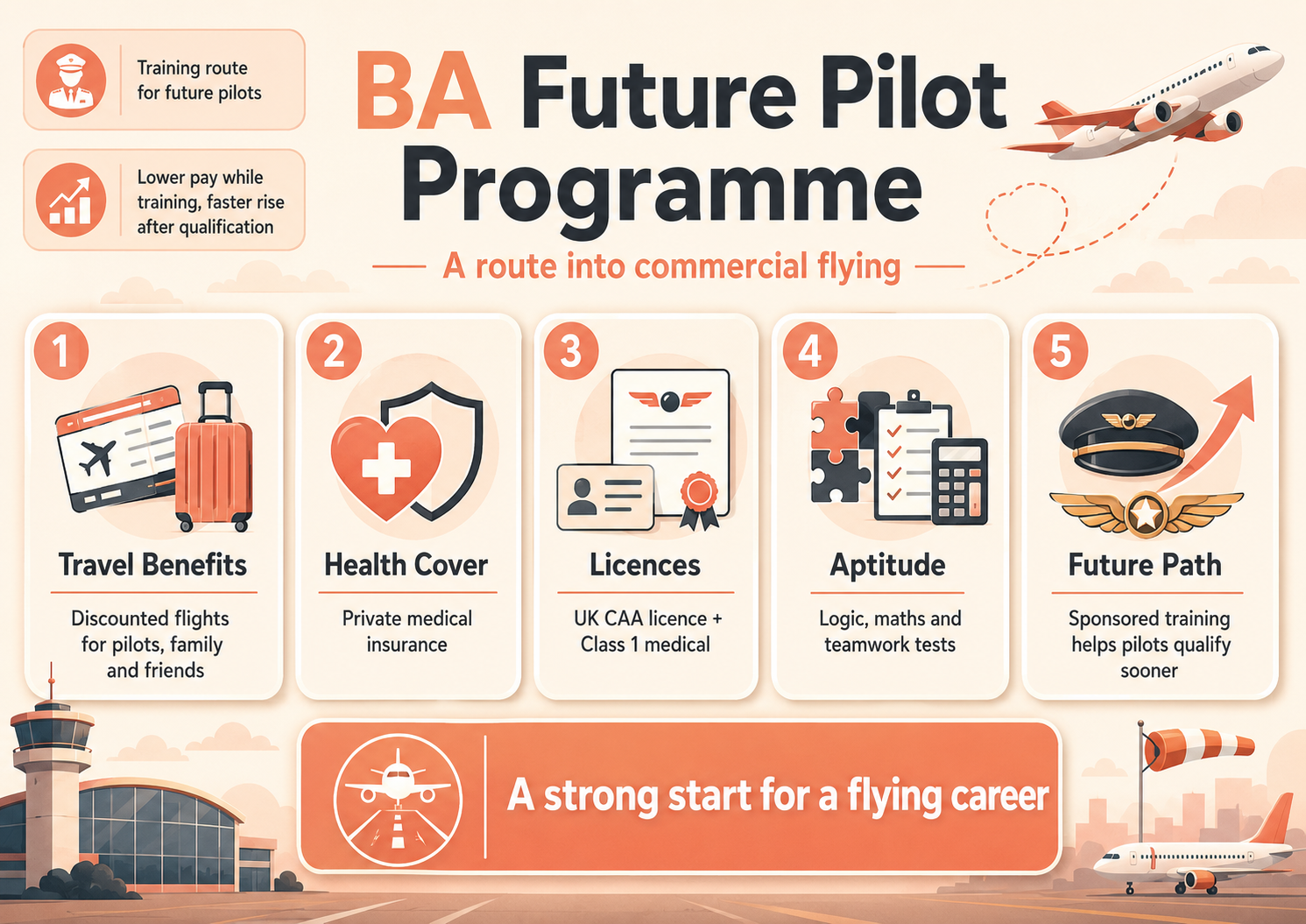
What is the British Airways Future Pilot Programme?
This is a specialised training route for people who want to become pilots. The airline helps manage the cost of training for successful applicants. While the pay starts lower during the training years, it rises quickly once they qualify. It is a fantastic way for young people to start a high-paying career in aviation.
- Travel Benefits: Discounted flights for pilots, families, and friends.
- Health Coverage: Private medical insurance is provided by the airline.
- Licences: A UK CAA licence and a Class 1 medical are mandatory.
- Aptitude: Recruitment includes logic, math, and teamwork assessments.
- Future Path: Sponsored training helps new pilots join the airline sooner.
What is the difference between long-haul and short-haul schedules?
Short-haul pilots fly smaller planes like the Airbus A320 to European cities. They often return to their home base at the end of every day. Long-haul pilots fly larger jets like the Boeing 787 to distant continents. They stay in hotels for several days before flying back to the United Kingdom.
How does the airline manage pilot fatigue?
British Airways follows very strict safety rules regarding rest and sleep. Pilots are required to have a minimum number of hours off between every flight. This prevents them from becoming too tired while operating the aircraft. The airline uses advanced software to create safe and healthy work schedules for all crew.
What aircraft do British Airways pilots operate?
The airline has a diverse fleet of over 250 modern aircraft. Pilots can fly short-range planes or massive long-range jets like the Airbus A380. Each plane type requires specific training and a unique set of skills. This variety allows pilots to have an interesting and evolving career over many years.
How does the British Airways pilot’s salary compare to those of other UK airlines?
British Airways typically pays much more than smaller regional or budget airlines. While some pilots in the UK earn around £60,000, British Airways pilots often earn double that. The airline’s pension and bonus structures are also much better than most competitors. This makes it the most desired employer for pilots in the country.
Is a career at British Airways a stable long-term choice?
Working for the UK’s flag carrier offers a very high level of job security. The airline has a long history and a very strong reputation worldwide. Pilots benefit from clear career paths and guaranteed pay increases over time. It is a stable profession that provides a high income for many decades.
- Fleet Variety: Pilots fly advanced Boeing and Airbus aircraft.
- Safety First: Strict rest rules ensure pilots stay alert and healthy.
- Top Pay: British Airways leads the UK market in pilot compensation.
- Security: The airline offers a reliable and prestigious long-term career.
- Rosters: Pilots work in blocks of days followed by generous time off.
What is the “45-minute rule” for flight crew?
The 45-minute rule is a procedural requirement for flight preparation and passenger boarding. It ensures that all crew and passengers are ready long before the plane leaves the gate. This helps the airline maintain a very high level of on-time performance. Pilots play a key role in making sure these timelines are met safely.
How do unions influence the British Airways pilots’ salaries?
Pilot unions negotiate with the airline to secure fair pay and better working conditions. They ensure that the British Airways pilot salary stays high as the cost of living increases. These negotiations happen every few years to update the pay scales. This protects the financial interests of all pilots working for the company.
Why is seniority so important in the aviation industry?
Seniority determines everything from your pay level to the flights you get to choose. Pilots with more years of service get the first pick of the best schedules. They can choose to fly to their favourite cities or have specific weekends off. It is a system that rewards loyalty and long-term commitment to the airline.
Final Thoughts
Overall, the British Airways pilot salary is among the highest wage levels in the UK aviation industry. As pilots gain more experience and move into higher roles, their pay continues to grow. They also receive valuable benefits, pensions and extra allowances. If you are planning a career as a pilot, British Airways offers strong earning potential and excellent long-term career opportunities.
FAQs
1. What Pilots Make $500,000 a Year?
- Only a small number of senior airline or private jet pilots can earn around $500,000 a year.
2. Do Pilots Make 700k?
- Yes, a few highly experienced pilots in top airlines or private aviation can earn around $700,000 a year.
3. What Is the 3:1:1 Rule on British Airways?
- The 3:1:1 rule limits liquid containers to 100 ml each and asks you to keep them together in one clear 1-litre bag.
4. What Pilots Make $200,000 a Year?
- Many experienced airline captains at major international airlines can earn $200,000 or more each year.
5. Why Can’t Pilots Fly After 65?
- Most commercial pilots must stop flying airline passenger flights at age 65 under international aviation rules.