How much does a commercial aviation pilot salary grow after you gain more experience? Your salary as a commercial aviation pilot grows quickly as you gain experience. Imagine looking up at the bright blue sky today. You see a large white plane leaving a long trail behind. Many people dream of sitting in that front cockpit seat. However, most people also wonder about the money involved here.
After the year 2023, the travel industry began to grow again. More people are flying for holidays or for important business trips. Because of this, airlines are looking for many new pilots now. Flying is a job that requires great skill and focus. Therefore, the rewards for this hard work can be quite high.
Now let’s dive into the details of this exciting British career.
What is the Average Commercial Aviation Pilot Salary in the UK?
When people talk about a commercial aviation pilot salary, they often mention big numbers. However, the truth is that the range is actually very wide. A new pilot does not earn the same as a veteran. Generally, earnings in the UK can start as low as £24,000. On the other hand, some senior captains earn over £140,000 yearly.
Actually, the median pay for all UK pilots is around £70,000. This figure depends heavily on which airline you work for. Smaller companies usually pay less than the huge global brands. Furthermore, your pay will increase every single year you stay employed. This is known as “seniority” within the aviation world.
To help you understand, look at the comparison table below. It shows how pay changes as you gain more experience.
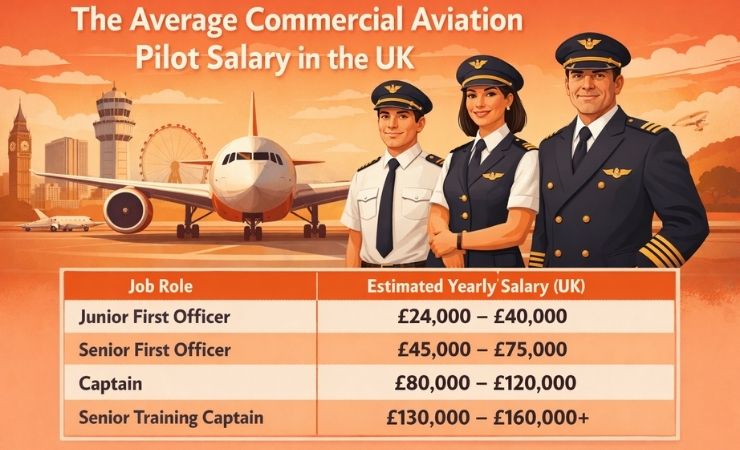
As you can see, the commercial aviation pilot salary grows significantly over time. It is a career that rewards those who stay loyal. Most pilots spend about five to ten years as a First Officer. After that, they may be promoted to the rank of captain. This promotion brings a very large jump in monthly take-home pay.
What Factors Influence a Commercial Aviation Pilot Salary?
Many different things can change your commercial aviation pilot salary in England. It is not just about flying the plane from A to B. First, the type of airline you join matters a lot. Short-haul airlines like Ryanair or easyJet have different pay structures. They focus on many short flights across Europe every day.
In contrast, legacy carriers like British Airways offer long-haul flights. These flights go to New York, Tokyo, or Sydney. Often, long-haul pilots earn more because they spend more time away. Additionally, the size of the aircraft plays a massive role. Flying a small Dash 8 turboprop pays less than flying a Boeing 787.
Big planes carry more passengers and require more technical knowledge. Consequently, the pilots of these “heavy” jets receive a higher wage. Another factor is your total number of flight hours. Reaching 1,500 hours is a major milestone for any pilot. At 5,000 hours, you become a very valuable asset to any airline.
Your home base location also changes how much you keep. Working at London Heathrow or Gatwick often comes with extra “London weighting.” This is extra money to help with the high cost of living. Pilots based in regional hubs like Belfast or Manchester might earn less. Nevertheless, their living costs are usually much lower in those areas.
The Role of Rank and Seniority in Your Pay
Your rank in the cockpit is a very big factor. A First Officer sits on the right side of the plane. They earn a good wage but stay below the captain. Eventually, you can become a captain yourself. This promotion brings a very large pay rise immediately. Furthermore, most UK airlines use a seniority list system. Seniority ensures your pay grows for every year you stay. If you stay for ten years, you earn more than a new pilot. Therefore, loyalty to one airline really pays off over time.
How Much Do Newly Qualified Pilots Earn in the UK?
Starting your journey as a pilot is a very expensive task. Most students spend over £100,000 on their flight training and exams. Because of this, the first few years of work are vital. Unfortunately, newly qualified pilots often start on a lower wage. Some people call this the “pay-to-fly” period of a career.
Entry-Level Salary
Many airlines use cadet schemes to find fresh talent for cockpits. These schemes sometimes offer a starting salary of around £24,000. While this seems low, the airline is often helping you.
During your first two years, you are a Junior First Officer. You will sit in the right-hand seat and learn from the captains.
You can expect:
- A starting salary of around £24,000
- Hands-on learning from experienced pilots
- A strong focus on building flight experience
Training Bonds Explained
They might be paying back your training loans for you. This is called a “training bond” in the aviation industry.
Basically, the airline deducts money from your gross pay each month. This money goes toward the cost of your specific jet rating.
Key points about training bonds:
- Monthly deductions from your salary
- Helps cover expensive training costs
- Usually lasts a few years
After a few years, this debt is usually fully paid off. Then, your actual take-home pay will see a very large increase.
Salary Growth Over Time
Even though the pay starts small, it does not stay there. Most pilots see their earnings double within five or six years.
It is a test of patience for every new flyer. Always remember that your first job is about gaining vital experience.
Which UK Airlines Pay the Highest Pilot Salaries?
If you want the highest commercial aviation pilot salary, you must choose wisely. British Airways is often seen as the top choice for many. They are the “flag carrier” of the United Kingdom. Their senior captains can earn very high wages and excellent bonuses. Furthermore, they offer great long-term job security for their staff members.
Major Commercial Carriers
However, low-cost carriers like easyJet and Jet2 are now very competitive. They have improved their pay packages significantly to keep their pilots.
- Pay Structure: An easyJet captain can sometimes earn more than a BA captain.
- Sector Pay: This happens because they fly many more individual flights per month. Each flight adds extra “sector pay” to their basic monthly salary.
Cargo and Charter Options
Do not forget about the charter and cargo flight companies. Airlines like DHL, UPS, or Titan Airways are very important. They fly boxes and mail instead of people around the world.
- Specialised Hours: These roles often pay very well because the hours are different. You might fly mostly at night while the world is sleeping.
- Job Benefits: Cargo pilots often enjoy very stable schedules and high yearly pay.
- Work Environment: Some people prefer this because boxes do not complain about delays.
It is a different lifestyle, but the financial rewards are great. Every airline has a different “vibe” and a different pay scale. You should research each one before you apply for a job.
What are the Additional Benefits and “Hidden” Pay?
The basic commercial aviation pilot salary is only part of the story. Pilots receive several other types of payments every single month.
Variable Pay and Daily Allowances
One major addition is called “Flight Duty Pay” or “Sector Pay”.
- Per-Flight Fees: This is a small fee paid for every flight you complete. If you fly four times a day, this adds up quickly.
- Per Diems: Additionally, pilots get “per diems” when they stay away from home. This is tax-free money meant to cover the cost of meals.
- Expense Savings: If you stay in a hotel in New York, the airline pays. You get to keep whatever money you do not spend on food. Many pilots save thousands of pounds a year using these allowances.
Long-Term Financial Security
Pension contributions are another massive benefit of working in the UK.
- Retirement Funding: Many airlines put a lot of money into your retirement fund. This ensures you are financially safe when you stop flying.
- Matching Schemes: In some cases, the airline matches your contribution very generously. This is much better than the pensions found in most other jobs.
Lifestyle and Travel Perks
The famous staff travel benefits.
- Discounted Flights: Pilots and their families can fly for very low prices. Sometimes you only pay the airport taxes for a long flight.
- Global Access: This allows you to see the world for almost no cost.
- Extended Benefits: While this is not cash, it is a huge financial perk. Your parents or siblings can also enjoy these “subsidised” holiday tickets.
Is the Commercial Aviation Pilot Salary Worth the Training Cost?
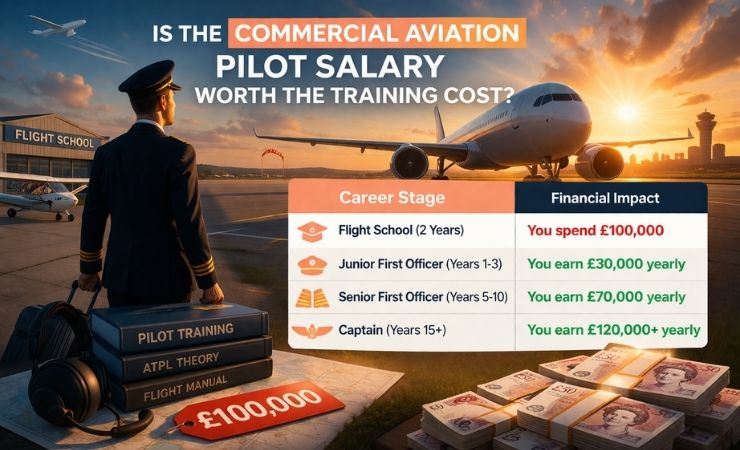
Training to become a pilot costs a lot of money in the UK. You might spend over £100,000 on your flight school fees. Therefore, you must decide if this big spend is a good idea. Most pilots view this cost as a long-term investment. They look at the next forty years of their working life.
You will earn a very large amount over your whole life. A typical pilot earns millions of pounds before they retire. Consequently, you will eventually pay back your initial training loans. Most pilots reach this “break-even” point within ten years. After that point, you enjoy a high profit every single month. Your commercial aviation pilot salary will support you well for decades.
Why the high cost makes sense
- You gain a highly specialised skill for your entire life.
- Your monthly income stays much higher than the UK average.
- Most airlines offer very generous pension plans for retirement.
- You can find work in many different countries easily.
Moreover, you get to travel the world for free. Your family receives very cheap flight tickets too. These perks save you thousands of pounds every year on holidays. Instead of a boring office, you work in an exciting cockpit. You see the beautiful sunrise from 35,000 feet in the air. This amazing view is truly priceless for many people.
Of course, you must stay healthy to keep flying. You need to pass a strict medical test every single year. But the high commercial aviation pilot salary rewards this physical risk. It provides a very comfortable life for you and your family. In the end, most UK pilots love their chosen career path. They believe the high training cost is worth every single penny. You are not just buying a job. You are buying a life of adventure and financial freedom.
Conclusion
Becoming a pilot in the UK is a journey. It starts with hard work and a very large financial investment. The starting commercial aviation pilot salary might feel a bit low at first. However, the potential to earn more is very real and exciting. You can grow from a cadet to a senior captain. Flying is not just a job; it is a way of life. You get to travel, see the clouds, and lead a team. Always keep your eyes on the horizon and keep learning more. Your dream of flying can become a very stable financial reality. Good luck with your journey into the world of professional flying.
Frequently Asked Questions (FAQs)
1. How much does a UK commercial airline pilot earn?
- UK commercial pilots typically earn between £24,000 and £160,000+ per year, depending on experience and rank.
2. What pilots make $200,000 a year?
- Senior captains at major airlines, especially long-haul pilots, can earn $200,000 or more annually.
3. How much does a Jet2 pilot earn?
- Pilots at Jet2 earn around £60,000 to £140,000 per year, depending on their role and experience.
4. Do commercial airline pilots make good money?
- Commercial pilots earn good salaries, especially as they gain experience and move up to captain roles.
5. Is a pilot a millionaire?
- Some experienced pilots can become millionaires over time through high salaries and savings, but it depends on career length and spending.
6. How much does a Ryanair pilot earn?
- Pilots at Ryanair typically earn between £40,000 and £150,000 per year, based on rank and experience.