Many people want to know how to get a commercial pilot license UK because aviation is an exciting career. However, training is challenging and requires dedication. Also, you must meet age, health, and educational requirements before starting lessons. Moreover, you need a UK CAA Class 1 Medical, be at least 18 years old, have 200 flight hours, a Night Rating, and pass 13–14 ATPL theory exams. Training includes advanced instrument and multi-engine flying and usually takes 16–18 months.
In addition, UK commercial pilots can earn good salaries and enjoy career growth. Also, cadet programmes and sponsorships can help reduce training costs, which range from £70,000 to £150,000. Because pilots gain experience gradually, pay and benefits increase over time. Finally, obtaining a CPL in the UK opens many professional opportunities.
What is the Cost of a Commercial Pilot License UK?
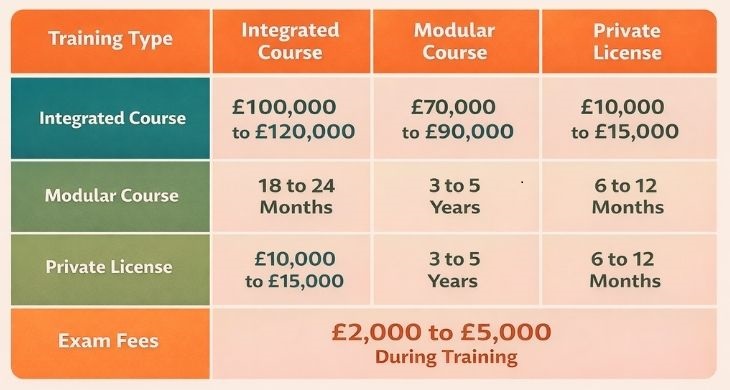
Initially, you must know that flight training is quite a big investment. The total cost of a corporate pilot license uk can be very high. Generally, students spend between £70,000 and £120,000 for their full flight training. This amount covers your ground school books and all your flying hours.
Furthermore, you must pay for your exams and your medical certificates too. Some schools offer a payment plan to help you manage the costs. However, many students take out a loan to pay for their school. Specifically, you should research many schools to find the best price for you.
Why Should You Become a Pilot in Britain?
Flying is one of the most respected and exciting jobs in the world. You get to travel to many different countries as part of your daily work. Moreover, you meet interesting people from various cultures every day, which makes the job socially rewarding.
Also, most pilots enjoy the unique feeling of taking off and soaring into the bright blue sky. Because of this excitement and adventure, many hard-working students dream of becoming pilots in Britain. In addition, pilots wear smart and professional uniforms, which adds to the sense of pride and responsibility.
Furthermore, the job offers freedom and flexibility, allowing pilots to manage their schedules and experience new places. Experienced pilots can also earn very competitive salaries and enjoy long-term career growth.
Finally, the combination of travel, high responsibility, and financial rewards makes a pilot career in the UK highly respected, fulfilling, and attractive for ambitious individuals.
What Are the Basic Requirements for New Students?
To start pilot training in the UK, you must meet several basic requirements. First, you need to be at least 16 to 18 years old, depending on the training programme. Also, you must have strong English language skills, as communication and flight instructions rely on English.
Moreover, good math and science knowledge helps with navigation, instruments, and calculations. You must pass a UK CAA Class 1 Medical to ensure fitness for flying. In addition, airlines or flight schools often require a high school diploma or equivalent.
Finally, dedication, focus, and physical and mental discipline are essential because pilot training is challenging and requires consistent effort. Meeting these basic requirements allows students to begin a safe, professional, and rewarding aviation career in the UK.
How Do You Choose the Right Flight School?
Choosing the right flight school in the UK is very important for your pilot career. However, you must check if the school is CAA-approved because this ensures training meets legal and safety standards. Also, consider the type of training offered, as integrated courses are faster while modular courses are more flexible.
Moreover, compare total costs, including tuition, materials, and flight hours. In addition, review the aircraft fleet and simulators, because modern equipment improves learning and safety. Check the school’s placement record, as top schools often help graduates join airlines faster.
Finally, visit schools if possible, ask questions, and read reviews. Therefore, selecting a reputable, supportive flight school builds strong skills and improves future earnings and career opportunities in the UK.
How Long Does a Commercial Pilot Licence UK Take?
The time it takes depends on which type of training you choose. If you study every day, a professional pilot licence in the UK takes two years. This is often called an “integrated” course by many flight schools.
On the other hand, some people choose the “modular” path for training. This means you learn in small steps while you work another job. Consequently, the modular path might take you four or five years to finish. However, it is a great way to save money while you learn. Specifically, you can go at your own pace and enjoy the journey.
- Integrated training is very fast and very intense for students.
- Modular training allows you to work and save money easily.
- You must spend at least 200 hours flying in the air.
- Ground school involves passing 14 very difficult theory exams.
- You will learn about navigation, weather, and aeroplane engines, too.
- Night flying is a special part of your advanced training path.
- Multi-engine training helps you fly much larger and faster planes.
What Exams Must You Pass to Succeed?
Initially, you will start with ground school to learn the rules. You must study subjects like meteorology, which is the study of weather. Then, you will learn about air law and how to navigate. These exams are very tough and require a lot of reading time.
Furthermore, you must pass a practical flight test with an examiner. Specifically, the examiner will watch how you handle the aeroplane during landing. They will also check if you can stay calm during emergencies. Indeed, passing these tests is a very proud moment for every student.
Can Immigrants Become Pilots in the UK?
Yes, many immigrants successfully become pilots in the UK every year. However, you must first have the legal right to work in the country. Also, you need to pass strict background and security checks to ensure safety. Because aviation is highly regulated, your English language skills must be strong for communication and flight training.
Moreover, completing proper pilot training and gaining flight hours is essential for career growth. Therefore, studying hard and following the correct training path increases your chances of success. In addition, airlines often offer cadet programmes or sponsorships to support international students.
Finally, the UK aviation industry welcomes skilled talent from around the world. This diversity strengthens teamwork and creates a safe, professional, and rewarding environment for all pilots.
How Do You Find Your First Pilot Job?
Finding your first pilot job in the UK requires careful planning and preparation. However, competition can be high, so you must be well-prepared. First, complete your commercial pilot licence and necessary ratings, including multi-engine and instrument training.
Also, gain as many flight hours as possible, because experience increases your chances of being hired. Moreover, create a professional CV and cover letter tailored to airlines. Apply to both large and smaller airlines, as opportunities vary.
In addition, go to networking events and aviation career fairs to speak with airline recruiters face-to-face. Therefore, building connections and showing professionalism can improve your success. Finally, consider cadet programmes or sponsored schemes, as they help new pilots secure their first airline job while reducing initial costs. Persistence and dedication are key to starting your aviation career.
What Are the Different Career Paths in Aviation?
Aviation offers many career paths for pilots in the UK, each with unique pay and opportunities. However, choosing the right path depends on your goals, experience, and training. Also, different paths offer varied flight hours, responsibilities, and salaries.
Moreover, some routes provide faster promotions and higher long-term earnings. Therefore, understanding each option helps plan your career. Common career paths include:
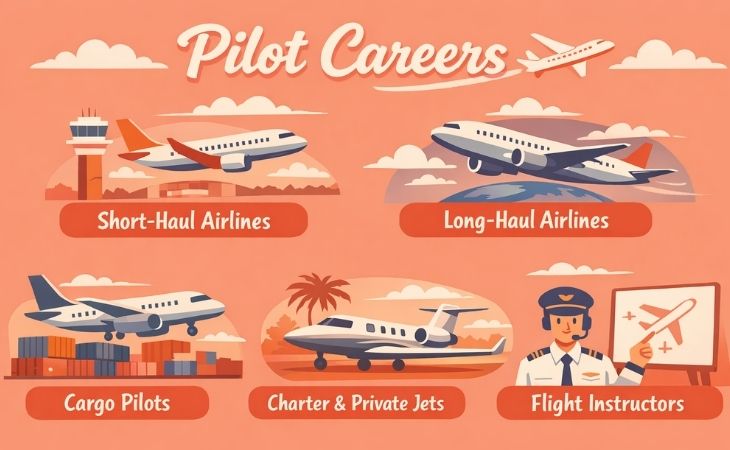
- Short-Haul Airlines: Fly domestic or nearby international routes with moderate pay and experience growth.
- Long-Haul Airlines: Work on international flights, earn higher salaries, and gain valuable experience.
- Cargo Pilots: Transport goods, often with flexible schedules and different pay structures.
- Charter and Private Jets: Offer high pay and exclusive flying opportunities.
- Flight Instructors: Teach new pilots while gaining flight hours and building experience.
Choosing the right path impacts both pay and career progression in the UK aviation industry.
How Much Do New Pilots Earn in the UK?
When you start your first job, your pay will be modest. Usually, a junior pilot earns between £24,000 and £30,000 per year. However, this salary grows very quickly as you gain more experience.
Specifically, after a few years, you might earn over £50,000 annually. Senior Captains at big airlines can earn more than £140,000 every year. Furthermore, you get extra money for every hour that you fly. Consequently, the financial rewards are very good for hard-working flight crews. Indeed, the high cost of training is worth it in the end.
How Can You Prepare for Flight School Now?
You can prepare for flight school in the UK by focusing on both skills and knowledge. However, starting early gives you a strong advantage over other students. Also, improve your English, math, and science skills because they are essential for aviation training.
Moreover, stay physically fit, as you must pass a UK CAA Class 1 Medical. Therefore, maintain a healthy lifestyle and exercise regularly. In addition, research flight schools, cadet programmes, and course costs to plan your budget carefully. Also, speak with current pilots to understand training and career expectations.
Finally, develop discipline, time management, and study habits, because these skills help you succeed in school and later in a professional pilot career. Starting preparation early ensures smoother training and faster career growth in the UK aviation industry.
What is the Future of Flying in the UK?
The future of flying in the UK looks strong for pilots and aviation careers. Moreover, pilot demand is rising because airlines are adding more domestic and international routes. Also, technology is improving with modern aircraft and advanced flight systems, making flying safer and easier.
However, pilots must learn new skills constantly to keep up with changes. In addition, environmental rules push airlines to use fuel-efficient and eco-friendly planes. Therefore, understanding these trends helps pilots plan their careers and select the best airlines. Finally, competitive pay, career growth, and global travel make the UK an attractive place for new and experienced pilots.
Final Thoughts
Earning a commercial pilot license UK is a challenging but rewarding career choice. Training is expensive and requires dedication, focus, and discipline. However, pilots in the UK enjoy competitive salaries, career growth, and global travel opportunities. Cadet programmes and sponsorships can reduce costs, while long-haul routes often provide higher pay and experience. Moreover, proper preparation, strong skills, and persistence help secure your first pilot job. Ultimately, becoming a pilot offers adventure, financial rewards, and a respected profession in the UK aviation industry.
FAQs on Commercial Pilot License UK
1. How much does it cost to get a commercial pilot license in the UK?
- It costs around £70,000 to £150,000 for full pilot training.
2. Is 35 too late to become a pilot?
- No, many people start pilot training in their 30s and have long careers.
3. Can you be a pilot with bipolar?
- No, bipolar usually prevents you from getting a UK Class 1 medical.
4. How long does it take to become a commercial pilot in the UK?
- It takes 16–24 months for integrated courses or 3–5 years for modular training.
5. Can I become a commercial pilot at 40?
- Yes, if you meet medical and training requirements and plan carefully.
6. What is the starting salary for a commercial pilot in the UK?
- New pilots usually earn between £24,000 and £40,000 per year.
7. Is 30 too old to become a pilot in the UK?
- No, 30 is still a good age to start pilot training.
8. Are UK pilots well paid?
- Yes, experienced pilots, especially captains, earn high salaries and good benefits.
9. What disqualifies you from being a pilot?
- Serious medical conditions, mental health issues, poor eyesight, or failing Class 1 medical tests.