
Many people get confused by job titles like care worker, care assistant, support worker, or care and support worker. These titles often look the same in job ads. However, the difference between care worker and support worker matters. It shows what each role actually does.
For example, a care worker spends most of their time helping with personal care. They help people wash, dress, eat, use the toilet, and move safely. A support worker also helps with care, but at the same time, they focus more on independence. They help with shopping, cooking, travel, social events, or going to work or college. In England, adult social care has about 1.6 million jobs. Care worker and support worker roles make up over 900,000 of these. Around 100,000 jobs are open at any time.
Let’s take a closer look at the difference between a care worker and a support worker and see what each role really does.
What Is the Difference Between Care Worker and Support Worker?
Here’s a quick look at the main differences between a care worker and a support worker:
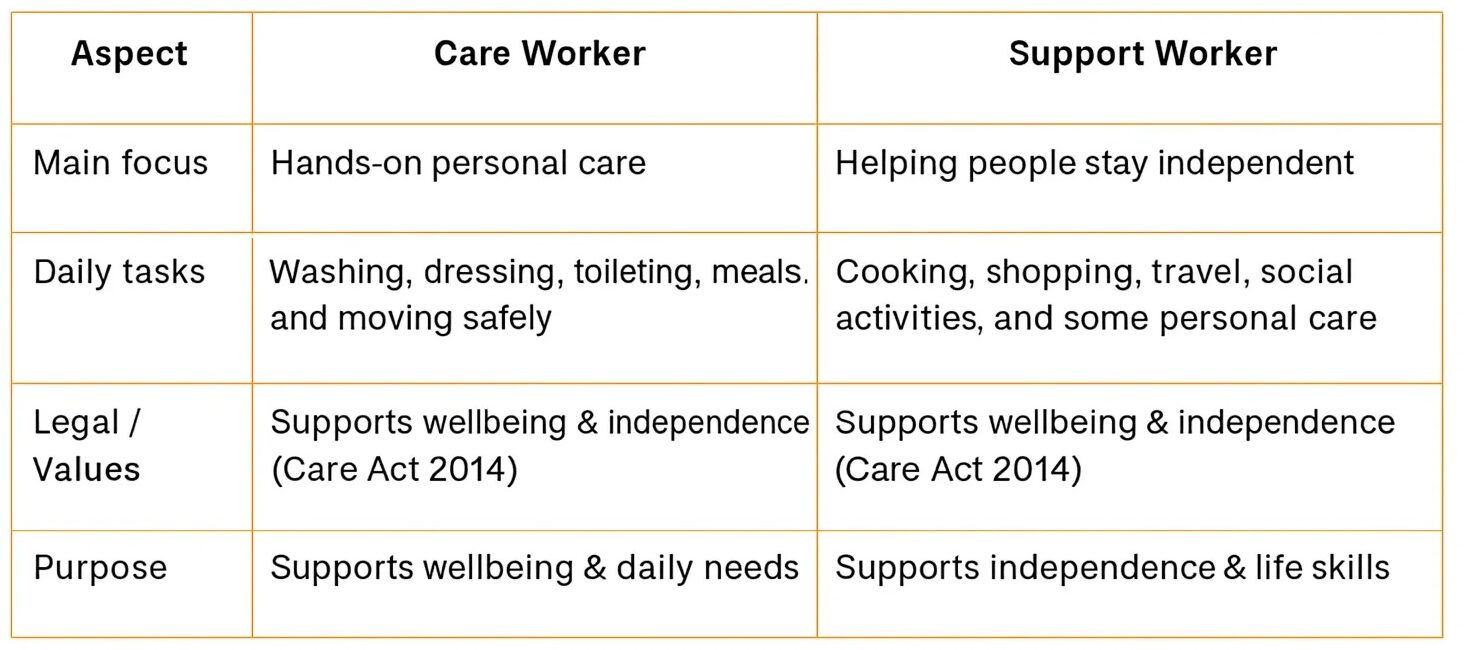
As you can see, the two roles share many responsibilities, but their main focus is different. For example, care workers spend most of their time on personal care. They help people with daily needs like washing, dressing, and moving safely. At the same time, support workers focus on independence. They help people take part in everyday activities, such as shopping, cooking, or social events.
It is also important to know that job titles can be confusing. In fact, the work a person does depends on the employer and the needs of the person being supported. Overall, both care workers and support workers aim to make life safer, easier, and better for the people they help.
What Does a Care Worker Do?
This is what a care worker does day to day:
- Help people wash, dress, bathe, and use the toilet
- Support eating and drinking safely
- Assist with moving around using wheelchairs, hoists, or walking aids
- Remind or give medication and keep records
- Handle light household tasks like cleaning, laundry, and shopping
- Watch for changes in mood, health, or mobility and note them
- Provide companionship and encourage hobbies or activities
Who they usually support
Care workers mainly support older people, often those with frailty or dementia, and they also help adults with physical disabilities or long-term conditions. Most of the time, they work in people’s homes or care homes. It’s worth noting that the care worker, or care assistant, is the most common frontline role in adult social care. Because of this, their work has a big impact on people’s daily lives.
What Does a Support Worker Do?
Here’s what a support worker’s day looks like:
- Cook, clean, shop, and help with daily routines
- Help with money, bills, and appointments
- Teach life skills like using transport or planning the day
- Join clubs, sports, college, trips and work activities
- Offer personal care when needed
- Follow plans for learning disabilities, autism, or mental health
- Build trust and help people live independently
Who they usually support
Support workers assist people with learning disabilities, autism, mental-health conditions, brain injuries, or other complex needs. They usually work in supported living or community settings. Most of the time, they support one person or a small group for a long time. This means the job focuses on building strong relationships. It also helps people reach their daily goals and become more independent.
How Do Their Daily Duties Compare?
Care workers and support workers do similar jobs, but their focus is different. Care workers spend most of their time helping with personal care and physical support. Because of this, they often help many people in a shift, either in care homes or at home visits. Support workers, on the other hand, focus on independence and life skills. This means they usually work with one person or a small group for a longer time, helping with everyday tasks and community activities.
The effort in each job also differs. Care work is more physical, including moving, handling, and personal care. Support work is more emotional, helping people with mental health, motivation, or behaviour that can be challenging. Even so, both roles share many daily tasks. Together, they make up about half of all adult social care jobs, showing how much their work overlaps.
What Skills Does Each Role Need?
Both care workers and support workers need important skills to do their jobs well. They must show empathy, patience, and reliability. They also need to communicate clearly, even with people who do not use speech. At the same time, they should notice changes in people’s mood or health and write them down. Finally, working well with others and following rules is key to keeping people safe and cared for.
Additional skills for care workers:
- Comfortable helping with personal care and respecting dignity
- Safe when moving people and stopping infections
- Physically ready for busy shifts
Additional skills for support workers:
- Help people do more on their own
- Understand learning disabilities, autism, or mental-health needs
- Confident moving around and supporting people in the community
Worth knowing: About half of frontline care and support staff do not have a formal social care qualification. But most complete the Care Certificate or other training. This helps them gain experience and learn how to do their job well.

Do Care Workers and Support Workers Need Different Training?
Care workers and support workers usually start with the same basic training. In England, new staff complete the Care Certificate. This covers duty of care, communication, safeguarding, health and safety, infection control, and working in a way that focuses on the person. Because of this, around half of adult social care staff finish the Care Certificate, and over a third also hold a Level 2 or Level 3 care qualification.
Still, the extra training depends on the role. Care workers often learn more about personal care, moving and handling safely, giving medication, and dementia or end-of-life care. Meanwhile, support workers focus on learning disabilities, autism, mental health, handling challenging behaviour, and staying safe while working in the community.
Basically, both roles share the same main training. The difference is who they help and the type of service, not the job title.
Who Do They Work With?
Care workers mainly help older people, especially those with frailty or dementia, in care homes or extra-care housing. They also help adults with physical disabilities or long-term health conditions who need daily care at home.
Support workers usually help people with learning disabilities, autism, mental-health needs, or brain injuries. They also support people in housing services, homelessness projects, or families under stress.
It is important to know that many care and support workers help people with different needs. In fact, Skills for Care counts both roles together, showing that workers often support older people, people with disabilities, mental-health needs, and those who want more independence.
Do They Work in Different Settings?
Care workers mostly spend their days in care homes or nursing homes. They also visit people at home through home-care services. Sometimes, they work in extra-care housing or short-term units after a hospital stay. Their work usually follows shifts, including nights and weekends.
Support workers mainly work in supported living homes or individual flats. They also travel to help people in the community through outreach or floating support. Many work in day services, education, or job projects for people with learning disabilities, autism, or mental-health needs.
On top of that, they may help people in hostels or housing for those at risk. Their days focus on the person’s activities and goals, and some evenings or weekends are included.
Is the Pay Different Between the Two Roles?
Care workers and support workers usually earn about the same. For example, Skills for Care 2025 says the median pay for care workers is around £12 per hour, and Indeed reports an average of £13.50 per hour. Support workers earn similar amounts, so pay is very close between the two roles.
Even though these jobs are in high demand, pay is below the UK full-time average of £39,000 a year. On top of that, about 1 in 5 staff work on zero-hours contracts, with more in home-care. Pay and benefits, like sick leave or pensions, can also vary depending on the employer.
Overall, most care and support workers earn between £11 and £14 per hour. The main factors that affect pay are the employer, location, and type of contract—not the job title.

Final Thoughts on Care Worker vs Support Worker
Adult social care in England has about 1.6 million jobs, and care and support worker roles make up over half of these. Every year, tens of thousands of vacancies open, showing strong demand. By 2040, England will need around a quarter more care jobs as the population grows older.
The Care Workforce Pathway offers clear steps for career growth. You can move from “new to care” → “care or support worker” → enhanced worker → team leader → deputy or registered manager. Some people even go on to work in nursing, social work, or occupational therapy.
Knowing the difference between care worker and support worker makes it easier to choose the right job. If you like helping people with daily personal care, care work is a good fit. But if you enjoy helping people stay independent and take part in everyday activities, support work may suit you better.
Frequently Asked Questions FAQs
What is the difference between care and support?
- Care helps with personal needs like washing, dressing, and eating. Support helps people stay independent and join daily or community activities.
What is the difference between care and support needs?
- Care needs are about hands-on help. Support needs focus on independence and life skills.
What is another name for a support worker?
- They can also be called care and support workers, support assistants, or key workers.
What are the duties of a care and support worker?
- They help with personal care, daily tasks, medication, chores, emotional support, and building independence.
Is a care worker the same as a support worker?
- Not exactly. Care workers focus on personal care. Support workers focus on independence and daily life skills.
What is the role of a care worker?
- A care worker helps with personal care, daily tasks, mobility, medication, and emotional support at home or in care settings.
What qualifications do you need to be a care support worker?
- Most start with the Care Certificate. Some also take Level 2 or 3 care qualifications, depending on experience.