
Legislation and policy often sound similar. So people usually think legislation and policy are the same. But the fact is, there’s a day-night difference between them. You can’t understand it properly until you know the difference between legislation and policy. It’s the only way to differentiate the two words. So, what’s the difference?
Legislation is the law. The government and Parliament make it mandatory for everyone to follow it. Laws set the rules that keep people and organisations safe and fair. At the same time, policy is a plan. Governments and organisations write policies to show how they will follow the law. After that, procedures explain the steps people take every day to put policies into action. When laws, policies and procedures work together, everything stays safe, fair and organised.
Let’s dive in and see what legislation and policy are and how they work together.
What Is Legislation? Simple Explanation
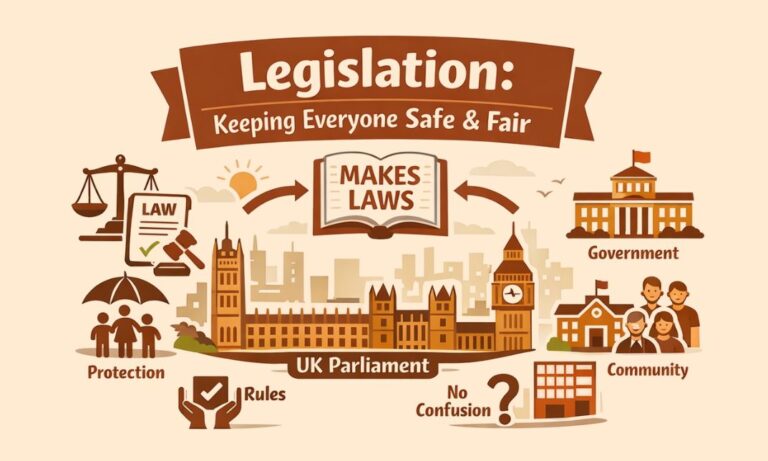
Legislation is the law. It sets the rules that everyone must follow, including people, businesses, schools, and organisations. Because of these rules, people stay safe, their rights are protected, and things are fair for everyone. In the UK, the government and Parliament make these laws. They explain clearly what is allowed and what is not. Without these laws, there would be confusion, and people would not have protection.
Main Characteristics of Legislation
Here are the main features that make legislation important:
- Legal authority – Laws have absolute power. Everyone must follow them. Breaking a law can cause trouble.
- Applies to everyone – Everyone, including people and organisations, must obey the rules. No one can ignore them.
- Difficult to change – Laws stay for a long time. Any change must go through Parliament and take time.
Real Examples of Legislation
- Care Act 2014 – Protects adults who need care and support. It makes sure they stay safe and receive the help they need.
- Children Act 1989 – Keeps children safe and makes sure they are looked after. It also protects them from harm.
- Equality Act 2010 – Promotes fairness and stops discrimination. People are treated equally in schools, workplaces, and daily life.
What Is a Policy? Explained for Beginners
A policy is a clear plan that shows how an organisation will act. It is not a law, but it helps people make the right choices. Because of this, policies keep work fair, safe, and organised. Everyone knows what to do and what is expected.
Policies work in different ways depending on who makes them. Government policies guide the country to reach its goals. Workplace policies tell staff how to behave and the steps to follow. When both work together, everyone understands the rules, and things run smoothly.
Key Characteristics of a Policy
Here’s what makes a policy important:
- Not a law – Policies show what to do, but they are not laws. They do not have legal power.
- Based on values and goals – They explain what the organisation cares about and what it wants to achieve.
- Easy to change – Policies can be updated quickly when things change, or new rules are needed.
Common Policy Examples
Here are some common types of policies:
- Equal Opportunities Policy – Makes sure everyone is treated fairly. No one is left out at work or school.
- Safeguarding Policy – Protects children and vulnerable adults from harm. It keeps them safe.
- Health and Safety Policy – Helps people stay safe at work. It prevents accidents and keeps everyone secure.
Difference Between Legislation and Policy
At first, legislation and policy might look the same, but they are totally different. Legislation means law, and policy is a guide. Legislation tells everyone the rules they must follow. Meanwhile, policy shows people or organisations the steps to reach their goals.
On a closer look, the difference becomes apparent. Laws have legal power and are hard to change. Policies work a bit differently. They guide actions and decisions and can be updated when needed. Laws apply to everyone, while policies are made by specific organisations or governments to keep things fair and organised.
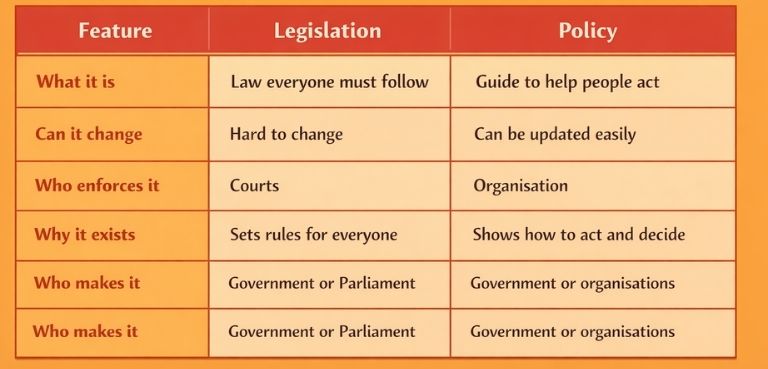
This table makes it easy to see the main differences quickly.
How Legislation, Policy, and Procedures Work Together
Legislation, policy, and procedures work together. Think of them as a circle, where each one depends on the other.
Legislation comes first. Because it is the law that everyone must follow. Without it, there is no clear rule about what is right or wrong. Next comes policy. A policy shows how an organisation will follow the law. It guides staff and explains why specific actions are important.
Procedures come last. They tell staff the exact steps to take every day. For example, a safeguarding procedure shows what to do if a child is at risk. The policy explains why it is important, and the law makes it a must.
Laws instruct you on what to do. Policy explains why it matters. Procedures show how to do it. Together, they form a system that protects people, keeps work safe and makes sure rules are followed.
What Are Procedures? Simple Meaning
Procedures are instructions that show how to do a task correctly. They mainly focus on action. Specifically, not just rules. Without procedures, even the best policies stay on paper and do not work in real life.
Procedures follow policies and make them easy to use. A policy explains why something is important. A procedure shows the order of actions and how to do them the right way. This helps staff know exactly what to do and complete tasks safely and properly.
Policy and Procedure Example
Think about a safeguarding policy. It explains that the organisation will keep children safe and why this is important. The procedure shows what to do in real life:
- Tell the designated staff member right away if you see a risk.
- Write all the details clearly so nothing is missed.
- Follow up to make sure the child stays safe.
The policy explains why these actions are important. The procedure shows how to do them correctly. Together, they help everyone know exactly what to do, keep children safe and follow the law. This makes the rules easy to use and guides staff to act confidently every day.
How Legislation Shapes Organisational Policies
Here are the key ways legislation shapes policies:
- Turning laws into policies – Organisations take the rules from the law and create policies that show staff exactly what to do. This makes following the rules much easier.
- Making policies match the law – Policies must follow the law. If they don’t, people can get hurt, and the organisation can face problems.
- Keeping people and the organisation safe – Following the law protects everyone and helps the organisation run properly. Policies explain the law in a way that staff can use in their daily work.
Who Makes Legislation and Policy in the UK?
In the UK, making laws and policies is a team effort. The government comes up with ideas and plans the rules. Parliament talks about ideas. If they vote “yes”, the idea becomes a law. At the same time, Scotland, Wales and Northern Ireland have their own governments. They can make laws and policies for their own regions. This makes sure the rules work for the whole country and also meet local needs. Basically, the government, Parliament, and local administrations work together to keep laws clear and simple.
Primary and Secondary Legislation Explained Clearly
Parliament makes the main laws. It sets the big rules that everyone must follow. A good example is the Equality Act 2010, which protects people from discrimination.
Secondary legislation comes from a primary law. It gives the details and shows how the law works in real life. The Equality Act tells workplaces how to report discrimination cases correctly.
Both types of legislation function together, making them essential. Primary legislation gives the main rules. Secondary legislation shows the practical steps. Together, they turn the law into clear steps people can follow.
Final Thoughts on the Difference Between Legislation and Policy
Understanding the difference between legislation and policy makes rules easier to follow. Legislation sets the law, and policies show how to follow it in real life. Knowing this difference helps you understand what to do and how to act.
When you can tell rules from guidance, you can work with confidence. You follow procedures the right way, keep people safe and help organisations run smoothly. This knowledge also turns confusing rules into simple steps. It helps you make wise choices, handle daily tasks safely, and work or study more effectively.
FAQs
1. What’s the difference between legislation and workplace policies?
Legislation is the law that applies to all of us. Policies are rules made by organisations to show how to follow the law.
2. Do policies come from legislation?
Yes. Policies take the law and turn it into practical rules for daily work.
3. Is GDPR a policy or legislation?
GDPR is legislation. It’s a law about data protection. Organisations create policies to follow.
4. What is legislation and policy in health and social care?
Legislation sets the legal rules. Policies guide staff on how to provide safe care.
5. What are policies and legislation?
Legislation is law. Policies are guidance that explains how to act legally and correctly.
6. What are the 4 types of policies?
Common types are: Health and Safety, Equal Opportunities, Safeguarding and Data Protection.
7. What are the 5 P’s of policy?
The 5 P’s are Purpose, Principles, Process, People, and Practice. They help shape clear policies.