
Feeling anxious at work can turn a normal day into a heavy one. Your heart races and thoughts move too fast. Even simple tasks can feel hard. You may worry about mistakes, meetings, or fitting in with your team. Still, you are not alone. In Great Britain, 964,000 workers suffered from work-related stress, depression, or anxiety in 2024/25, according to the HSE. That number shows how many people face the same quiet struggle. The good news is that small steps can help you feel calmer. Breathing, short breaks, better sleep and the right support can make work feel easier.
In this guide, you will learn why anxiety happens at work and how to manage it with care.
What is this fluttery feeling in your body?
Anxiety feels like a tiny bird trapped inside your chest. It is a feeling of worry or fear about things. You might worry about a big meeting tomorrow morning. Perhaps you fear talking to your new UK colleagues today. These thoughts often start with the words “what if.”
Actually, a little bit of worry is quite normal. It helps us prepare for hard tasks or tests. However, too much worry makes life feel very difficult. Even 25 percent of teenagers feel this way too. Truly, your body is just trying to protect you now. It releases a chemical called adrenaline into your bloodstream. This makes you ready to face a scary threat.
But work is not usually a physical threat to us. So, we must learn to calm our bodies down. The NHS offers great advice on these feelings.
Why am I feeling anxious at work?
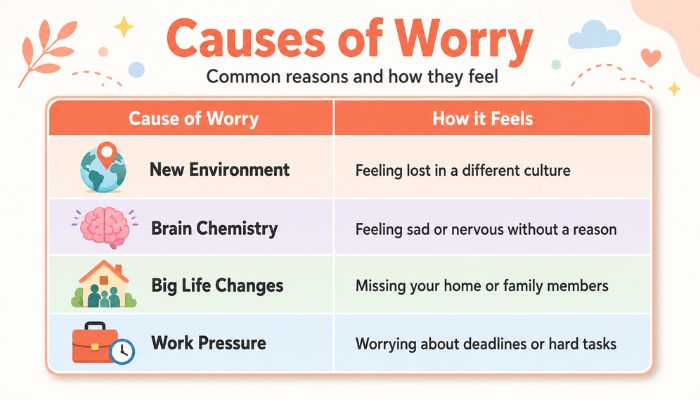
High-pressure work environments can raise your stress levels. You might struggle to understand every word during meetings. Actually, your brain is just trying to protect you from stress. New rules and different cultures often trigger these nervous feelings. Indeed, your mind might worry about making a small mistake. This reaction is normal when you start a new journey.
Specifically, brain chemistry plays a large part in your mood. Stress can change how your brain handles your busy day. Some people have genes that make them worry more easily. Traumatic events from the past can stay with you too. Moving to a new country is a massive life event. It changes your routine and your sense of safety. Racism or unfair treatment can cause deep trauma as well. Understanding these causes is the first step to healing.
What are the common signs of worry?
Everyone feels anxiety in a slightly different way today. You might feel restless or unable to sit still. Some people feel very tired even after sleeping well. Others find it hard to focus on their daily tasks. Your muscles might feel very tight and sore now. As a matter of fact, you might get annoyed with others very quickly.
Sometimes, you might find it hard to control your worry. You might even have trouble falling asleep at night. These are all signs that your body needs help. Following this, you can start to track your own signs.
How to stop feeling anxious at work?
Many people search for ways of feeling anxious at work less often. Try taking a deep breath right where you sit. Focus on the air moving in and out slowly. Following this, try to go for a short walk. Moving your body helps to clear away the fog.
Often, a five-minute break can change your whole afternoon. Besides, drinking water helps your brain stay calm and alert. You can build a toolkit to help yourself daily. Step away from your desk for a few moments. Look at a tree or the sky for a bit.
These small acts help you stay in the present. You are stronger than the worries in your head. Taking control of your breath is a powerful tool.
How do stress and anxiety differ?
Stress and anxiety are like close cousins in your mind. Stress usually comes from a specific task or a deadline. It often goes away once the task is finished.
Anxiety is a bit different because it stays with you for a longer period. It can stay even when there is no clear danger. Think of stress as a reaction to a big event.
Actually, anxiety is more about how you feel inside. Both feelings deserve your attention and care right now. Naturally, you can learn to manage both over time.
Can the 4-7-8 breathing method help?
This simple trick calms your heart rate very quickly. Specifically, breathe in quietly for four slow seconds. Then, hold your breath for seven seconds if possible. Finally, exhale through your mouth for eight long seconds. Repeat this cycle four times when you feel panicky. It acts like a reset button for your nerves.
Well, your body cannot stay upset while you breathe slowly. You can do this at your desk very quietly. No one will even know you are doing it. It is a secret tool for your busy workday. Using this method helps you stay in the present.
Is keeping a thought diary useful?
Writing down your worries can clear your heavy head. It is like moving thoughts from your brain to paper. You can write it down in a notebook or use a phone app. When you feel worried, write down exactly why. Then, look at the words and ask some questions, like:
- Is this worry based on a real fact? Or
- Is it just an opinion in your head?
Often, our minds predict the very worst-case scenario. Challenging these thoughts makes them feel much smaller. Actually, you have overcome many hard things before now. Remind yourself of your past wins and your strengths. This helps with managing anxiety at work every single day.
How do I sleep better at night?
Sleep is very important for your mental health today. Try to get eight hours of rest every night. Go to bed at the same time each evening. Avoid looking at your phone right before you sleep. The blue light can keep your brain awake longer.
Instead, try reading a book or listening to music. Make your bedroom a calm and quiet space now. Well, a rested mind handles stress much better. You will feel stronger when you walk into work. Good sleep helps you stay patient with your colleagues. It is a simple way to care for yourself. Following this routine will change how you feel.
Should I speak to a professional?
Asking for help is a very brave thing to do. You do not have to carry this alone. Talking to a therapist can help you find triggers. They can show you new ways to manage worry.
In the UK, you can visit a GP in the UK for guidance. They can guide you to the right care. The NHS talking therapies service is free to use. Sometimes, doctors might suggest medicine to help you feel better. This is just like taking medicine for a cold. It helps your body get back to health. Besides, talking to a trusted friend can also help. Just voicing the words can make you feel lighter.
How should I help a nervous colleague?
You might notice a teammate who seems very nervous lately. They might struggle to finish their tasks on time. Supporting them can make the whole team much stronger.
Start by listening to them without any judgement today. Ask them what might make their day easier. Perhaps they need a quieter desk or more breaks. Clear communication helps reduce their hidden fears and worries.
Be kind and patient as they learn to cope. A supportive workplace helps everyone do their best work. You are managing someone with anxiety at work with kindness.
Simple ways to feel better
- Take deep breaths whenever you feel a bit rushed.
- Step outside for fresh air during your lunch break.
- Listen to calm music while you do your tasks.
- Keep drinking water to remain hydrated and alert.
- Eat healthy snacks like fruit for better energy.
- Smile at a colleague to build a friendly bond.
Can I change my work environment?
You can change small things to feel more comfortable. Bring a plant or a photo to your desk. These things can make a cold office feel warmer. Try to organise your tasks into a simple list. Crossing off items gives you a sense of win.
Also, try to avoid too much caffeine or coffee. Caffeine can make your heart race like anxiety does. Drink water or herbal tea to help maintain hydration.
Truly, a calm space leads to a calmer mind. You have the power to shape your surroundings. Take small steps to make your workspace feel safe.
What are grounding exercises?
If you feel a panic attack coming, try this. Look around and name five things you can see. Then, name four things you can touch right now. Listen for three things you can hear in the office. Find two things you can smell near your desk. Finally, name one thing you can taste or imagine. This is called the 5-4-3-2-1 technique for calm. It pulls your mind away from scary future thoughts. It forces you to notice the world around you. Suddenly, the racing thoughts start to slow down. You are back in control of your own body.
How to set daily goals?
Do not try to do everything all at once. Break big projects into tiny, manageable steps today. This makes the work feel less like a mountain. Celebrate every small task that you finish well. Actually, being realistic about your time is very helpful.
If you feel overwhelmed, it is okay to say no. You do not have to please everyone every second. Focus on doing one thing at a time with care. This reduces the pressure you feel on your shoulders. You will find that you get more done. Naturally, you will feel more confident as you work.
Stay strong in the UK
- Join a local group to meet new friends nearby.
- Visit a park to enjoy the green UK nature.
- Learn a new hobby that makes you feel proud.
- Talk to your family back home for extra love.
- Practice your English to feel more confident.
- Keep a list of things you like about yourself.
Where can I find UK support?
There are many places to turn if you struggle. You can speak to your GP for quick support. The GOV.UK mental health page lists helpful guides too. Your company might have a special help program too.
Many offices have “Mental Health First Aiders” on site. These people are trained to listen and help you. Never feel ashamed for needing a bit of support. Everyone needs a helping hand at some point. You are making a great life for yourself here. Take small steps and keep moving forward.
Final Thoughts
Feeling anxious at work does not make you weak at all. Focus on the things you can control right now. You cannot control what others think or say. But you can control how you care for yourself. Eat healthy food to keep your body very strong. Move your body every day to lift your mood. Surround yourself with people who make you feel good.
Actually, you are learning and growing every single day. With time, these feelings will start to fade away. You will find your rhythm in your new job. Keep being brave and keep being yourself always. Your hard work will surely pay off in the end. Truly, you have the strength to succeed here.
(Frequently Asked Questions (FAQ)
1. Should I quit my job if it gives me anxiety attacks?
- Do not quit in a rush. Try to speak with your GP, manager, or HR first. Ask for changes like lighter tasks, more breaks, or a quieter space. If the job still harms your health, then leaving may be the right step.
2. How do you deal with anxiety at work?
- Start with small actions. Breathe slowly. Take a short walk. Drink water. Write down what is worrying you. Then handle one task at a time. You do not need to fix the whole day at once.
3. What is the 3-3-3 rule for anxiety?
- The 3-3-3 rule helps you come back to the present. Look at 3 things. Listen for 3 sounds. Move 3 body parts. It gives your mind something simple to focus on.
4. Why does my workplace make me feel anxious?
- Your workplace may feel stressful due to pressure, deadlines, unclear rules, or fear of making mistakes. For immigrants, language, culture, and fitting in can add more stress. Your body reacts when it feels unsafe.
5. What are 5 warning signs of anxiety?
- Common signs include a racing heart, fast thoughts, poor sleep, tight muscles, and trouble focusing. You may also feel tired, restless, or easily upset. These signs mean your mind needs care.
6. Is it normal to always be anxious at work?
- Feeling anxious sometimes is normal. Feeling anxious every day is not something to ignore. It does not mean you are weak. It means you may need support, rest, and a safer way to handle work stress.