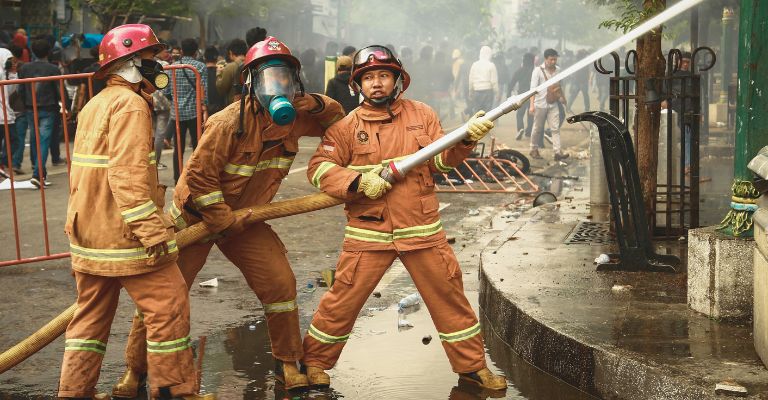
Fire signs keep people safe by showing what we should do and what we should avoid around fire. For example, fire prohibition signs warn us about dangerous activities, such as smoking or lighting a flame. Meanwhile, fire equipment signs point out tools we can use to fight fire, such as extinguishers and hoses. At the same time, their bright colours and clear symbols help everyone notice and understand them quickly.
Also, different fire signs serve different purposes. They use simple rules for colours, shapes, and placement so people can recognise them easily. As a result, we see fire equipment signs in red, while prohibition signs have a red circle with a line through it. By learning these basics, we can act quickly, stay safe and follow safety rules at work or in public places.
Here’s a question for you: what colour would you expect fire equipment signs to be? Let’s find out!
What Are Fire Prohibition Signs?
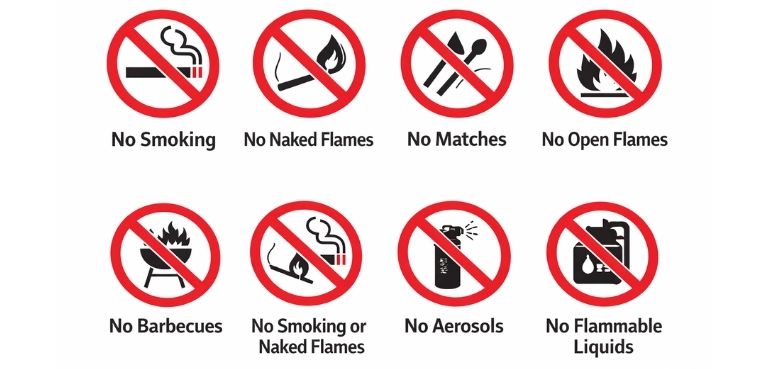
Fire warning signs tell people what they must not do near fire. They use a red circle with a line through it to indicate dangerous actions, such as smoking, lighting a fire, or using fire in the wrong place. That’s how these signs help prevent accidents and keep people safe at work, in public areas, and in factories.
At the same time, signs against fires are different from other fire safety signs. Warning signs indicate potential dangers, like wet floors or electrical hazards. Mandatory signs tell people what they must do, like wearing safety gear or following safety steps. This makes prohibition signs easy to understand and act on quickly because they only show what to avoid.
Also, putting signs in the right place helps everyone notice them fast. Their bright colours and clear symbols guide people to follow the rules and react quickly in the event of a fire.
Fire Safety Sign Meaning – Why It Matters
Fire safety signs help people stay safe around fire. They show what not to do, where safety tools are and how to follow emergency rules. This makes it easy for anyone to understand the message quickly, even if they cannot read the words. Clear signs can stop accidents and save lives in workplaces, public areas and factories.
These signs also warn people about danger quickly. A “No open flames” sign tells people not to light fires in unsafe areas. A “Do not smoke” sign shows that even a small spark can start a fire. At the same time, fire safety signs point out where tools like fire extinguishers, hoses, alarms, and emergency exits are. This helps people act quickly, stay safe, and protect others around them.
Besides, placing signs in strategic locations facilitates quick attention for all. Prohibition signs have a red circle with a line. Fire equipment signs are red with clear pictures. Warning signs are yellow to get attention. Once you know the basics, understanding signs takes no time at all.
Fire Equipment Signs – Colours and Standards
So, what colour are fire equipment signs? Standard signs are bright red with white symbols. The red catches your eye from far away, and the white symbols show clearly what each tool is. This way, anyone can spot the equipment fast and take action right away during an emergency.
Colour is not just for looks. It helps people recognise fire tools immediately, which can save valuable seconds when every moment counts. Red tells people there is danger and action is needed. By following the standard fire equipment signs colour, people know exactly where to look at work, in factories, or in public places.
At the same time, fire equipment signs are different from prohibition signs. Prohibition signs also use red, but they have a circle with a line to show what people must not do. Fire equipment signs show tools, guiding people to safety. This simple clarity stops mistakes and helps people react safely when needed.
Categories of Fire Signage
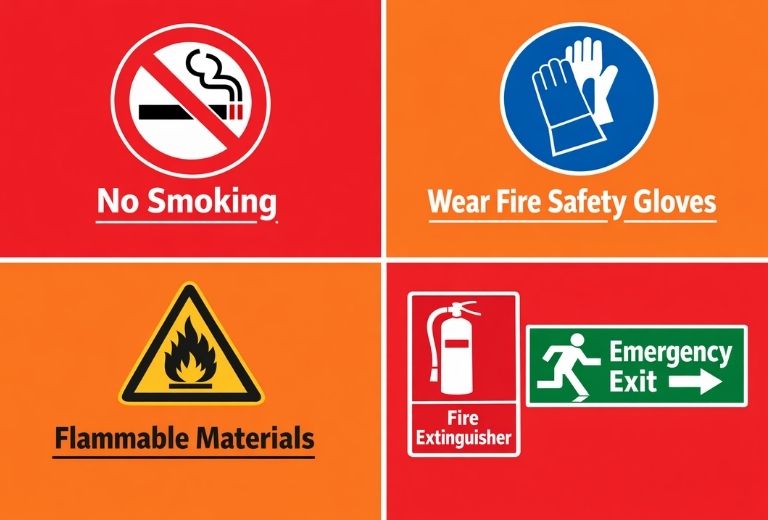
Let’s check out the main types of fire signs and their purpose:
- Prohibition Signs: Tell people what they must not do, like a “No Smoking” sign. These signs stop dangerous actions before accidents happen and help keep everyone safe.
- Mandatory Signs: Show people what they must do, like “Wear Fire Safety Gloves”. These signs make it easy to act safely and prevent problems.
- Warning Signs: Warn people about possible dangers, like “Flammable Materials”. They catch attention quickly and make people act carefully to avoid problems.
- Fire Equipment & Escape Signs: Identify the locations of exits and life-saving equipment. A “Fire Extinguisher” sign points to firefighting tools, and an “Emergency Exit” sign shows the fastest way out. In an emergency, these indications allow people to act quickly and safely.
Fire Sign Standards and Legal Requirements
Fire signs are not made for decorating the wall. Their main purpose is to protect lives during emergencies. They follow strict rules set by ISO and BS EN 7010. These rules tell us how signs should look, including their size, colour and symbols. This way, people can understand the signs quickly when every second counts.
The size of a fire sign must be big enough to be seen from far away. At the same time, the colour must follow the rules. Red shows fire equipment, green shows exits, yellow shows warnings, and blue shows actions people must take. Also, the symbols must be simple and easy to understand. Even someone who cannot read can know what to do. Signs should be placed in the right spots, like near fire extinguishers, emergency exits or areas with danger.
Employers have a legal duty to keep fire signs in good condition. This means checking them often and replacing any that are broken, faded, or missing. Not doing this can put people in danger and lead to fines or legal trouble.
Best Practices for Fire Prohibition Signs
Fire caution signs are only beneficial if people can see and comprehend them. Place them near fire hazards, entrances and equipment so everyone notices them at the right moment. When signs are in the right spot, people know what to avoid, and accidents can be prevented before they happen.
At the same time, keep the signs in good condition. Clean them regularly so dirt or dust does not block the message. Replace any signs that are damaged, faded or broken. Clear and visible signs make it easier for anyone to act quickly and safely in an emergency.
Finally, make sure everyone understands the signs. A little training or guidance helps people know what each sign means and how to act safely. When people understand the signs, they can stay calm and respond correctly in a fire. Regular reminders or drills help keep this knowledge fresh.
Common Mistakes and Misunderstandings
Points to be careful about:
- Using the wrong colours or symbols: Fire signs must follow the right colours and symbols. Wrong signs can confuse people and slow them down when every second matters.
- Hiding signs or placing them in cluttered areas: Signs must be easy to see. If they are blocked by furniture, equipment, or other objects, people might miss them in an emergency.
- Ignoring categories or staff awareness: Each fire sign has a specific purpose. Not knowing the difference between signs or failing to teach people their meaning puts everyone at risk.
- Overlooking real consequences: Bad or incorrect signage can cause accidents, injuries, or even fires. It can also create legal problems or affect insurance if rules are not followed.
- Not checking signs regularly: Signs that are damaged, faded, or missing cannot help anyone. Frequent checks make sure signs stay clear and effective.
- Assuming everyone understands signs: Do not rely on people guessing the meaning. Everyone should know what the signs mean and how to act in an emergency.
Final Thoughts on Fire Prohibition Signs
Fire signs are designed to protect lives, not to decorate. They save lives and help people stay safe. Knowing the right colours, symbols and categories makes it easy for everyone to understand what not to do around fire. Clear signs can stop accidents and keep homes, workplaces, and public areas safe.
To make signs useful, always check them often and place them where everyone can see them. Also, make sure no sign is blocked or damaged. When people can see and understand the signs, they act quickly and safely. It helps too to review your signs from time to time. Finally, make sure each sign is clear, visible, and in the right spot. A simple check can prevent accidents, protect people, and keep everyone safe.
FAQs
- What are the prohibition signs for fire?
They show what you must not do around fire, like “No Smoking” or “No Open Flames”.
- What are the rules for fire signage in the UK?
Signs must follow BS EN 7010 and ISO standards for size, colour, symbol, and placement.
- What are the 4 P’s of fire safety?
Prevent, Protect, Plan and Practise – simple steps to stay safe from fire.
- How can I create my own prohibition sign?
Use the right shape, colour, and symbol. Keep it clear and simple so anyone can understand it.
- Where can I design my own sign online for free?
Free tools like Canva, Visme and Vecteezy let you make custom signs easily.
- What does a prohibition sign look like in the UK?
It’s usually a red circle with a diagonal line across a black symbol on a white background.
- What are the 5 categories of fire signage?
Prohibition, Mandatory, Warning, Fire Equipment, and Escape or Emergency Route signs.