
How can I get into construction and move up quickly in the UK? Why do people ask this? Actually, the UK construction industry needs around 250,000 extra workers by 2028. This means beginners have huge opportunities to start a career.
To take the first step, you need to learn the basics. Most building sites ask for a CSCS card. You can get one by passing the CITB Health, Safety & Environment (HS&E) test. For the Green Labourer card, you also need a Level 1 Health & Safety in a Construction Environment course. The HS&E test costs £22.50, and the CSCS card costs £36. Always apply on the official CSCS website to avoid paying extra.
After that, choose the route that suits you best. You can start an apprenticeship and earn while you learn. You can work as a labourer to get practical knowledge or take a short college course that leads to site work. There are over 100 construction apprenticeships in different trades and technical roles. So, there are plenty of options to start and progress in the UK construction industry.
Let’s dive in and see the best ways to start and grow in the UK construction industry.
How Can I Get Into Construction?
You start by choosing the role you want, like labourer, groundworker, bricklayer, plant operator, carpenter, or a technical trade. Once you know your role, check which CSCS card and course you need. You can find all the details on Go Construct. After that, book and pass the CITB Health, Safety & Environment (HS&E) test. When you pass, apply for the right CSCS card online. These steps give you the skills and proof you need to work safely on site.
Next, start applying for entry-level jobs or apprenticeships. This helps you get hands-on experience, build your working hours, and collect proof for higher CSCS cards or NVQs. By following this path, you can learn new skills, earn money, and move up faster in the UK construction industry.
What Jobs Can You Start With in Construction?
If you’re new to construction, these entry-level roles are a great way to get started:
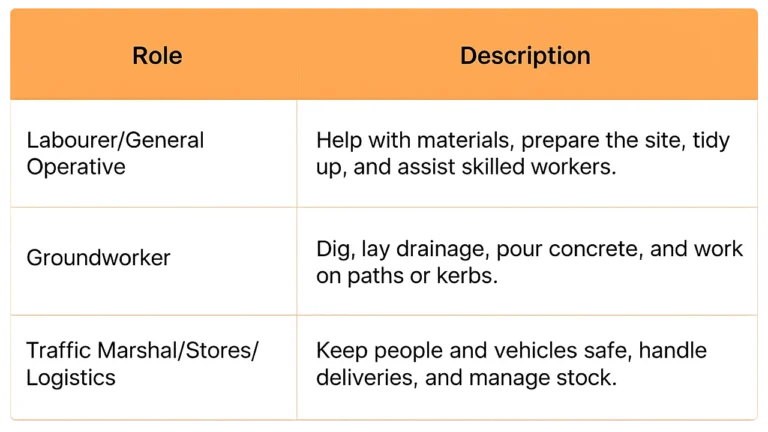
These jobs help you learn the basics and show that you are reliable. They also give you a chance to move into skilled trades. Start with small tasks and gain actual work practice. Step by step, you can build your foundation to grow your construction career.
Do You Need Qualifications to Begin?
To start as a Green Labourer, you need a Level 1 Health & Safety in a Construction Environment course or another CSCS-approved alternative. You also must pass the CITB Health, Safety & Environment (HS&E) test. After that, you can apply for your CSCS card. All the details are on the official CSCS website.
Many labourer jobs accept beginners with a CSCS card who are ready to learn. This card acts as your key to getting on-site and starting work.
What Is the CSCS Card and Why Do You Need It?
The CSCS card is the UK’s main construction ID and skill card. It shows a worker has passed the basic health and safety test and has the right training for their job. There are different cards for different jobs and skill levels. Each card has a colour that shows your role and experience. For example:
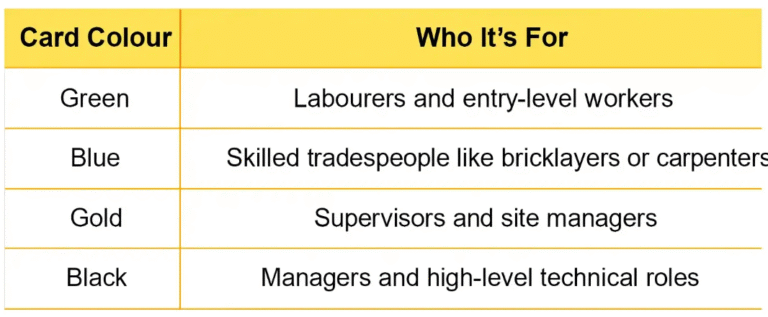
You need a CSCS card for:
- Most building sites and contractors ask for it.
- It shows that you understand health and safety rules.
- Employers can trust that you can work safely.
- It gives access to jobs on construction sites.
- The card shows your experience and skill level.
- You need it to move on to higher-level CSCS cards.
How Do You Get a CSCS Card?
Follow these simple steps to get your CSCS card:
- Step 1: Pass the CITB Health & Safety (HS&E) test. It’s valid for 2 years and costs £22.50.
- Step 2: Get the right qualification for your card type. For example, a Green Labourer card needs a Level 1 Health & Safety in a Construction Environment course.
- Step 3: Apply for your CSCS card on the official site. It costs £36, but Apprentice cards are free.
What Training Courses Help You Start?
Getting the right training is the first step to starting a strong construction career. A good place to start is the Level 1 Health & Safety in a Construction Environment course. This course is needed for a Green CSCS card and is offered by City & Guilds. Next, prepare for the HS&E test using CITB revision materials or the official app. Both the Level 1 course and the HS&E test are mandatory to get a Green CSCS Labourer card. If you want to become a supervisor later, take courses like SSSTS and SMSTS. If you want to become a supervisor later, courses like SSSTS and SMSTS can help you progress to higher roles.
How Can You Gain Experience Quickly?
Gaining site experience early sets the stage for your growth. To do this, begin by applying for entry-level roles while you finish your Level 1 course and HS&E test. Some employers may even offer support during this time. You can also use the GOV.UK Find an Apprenticeship service or contact local contractors to get a job. Also, check Go Construct to learn about different roles and career paths. Finally, doing extra hours or weekend shifts helps you learn faster and improve your skills.
Can You Join Construction With No Experience?
Yes, you can. Many people start as labourers or general operatives after they get a Green CSCS card. This first step helps you see how a site works. It also helps you learn simple daily tasks. Then you can move into a trade through an apprenticeship or an NVQ. Each new skill helps you grow and leads you to better jobs.
Now here is something many people often miss. You get real training while you work. Most sites teach you how to use basic tools, handle materials, follow safety rules and work as part of a team. These simple skills make you much stronger for the next step.
How Do You Find Your First Construction Job?
Starting a career can feel confusing at first, but a few clear steps make it easier. First, search major job boards like Find a Job (DWP) for labourer, groundworker or traffic marshal roles that require a CSCS card. At the same time, you can register with construction labour agencies. Keep your CSCS number and right-to-work ID ready so you can apply quickly.
Then, focus on making your CV stand out. Highlight your punctuality, safety awareness, manual handling skills, and any experience with tools or on-site work. Showing these qualities tells employers you are reliable and ready, which increases your chances of getting hired and moving forward in construction.
What Secret Paths in Construction Lead to Success?
Construction is more than just labouring or bricklaying. Some hidden roles can boost your career faster if you explore them. Jobs in plant operation, scaffolding or specialist trades like electrical and plumbing are in high demand and often pay more. Niche roles such as site logistics, traffic management, or material handling also give important skills and real work experience.
By trying different roles and learning new skills, you become more versatile to employers. These less obvious paths can help you reach supervisory or technical positions sooner. If you stay open to opportunities that others may overlook, you can climb the career ladder faster in the UK construction industry.
Final Thoughts on Getting Into Construction in the UK
Breaking into construction can feel hard at first. If you are asking how can I get into construction, the steps are not complicated. Start with the CITB Health, Safety & Environment test, then get your Green CSCS card. After that, take an entry-level job or apprenticeship. The cost is clear: £22.50 for the test and £36 for the card when you apply directly. Once you start working, focus on learning skills and gaining experience. Step by step, you can get higher-level CSCS cards and better-paying jobs in the UK construction industry.
FAQs (Frequently Asked Questions)
1. How can you start a career in construction?
- Get a CSCS card, pick an entry role or apprenticeship, and start learning on-site.
2. How to get into construction with no experience in the UK?
- Start as a labourer with a Green CSCS card and build your skills while working.
3. What is the best way to get started in construction?
- Do a Level 1 Health & Safety course, pass the HS&E test, then grab an entry job or apprenticeship.
4. What is the highest paid job in construction?
- Site managers, project managers, and specialist engineers top the pay charts.
5. What jobs pay $4000 a month in the UK?
- Experienced electricians, plumbers, and skilled site managers can earn around this.
6. Who earns £250k a year in the UK?
- Top directors, architects, and senior project managers reach six-figure salaries.
7. What are the 7 stages of construction?
- Concept/Planning
- Design
- Pre-construction
- Procurement
- Construction
- Commissioning
- Handover & Closeout