
So you’re aiming to become a Level 3 Teaching Assistant — brilliant! It’s a role full of purpose, where you’ll help children learn, grow, and feel supported. With your qualification in hand, you’re ready to step up and take on bigger duties in the classroom. Now, let’s talk about what you really want to know: How much does a level 3 Teaching Assistant earn UK?
Level 3 TAs are generally at the middle points of the National Joint Council (NJC) pay scale that most councils and schools follow. Outside of London, the hourly rate for this level is typically around £13.70 to £15.60 (depending on the specific grade point). It’s a little higher in London because of the extra cost of living there.
The super important thing to remember is that most TA roles are term-time only. This means you only work (and get paid for) when the children are in school, and your actual yearly take-home pay is worked out ‘pro-rata’ (meaning ‘proportionally’). Don’t worry, we’ll break down what that really means for your bank account!
What Does a Level 3 Teaching Assistant Do?
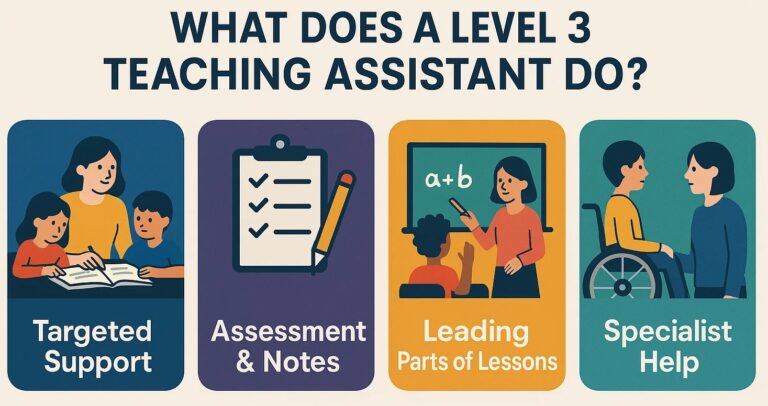
A Level 3 TA does much more than just help a teacher tidy up! You are a key part of the learning team, using your higher qualification to take on serious responsibilities.
- Targeted Support: You often lead small-group or one-to-one sessions focusing on things like phonics, maths recovery, or reading practice. This is called “targeted intervention”, and it’s a huge help to pupils who need a little extra boost.
- Assessment and Notes: You keep detailed notes on how pupils are doing (their progress and attainment) and share this feedback with the teacher or the Special Educational Needs Coordinator (SENDCo).
- Leading Parts of Lessons: Under the main teacher’s direction, you might be asked to lead specific parts of a lesson or help manage the whole class. You are trusted to deliver planned learning activities.
- Specialist Help: Level 3 TAs are frequently focused on assisting students with Special Educational Needs (SEN) to access the curriculum and do well.
If you want a deeper look into what this role really involves, responsibilities, pay, and career paths, take a look at this guide. It’s written in plain English and gives you a clear picture of What Is a Teaching Assistant Level 3 looks like in the real world.
How Much Does a Level 3 TA Earn per Hour in the UK?
Let’s look closely at the hourly rate outside of the capital.
For most local authority schools, a Level 3 TA will be placed on a grade that falls roughly on certain NJC ‘Spinal Column Points’ (SCPs). As of 2024/2025 pay rates, this commonly translates to an hourly rate of around £13.70 to £15.60.
Quick Tip: Always check the specific grade and SCP that a job advert uses, as different councils group the points differently!
If you work in or near London, you’ll see a slightly higher rate due to ‘London Weighting’ (a payment to help with the higher cost of living). This is essential to check if you live in a high-cost area!
Level 3 Teaching Assistant Pay Variations Across the UK
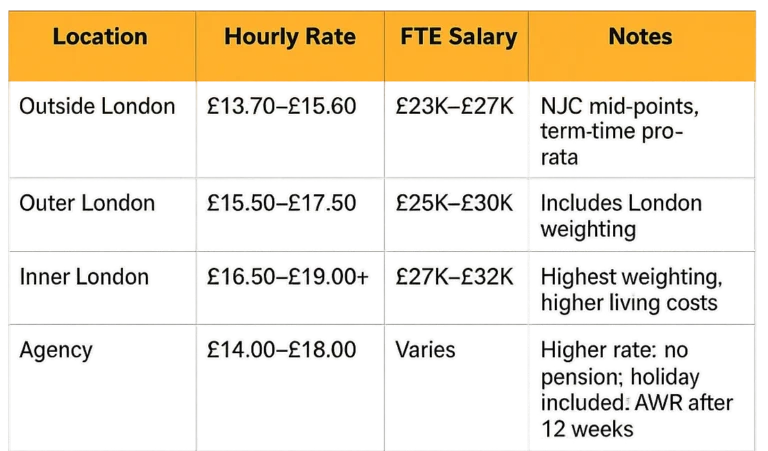
Note: Most TA roles pay for ~38–40 weeks of work, stretched over 12 monthly payments.
What Is the Average Yearly Salary for Level 3 TAs (Term-Time)?
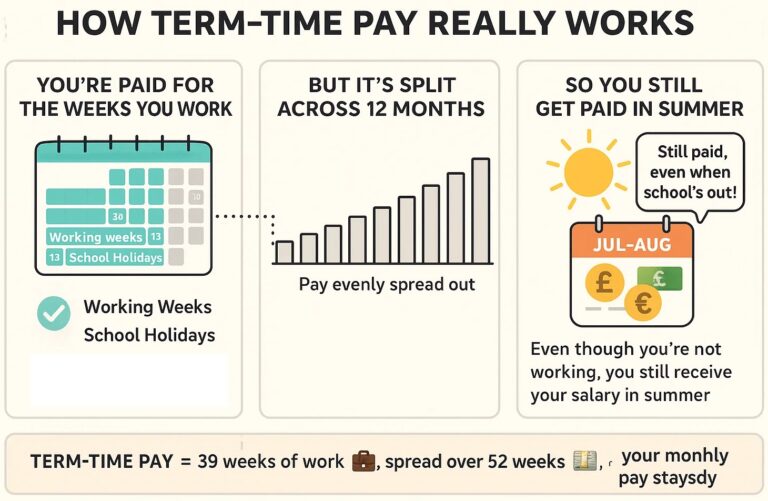
This is where the term-time contracts come in, and it can be a bit confusing at first!
If a Level 3 TA role were a full-time, all-year-round job (which it usually isn’t!), the pay would typically look like an annual salary of around £23,000–£27,000 (FTE—Full-Time Equivalent). This is the big headline figure you often see advertised.
BUT HERE IS THE CATCH: Your actual take-home pay is pro-rata. You are only paid for the weeks you work (usually about 38 or 39 weeks a year) plus your holiday entitlement. However, for budgeting purposes, your school will usually split that total pay over 12 months, so you still get a salary during the summer holidays.
This means your actual yearly take-home salary will be much less than the £23k to £27k FTE figure. Depending on your weekly hours and how many paid weeks are in your contract, your take-home might be closer to £15,000–£18,000 per year.
Does Pay Change in London and High-Cost Areas?
Absolutely, yes!
Because living in the capital (and some surrounding high-cost areas) is so much more expensive, schools must offer an extra payment called ‘London Weighting’ or a similar supplement. This helps TAs afford to live there. On similar grade points, an inclusive hourly rate (including that extra money) can often reach £16 to £19+ in Inner or Outer London. It makes a real difference!
Starting Pay vs Experienced Level 3 Teaching Assistant Pay
When you first start in a Level 3 role, you’ll usually be placed on the lowest pay point (Spinal Column Point) for that specific grade.
The good news is that in most local authority schools, if your performance is satisfactory, you will increment annually. This means you move up one pay point each year until you reach the top point of the grade you were hired in. So, your pay gradually increases over time simply by staying in the role.
Do SEN Duties or HLTA Progression Increase Pay?
Yes, they often do! This is a great way to grow your earnings:
-
- Special Educational Needs (SEN): If your role focuses heavily on supporting pupils with complex SEN, or if you hold specific SEN qualifications, the job may be advertised on a higher grade/pay scale to reflect the extra responsibility and skill. Sometimes you may get an additional SEN allowance on top of your standard pay.
- Higher Level Teaching Assistant (HLTA): This is the next natural step up! HLTAs are qualified to cover classes and lead learning without a teacher present. This role is always graded higher and will see you earning significantly more, often putting you on a full-time equivalent salary of £27,000+ outside of London.
School Contract vs Agency Work: Which Pays More?

An interesting fact is that agency jobs can look exciting because the hourly pay jumps out at you. But when you dig deeper, school contracts usually work out better long-term. You get a strong pension, steady hours, and paid holidays already included in your salary, and all of that adds up fast.
After 12 weeks in the same school, agency staff should get AWR parity, meaning pay should match the school’s scale. Agency work suits people who want flexibility or are new to and testing different schools. School contracts win for stability, long-term benefits, and career progression. So, when comparing, don’t just look at the hourly rate—look at the full package.
A Quick Word on Pensions
Here’s something many people miss: the Local Government Pension Scheme (LGPS). Most school-contract TAs get it. It’s employer-matched, meaning the school pays extra money into your pension every month — on top of your salary. Over time, that adds up. Agency roles rarely offer this level of support, so even if the hourly rate looks higher, you could lose out long-term.
A strong pension isn’t just paperwork; it’s future security!
How to Increase Your Level 3 TA Salary (Skills & Courses)
Want to boost your pay packet? Focus on these areas:
- HLTA Assessment: This is one of the most significant steps. Passing the HLTA assessment opens the door to higher-graded roles and higher pay.
- Specialist CPD: Take Continuing Professional Development (CPD) courses in high-demand areas like:
- Specific SEN (e.g., Autism, ADHD)
- ELSA (Emotional Literacy Support Assistant)
- Phonics/Reading schemes
- Behaviour support
- Apply for Higher-Graded Posts: Use your specialist skills and experience to apply for roles specifically graded higher than a standard L3 TA, such as an SEN Lead TA or a Specialist Intervention Assistant.
Final Thoughts: How Much Does a Level 3 Teaching Assistant Earn UK — What to Expect
Wrapping this up, the Level 3 Teaching Assistant role is challenging, rewarding, and essential—and you deserve to be paid fairly for your expertise! The single best piece of advice is never to compare roles based only on the big, headline FTE annual salary figure. When you look at a job advert, always check these four things to see what you’ll actually get:
- The SCP/Grade: What pay point is the school using?
- The Hours per Week: How many actual hours will you work (e.g., 25, 30, or 32.5)?
- The Paid Weeks: Is it 38, 39, 42, or more? (This includes your holiday pay).
- Any Allowances: Is there London Weighting or an SEN payment included?
Checking these details will give you the true, honest picture of your take-home pay. Good luck!
Ready to take the next step and put your Level 3 skills into action? Train in a way that fits your life and gives you real confidence in the classroom. Join the Level 3 Teaching Assistant course at Unified Course!
Frequently Asked Questions (FAQ)
1. How much do Level 3 teaching assistants make in the UK?
- Around £15,000–£18,000 a year or £13.70–£15.60 per hour.
2. Can a Level 3 TA become a teacher?
- Yes — with extra training like a degree or QTS route.
3. How much do Level 4 teaching assistants earn?
- Usually £18,000–£22,000 a year (term-time).
4. How much does a TA get paid per hour in the UK?
- Around £11–£15 per hour, depending on location.
5. What are TA pay scales?
- Most follow local council pay bands (NJC scale).
6. Is being a TA a stressful job?
- It can be busy, but a supportive school makes a big difference.
7. What is the difference between Level 2 and Level 3 TA?
- Level 3 has more responsibility and learning support tasks.
8. How much are TAs paid per hour?
- Usually £11–£15 per hour.
9. Can a Level 3 TA cover a class in the UK?
- Yes — many schools allow it with planned work.
10. Why are schools getting rid of TAs?
- Mostly due to school budget pressures and restructuring.