Have you ever looked up at a plane and wondered about the person flying it? Many people dream of sitting in that cockpit and traveling across the world. However, one big question usually comes up before anyone starts flight school. You likely want to know exactly how much does a pilot earn UK.
To give you a quick answer, a pilot in the UK can earn £24,000 to £170,000. Your specific salary depends on your experience, your airline, and the type of plane you fly.
The UK aviation industry has changed quite a lot over the last few years. After the global travel pauses of 2020, the industry finally saw a huge recovery in 2023. Now, airlines are desperate for new staff to fly their growing fleets of aircraft. Because of this demand, salaries for many flight crews are beginning to rise again.
How Much Does a Pilot Earn UK?
When you first finish flight school, you are usually called a “cadet” or a “second officer”. At this stage, you have your license but very little experience in a real airliner. Consequently, your starting salary will be the lowest point in your professional career.
Most new pilots at large airlines start with a salary between £24,000 and £30,000. However, some smaller companies might pay even less during the first few months of your employment. This is often because you are still completing your “line training” with a senior instructor.
Regional vs. Major Carriers
Different types of airlines offer very different pay scales for new starters. For example, a regional airline like Loganair flies smaller planes on shorter routes across the UK. Because their planes are smaller, they often pay less than a massive company like British Airways.
Major carriers usually offer better starting packages to attract the best students from flight schools. Additionally, these big airlines often provide a faster path to earning a higher wage. If you work for a budget airline like Ryanair, your pay might depend more on how many hours you fly.
Training Pay
You might wonder if you get paid while you are still learning the airline’s specific rules. Most UK airlines will pay you a basic wage while you finish your final exams. However, this “training pay” is usually much lower than your standard monthly salary. Once you pass your final check-ride, your pay will jump up to the full First Officer rate.
What Factors Determine How Much Does a Pilot Earn UK?
Many different things can change the amount of money you see on your monthly payslip. Firstly, the number of hours you have flown in your life is the most important factor. Airlines use “pay scales” that give you a raise for every year you stay with the company.
Flight Hours
In the aviation world, experience is measured in hours rather than just years of work. A pilot with 5,000 hours of experience is much more valuable than someone with only 500 hours. Consequently, senior pilots earn significantly more money because they have proven they can handle difficult situations.
Short-Haul vs. Long-Haul
The distance you fly also changes how much does a pilot earn UK every year. Short-haul pilots fly across the UK and Europe, often returning home every single night. In contrast, long-haul pilots fly across oceans to places like New York, Dubai, or Singapore. Long-haul flying usually pays more because it involves larger planes and more time away from home.
Aircraft Type
The size of the plane often dictates the size of the paycheck for the flight crew. Flying a massive Boeing 787 Dreamliner usually results in a higher salary than flying a small turboprop plane. This is because larger planes carry more passengers and generate more profit for the airline.
Base Location
Where you live in the UK can also affect your total earnings due to local allowances. Pilots based at London Heathrow or London Gatwick often receive extra money to help with high living costs. If you are based in a cheaper city, your basic salary might stay the same, but your allowances could be lower.
What Additional Benefits and Allowances Do UK Pilots Receive?
UK pilots earn more than just a basic salary. They receive many extra payments and perks every month. These benefits increase their total income throughout the year. Additional allowances make the career profitable.
Extra Pay for Flying Hours
Pilots get “Flight Duty Pay” every month. The airline pays them for every hour they fly. Therefore, your income grows when you fly more often. For instance, the summer months bring many flights and big paycheques. This system rewards pilots for their hard work during busy seasons. Moreover, this extra cash helps during the quieter winter months as well. Your monthly cheque depends on your flying schedule.
Allowances for Travel
Airlines give pilots “Per Diems” when they stay away from home. These are cash payments for meals and daily needs. You receive this money whether you stay in Paris or New York. Many pilots save this cash to boost their total earnings. Consequently, these allowances offer a great bonus for seeing the world. Also, the airline covers your hotel costs during these trips. This makes travel even more enjoyable.
Security and Health Benefits
UK airlines provide excellent pension schemes for their staff. These plans help you save money for your old age. Furthermore, most pilots enjoy several other important perks:
- Private healthcare allows you to see a doctor quickly.
- Life insurance protects your family and provides peace of mind.
- Retirement funds grow steadily over your entire career.
- Loss of license insurance covers you if you cannot fly.
These extras make a pilot’s total earnings much more valuable. Indeed, the financial package offers great long-term stability for your daily life.
What Does the 2026 Commercial Pilot Pay Chart Show?
To help you compare different companies, we have created a simple pay chart for major UK airlines. Please remember that these numbers are estimates based on recent data from 2026. Salaries can change based on new union agreements and company performance.
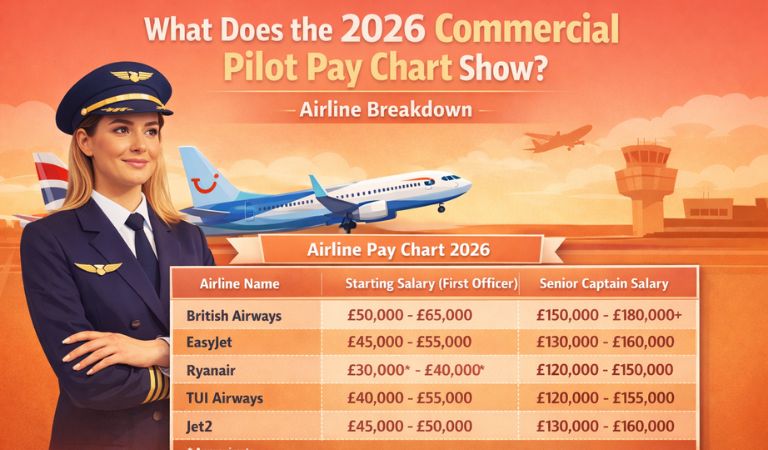
As you can see from this chart, there is a massive difference between a junior and a senior role. When you finally “get your fourth stripe” and become a Captain, your salary almost doubles. This is the goal that every young pilot works toward during their first decade of flying.
What Additional Benefits and Allowances Do UK Pilots Receive?
Your basic salary is only one part of the money you receive every month. Pilots actually get several different types of extra pay that add up to a larger total. Understanding these extras is vital when asking how much does a pilot earn UK pilots in reality.
- Sector Pay: This is a small payment given to you for every single flight you complete.
- Duty Pay: You receive an hourly rate for every hour you are at work, even on the ground.
- Overnight Allowances: When the airline makes you stay in a hotel, they give you money for food.
- Pension Schemes: Most UK airlines put extra money into a savings account for your retirement.
- Staff Travel: This is a famous benefit that allows you to fly on holiday for a very low price.
Sector pay can add several thousand pounds to your yearly income if you fly a busy schedule. Furthermore, the pension contributions from big airlines like British Airways are very generous compared to other jobs. Staff travel is not exactly “cash,” but it saves you a lot of money on family vacations.
How Long Does It Take to Reach the Highest Pilot Salary Brackets?
You cannot become a high-earning captain overnight; it takes a lot of patience and good safety records. Most pilots start as a first officer and stay in that role for several years. Specifically, it usually takes about three to five years to become a “senior first officer”.
Once you reach the “senior” level, your salary will increase to a very comfortable middle ground. However, the biggest jump happens when the airline decides you are ready for “command”. The “Time to Command” can vary wildly depending on which airline you choose to work for.
Key Factors for Faster Growth
Not every pilot follows the same timeline. Many things can make your progress faster or slower. For example:
- Airline Type: Major carriers pay more than regional or charter airlines.
- Aircraft Size: Flying long-haul wide-body jets often yields higher pay.
- Seniority System: Most UK airlines use a “last in, first out” seniority list.
- Market Demand: A shortage of pilots can lead to faster promotions.
In a fast-growing airline like Ryanair or easyJet, you might become a captain in just five to seven years. In a more traditional airline like British Airways, it could take fifteen years or even longer. This is because these airlines use a “seniority list” to decide who gets promoted first.
The seniority list is a very simple rule: the person who has been there the longest gets the promotion. Therefore, if you join a company when you are young, you will eventually reach the top pay scales. Similarly, your place on this list determines which holidays you get off and which routes you fly.
Moving Up the Ranks
Promotion depends on your total flying hours and airline seniority. You can typically move to a role within three years.
- First Officer: Salaries usually sit between £35,000 and £60,000.
- Senior First Officer: This role often pays up to £85,000.
- Flight Hours: You need at least 1,500 hours for a full license.
Transitioning from a co-pilot to a captain is a major milestone. This step often takes between four and ten years. It depends heavily on the airline’s size and recruitment needs.
Is the ROI of Flight Training Worth the Potential Salary?
Becoming a pilot costs a lot of money up front. Many people wonder if the high salary justifies the initial debt. You must weigh the training fees against your future earnings carefully.
The Cost of Flight Training
Training to be a pilot in the UK is very expensive. Most students pay between £70,000 and £130,000 for a full course. This price often covers flight hours, ground school, and exams. Furthermore, you might need to pay for your own type rating later. This extra qualification can cost another £20,000. Most people take out large loans to cover these high bills.
Starting Salaries and Debt
You will likely earn a modest wage in your first few years. Junior pilots often start on roughly £24,000 to £30,000. Consequently, monthly loan repayments can feel very heavy at first. You must manage your budget tightly during this early stage. However, your pay will increase as you gain more experience and flying hours.
Long-Term Financial Gain
The real return on investment appears after five to ten years. Senior First Officers and Captains earn much higher wages.
- Mid-career: You might earn £60,000 to £90,000 annually.
- Senior Captains: Top earners at major airlines make over £150,000.
- Benefits: Many airlines offer great pensions and travel perks.
- Job Security: Skilled pilots usually enjoy stable, long-term employment.
Over a thirty-year career, a pilot can earn millions of pounds. Therefore, the initial training cost is a small fraction of lifetime earnings.
Important Risks to Consider
The path is not always smooth or guaranteed. You should consider the following risks before you start.
- Medical Fitness: You must pass strict health checks every year.
- Market Trends: Economic downturns can slow down airline hiring.
- Training Failure: Some students struggle to pass the difficult flight tests.
- Interest Rates: Higher interest rates make your loan cost more over time.
Conclusion
The career outlook for 2025 and beyond looks very bright for new pilots entering the market. Airlines are expanding their routes and buying hundreds of new aircraft that will need fresh crews. If you start your training now, you could be in a high-paying cockpit within just a couple of years.
Determining how much does a pilot earn UK depends on how much effort you put into your career. While the starting wages are modest, the potential for growth is much higher than in most other industries. If you love flying and stay dedicated, you can earn a fantastic living while seeing the world.
Frequently Asked Questions (FAQs)
1. How much does a TUI pilot earn?
- Pilots at TUI Group earn around £82,000 to £130,000+ per year.
2. How much do British Airways pilots earn?
- Pilots at British Airways typically earn £60,000 to £160,000+ per year.
3. What is the best age to become a pilot?
- The best age to start is between 18 and 30 years old.
4. How much do RAF pilots get paid in the UK?
- Pilots in the Royal Air Force earn about £45,000 to £70,000+ per year, increasing with rank, experience, and flying allowances.
5. What do Jet2 pilots earn?
- Pilots at Jet2 typically earn, first officers £64,000 to £76,000, and captains £100,000 to £140,000+