
How to bleed a radiator effectively when your radiator is cold at the top but warm at the bottom? In that case, start by turning the heating off and letting the radiator cool. This problem usually means trapped air is blocking hot water from moving properly. The good news is that you can often fix it at home with a radiator key, a towel, and a small bowl. Open the bleed valve slowly, let the air escape, then close it when water starts to drip.
In this guide, you will explore the safe steps, how to check boiler pressure, and when to call a Gas Safe registered engineer.
What does bleeding a radiator mean?
Bleeding a radiator essentially means releasing air that has become trapped at the top of your heating units. Over time, air bubbles enter the central heating system through various ways, such as small leaks or when the pump is running. Since air is lighter than water, it floats to the highest point in your radiators. When you “bleed” the system, you open a small valve to let that air escape. This allows hot water to finally fill the entire space inside the radiator.
When the air leaves the system, your radiator can heat your home much more evenly. It is a fundamental part of basic radiator care for any UK homeowner or tenant. It is worth noting that trapped air can reduce your radiator performance by about 6 per cent, according to data from EDF. By removing this air, you ensure you are getting the full value of the energy you pay for every month.
Why is your radiator cold at the top?
A radiator usually feels cold at the top because air has nowhere else to go. Because your heating system is a loop, water is pumped around to carry heat, but if air gets in, it rises to the top of the metal panels. The hot water stays lower down because it cannot push past the air pocket. This results in the warm bottom and cold top that many people notice during the first cold snap of the year.
The fact is that cold spots often tell you where the problem starts. You might also notice other symptoms, such as strange gurgling sounds that sound like a running tap inside your walls. These sounds are the air bubbles moving through the pipes. If you ignore these signs, your boiler has to work much harder than it should to keep the room at the temperature you want. This adds extra pressure to your heating system at the worst possible time.
What is the 3-S check before bleeding a radiator?
To make sure you are not wasting your time, it is best to use a quick diagnostic framework. We call this the 3-S Check, which helps you avoid guessing about the state of your heating. By following this simple routine, you can identify exactly which radiators need attention and which ones are working fine.
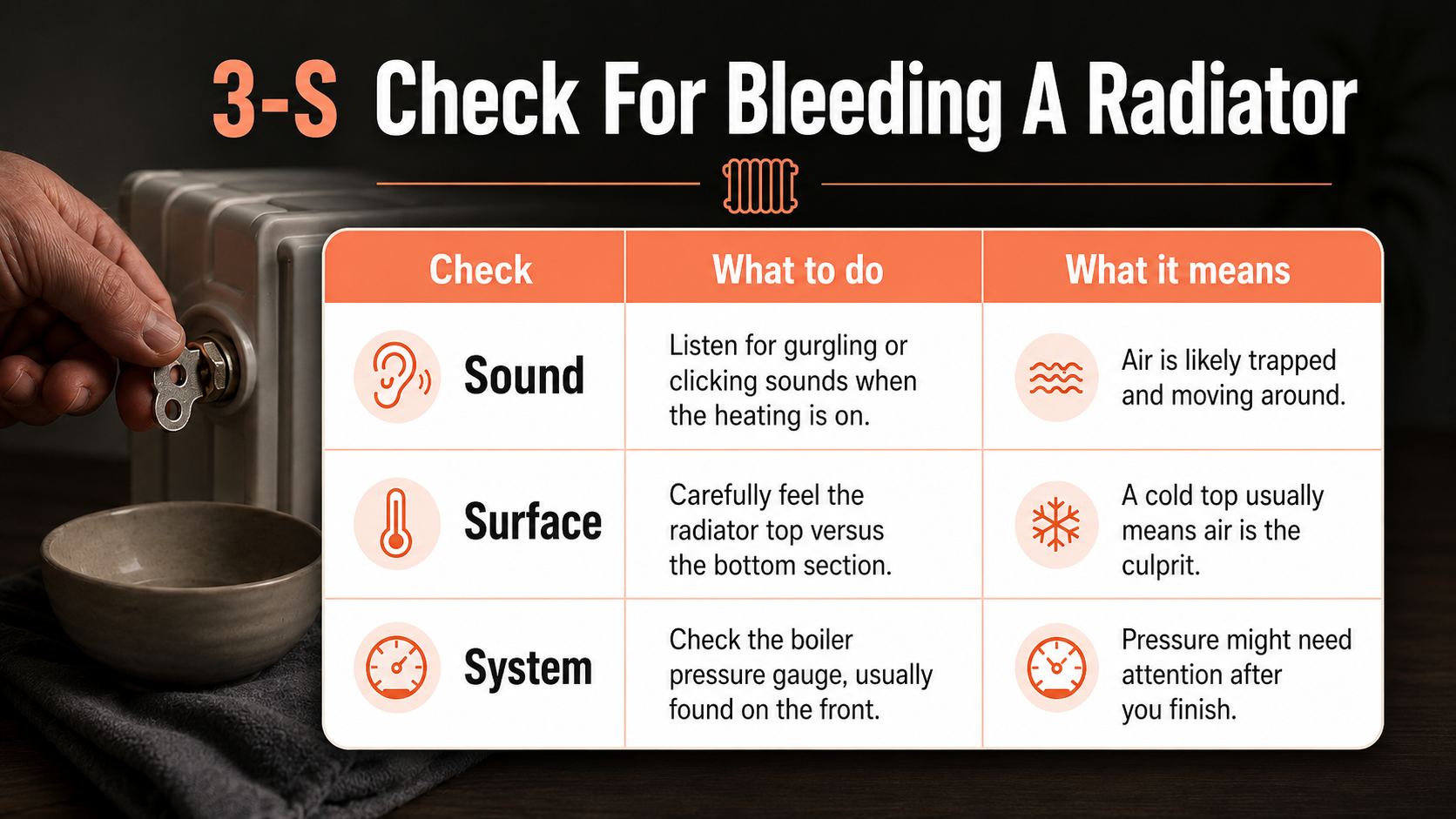
The interesting thing is that your radiator usually gives clear clues before it stops working entirely. Using this check stops you from bleeding radiators that do not need it, which helps maintain the overall pressure of your central heating system.
How to bleed a radiator effectively without making a mess?
To bleed a radiator safely, you need to be prepared. The last thing you want is a jet of dirty water hitting your cream carpet or your wallpaper. To start the process, turn off your heating and let the radiator cool down completely. Once the system is cold, place a thick towel directly under the bleed valve. This valve is the small square-shaped plug located at the very top corner of the radiator.
Hold a small bowl or a jug below the valve to catch any drips. Fit your radiator key onto the square part of the valve and turn it slowly in an anti-clockwise direction. You do not need to turn it very far, usually a quarter turn is enough. Listen for the hissing sound, which is the trapped air escaping into the room. Keep the valve slightly open until the air stops escaping and water starts dripping out. Once you see a steady drip, turn the key clockwise to close the valve. Then wipe the area and check the radiator after the heating is back on. Remember, do not open the valve fully, a small turn is always enough to get the job done.
What tools do you need to bleed a radiator?
You do not need an expensive toolkit to maintain your radiators. Most UK homes will already have the basic items tucked away in a kitchen drawer or under the sink. Radiator keys are very cheap and can be bought at almost any local DIY shop or hardware store for just a few pounds.
- Radiator key: This is the specific tool that opens the bleed valve safely.
- Towel: You need this to protect your flooring from any splashes.
- Jug or bowl: This holds the small amount of water that follows the air.
- Cloth: Use this to help you grip the valve and wipe away drips.
- Flat-head screwdriver: This works on some modern valves if you cannot find a key.
Mentioning tools is important because using the wrong item, like pliers, can damage the valve and make it impossible to open in the future.
Should you turn the heating off before bleeding?
Yes, you must always turn the heating off before you even think about bleeding a radiator. This is a vital safety step that many people overlook when they are in a rush. When the heating is on, the water inside the system is under pressure and can be extremely hot. If you open the valve while the pump is running, you risk being scalded by hot water spraying out at high speed.
The honest truth is that this is the step you should never skip. Turning the system off also allows the air and water to settle. If the pump is still moving the water around, you might not get all the air out because it is being pushed through the pipes. Letting the radiators cool down for about an hour is the safest way to ensure you can work without any risk of burns or making a massive mess in your home.
Which radiator should you bleed first in a UK home?
In a standard UK house with two floors, there is a specific order you should follow to get the best results. You should start with the downstairs radiator that has the longest distance from the boiler. Once you have finished all the radiators downstairs, you should then move to the upstairs rooms, starting again with the one furthest from the boiler and working your way back.
This works well in many combi-boiler homes because it helps clear the air in a logical path. If you live in a flat, the process is even simpler; just start at one end of the property and move through each room. If you are a tenant in a rented home or a council property, you are usually fine to do this yourself, but if you find a major fault or a leak, you should always report it to your landlord or housing provider. Using a walk-through route ensures that you do not miss a single unit, helping the whole system run smoothly.
What sound should you hear when the air comes out?
When you turn the radiator key, you should be listening for a very specific hissing sound. This is the sound of the high-pressure air escaping through the small gap you have created in the valve. It sounds very similar to a bicycle tyre being deflated. This hiss is the sound of success, as it confirms that air was indeed the reason your room was feeling so cold.
The surprising part is that the sound tells you when to stop. As soon as the air has all gone, the hissing will stop abruptly and will be replaced by a dribble of water. This water is often discoloured or grey, which is normal for a central heating system. A small drip is perfectly fine, but if you see a fast stream, it means you have opened the valve a bit too much. Close it quickly and the job is done.
How do you check boiler pressure after bleeding?
After you have bled all the radiators in your home, you must check your boiler pressure gauge. Because you have let air and a small amount of water out of the system, the pressure will almost certainly have dropped. Many UK sealed central heating systems, especially those with combi boilers, need a certain amount of pressure to work correctly.
When the system is cold, the needle on the gauge should usually sit between 1.0 and 1.5 bar. If you look at the gauge and see the needle is in the red zone or below 1.0, your boiler might not even fire up. Some systems rise closer to 2 bar when they are running and hot, which is also quite normal. If the pressure is too low, you will need to use the filling loop to top it up. Always follow your specific boiler manual before you do this, and if you notice the pressure keeps falling day after day, you should call a professional engineer to check for hidden leaks.
What if your radiator is still cold after bleeding?
Sometimes, you can bleed a radiator and find that the top is still cold or the whole unit refuses to warm up. If this happens, the issue might be slightly more complex than just trapped air. It is important to stay calm and look at the other components of your heating system before assuming the worst.
- Check the TRV: The Thermostatic Radiator Valve is the dial that controls the heat. Sometimes the small pin inside gets stuck, which prevents water from entering the radiator.
- Check the pressure: As mentioned before, the boiler might simply not have enough power to push water to the furthest radiators.
- Check the radiator bottom: If the bottom is cold and the top is hot, you probably have a build-up of sludge, which is a mix of rust and dirt that settles at the base.
- Compare other rooms: If some rooms are boiling and others are cold, your system might need balancing, which is a different process involving the lockshield valves.
- Call a pro: If you have tried everything and the radiator is still stubborn, it is time to call a professional.
Tenants in rented, council, or housing association homes should always report these ongoing heating faults to their landlord rather than trying to fix complex valve issues themselves.
Is bleeding, balancing, and flushing the same thing?
No, these three terms refer to very different maintenance jobs. It is easy to get them confused, but knowing the difference will help you speak to an engineer more clearly. Bleeding is the simple act of removing trapped air, which most people can do themselves. Balancing is about adjusting the valves to make sure the water is shared equally between all the radiators in the house. Flushing, or power flushing, is a deep clean that removes the heavy sludge from the entire system.
|
Job |
Main problem |
DIY level |
|
Bleeding |
Trapped air at the top. |
Easy |
|
Balancing |
Uneven heat between rooms. |
Medium |
|
Flushing |
Sludge and dirt build-up. |
Best left to a pro |
The simple fact is that each job fixes a different heating problem. If you bleed a radiator that actually needs flushing, you will not see any improvement in your home temperature.
How often should you bleed your radiators?
You do not need to bleed your radiators every single week. A good rule of thumb is to check your radiators every few months, especially just before the winter season begins. You should only bleed them when you notice specific signs, such as cold tops, gurgling sounds, or a room that is taking far too long to get warm.
It is a great idea to check them after the heating has been turned off for the whole summer, as air can often settle in the pipes during those quiet months. However, you should not bleed radiators that are working perfectly for no reason, as this just lowers your boiler pressure unnecessarily. What matters most is that you follow the signs, not just the calendar. Always remember to check the boiler pressure gauge after you have finished your seasonal checks.
How can bleeding your radiator help save energy?
Bleeding a radiator is one of the easiest ways to help your heating work better without spending a penny. When hot water can move freely through the entire radiator, the room reaches the temperature you want much faster. This means your boiler does not need to run for as long, which can help lower your energy usage.
- Rooms heat more evenly: You will not feel those annoying cold spots while you are trying to relax.
- Cold spots become less common: The whole surface of the radiator contributes to the warmth of the room.
- The boiler faces less strain: A more efficient system lasts longer and breaks down less often.
- Wasting less energy: You are only heating the water you actually need to use.
- Home feels warmer for longer: An efficient radiator stays warm even after the boiler has clicked off.
The biggest benefit is that one small job can improve daily comfort. While we cannot promise exact savings on your bills, a well-maintained system is always cheaper to run than one full of air.
How do you keep radiators working well after bleeding?
Once you have cleared the air, you want to make sure the heat can actually reach you. After bleeding, keep your radiators clean and clear. Many people make the mistake of pushing a large sofa right up against a radiator, which traps the heat behind the cushions. It is much better to leave a gap so the air can circulate properly.
You should also avoid covering your radiators with heavy curtains that hang down in front of them, as this sends the heat straight out of the window instead of into the lounge. Dusting the fins inside the radiator every now and then is also a good habit, as dust can act as a layer of insulation that stops the heat from escaping. Lastly, booking an annual boiler service is the best way to spot any bigger heating problems before they become an expensive emergency. The remarkable thing is that small habits protect the whole system and keep your UK home cosy all year round.
When should you call a Gas Safe registered engineer?
While bleeding a radiator is a simple DIY task, there are times when you must call in a professional. In the UK, anyone working on your boiler must be a Gas Safe registered engineer. You should call for help if your boiler pressure keeps dropping even after you have topped it up, as this usually means you have a leak somewhere in the system.
If you notice water leaking from the valves, or if you hear loud banging noises coming from the boiler, do not try to fix it yourself. Other red flags include the radiator staying cold at the bottom while the top is hot, or if several radiators in the house stay cold despite your best efforts to bleed them. If you cannot find the bleed valve or if you feel unsure about what you are doing, it is always better to be safe than sorry. Calling a professional helps make sure the repair is safe, correct, and dependable.
Final thoughts: How to bleed a radiator effectively this winter?
Learning how to bleed a radiator effectively really comes down to having a safe and steady routine. You must turn the heating off, let the radiator cool down, open the valve slowly with the right key, and release the air until you see a few drops of water. Once you have closed the valve and wiped everything clean, a quick check of the boiler pressure will ensure the whole system is ready for the cold nights ahead.
This is a small task, but it can truly make a cold room feel much warmer and more inviting. If you ever feel unsure about the process, it is always best to stop and ask for advice. The reality is that warm homes often depend on simple checks done at the right time. By taking ten minutes to bleed your radiators, you are making your home more comfortable and your heating system more reliable for the months to come.