What are pilot salaries in the UK right now? The average pilot salary in the UK is around £90,000 per year. Pilot wages in the UK right now vary a lot depending on experience, airline, and aircraft type. If you are thinking about flying jobs in the UK, this guide is for you. Pilot work sounds exciting, and it often is. However, pay can vary a lot.
Some people hear about high pilot wages and imagine instant wealth. In reality, the path is slower. Training costs money, experience takes time, and airline type matters. Still, pilot work can become a strong career. It can also offer travel, status, and long-term growth.
What are Pilot Salaries in the UK at the Start of a Career?
Starting your career as a commercial pilot in the United Kingdom is an exciting step. Your first salary depends heavily on the airline you join and the aircraft you fly.
Starting Salary Ranges
- Regional Airlines: Newly qualified pilots often start on £24,000 to £30,000. These roles usually involve flying smaller turboprop planes.
- Low-Cost Carriers: Airlines like Ryanair or Wizz Air offer higher starting pay. You can expect between £30,000 and £45,000 in your first year.
- Major Airlines: Top carriers like British Airways or Virgin Atlantic pay the most. New first officers here earn between £45,000 and £55,000.
Most pilots also receive “sector pay” for every flight they complete. This bonus can add several thousand pounds to your annual income. However, you must consider training costs. Some airlines charge £30,000 for a “type rating” course. They often deduct this money directly from your monthly salary for three years.
Furthermore, many pilots begin as flight instructors to build hours. These roles pay less, often around £25,000 per year. Fortunately, a global pilot shortage is currently pushing salaries higher across the UK. This makes aviation a stable and rewarding career choice for the future.
How Do Pilot Salaries Rise With Experience?
Experience changes everything in aviation. As pilots gain hours, trust, and responsibility, pay usually climbs. The gap can be large.
First Officers and Captains
First officers support the flight. Captains lead it. Because of that, captains normally earn much more.
A captain may earn nearly double that of a junior first officer’s salary. Sometimes the gap is even wider. Also, captains often receive more allowances and overtime options.
In many UK airlines, the move to captain is a major pay jump. That promotion can change a family budget very quickly.
Senior Pilots
Senior pilots can earn much more than newcomers. They may fly larger aircraft, longer routes, or difficult schedules.
Typical senior pay can reach the following:
- £70,000 to £100,000+ for many captains
- £100,000 to £140,000+ for senior or wide-body roles
Long-haul and Short-haul Flying Pay
Long-haul flights usually last longer and may include overnight stays. Therefore, they often come with better pay or extra allowances.
Short-haul flying can still be well paid. However, it may involve more take-offs, more landings, and busier days. Long-haul may pay more because the work is different and the trips are longer.
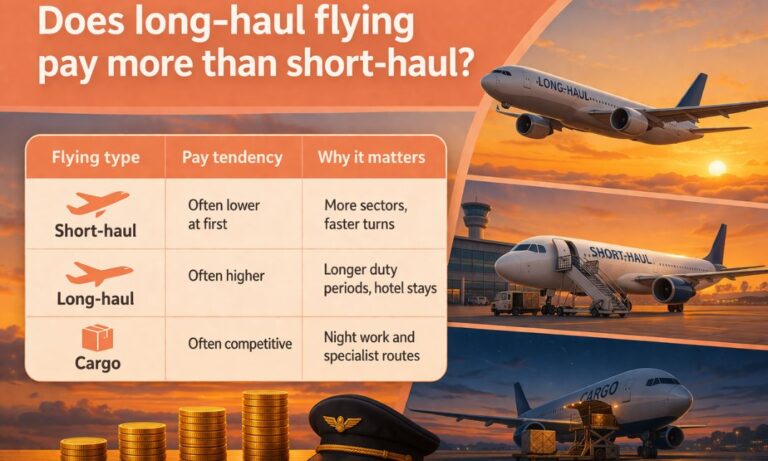
So, experience and route type both shape pilot salaries in a big way.
What Affects Pilot Pay at UK Airlines?
Several key factors change how much you earn as a pilot in the UK. Your salary depends on your rank, your employer, and the routes you fly.
Rank and Experience
- First Officers: New pilots start here. They usually earn between £40,000 and £60,000.
- Captains: You need about 3,000 flight hours for this role. Captains often earn double the pay of a first officer.
- Seniority: Most airlines give you a pay rise for every year you stay.
Airline Type and Routes
The airline you choose makes a massive difference. British Airways pays the highest base salaries in the UK. However, budget airlines like Ryanair allow you to fly for longer. More hours mean more “sector pay” bonuses in your pocket.
Furthermore, long-haul pilots usually earn more than short-haul pilots. They fly to distant places like New York or Tokyo. These pilots get extra money for food and hotels while away.
Training Costs
Training costs affect your take-home pay. Some airlines charge £30,000 for a specific plane qualification. They often deduct this money from your salary for three years. Therefore, your actual cash might be lower at the start. Fortunately, a global pilot shortage is currently pushing all UK salaries higher.
Which UK Airlines and Sectors Pay the Most?
In 2026, the highest salaries of pilots in the UK come from major “legacy” airlines and specific long-haul sectors. British Airways remains the top payer, with senior long-haul captains earning over £220,000. Virgin Atlantic follows closely, offering high salaries for international routes.
- British Airways: Senior captains can exceed £227,000.
- Virgin Atlantic: High-tier pay often reaches £211,000.
- Cargo Operators: Companies like DHL or FedEx pay very well for night and long-distance freight.
- Private Jets: Elite corporate pilots can earn over £150,000 serving wealthy clients.
Long-haul flying is the most lucrative sector in aviation. These pilots fly large aircraft like the Airbus A350 or Boeing 787. Because they spend days away from home, they receive large “per diem” allowances. These extras significantly boost their base pay.
In contrast, short-haul pilots fly more often but stay within Europe. While their base pay is lower, busy “low-cost” pilots at Jet2 or TUI can earn high bonuses. However, for the absolute highest income, the “big jets” on international routes are the winning choice.
How Much Do UK Pilot Incomes Leave After Tax?
Your final take-home salary is greatly altered by UK income tax and National Insurance (NI). In 2026, the amount you keep depends on your specific tax bracket and location.
Entry-Level Take-Home Pay
A new first officer earning a gross salary of £40,000 will usually take home around £32,300. This calculation assumes a standard personal allowance of £12,570. At this level, you pay 20% income tax and 8% National Insurance on your earnings above the threshold. Therefore, your monthly cash is approximately £2,700.
Higher Earners and Captains
Experienced pilots face higher tax rates. For example, a senior first officer on £90,000 might take home £62,700. Once your salary exceeds £100,000, you begin to lose your tax-free personal allowance. This creates a “tax trap” where your effective rate can reach 60%.
- £120,000 Salary: You take home roughly £76,000.
- £185,000 Salary: A top-tier captain keeps about £110,000.
Furthermore, these figures do not include pension contributions or student loan repayments. Many pilots also pay back high training loans each month. Consequently, your disposable income might feel lower than the headline salary suggests. Always check local Scottish tax rates, as they are often higher for top earners.
Are Pilot Pay Rates Worth the Training Investment?
Deciding to become a pilot is a massive financial choice. You must weigh the high cost of training against your future earnings. In the UK, this path is often a long-term game.
The Initial Training Cost
Flight school is very expensive. A full “Integrated” course in the UK often costs between £100,000 and £130,000. This price usually covers your ground school and flight hours.
However, it rarely includes your living costs or “Type Rating” for a specific jet. A type rating can add another £30,000 to your total debt.
Many students take out large bank loans to fund this dream. Consequently, you might start your career with significant monthly repayments. You must earn enough to cover these bills and your rent.
Early Career Earnings
Your first few years might feel financially tight. A new First Officer at a budget airline often starts on £34,000 to £45,000.
- Low Starting Pay: Some smaller airlines pay even less at the beginning.
- Loan Repayments: You might pay £1,000 per month back to the bank.
- Take-Home Pay: After tax and loans, your “spending money” could be low.
However, this stage is temporary. Most pilots “unfreeze” their full licence after 1,500 flight hours. This milestone usually triggers a pay rise. Furthermore, you gain seniority every year you stay with one company. Learn more at Average UK Pilot Salary: 2026 Career Guide in detail.
The Turning Point
The real return on investment happens when you move to the left-hand seat. Becoming a Captain is the biggest goal for every pilot.
- Massive Pay Jump: Captains at EasyJet or Jet2 often earn over £140,000.
- Top-Tier Salaries: At British Airways, senior Captains can exceed £220,000.
- Extra Benefits: You receive large pension contributions and flight allowances.
At this level, you can repay your training loans quickly. You will also enjoy a very high standard of living. Most pilots reach this stage within five to ten years of starting.
Long-Term Job Security
The global pilot shortage is a huge advantage for new students. Airlines are currently desperate for trained crew. Therefore, salaries are rising faster than inflation in 2026. Many airlines now offer “joining bonuses” to attract staff. This shortage makes your expensive licence a very valuable asset.
How Can UK Pilots Increase Their Earnings Faster?
In the UK, pilots can grow their income by making smart career moves. The aviation industry is changing quickly. Demand for crew is high in 2026. Therefore, you have many ways to reach a six-figure salary sooner.
Choose the Right Airline
Your choice of employer is the biggest factor. Large legacy carriers like British Airways often offer the highest base pay. However, low-cost airlines like easyJet or Ryanair sometimes offer faster paths to the rank of Captain. You should compare total packages, including pensions and sector pay. Some airlines now offer signing bonuses of up to £50,000 for experienced crew.
Pursue Rapid Command
Moving from First Officer to Captain is the quickest way to double your pay. To do this faster, you should stay flexible. Be willing to move bases or change airlines to find a shorter seniority list. Some regional airlines promote pilots in just three to five years. Once you gain command experience, your market value rises significantly.
Get High-Value Type Ratings
Airlines pay more for pilots who can fly complex aircraft. Ratings for wide-body jets like the Airbus A350 or Boeing 787 often lead to premium pay. Additionally, flying long-haul routes increases your “per diem” and overnight allowances. These tax-free payments add thousands to your take-home pay every year.
Become a Trainer
You can increase your hourly rate by teaching others. Aim to become a Type Rating Instructor (TRI) or a Type Rating Examiner (TRE). These roles carry extra responsibility and higher pay. Most airlines value training captains highly and provide them with stable, lucrative contracts.
Use Your Time Off
Pilots often have unique rosters with blocks of free time. You can use these days for side hustles. Many pilots work as ground school instructors or flight simulator tutors. Others invest in real estate or offer aviation consulting. These extra streams of income help you build wealth while you wait for your next promotion.
Final Thoughts
Pilot work is not a quick-money job. However, it can become a rewarding career with strong long-term pay. The key lesson is simple. Earnings of a pilot depend on rank, airline, aircraft, hours, and extra skills. At the start, pay may be low or even zero during training. Later, the numbers can rise sharply.
If you are planning this path, look at the full picture. Check training costs, take-home pay, pensions, and benefits. Then, compare the long-term value, not just the first salary. With patience and the right training, aviation can be a very good career in the UK.
FAQs
1. What is a pilot’s salary in the UK?
- Commercial pilots in the UK typically earn between £24,000 and £120,000+ per year, depending on experience and role.
2. What pilots make $200,000 a year?
- Senior captains at major airlines, especially long-haul international pilots, can earn $200,000 or more annually.
3. Do pilots make 700k?
- Only a few top senior captains with bonuses and many years of experience may approach this level.
4. What is the highest pilot salary?
- The highest-paid pilots (senior captains or training captains) can earn £150,000 to £200,000+ per year.
5. Do pilots fly 40 hours a week?
- Pilots usually fly 75 to 100 hours per month, with additional duty time for preparation and standby.
6. Is a pilot a millionaire?
- Some experienced pilots can become millionaires over time, but it depends on salary, savings, and career progression.