Ever wondered about pilot salary airlines? If your answer is yes, you need to understand how pilot salaries and airlines work in the UK aviation industry.
Airline pilots fly passengers safely and follow strict aviation rules every day. They also plan flights, check the weather, and work closely with the cabin crew. Starting pay often sits near £30,000–£40,000. Experienced captains can earn £80,000–£120,000 or more with major airlines. Some pilots fly short-haul routes, while others fly long-haul flights worldwide. Overall, pilots keep passengers safe and flights running on time.
Now, let’s dive in and explore everything about pilot salary pay in the UK.
What does Pilot Salary Airlines really mean in the UK?
In the UK, the term “pilot salary” describes how much flight deck crews actually earn. This figure includes your basic pay, flying hourly rates, and overnight allowances. Therefore, your total take-home pay depends heavily on your specific airline and rank. Most British pilots see their income grow steadily as they gain experience.
What roles are included when we talk about “pilot salary and airlines”?
The term “pilot-salary airline” includes several positions in an airline’s cockpit. Each role carries different responsibilities and earns different pay.
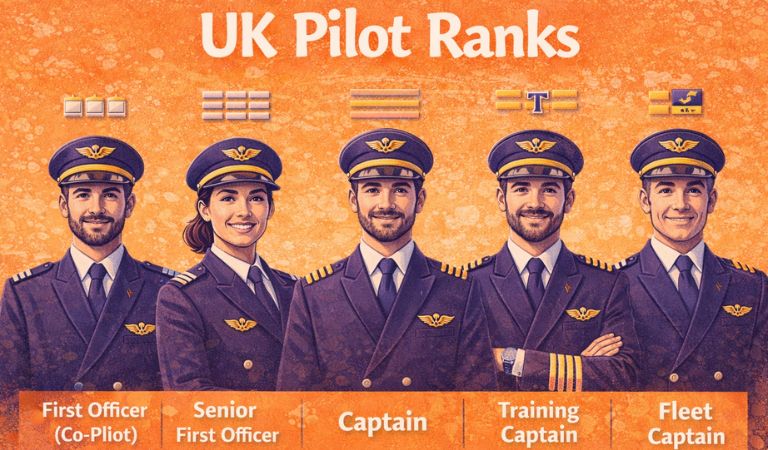
Here are the most common pilot roles in UK airlines:
- First Officer (Co-Pilot): Helps the captain fly the aircraft and learns on the job under supervision.
- Senior First Officer: A more experienced co-pilot who handles complex tasks and supports the captain independently.
- Captain: Leads the flight, makes key decisions, and holds full responsibility for safety.
- Training Captain: Teaches, guides, and evaluates other pilots during training and assessments.
- Fleet Captain: Oversees a specific aircraft type, ensuring safety, standards, and operational efficiency.
Pay usually rises as pilots gain experience and move into senior roles.
The difference between commercial, cargo, and regional airline pilots
Pay varies significantly across these three sectors.
Commercial airline pilots:
- Major commercial airlines like British Airways offer high base salaries and prestige. They focus on passenger comfort and strict schedules.
Cargo airline pilots:
- Cargo pilots often fly through the night. While they miss the glamour of passengers, their pay remains very competitive. Large logistics firms value the precision required for global supply chains.
Regional airline pilots:
- Regional pilots fly smaller planes on shorter routes. These roles provide excellent experience for beginners. However, the pay usually sits lower than long-haul international roles. Because of these differences, pilot salaries vary widely across airlines.
How UK regulations and unions influence pilot pay
British pilot pay does not exist in isolation. The Civil Aviation Authority (CAA) sets strict rules on flight hours. These rules stop pilots from getting too tired but also limit how much extra pay they can earn from overtime.
Unions, like BALPA, play a big role in the UK. They negotiate agreements with major airlines. These deals give yearly pay rises and protect pension contributions.
How Does Pilot Salary Airlines Vary Across the UK’s Major Carriers?
Pilot pay in the UK depends on many factors. Your airline, rank, and the routes you fly change your total earnings. Major carriers offer different packages that reflect their business models and flight networks.
The Flag Carriers: British Airways and Virgin Atlantic
We all know that British Airways and Virgin Atlantic frequently set the gold standard for UK pilot compensation. These airlines focus on long-haul travel, which usually commands higher salaries. British Airways typically pays new First Officers around £40,000 to £50,000. As you gain experience, this figure grows quickly. Senior Captains on long-haul fleets, like the Airbus A350, can earn over £170,000.
Virgin Atlantic offers similar competitive rates. Their pilots often enjoy high base salaries because they fly large, complex aircraft across the Atlantic. You will find that these legacy carriers also provide excellent pension schemes and staff travel perks.
The Difference Between Ranks
Promotion remains the fastest way to grow your income. Each new stripe on your shoulder brings a significant pay rise. Most pilots begin as Second Officers during their initial training session. This entry-level role offers a modest base salary. Typically, you might earn between £30,000 and £45,000 at this stage.
Once you gain experience, you move to First Officer. This step usually adds £15,000 to your yearly earnings. Your flying hours begin to accumulate quickly now. Most airlines then promote you to Senior First Officer after several years of safe service.
- Senior First Officers often earn between £70,000 and £95,000 at major UK carriers.
- The Command Course prepares you for the final jump to the left-hand seat.
- Captains take full legal responsibility for the aircraft and the crew.
- Senior Captains at top airlines can earn basic salaries exceeding £150,000.
The transition from Senior First Officer to Captain is the most rewarding milestone. It often doubles your base pay. Furthermore, your hourly rates increase because Captains earn more for every flight.
Long-haul vs. Short-haul Impact
One more important thing is that route types affect how you earn “extra” money. Short-haul pilots fly more often but stay closer to home. They earn “sector pay” for every take-off and landing. In contrast, long-haul pilots receive higher “Flight Duty Allowances” for spending nights away in hotels. While long-haul base pay is usually higher, a busy short-haul schedule can sometimes close the gap.
What is the Average Starting Salary for a Newly Qualified Pilot?
Landing your first job in a cockpit is a major career milestone. In the UK, a newly qualified pilot typically earns a starting salary between £24,000 and £45,000. This range fluctuates based on the airline’s size and the specific aircraft you fly.
Expectations for “Frozen ATPL” Holders
A “Frozen ATPL” is the standard entry-level licence for commercial pilots. It allows you to work as a First Officer, but you cannot become a Captain yet. Most airlines view these pilots as trainees during their first year.
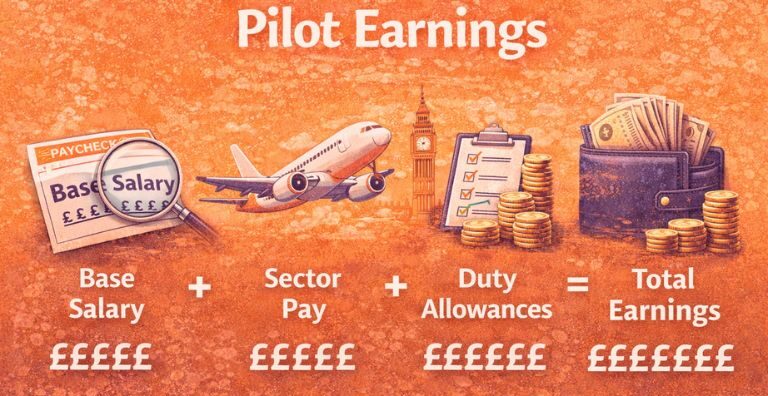
- Base Salary: Expect a starting basic pay of £25,000 to £32,000.
- Sector Pay: You earn extra money for every flight leg you complete.
- Duty Allowances: These payments cover your time away from your home base.
- Total Earnings: Flight pay often boosts your yearly take-home to £35,000 or more.
The Impact of Training Routes
Your financial start is greatly dependent on how you funded your flight school. Self-funded pilots often face high monthly loan repayments. Conversely, sponsored cadets usually enjoy more financial security from day one.
Self-Funded Training Most pilots pay roughly £80,000 to £120,000 for their own training. After graduation, they must find a job independently. Some airlines also require these pilots to pay for their own “Type Rating” for £20,000. This procedure adds more debt before the first pay cheque arrives.
Sponsored Cadet Programmes: Airlines like British Airways or TUI sometimes offer sponsored schemes. These programmes often cover the upfront training costs entirely. In return, you might receive a slightly lower starting salary for a few years. However, you avoid the massive debt of private flight schools.
Typical Packages at Regional Airlines
Regional carriers like Loganair or Aurigny provide a vital starting point for many. These airlines fly smaller turboprop aircraft on shorter routes across the UK and islands.
- Initial Pay: New First Officers usually start between £24,000 to £30,000.
- Work-Life Balance: You often return home every evening because flights are short.
- Rapid Progression: You can often move to a captain role faster than at major airlines.
- Skill Building: Flying in challenging coastal weather builds excellent manual flying skills.
Which Low-Cost Pilot Salary Airlines Offer the Best Starting Rates?
Choosing a low-cost carrier can be a smart financial move for a new pilot. In the UK, easyJet, Ryanair, and Jet2 currently offer some of the most competitive starting packages. Understanding how each airline operates helps new pilots make better choices.
The Budget Giants: Comparing Pay
Each airline has a unique way of rewarding its flight deck.
- easyJet: They offer a high basic salary, often starting around £57,000 for new Second Officers.
- Ryanair: Their UK “Junior First Officer” total package typically sits between £55,000 and £70,000.
- Jet2: This airline is known for stability, with total First Officer earnings often reaching £64,000 to £80,000.
While easyJet frequently leads in base pay, Ryanair and Jet2 provide speedy promotion opportunities.
Sector Pay vs. Basic Salary
Low-cost carriers rely heavily on Sector Pay. This is a flat fee paid for every flight leg you complete. Consequently, your monthly take-home pay varies depending on how busy your schedule is.
A pilot flying four short hops in one day earns more sector pay than a pilot flying one long route. Therefore, summer months are usually much more lucrative than winter.
Rostering Patterns
Schedules like “5-on, 4-off” directly affect take-home pay. More consecutive working days can increase overtime and flying bonuses. Conversely, longer rest periods reduce total earnings but improve work-life balance. Pilots must plan carefully to optimise income while staying rested and safe.
What Benefits and Allowances Are Included Beyond the Basic Pay?
While your basic salary is the core of your pay, extra benefits often define a pilot’s true take-home wealth. These additions can boost your annual earnings by £10,000 to £20,000.
Duty Pay and Flight Pay
Airlines pay you extra for every hour you spend on duty. “Flight Pay” specifically covers the time from engine start to engine shutdown.
- Hourly Rates: These typically range from £15 to £100 depending on your rank and seniority.
- Sector Pay: Short-haul pilots often receive a flat fee per flight “leg” instead of hourly rates.
Per Diems and Layovers
When you stay away from your home base, the airline pays a “Per Diem” allowance. This tax-free stipend covers meals and incidental costs during international layovers.
- Short-haul: You might receive £20 to £40 for a single night away.
- Long-haul: Extended trips to expensive cities can net you £100 or more per day.
Pensions and Core Benefits
Retirement packages vary wildly between major legacy carriers and smaller budget airlines.
- British Airways: They often offer a highly competitive pension with employer contributions reaching 15%.
- Smaller Airlines: Many regional carriers only provide the legal minimum of 3% to 5%.
- Other Perks: Expect private medical insurance, life cover, and discounted “standby” travel for your family.
Loss of Licence Insurance
This is your most vital safety net. If you lose your medical certificate due to illness or injury, you cannot fly.
Loss of Licence insurance pays a large lump sum, often up to £300,000, if your career ends abruptly. Some top-tier airlines include this as a free benefit. However, many junior pilots must pay for private cover, which can cost £500 to £1,000 annually.
Final Thought on Pilot Salary Airlines
Becoming an airline pilot needs the right mix of training, experience, and good habits. First, complete your Frozen ATPL. It gives you the official licence and knowledge you need. Next, gain hands-on experience flying small or regional aircraft so you can handle real situations confidently. Also, learning airline procedures and using flight management systems makes your job faster, safer, and better organised.
At the same time, follow regulations, improve your flying skills, and keep learning. These steps help your career grow. By following this path, you can get better pay, job security, and opportunities to move up. Finally, if you do it right, you will not just fly an aircraft. You will lead flights safely and professionally.
Frequently Asked Questions (FAQs)
1. How much does an airline pilot earn?
- Most UK airline pilots earn between £50,000 and £120,000 per year, depending on experience.
How much money do airline pilots make?
- Pilot salaries vary. Junior pilots start lower, while senior captains earn more than £100,000 annually.
3. Do pilots make £700k?
- Only very senior pilots on long-haul international flights with top airlines can earn close to £700,000.
Which airline has the highest paid pilot?
- Major international airlines like Emirates and British Airways often pay their senior pilots the most.
Is a pilot a millionaire?
- Most earn high salaries but not millionaire-level wealth.
What do Jet2 pilots earn?
- Jet2 pilots usually earn between £50,000 and £90,000 per year, depending on rank and experience.