In this article, “plane pilot” means UK commercial airline pilots — the people flying passenger flights on airlines like British Airways, easyJet, Ryanair, Jet2, TUI, and Virgin Atlantic. Some fly short-haul routes around the UK and Europe. Others fly long-haul routes across the world.
Pilot pay in the UK is usually strong compared to most jobs, but it can also be very uneven. A simple way to set expectations is this: in 2025, UK pilot pay is often described as sitting somewhere between about £25,000 and £170,000 a year, depending on whether you’re new or very experienced, and whether you’re a First Officer or a Captain. If you look at “average” figures, you’ll often see numbers like around £72,000 on some salary platforms, and around £63,800 on others. The big point is that pay changes a lot based on the airline, your rank, your aircraft type, and your base.
For a quick comparison, the typical UK full-time salary is around £37,400–£37,500. So many mid-level airline pilots are earning well above the national median. In the rest of this article, I’ll explain how salary changes by airline, experience, rank, aircraft type, and location, so the numbers make sense instead of feeling random.
Salary of Plane Pilot on Average?
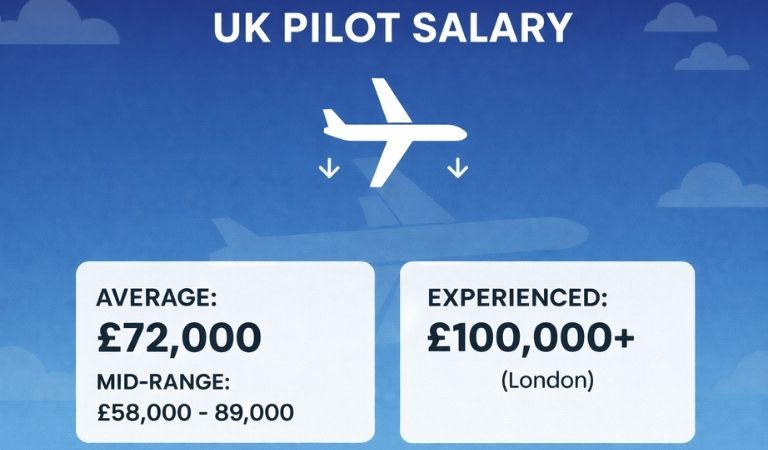
If you just want a simple snapshot of pilot pay in the UK, here it is.
Across common salary trackers, the “average” UK pilot salary is often shown in the mid-£60,000s to low-£70,000s. One platform puts the average airline pilot salary at £72,262, with many reported salaries in the £58,600 to £89,100 range and top reported earners a bit over £107,000. Another shows an average of about £63,805 across UK pilot roles.
Some training providers sum it up in plain language: once established, airline pilots often “typically” earn £72,000–£80,000, and London-based pilots can be closer to £100,000. The key comparison is simple: UK median full-time pay is around £37k, so even a mid-range airline pilot salary sits in a high-earning bracket.
A quick note on why “average” can be confusing
If you’ve ever searched pilot salaries online, you’ve probably noticed the numbers don’t always match. That’s because “pilot” is a wide label. Some datasets include people who fly small aircraft, helicopters, training flights, cargo, or private jets. Others focus more on airline pilots. Even within airline flying, two people with the same job title can earn very different pay because:
- one may be a new First Officer and one may be a Senior First Officer,
- may fly short-haul or may fly long-haul,
- one may be based at a big hub and one may be based regionally,
- and one may get more extras like sector pay, allowances, and overtime.
So averages are helpful for a rough idea, but the best way to understand pay is to look at what changes it — which is exactly what the next sections do.
Does Pilot Salary Change by Airline?
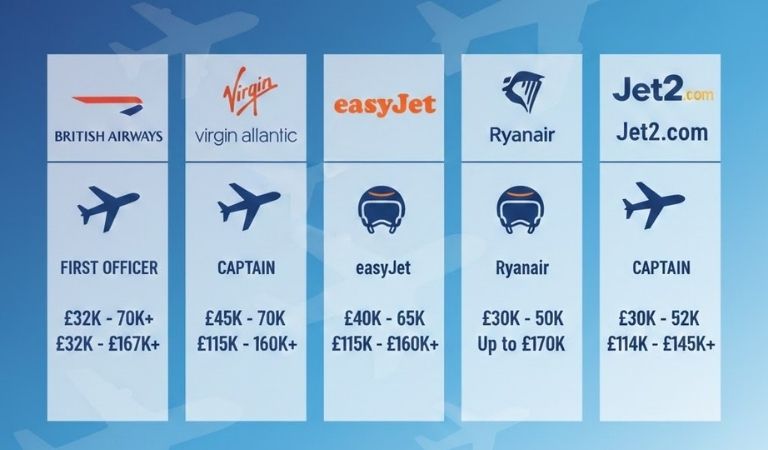
Yes — the airline you work for can shift your pay by tens of thousands. You can have the same licence as another pilot and still end up with a very different payslip. Below are typical UK-style ranges people often see talked about. Think of them as “ballpark” figures, not exact promises.
British Airways (BA)
- Entry-level First Officers: often talked about around £32,000–£40,000, then rising with experience and fleet.
- Captains: commonly described around £100,000–£167,000+, with wide-body long-haul captains nearer the top end.
BA is also a good example of how big airlines can have a wide spread. A First Officer on one fleet can be on a very different scale from a First Officer on another fleet, especially once seniority and route type are considered.
Virgin Atlantic
- First Officers: often quoted in the £45,000–£70,000 band.
- Captains: often quoted around £115,000–£140,000+, and sometimes £120,000–£160,000 depending on fleet and seniority.
Virgin is mainly long-haul, so people often associate it with higher-end captain pay and longer trips, but it also comes with a different lifestyle (more time away, more overnights).
easyJet (UK-based)
- First Officers: often described around £40,000–£65,000 depending on seniority.
- Captains: some recent reports talk about packages up to around £170,000 a year when variable pay is included.
easyJet is a good example of a short-haul airline where the totals can still be very strong. If sector pay and other extras are built into the deal, busy flying schedules can boost earnings.
Ryanair (UK bases)
- First Officers: often described around £30,000–£50,000 on UK-style contracts.
- Captains: commonly described with a basic around £114,000, with total package moving towards around £145,000 once extras like sector pay and allowances are added.
Ryanair runs a highly structured and efficient operation. Many pilots like predictable patterns, but others may prefer a long-haul lifestyle. It comes down to personal priorities as much as pay.
Jet2.com
- First Officers: figures often shown around £63,800–£81,900.
- Senior First Officers: often shown around £92,000.
- Captains: basic sometimes quoted around £140,600, then more once sector pay and extras are added.
Jet2 is a leisure airline, and leisure flying can be intense in peak seasons. That can be good for earnings if overtime and sector pay are available, but it can also mean the job feels busy when everyone else is on holiday.
TUI Airways
- Some job-site averages for pilot pay at TUI sit around £104,000 (and higher on some pages), showing that leisure carriers can be very competitive.
The takeaway: airline choice alone can change your yearly pay by a huge amount — even before you add allowances, sector pay, and bonuses.
Why the same job title can pay differently at different airlines
It’s worth saying this plainly: pilot pay isn’t only about the licence. Airlines have different:
- pay scales,
- contract types,
- roster patterns,
- overtime rules,
- and add-on pay.
So two “First Officers” might both fly the same type of aircraft, but one has a higher base, or gets more sector pay, or works a roster that creates more earning opportunities.
How Do Low-Cost and Flag Carriers Compare on Pay?
People often assume flag carriers always pay more. That used to be a cleaner rule. Now it’s more mixed.
Flag / full-service airlines (higher top end)
BA and Virgin Atlantic pay captains roughly £115,000 to £160,000+, with BA long-haul wide-body captains earning around £167,000 before extras at the top end. Flag carriers also tend to have larger long-haul fleets and more complex route networks. That can translate into higher responsibility and, at the top end, higher pay.
Low-cost and leisure carriers (often competitive now)
easyJet has been linked with captain packages up to around £170,000 including variable pay. Some talk around pay deals has even mentioned experienced captains moving from around £163,000 toward £190,000 on certain setups.
Under some contracts, Ryanair UK pays captains up to the mid-£150,000s, and many pilots value the more predictable roster patterns. Jet2 and TUI often show strong pilot pay too. Many people find this surprising because leisure airlines can look seasonal, but strong travel demand and the need for skilled pilots force these airlines to pay competitively.
Another simple way to compare carriers
If you’re comparing airlines, it helps to ask:
- Does the base salary stand high on its own, or do extras push an average salary higher?
- Are the extras easy to earn, or rare?
- Are the rosters predictable?
- Does the airline have long-haul, short-haul, or both?
- How quickly do pilots progress up the scale?
Sometimes a slightly lower base with strong sector pay and a steady roster can feel better than a higher base with a lifestyle you don’t enjoy.
How Does Experience Affect a Pilot’s Salary?
Pilot pay is very “ladder-shaped.” It usually climbs a lot as you move through the career stages.
Entry-level
UK airlines typically pay new commercial pilots or junior First Officers around £25,000–£28,000 in early roles, especially outside the largest airlines. It can feel surprising to people that starting pay can be modest, because “pilot” sounds like a high-paid job from day one. But the early years are often about building hours, learning airline operations, and gaining experience.
First Officer (short-haul vs long-haul)
A simple way to think about it:
- short-haul First Officers are often described around £35,000–£60,000
- long-haul First Officers are often described at £55,000+
Long-haul often pays more because it can be more demanding in different ways: longer duty periods, time zone changes, more nights away, and more complex route planning.
Mid-career
Once established, many guides describe UK airline pilots as “typically” earning £72,000–£80,000. At this stage, many pilots start to feel financially comfortable, especially once they settle into a stable fleet and base.
Senior / long-haul captains
Senior long-haul captains at major UK airlines can reach £150,000–£170,000+ in base pay, and then go higher once you add allowances and other extras. So in plain terms: pilot salaries can roughly triple between an entry-level First Officer job and a senior long-haul Captain role.
What experience really buys you
Experience usually means:
- you’re trusted with more responsibility,
- you can operate in more complex conditions,
- you’re more efficient and calm under pressure,
- and you often get better choices of roster and base once you have seniority.
All of those things tend to move you up the pay ladder.
Do Captains Earn More Than First Officers?
Yes, and the gap is usually very clear. A rough rule of thumb in UK airline pay talk is: a Captain often earns around two to three times what a junior First Officer earns, especially in the early years. Here’s how airlines typically structure pay in the examples people most often discuss:
- BA: First Officers can sit from £32,000 up to £75,000 depending on experience and fleet, while Captains often sit around £115,000–£145,000, with some wide-body captains around £167,000+ before extras.
- easyJet: First Officer pay can climb into higher bands on some scales, while Captain totals can sit in the £145,000–£190,000 area when variable elements are included.
- Ryanair (UK): First Officer basic is much lower, while Captains are often talked about with a basic around £114,000 and total packages around £145,000 once extras are added.
Why the captain jump is so big
This part is pretty simple: captains carry more responsibility. They make the final calls and manage the crew in the air. They handle the big decisions when things change fast. That extra responsibility is why the pay difference is usually large — and why becoming a captain is often the biggest pay milestone in a pilot’s career.
Does Aircraft Type Affect Pilot Pay?
Usually, yes. Aircraft type often links directly to route type: short-haul narrow-body versus long-haul wide-body.
Short-haul jets (A320 / B737)
Short-haul First Officer pay is often described around £35,000–£60,000. UK airlines often pay short-haul fleet Captains £120,000–£170,000 once sector pay and extras are included.
Long-haul wide-bodies (A330, B787, A380)
Long-haul First Officer pay is often described as £55,000+, usually higher than many short-haul FO roles. Large airlines often pay long-haul wide-body Captains £145,000–£167,000+ before allowances. In simple words: the bigger and longer-range the aircraft, the higher the pay tends to be, especially for Captains.
Why aircraft type changes the lifestyle too
It’s not just pay. Aircraft type changes your routine.
Short-haul:
- more take-offs and landings,
- more sectors in a day,
- often home more nights (depending on roster),
- a fast pace.
Long-haul:
- fewer flights, but longer duties,
- more time away,
- more jet lag,
- different kinds of pressure.
Some people love short-haul and want to be home often. Others love long-haul and prefer fewer “days at work” even if the trips are long.
How Does Location or Base Country Impact Salary?
This is still UK-only, but base location matters a lot. First, the big picture: the UK median full-time salary is around £37,400–£37,500, while pilot averages are often shown around £63,800 to £72,000+. So pilots are high earners anywhere in the UK. Now the base effect:
London and major hubs
Airlines often pay pilots working around Greater London higher salaries, with some estimates putting pay at around £100,000. That’s partly because big hubs like Heathrow and Gatwick host large fleets and a lot of higher-paying long-haul flying. London bases can also come with higher costs, of course. So while pay may be higher, so is housing, commuting, and general living costs.
Regional bases
Regional bases can still pay very well. Airlines like Jet2 and TUI base pilots across the UK, and many of their roles still sit in that £100k-ish territory for experienced pilots. Key idea: London and long-haul bases often pay the highest, but strong leisure carriers at regional airports can still offer pay that’s miles above typical local wages.
Base also affects your day-to-day life
Even if two bases have similar pay, your quality of life can change a lot:
- commute time,
- parking and transport,
- early starts,
- how often you get “back-to-back” duties,
- and whether you have more night-stops or not.
For many pilots, the base choice is almost as important as the salary.
What Extra Benefits Do Pilots Receive?
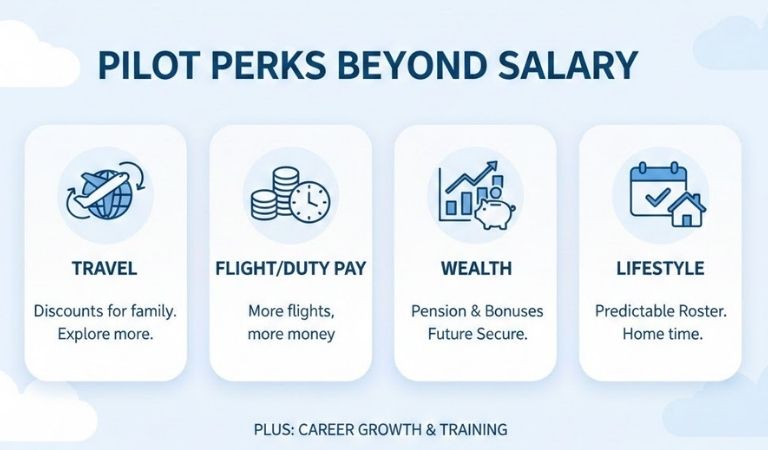
Pilot pay isn’t just the headline salary. Many pilots look at the whole package.
Staff travel and discounts
Many UK airline pilot roles come with discounted travel, and sometimes standby travel, for the pilot and close family. For a lot of people, this is a big perk. Some pilots value this as much as a pay rise, because it can save thousands over a year if you travel a lot or have family overseas.
Allowances and sector pay
This is where total earnings can jump:
- sector pay (paid per flight or per block hour)
- away-from-base allowances
- duty pay
- overnight allowances (where relevant)
These extras can make a big difference at low-cost and leisure carriers, where flying patterns and sector pay can add up fast.
Pensions, profit-share, bonuses
Some airlines offer strong pension contributions and bonus schemes, which can matter a lot over a full career. It’s not as exciting as a headline salary number, but over 20 or 30 years it can be huge.
Rosters and lifestyle
Some low-cost airlines talk about predictable rosters, like 5 days on / 4 days off, and fewer planned overnights. That can be a massive quality-of-life win, even if the base salary isn’t the highest in every case. A simple way to compare airlines is: salary + allowances + pension + travel perks + roster.
Training and progression support
Another “hidden benefit” is how airlines handle training and progression. Some airlines:
- have smoother pathways from First Officer to Captain,
- support extra ratings or upgrades,
- offer coaching and development,
- and give clearer long-term plans.
That matters because progression is where the real pay growth comes from. A pilot who progresses steadily can earn far more over a career than someone who remains stuck at the same level for years.
Final Thoughts on Plane Pilot Salaries Across Airlines
If you want the UK takeaway in plain English, it’s this: Pilots in the UK generally earn well above the national average. Typical airline pilot pay often sits around £63,000–£80,000, and many Captains earn in the £100,000–£170,000+ range at major airlines.
What makes the biggest difference is:
- the airline you work for (low-cost, leisure, or flag carrier)
- rank (First Officer vs Captain)
- your aircraft and routes (short-haul vs long-haul)
- base (London hub vs regional)
- and your extras (sector pay, allowances, bonuses, travel perks)
One last realistic note: pilot training costs a lot, and starting salaries are often modest compared to the investment required. But the long-term earning potential can be strong — especially if you progress to Captain on larger aircraft at a well-paying airline.
Frequently Asked Questions (FAQs)
1. How much does a pilot earn in the UK?
- UK airline pilot salaries typically range from £25,000 for new First Officers to £170,000+ for senior Captains, depending on airline, aircraft, rank, and base.
2. Do airplane pilots make good money?
- Yes. Most UK airline pilots earn well above the national average, especially once experienced, with many Captains earning six figures plus allowances and benefits.
3. How much do British Airways pilots get paid?
- BA pilots commonly earn £32,000–£75,000 as First Officers and £115,000–£167,000+ as Captains, depending on fleet, seniority, and long-haul or short-haul flying.
4. How much does an easyJet pilot earn?
- easyJet First Officers often earn £40,000–£65,000, while Captain packages can reach £145,000–£170,000+ once sector pay and variable elements are included.
5. How much does a Ryanair pilot earn?
- UK-based Ryanair First Officers often earn £30,000–£50,000, while Captains typically earn around £114,000 basic, rising toward £145,000 with extras.
6. Which airline has the highest paid pilots?
- In the UK, top-paying roles are often at BA, Virgin Atlantic, easyJet, and Ryanair, with senior long-haul or high-utilisation Captains earning the most.
7. Who is the richest pilot in the world?
- The richest pilots are usually airline founders or executives rather than working captains; figures often cited include airline owners and aviation entrepreneurs.
8. Is being a pilot a stressful job?
- It can be. Pilots manage safety, schedules, and fatigue, but strong training, procedures, and predictable rosters help many pilots balance stress and lifestyle.
9. What is the lifetime salary of a pilot?
- A UK airline pilot can earn £3–6 million+ over a career, depending on progression speed, airline choice, aircraft type, and years spent as a Captain.