Safeguarding is about one simple thing: people deserve to feel safe. Safe at home, in hospital. Safe in a care home, safe with the people around them.
And when someone is not safe, safeguarding is what helps us notice, speak up, and do something about it. Sometimes abuse looks like shouting, hitting, or threats. But sometimes it’s quieter. It can look like someone being left hungry. Being ignored, being controlled and being scared to talk. Or having their money taken “little by little” until they have nothing left. This is why safeguarding matters so much. Because harm doesn’t always come with a big warning sign. And many people don’t say, “I’m being abused.” They might say things like:
- “It’s fine… I don’t want trouble.”
- “Please don’t tell anyone.”
- “They’ll be angry if they find out I spoke.”
So we need a clear way to guide our actions. What are the 6 principles of safeguarding? They help staff and services make decisions that are safe, fair, and kind. Not rushed, not cold, not “one size fits all.”
What Are the 6 Principles of Safeguarding?
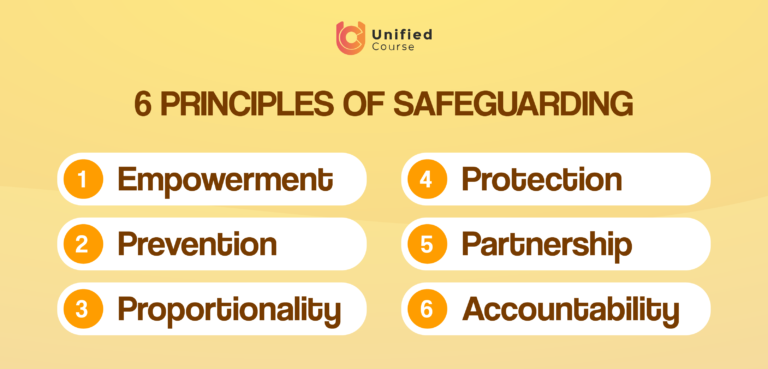
Here are the six principles. If you’re new to safeguarding, don’t worry — we’ll break each one down right after this.
- Empowerment – helping the person make their own choices, with proper information.
- Prevention – stopping harm before it happens.
- Proportionality – responding in a way that fits the risk (not too big, not too small).
- Protection – taking action for people who are at serious risk and can’t keep themselves safe.
- Partnership – working together with other services, families, and communities.
- Accountability – being clear about who is responsible, and keeping good records.
A helpful way to remember the “feel” of these principles is this: Safeguarding should be with people, not done to people — unless the risk is so serious that urgent action is needed.
Why Are the 6 Principles of Safeguarding Important?
Because safeguarding is not just one simple decision like “report or don’t report.” Real life doesn’t work like that. Sometimes:
- The person wants help but feels scared
- The person doesn’t want help, but the risk still worries you
- The family says one thing, the person says another
- Staff feel unsure because there isn’t “proof,” only warning signs
- The person has capacity and can choose, even if the choice seems risky
- The person may not have capacity, and decisions must be made carefully
That’s why the principles matter. They stop safeguarding becoming two extremes:
Extreme 1: Overreaction
“Let’s take control of everything straight away.”
Extreme 2: Doing nothing
“We can’t prove it, so we won’t act.”
The principles help workers stay balanced. They help you protect someone without stripping away their dignity and choices. They also help teams work in the same direction, instead of every person doing something different. And honestly, they protect staff too. When you use the principles, your actions make sense. You can explain why you did what you did. That’s important when people are upset, when families have questions, or when a case is reviewed later.
If you want to see how these principles apply specifically to safeguarding children, our guide “What Is a DSL and How They Keep Kids Safe” explains the role of Designated Safeguarding Leads and how they support safe, consistent decision-making in schools.
What Is Empowerment in Safeguarding?
Empowerment means supporting the person to make their own decisions and to give informed consent. In everyday words, it’s saying:
“This is your life. You deserve a say. I’m here to support you.”
What empowerment looks like
Empowerment is not just asking, “Are you okay?” and walking away. It’s deeper than that. It means:
- giving clear information in a way the person can understand
- checking what the person wants to happen
- listening properly (not rushing, not judging)
- involving the person in meetings and plans where possible
- offering support like an advocate if they need help speaking up
Sometimes empowerment is as simple as slowing down and saying:
“Can I check I’ve understood you properly?” “What feels safest for you right now?”
A simple example
Imagine a woman tells a support worker her partner shouts at her and stops her seeing friends. She looks worried but says, “Please don’t tell anyone.” Empowerment does not mean making promises you can’t keep. So you don’t say, “I won’t tell anyone.” But empowerment also doesn’t mean ignoring her. It means:
- you listen
- reassure her she did the right thing by speaking
- explain gently what you may need to share and why
- ask what she wants as an outcome (safety, space, support, advice)
- you offer options (support services, safety planning, advocacy)
The point is: safeguarding should be shaped around the person, not done over their head.
What Does Prevention Mean in Safeguarding?
Prevention means acting early. It’s the idea that it’s better to stop harm before it happens than to wait until there’s a crisis. In normal words:
“Let’s catch problems early, before they get worse.”
What prevention looks like in real life
Prevention can show up in lots of everyday ways, such as:
- safer recruitment and training (so unsafe people are less likely to be in caring roles)
- clear rules about boundaries and professional behaviour
- staff knowing how to spot warning signs
- services making it easy to report concerns
- supporting carers before they are exhausted
- checking that care plans are actually being followed
- noticing patterns like repeated missed visits or repeated neglect
Prevention also includes having honest conversations early. For example, if a person is struggling at home, early support can stop things sliding into serious neglect.
A simple example
A carer is looking after an older parent. At first, it’s fine. Then you notice the carer is tired, snappy, and overwhelmed. The older person’s clothes are dirty and the house feels unsafe. This might not be “intentional abuse.” But it can become neglect if nothing changes. Prevention here could mean:
- more support at home
- respite care
- help with meals and medication
- advice and emotional support for the carer
Prevention is not about blaming people. It’s about stopping harm from growing.
What Is Proportionality in Safeguarding?
Proportionality means the response should be the least intrusive option that still keeps the person safe. In simple words:
“Do what’s needed — not more than needed.”
Why this matters
Sometimes people hear “safeguarding” and think it always means big actions: police, removal, emergency meetings, restrictions. But not every situation needs that. If we jump straight to the biggest response, we might:
- scare the person
- break trust
- take away choices too quickly
- make the person less likely to speak up in future
Proportionality helps you match the action to the risk.
Proportionality and choice
This part is important: adults can make choices that others don’t like. That can be hard for staff, because staff care and want the person safe. Proportionality helps you balance:
- the person’s right to choose
- the duty to protect them from serious harm
A simple example
A person says their neighbour helps with shopping, but sometimes the neighbour “borrows” money and doesn’t return it. The person feels annoyed but not frightened. A proportional response might be:
- a conversation about safer ways to manage money
- offering support from an advocate
- helping them set boundaries
- checking if the person feels pressured
A disproportionate response might be:
- forcing the person to cut contact immediately
- making big decisions without the person involved
Proportionality keeps safeguarding sensible and respectful.
What Does Protection Mean in Safeguarding?
Protection means taking action for people who are at high risk and cannot keep themselves safe because of their care and support needs. In everyday words:
“If someone is in danger and can’t protect themselves, we step in.”
What protection can include
Protection might look like:
- urgent safety planning
- arranging extra support quickly
- involving safeguarding teams
- involving the police if a crime may have happened
- using advocacy so the person has a strong voice
- moving someone to safety if needed
- putting protective measures in place around money, access, or care
Protection is sometimes the hardest part, because it can feel urgent and emotional.
A simple example
A person with dementia is being neglected at home. They are not eating properly, they’re left without support, and the home is unsafe. They can’t explain clearly what’s happening and can’t protect themselves. Protection might mean:
- urgent care support
- a safeguarding enquiry
- medical checks
- support for the family if they are struggling
- possibly alternative care arrangements if it’s not safe at home
Protection is about safety — and doing it with respect.
What Is Partnership in Safeguarding?
Partnership means services work together, and communities play a part too. In simple words:
“Safeguarding works best when people don’t work alone.”
Why partnership matters
Safeguarding situations often involve more than one issue:
- health needs
- mental health
- housing problems
- domestic abuse
- substance misuse
- isolation
- money worries
- crime or exploitation
So one service can’t fix everything.
What partnership looks like
Partnership can include:
- social care, NHS, and police sharing information properly
- housing helping with safer living arrangements
- domestic abuse services supporting safety planning
- advocacy services supporting the person’s voice
- care providers and families working together (when appropriate)
It also means working with the person themselves — not treating them like a “case” being passed around.
A simple example
A person is being exploited by people visiting their home. They are pressured to give money and are scared. Partnership might involve:
- police to deal with crime and immediate safety
- housing to improve security and reduce access
- health services to support physical and mental wellbeing
- adult social care to review care needs
- advocacy to help the person speak up and stay involved
Partnership is how safeguarding becomes joined-up instead of messy.
What Is Accountability in Safeguarding?
Accountability means people are clear about:
- who is responsible
- what action was taken
- why that action was chosen
- what happened next
In simple words:
“We don’t hide. We can explain what we did.”
Why it matters
Safeguarding can involve serious harm. If nobody records properly, things can go wrong:
- concerns get missed
- actions don’t happen
- people repeat the same mistakes
- families lose trust
- staff feel unprotected and unsure
Accountability keeps safeguarding safe and professional.
What accountability looks like
It includes:
- clear safeguarding policies
- named safeguarding leads
- good record keeping (dates, times, facts, actions)
- clear decision-making notes
- audits and checks
- learning from serious cases so services improve
Accountability is not “paperwork for nothing.” It’s how we show the person was taken seriously.
How Are the 6 Principles Used in Practice?
In real work, the principles don’t sit in separate boxes. They blend together.
A simple safeguarding “thinking path”
When a concern comes up, staff often (even if they don’t say it out loud) move through questions like:
- Empowerment: “What does the person want? Do they understand their choices?”
- Prevention: “Can we stop this getting worse?”
- Proportionality: “What is the least intrusive safe response?”
- Protection: “Is anyone in immediate danger?”
- Partnership: “Who else needs to be involved?”
- Accountability: “Have we recorded this clearly? Are roles clear?”
Example 1: Empowerment + Proportionality
A person says they feel unsafe with a family member but doesn’t want the police. Staff might:
- offer an advocate
- agree a safety plan
- increase support visits
- help with practical steps (like changing routines or securing money)
- respect the person’s choice unless others are at serious risk
Example 2: Prevention + Partnership
A service notices repeated neglect concerns in a local area. Teams might:
- work together on training
- improve the reporting process
- support carers earlier
- share learning between organisations
Example 3: Protection + Accountability
A serious concern is raised (for example, physical harm or severe neglect). Staff might:
- act quickly to protect the person
- follow the safeguarding process properly
- record decisions clearly
- keep the person informed as much as possible
- review and learn later
What Are the 6 R’s of Safeguarding?
Alongside the six principles, many workplaces teach the 6 R’s. These are like a quick “what do I do now?” checklist. They’re helpful when you feel worried and your head is spinning a bit.
- Recognise: Notice the signs. Trust your gut if something feels off.
- Respond; Stay calm. Listen. Reassure the person. Don’t promise to keep it secret.
- Record: Write down what you saw or what was said. Keep it clear and factual.
- Report: Tell your manager or safeguarding lead. If someone is in immediate danger, call emergency services.
- Refer: Pass it to the right team so proper support and investigation can happen.
- Review: Follow up. Make sure something actually happened and the person is safer.
These steps help people avoid freezing or second-guessing themselves when a concern is raised.
Final Thoughts on the 6 Principles of Safeguarding
Safeguarding is about people’s lives. It’s about noticing harm, speaking up, and taking action — while still respecting dignity, choice, and rights. What are the 6 principles of safeguarding?
The six principles — Empowerment, Prevention, Proportionality, Protection, Partnership, and Accountability — help workers do safeguarding in a steady, fair way. They help you protect people without panic, without taking over, and without ignoring the signs.
And if you ever feel unsure in the moment, remember this simple truth: It’s better to share a concern early than to stay silent and wish you had spoken up later.
FAQs
1. What are the 6 key principles of safeguarding?
- The six principles are Empowerment, Prevention, Proportionality, Protection, Partnership, and Accountability, guiding safe, fair, and person-centred safeguarding decisions.
2. What are the 6 R’s of safeguarding?
- The 6 R’s are Recognise, Respond, Record, Report, Refer, and Review, helping staff take clear, practical steps when safeguarding concerns arise.
3. Why are the 6 principles of the Care Act 2014 important?
- They help balance safety and rights, ensuring people are protected from harm while respecting choice, dignity, and lawful decision-making in adult safeguarding.
4. What are the 6 C’s of safeguarding?
- The 6 C’s are often listed as Care, Compassion, Competence, Communication, Courage, and Commitment, reflecting values that support safe and effective safeguarding practice.
5. What do the 6 C’s stand for?
- They stand for Care, Compassion, Competence, Communication, Courage, and Commitment, values that guide professional behaviour in health and social care.
6. How do you answer safeguarding interview questions?
- Explain what safeguarding means, show you understand reporting procedures, mention the principles, and give a clear example of how you would respond to a concern.
7. What are the three C’s of interview questions?
- The three C’s usually refer to Competence, Confidence, and Communication, focusing on how clearly you explain skills, experience, and decision-making.
8. What is the best way to explain safeguarding?
- Safeguarding means protecting people from harm, abuse, or neglect while respecting their rights, choices, and dignity, and taking action when someone is at risk.
9. What are the 5 best questions to ask an interviewer?
- Ask about training, safeguarding support, team culture, progression opportunities, and how concerns are handled, showing interest in safety and professional development.