
What is multi agency working in health and social care? It means different professionals and organisations work together to support a person’s health, wellbeing and care needs. These teams share information, skills and responsibilities to provide better support. Moreover, this approach helps people receive the right care from the right services at the right time.
In England, 683,000 people received long-term adult social care support. These statistics show the importance of teamwork between care services. Doctors, nurses, social workers and care workers often join their efforts to improve outcomes. Furthermore, they create support plans based on individual needs. Therefore, multi agency working improves communication, increases safety and helps vulnerable people receive effective and coordinated care.
What Is Multi Agency Working in Health and Social Care?
Multi-agency working in health and social care means different services building one coordinated response around a person. A nurse may identify a health concern, while a social worker understands the home situation. A housing team, police officer or charity may then provide support that one service could not offer alone.
This approach was not invented by one organisation or inquiry. UK services had worked together in different forms for many years. However, major safeguarding failures exposed the serious risks of agencies holding separate pieces of information without joining them together. The Victoria Climbié Inquiry and the Every Child Matters programme brought this problem into national focus and strengthened expectations around information sharing and joint decisions.
A detail many people do not know is that some areas use Multi-Agency Safeguarding Hubs. These bring professionals together to review concerns, connect information and decide what support or protection may be needed. The aim is simple: see the whole situation before a gap between services causes further harm.
Why is Multi-Agency Working Important in Health and Social Care?
Multi-agency working helps care teams support people in a better way. It keeps vulnerable adults and children safe from abuse and neglect. Also, teams can share ideas and solve problems faster when they work together.
This approach helps professionals give care that meets each person’s needs. Moreover, good teamwork improves safety, health and well-being. It also helps staff make better decisions and avoid delays. As a result, people get the right support at the right time. In addition, organisations can save time and provide better care through strong teamwork.
Who Takes Part in Multi-Agency Working?
Many people work together in multi-agency working. Everyone has a different job. However, they all help the same person. Doctors and nurses help people get better. Hospital staff give care and treatment. Therapists help people move, talk and do simple daily tasks.
Pharmacists help people take their medicine. Social workers and care workers give support at home and in the community. Police, teachers, councils and ambulance staff help keep people safe. Charities and family members also give help. Together, they make sure people get the care they need.
How Does Multi-Agency Working Improve Patient Care?
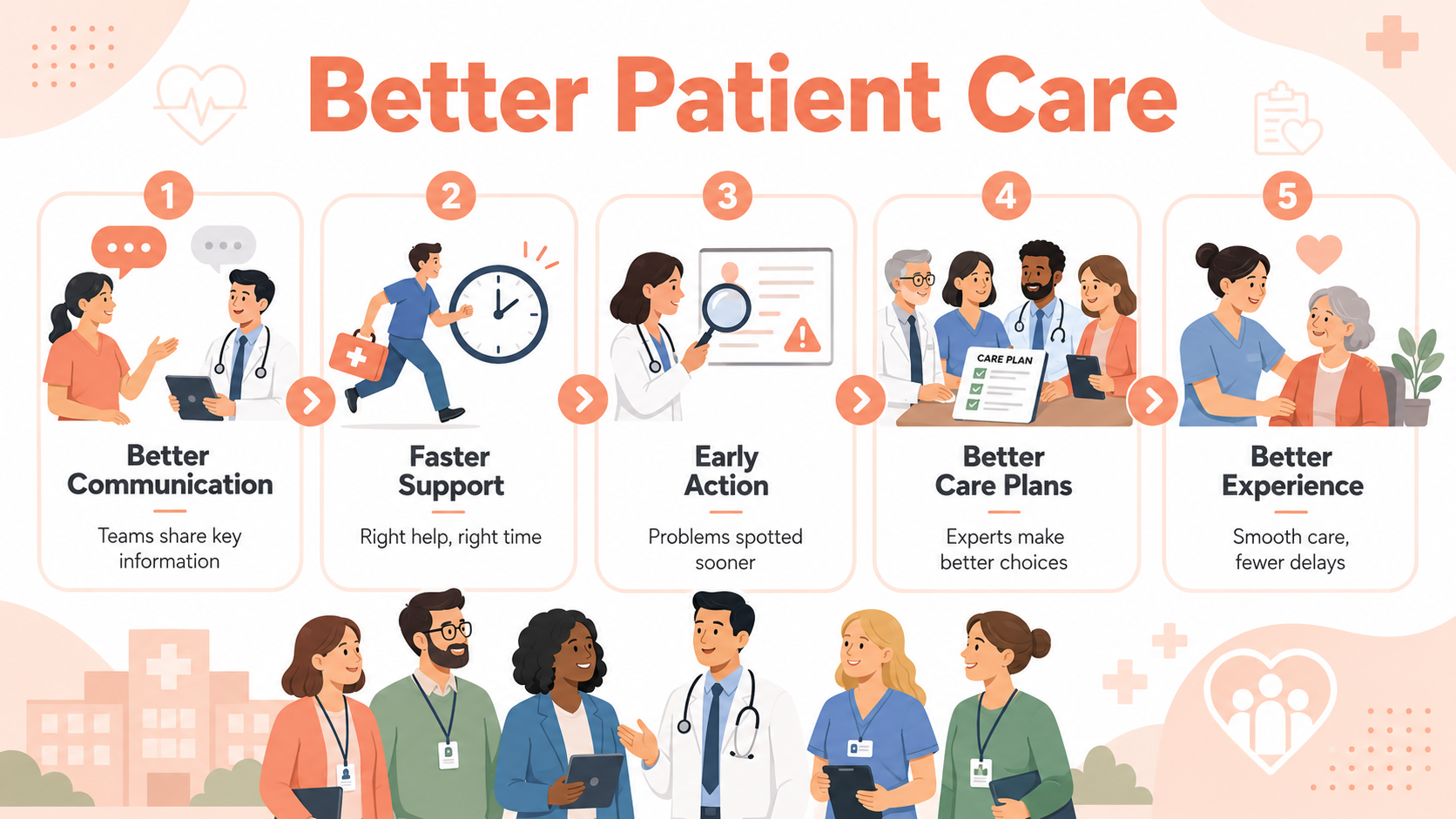
Multi-agency working helps teams give better care. It brings different services together to support each person’s needs.
- Better communication: Teams share information and understand people better.
- Faster support: Teams connect people with the right help quickly.
- Early action: Teams find problems early and reduce risks.
- Better care plans: Experts work together to make better choices.
- Better experience: People get smooth care without delays or repeated checks.
What are the Core Principles of Multi Agency Working?
Multi-agency working uses simple rules to help teams work well together. These rules focus on teamwork, safe communication and shared goals. Moreover, they help different services give better support and meet each person’s needs.
How Does Collaboration Improve Care?
Collaboration helps teams work together. Professionals share ideas and make plans as a team. They also understand their roles clearly. As a result, people get better support from different services.
Why Does Information Sharing Matter?
Sharing information helps teams make better choices. Professionals must protect private details and follow safety rules. They should share information at the right time. They also need consent unless sharing helps protect someone from harm.
How Does Coordinated Care Support Patients?
Coordinated care connects different services. It helps teams avoid doing the same work twice. Also, people can move between services more easily. This creates smoother care and better support.
How Does Teamwork Improve Outcomes?
Good teamwork helps people stay safe and healthy. When teams work together, they can spot problems early and provide better care. Moreover, people often feel happier and more supported during their care journey.
What Makes Multi-Agency Working Successful?
Multi-agency working becomes successful when teams work together in the right way. Clear communication helps people share updates and understand each person’s needs. Also, trust and respect help different services support each other. Teams need shared goals and clear roles to avoid confusion.
Moreover, good leadership helps workers make better choices. Keeping clear records helps teams follow progress and provide safe care. Regular reviews help improve support plans. Ongoing training also helps staff build their skills. As a result, teams can provide better care and support for people.
What is the Difference Between Multi Agency, Multidisciplinary and Integrated Working?
These three ways help people get better care. However, they do not work in the same way. Multi-agency working means different groups work together. For example, doctors, social workers and schools may help one person. They share updates and plan support.
Multidisciplinary working means different experts work together in one team. Doctors, nurses and therapists may work together to help a patient. Integrated care joins different services together. It helps people get care without confusion. All three methods help people stay safe and get the right support.
What Laws Support Multi-Agency Working in the UK?
Many UK laws help different services work together in health and social care. The Care Act 2014 helps teams work together to protect adults. It also supports Section 42 safeguarding enquiries. The Children Act 2004 and Every Child Matters help services protect children.
The Health and Social Care Act 2012 helps services join together. The Data Protection Act 2018 and UK GDPR help teams share information safely. The Mental Capacity Act 2005 protects people’s choices. These laws help teams give safe and better care.
How Does Information Sharing Improve Safeguarding?
Sharing information helps keep people safe. It helps different teams understand what is happening and give the right help at the right time.
- Keep people safe: Teams share information to spot danger and stop harm.
- Ask first: Staff should ask for permission before sharing personal information.
- Share when needed: They can share information without permission if someone is in danger.
- Make better plans: Clear records help teams choose the best support.
- Work together: The right information should reach the right person at the right time.
How Do Multi-Agency Meetings Work?
Multi-agency meetings help different teams work together to keep people safe. In these meetings, staff talk about problems, share new information and decide what to do next. A social worker or safeguarding lead usually leads the meeting, especially during Section 42 safeguarding enquiries.
Meetings can take place in person, online or by phone. The team follows a plan called an agenda. They write down what they discuss and make an action plan. They also set a time to finish each task and choose who will do it. Later, they meet again to check the progress.
When Do Professionals use Multi Agency Working?
Professionals use multi-agency working when a person needs help from more than one service. By working together, they can give better care and support. Teams use this way of working to keep adults and children safe. They also help in cases of abuse, family problems and people who need extra support.
Different teams work together to help people with mental health problems, disabilities and dementia. They also work together when someone leaves hospital or needs end-of-life care. This teamwork helps people stay safe and get the right help at the right time.
What are the Benefits of Multi Agency Working?
Multi-agency working helps different teams work together to help people. It makes care easier, faster and safer. It helps keep people safe and gives help more quickly. Teams share ideas, skills and information to make good choices.
They also make better care plans and give better care. When teams work together, they can save time and use help in the best way. People often get better sooner and receive the right support for a longer time.
What Challenges Affect Multi-Agency Working?
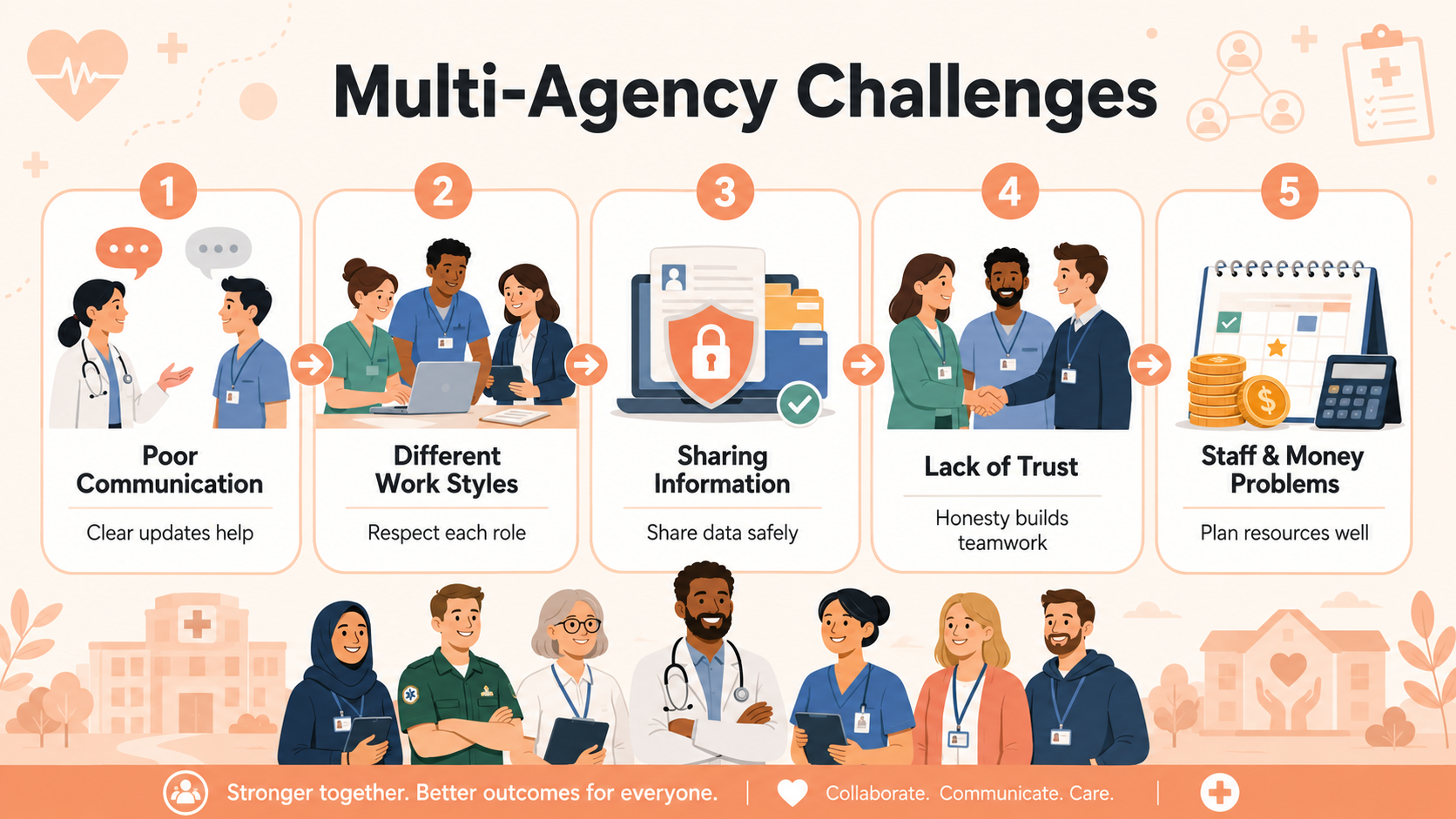
Multi-agency working can have some problems when many teams work together. Simple steps can help teams solve these problems and give better support.
- Poor communication: Teams should talk clearly and share updates often.
- Different work styles: Teams should learn how each service works and respect each other.
- Sharing information: Staff should follow safe rules when sharing important details.
- Lack of trust: Teams should work with honesty and support each other.
- Staff and money problems: Good planning can help teams save time and use resources well.
What is a Real Example of Multi Agency Working?
A simple example of multi-agency working is helping an older person who falls many times at home. Different teams work together to keep the person safe. The GP checks their health and finds the reason for the falls. The hospital team helps if the person has an injury.
A physiotherapist helps them walk safely and build strength. An occupational therapist checks the home and makes it safer. A social worker finds extra help if needed. A community nurse, the local council and the family also support the person during recovery.
How has Multi Agency Working Changed Over Time?
Multi-agency working has changed a lot over time. In the past, teams often worked alone. Now, they work together to help people. In the mid-19th century, health and welfare groups started helping people together. In the 1980s, teams began to build stronger links.
The Children Act 2004 and Every Child Matters helped teams protect children. The Care Act 2014 improved support for adults. Today, Integrated Care Systems (ICSs) help health and care teams work as one. Digital tools also make sharing information easier and safer.
What are the Best Practices for Effective Multi Agency Working?
Effective multi-agency working needs good teamwork and clear steps. When teams work well together, they can give safer and better support to people.
- Build trust: Teams should respect each other and work together.
- Communicate often: Regular talks help teams share updates and solve problems.
- Share clear information: Staff should share correct details in a safe way.
- Respect roles: Each professional should understand their own duties.
- Review and improve: Teams should check care plans, update skills and see if support works well.
Final Thoughts
So, what is multi agency working in health and social care in simple terms? It is the point where separate services stop working in isolation and start working as one joined-up team around the person.
That shared approach can prevent gaps, reduce delays and make support feel less confusing. It also helps professionals see the full picture rather than only one part of someone’s needs. When communication is clear and responsibilities are understood, care becomes safer, faster and more personal.
The strongest services do more than pass information from one team to another. They build trust, share decisions and act early. As people’s needs become more complex, effective multi-agency working will remain central to better care and stronger protection.