Electrical appliances make our daily work easier. However, damaged plugs, loose wires or faulty equipment can cause electric shocks and fires. This is why businesses need to check their electrical equipment regularly. One important way to manage these risks is through regular electrical safety inspections, including PAT testing. What is PAT testing, and why does it matter? PAT stands for Portable Appliance Testing. It helps find faults in electrical equipment. It checks whether electrical appliances are safe to use. Common examples include kettles, computers, printers, microwaves and extension leads. These checks help find electrical faults before they cause harm. They also help businesses keep workers and visitors safe.
In this guide, you will learn how PAT testing works which appliances need it and how often to do it. We will also cover UK rules, costs and other key details.
What Is PAT Testing?
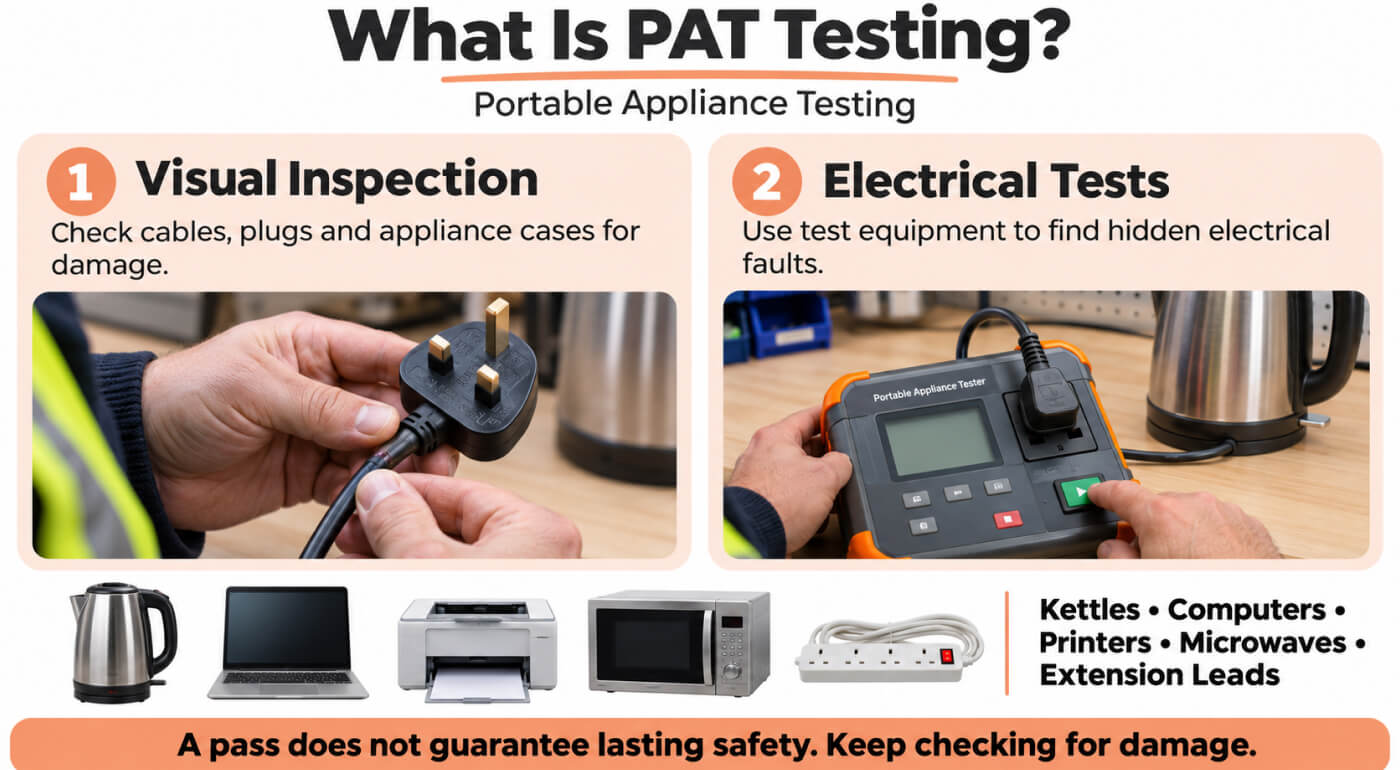
PAT testing stands for Portable Appliance Testing. It checks whether electrical appliances are safe to use. You may find these appliances in offices, shops, schools and homes. Common examples include kettles, computers, printers, microwaves and extension leads. Over time, wires can wear out, plugs can crack and electrical parts can develop faults. These problems may cause electric shocks or fires if nobody checks them.
PAT testing usually involves two main steps. The first is a visual inspection. A competent person looks for damaged wires, loose plugs, broken cases and other visible problems. The second step involves electrical tests. A PAT tester uses special equipment to check the appliance for hidden electrical faults. These checks help people find problems before they cause harm. However, passing a PAT test does not mean an appliance will stay safe forever. Regular checks still matter because damage can happen at any time.
Why Is PAT Testing Important?
Electrical safety is important in every workplace. A damaged wire or faulty plug may look like a small problem. However, it can cause an electric shock or start a fire. PAT testing helps businesses find these problems early. It also helps keep workers, customers and visitors safe.
Regular checks help businesses keep their workplaces safe. For example, faulty computers or loose wires can put office staff at risk. In shops, damaged kettles or other electrical items may hurt workers or customers. Factories also use many tools and machines. So, regular safety checks are very important.
PAT testing can also stop small problems from getting worse. A tester can find broken plugs, damaged wires and other faults. Businesses can then repair or replace faulty items. This helps prevent accidents and keeps everyone safer at work.
Which Electrical Appliances Need PAT Testing?
Many electrical items need regular safety checks. You can find these items in offices, shops, schools, factories and homes. Common examples include computers, kettles, printers and extension leads. PAT testing helps find damage and electrical faults before they cause harm.
Here are some common examples:
- Computers, laptops and monitors: Check their plugs, wires and power cables for damage.
- Kettles, microwaves and toasters: Look for broken plugs, loose wires and other signs of damage.
- Printers and photocopiers: Make sure the power cables and plugs stay in good condition.
- Extension leads and power cables: Check for cuts, cracks and loose parts.
- Vacuum cleaners: Look for damaged wires, plugs and loose connections.
- Portable heaters and fans: Check these items often, especially when people use them every day.
- Power tools: Drills, saws and other tools need regular checks, mainly on busy work sites.
However, some appliances need more checks than others. For example, workers often move power tools from one place to another. This can damage their wires and plugs. A computer on an office desk may face less damage. So, businesses should check how often people use each item and where they use it. The Health and Safety Executive (HSE) says that UK law does not require annual PAT testing. However, under the Electricity at Work Regulations 1989, employers must make sure all electrical equipment is safe. Regular checks help businesses find faults and protect people from harm.
How Does PAT Testing Work?
PAT testing involves a few simple steps to check if an electrical appliance is safe to use. A trained person starts by looking at the appliance, plug and power cable. They check for cuts, cracks, loose parts and broken plugs. Burn marks or signs of heat damage may also show a problem. If they find any damage, they may stop the test and make sure nobody uses the faulty item.
Next, the tester may use a PAT testing machine to find hidden faults. The machine checks parts such as the earth wire and the insulation around electrical parts. These checks help find problems that people cannot see. However, the tester chooses the right tests based on the type of appliance. After the checks, the tester records the results. Each appliance gets a pass or fail result. A pass label shows that the item passed the checks on that date. If an appliance fails, the business should stop people from using it. They must repair or replace it before anyone uses it again. Clear records also help businesses plan future checks and keep track of each appliance.
What Are the Different Types of PAT Tests?
PAT testing can include different types of electrical tests. Each one checks a different part of an appliance. Together, they help find faults that may cause electric shocks or other harm. The tester chooses the right tests for each appliance.
- Earth Continuity Test: This test checks the earth wire inside an appliance. The wire helps protect people if an electrical fault occurs. The tester checks whether it has a good connection. A poor connection can make an appliance unsafe and increase the risk of an electric shock.
- Insulation Resistance Test: Good insulation keeps electricity in the right place. During this test, the tester checks the insulation around electrical parts using special equipment. Damaged insulation can let electricity escape and cause an electric shock.
- Earth Leakage Test: The tester checks if electricity leaks from an appliance. A leak may point to a fault inside it. High leakage can put users at risk of an electric shock. The test helps find problems that need attention.
- Lead Polarity Test: Correct wiring keeps an appliance safe to use. This test checks if the wires in a plug or power cable are in the right places. These include the live, neutral and earth wires. Incorrect connections can make an appliance unsafe, so the tester checks that the wiring is correct.
How Often Should PAT Testing Be Done?
UK law does not set one fixed time for PAT testing. Not all appliances need a test each year. Businesses should look at how people use their equipment. A risk assessment helps them choose the right time for testing. Some items need more checks than others. For example, power tools on busy building sites can get damaged easily. A kettle used daily may also need regular checks. However, a lamp that stays in one place may need fewer checks.
Here are some suggested check times:
- Power tools on building sites: A check after 3 months.
- Kettles and kitchen appliances: A check after 6 to 12 months.
- Office computers and printers: Every 1 to 2 years.
- Lamps in guest rooms: Every 2 to 4 years in low-risk places.
These times are only examples. The right schedule depends on how people use each appliance. Visual checks matter too. Before using an appliance, workers should look for damaged plugs, loose wires or broken parts. They may need to do these checks more often than electrical tests. Regular checks help find damage early and keep people safe.
What Does UK Law Say About PAT Testing?
UK law does not require every business to carry out PAT testing. However, employers must keep electrical equipment safe for their staff and visitors. Regular checks can help prevent electric shocks, burns and fires.
The Electricity at Work Regulations 1989 require employers to keep electrical equipment safe. They must also fix faults that could hurt someone. For example, a damaged power tool could give a worker an electric shock. The employer must stop workers from using it until someone fixes or replaces it. The Health and Safety at Work etc. Act 1974 also requires employers to protect their staff. They must take steps to reduce risks at work.
Who Is Responsible for Electrical Safety?
Different people have different duties:
- Employers: Must keep workplace electrical equipment safe and arrange checks when needed.
- Self-employed workers: Need to keep the electrical equipment they use in safe condition.
- Employees: Should follow safety rules and report damaged plugs, wires or appliances.
- PAT testers: Need the right skills and knowledge to check equipment safely.
A business can hire a trained worker or an outside company to carry out PAT testing. However, the employer remains responsible for workplace electrical safety.
Does the Law Set a PAT Testing Schedule?
No UK law sets a fixed date for PAT testing. Businesses do not need to test every appliance once a year. Instead, they should check how often people use each item and where they use it. For example, a daily-use kettle or a busy site power tool may need more checks than a desk lamp. Keeping records of checks, tests and repairs also helps. These notes help employers track faults, plan future checks and show that they take safety seriously.
Who Can Carry Out PAT Testing?
A person with the right skills and knowledge can carry out PAT testing. They do not always need a special licence or formal qualification. However, they must know how to check electrical items safely and use testing tools correctly. A competent tester should know how to spot damage to plugs, wires and appliances. They should also know how to use a PAT testing machine and understand the results. Good testers can find faults and record their findings clearly.
Employers can test their own equipment if they have the right training. For example, a trained member of staff can check office kettles, computers and other small appliances. However, some equipment needs more care and skill. In these cases, businesses should hire an experienced PAT testing professional. This is often a better choice for large workplaces, busy building sites or places with complex electrical equipment. Choosing the right tester matters. A skilled person can spot problems that others may miss. They can also help businesses fix faults before someone gets hurt. After all, electrical safety is too important to leave to guesswork.
How Much Does PAT Testing Cost in the UK?
PAT testing in the UK usually costs £1 to £3 per appliance. However, many companies also charge a visit fee of around £40 to £80. So, you may pay more if you only have a few items to test. The price often depends on how many items you have. For example, testing 50 items may cost £100 to £155. A large workplace with 300 or more items may pay £360 or more. Some companies also offer lower prices for large jobs.
Here are some example costs:
|
Property type |
Number of items |
Estimated cost |
|
Small home or office |
Up to 20 |
£45–£85 |
|
Small business |
Around 50 |
£100–£155 |
|
Medium workplace |
Around 100 |
£130–£255 |
|
Large workplace |
300 or more |
£360+ |
What Affects the Cost of PAT Testing?
A few things can change the price:
- Visit fee: A tester may charge £40 to £80, even if you have only five items.
- Location: PAT testing often costs more in London and the South East.
- Workplace type: A small office takes less time to check than a busy factory.
- Extra services: Evening and weekend visits may cost more. Microwave safety checks may also add to the bill.
Before you book, ask the company for the full price. Check if it includes test labels and a report. Also, ask about extra fees. This will help you avoid surprise costs later.
What Are the Main Advantages of PAT Testing?
Regular PAT testing helps businesses keep electrical equipment safe. It also protects people from harm and helps prevent costly problems. Here are some key benefits:
- Prevents accidents: Regular checks help find faults before they cause electric shocks, burns or fires.
- Keeps people safe: Safe appliances protect workers, customers and visitors from electrical dangers.
- Finds damage early: PAT testing helps spot broken plugs, loose wires and faulty appliances before they cause trouble.
- Improves workplace safety: Regular checks help employers look after their staff and meet their safety duties.
- Helps track equipment: Test records help businesses keep track of their appliances and plan future checks.
- Saves money: Finding faults early can stop small problems from getting worse. This may help businesses avoid costly repairs or buying new equipment.
Most importantly, regular PAT testing gives people more peace of mind. Everyone deserves to feel safe when using electrical equipment at work.
Final Thoughts
Now you know what is PAT testing and why it matters. Regular checks help find electrical faults before they cause harm. They also help keep workers, customers and visitors safe. UK law does not set fixed testing dates, so businesses should check their equipment based on risk and use. If you want to learn how to carry out these checks, the PAT Testing Course (Portable Appliance Testing) can help you build your knowledge and skills. A little care today can help prevent serious problems tomorrow.
FAQs About What Is PAT Testing
1. What does PAT testing actually do?
PAT testing checks electrical items to make sure they are safe to use. It includes checking for damage and testing for electrical faults. This helps prevent electric shocks and fires.
2. Is a PAT test a legal requirement?
PAT testing is not a legal duty for UK businesses. However, employers must keep electrical equipment safe. PAT testing helps them meet this duty.
3. Can you do a PAT test yourself?
Yes, you can do a PAT test yourself if you have the right training and tools. You must know how to use the tester and check the results safely.
4. What will fail a PAT test?
An electrical item may fail a PAT test if it has:
- Broken or damaged plugs.
- Loose wires or connections.
- Exposed or damaged cables.
- Incorrect fuses.
- Poor insulation.
- Signs of electrical faults.
5. How much do PAT testers charge in the UK?
PAT testers usually charge around £1 to £1.25 per item. Some may also charge a call-out fee of £40 to £60. The price depends on the number of items and location.
6. Is PAT compulsory?
No, PAT testing is not compulsory by law. However, businesses must make sure their electrical items are safe to use. Regular checks can help them do this.
7. Can you PAT test without being an electrician?
Yes, you do not need to be an electrician to do PAT testing. However, you must have the right training and skills. You must also know how to use the testing equipment safely.