Fire safety is a huge responsibility for every workplace. In the UK, the laws are very strict to keep people safe. However, a written plan is never enough on its own. Real people must be ready to act when danger appears. Therefore, we need to ask an important question. What is the role of a fire warden in our daily lives?
For new residents in the UK, understanding this role is vital. It helps you stay safe at work and in public buildings. Sadly, fire is still a real danger in this country. Let’s break it down to know all the key duties and safety steps that fire wardens follow each day.
Key Stats And Context for the Role of Fire Warden
We can look at the official numbers to understand the risk. In England, the statistics for the year ending December 2024 are sad. In total, there were 254 fire-related fatalities. That means 254 people lost their lives due to fire. Specifically, 199 of these deaths happened in dwelling fires. A “dwelling” is just a formal word for a home or house. This group made up around 78% of all fire deaths. These numbers come directly from the GOV.UK reports.
On a positive note, overall fire incidents have fallen recently. In the last decade, the total number of fires has dropped. However, hundreds of people are still killed every single year. Additionally, thousands more are injured in UK fires. This data comes from the International Fire & Safety Journal. Consequently, we cannot just ignore the risk. We must be prepared.
The Legal Context
The law in the UK takes fire safety very seriously. The Fire Safety Regulatory Reform Order of 2005 is the primary law. This law applies to almost all non-domestic premises. “Non-domestic” means places that are not private homes, like offices. Under this law, there is a “responsible person”. Usually, this is the business owner or the building manager.
This person has many big duties. For instance, they must do a fire risk assessment. They must also put preventive measures in place. Furthermore, they need to plan clearly for emergencies. Finally, they must give information and training to all staff.
Article 18 of this law is very important. It talks about “safety assistance”. The responsible person must appoint “competent persons”. These helpers assist with safety measures. In practice, we usually call these people fire wardens. Sometimes, you might hear them called fire marshals.
The High-Level Role
So, what do these people actually do? Ideally, fire wardens are trained staff members. They have two main jobs. First, they help prevent fires from starting day-to-day. Second, they lead the evacuation during a real emergency. This combination keeps everyone safe.
What Is the Role of a Fire Warden During Emergencies?
When a fire alarm sounds, everything changes instantly. Panic can happen very quickly. Therefore, a calm leader is necessary. This section explains the core answer in plain English.
Core Emergency Role
During a real fire, the warden has a specific job. First, they must raise or confirm the alarm. If they see a fire, they must act immediately. They ensure the fire alarm system is active. This sound warns everyone else in the building.
Next, they lead the evacuation. They guide people away from danger. They show people the correct exits to use. Also, they direct everyone to the assembly points. An assembly point is a safe place outside the building.
In addition, they perform a “sweep” of the area. This means they check rooms to make sure they are empty. They look in offices, meeting rooms, and toilets. They also check storerooms where people might be hiding. However, they only do this if it is safe. They assist people who need extra help. For example, some people have disabilities or mobility issues. The warden helps them follow their Personal Emergency Evacuation Plans (PEEPs).
Finally, they try to slow down the fire. They do this by closing doors behind them. A closed door stops smoke from spreading quickly. But they only do this if they can stay safe.
Reporting Information
Once outside, the job is not finished. They must report to the person in charge. Usually, they meet at the assembly point. They give vital information to the fire service.
- Clear Areas: They confirm if their zone is empty.
- Location: They say where the smoke was seen.
- Hazards: They mention dangers like gas cylinders or chemicals.
- Missing People: They report anyone who did not get out.
There is one most important rule. Fire wardens do not replace the fire service. Their job is to get people out quickly. After that, they give good information to firefighters.
What Does a Fire Warden Do Before an Emergency?
Most of the time, there is no fire. However, the warden is still working. Prevention is better than a cure.
The Legal Hook
Article 18 says “competent persons” must help. This means wardens help with the daily safety rules. The responsible person decides the rules, but wardens make them work.
Assisting With Risk Control
First, they assist with fire Warden risk control measures. A “risk assessment” is a check of what might cause harm. Wardens help managers fix problems found in this check. For instance, they might remove combustible storage. “Combustible” means something that burns easily, like paper. They remove these items from escape routes. Also, they improve general housekeeping to keep areas tidy.
Monitoring Escape Routes
Second, they watch the escape routes carefully. Corridors and stairwells must be clear. If a box blocks a hall, people cannot escape. Furthermore, they check that exit doors open easily.
Crucially, they check fire doors. A fire door is heavy and stops fire from spreading. Sometimes, people wedge them open with doorstops. This is very dangerous. The warden checks that fire doors are not partially open.
Checking Local Equipment
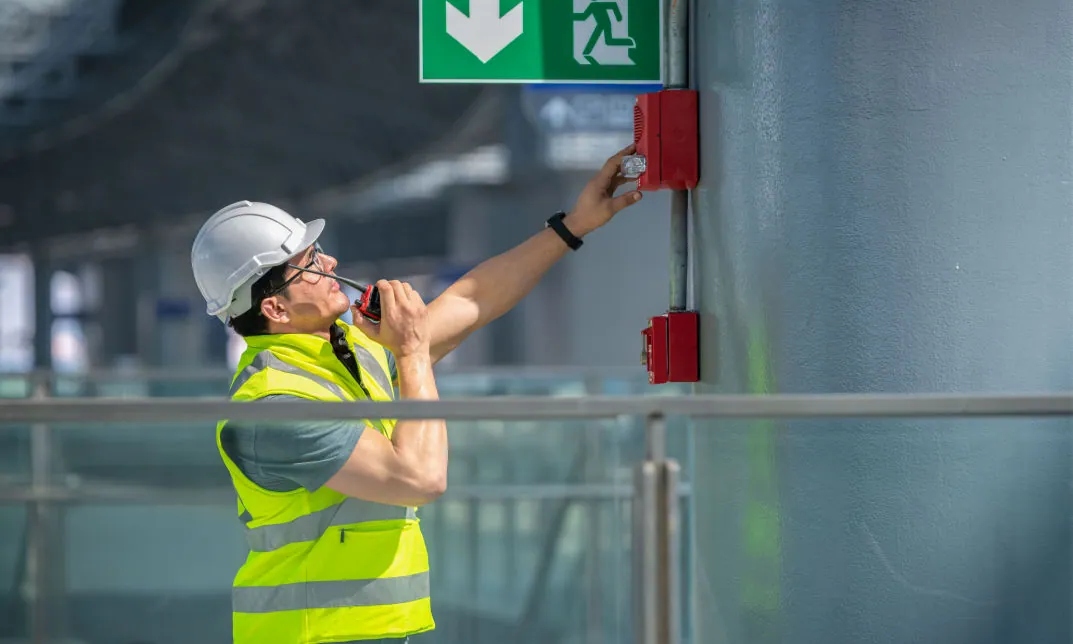
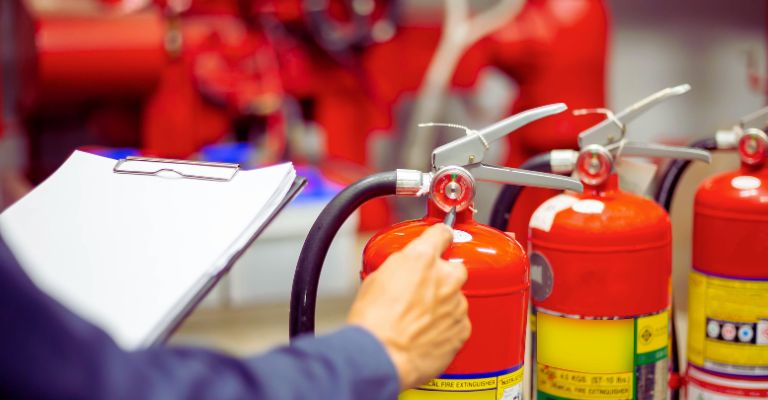
Third, they look at safety equipment visually. They check that fire extinguishers are present. They make sure nothing is blocking the extinguisher. Also, they check the “call points“. These are the red boxes you smash to sound the alarm. They must be visible to everyone. Additionally, they check that emergency lights and signs are in place.
Supporting Fire Drills
Fourth, they support fire drills. A drill is a practice run for a fire. Government guidance says there should be one drill per year. Wardens help plan these drills. During the practice, they make sure people know the routes. Afterwards, they tell managers about any problems.
Promoting Fire Safety
Finally, they promote safety in their area. They remind colleagues about the rules. For example, they enforce no-smoking rules. They check that portable heaters are used safely. Moreover, they ensure rubbish does not build up. This proactive attitude stops fires before they start.
What Does a Fire Warden Do During an Emergency?
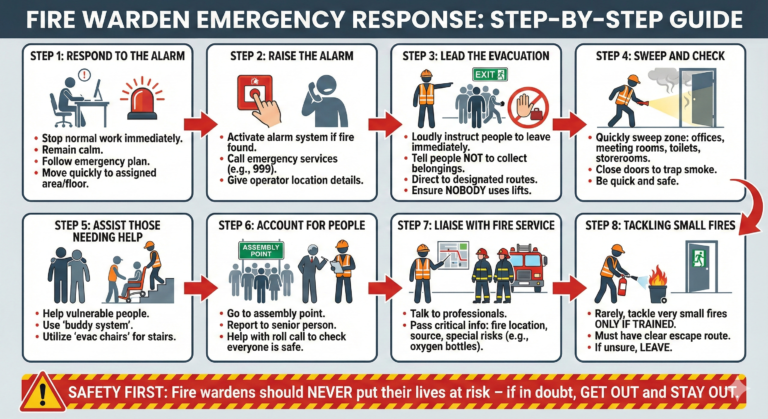
Imagine the alarm goes off right now. What happens next? Here is a step-by-step picture for you.
Step 1: Respond to the Alarm
Immediately, the warden stops their normal work. They must remain calm. Then, they follow the workplace emergency plan. They move quickly to their assigned area or floor.
Step 2: Raise the Alarm
If they find the fire, they must act. They activate the alarm system. In addition, they might need to call 999. They give the operator details about the location.
Step 3: Lead the Evacuation
Next, they tell people to leave immediately. This instruction must be loud and clear. Crucially, they tell people not to collect belongings. Bags and coats are not worth dying for. They direct people to the designated routes. Furthermore, they ensure nobody uses the lifts. Lifts can be dangerous in a fire.
Step 4: Sweep and Check
Then, they sweep their zone. They quickly check offices and meeting rooms. They look in toilets and storerooms. As they go, they close doors. This action traps the smoke. However, they must be quick and safe.
Step 5: Assist Those Needing Help
At the same time, they help vulnerable people. They might use a “buddy system”. This is where a friend helps someone walk. For stairs, they might use “evac chairs”. These are special chairs for going down stairs safely.
Step 6: Account for People
After leaving, they go to the assembly point. They report to the senior person. They help with the roll call. This is a list of names to check that everyone is safe.
Step 7: Liaise With Fire Service
Then, they talk to the professionals. They pass on critical information and say where the fire is. Also, they describe the source of the fire and mention any special risks, like oxygen bottles.
Step 8: Tackling Small Fires
Finally, they might tackle a small fire. However, this is rare. They only do this if they are trained. Also, the fire must be very small. There must be a clear escape route. If they are unsure, they leave.
Safety First: Fire wardens should never put their lives at risk – if in doubt, get out and stay out.
How Do Fire Wardens Keep People Safe?
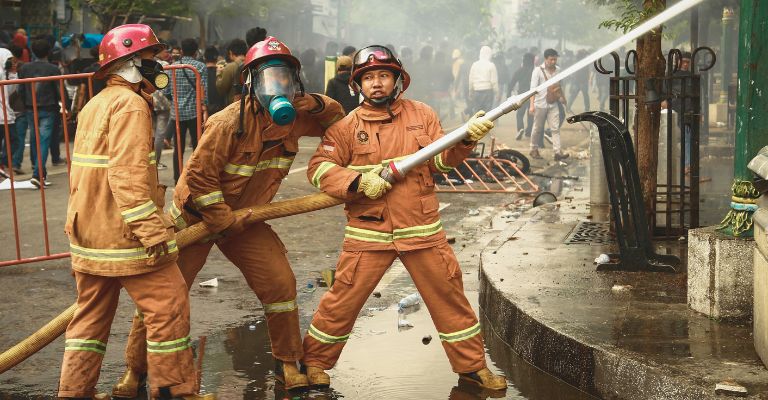
You might wonder how these tasks help. This section explains the mechanisms of safety.
Preventing Fires First
Ideally, a fire never happens. Wardens reduce risk by checking housekeeping. They look for electrical risks like bad wires. They watch for overloaded sockets. By fixing these, they stop the spark.
Keeping Routes Usable
During a fire, smoke makes it hard to see. Therefore, escape routes must be clear. Wardens ensure exits are unlocked. They check that the signs point the right way. This lets people escape quickly without confusion.
Maintaining Readiness
Practice makes perfect. Wardens support the annual fire drills. Drills create “muscle memory“. This means your body knows what to do automatically. In a real emergency, people will not panic as much.
Protecting High-Risk People
Everyone deserves to be safe. Wardens help create PEEPs for disabled staff. This includes visitors, pupils, or patients. They make sure these plans actually work.
Ensuring Systems Work
Finally, they act as a warning system. They spot faults in alarms or doors. They report broken emergency lighting. Consequently, problems are fixed before a fire happens. In most workplaces, fire wardens are vital. They turn a written fire plan into real-world action.
What Checks Do Fire Wardens Need to Make?
To be effective, wardens use a checklist. The law requires fire precautions to be maintained. Many routine checks are delegated to wardens.
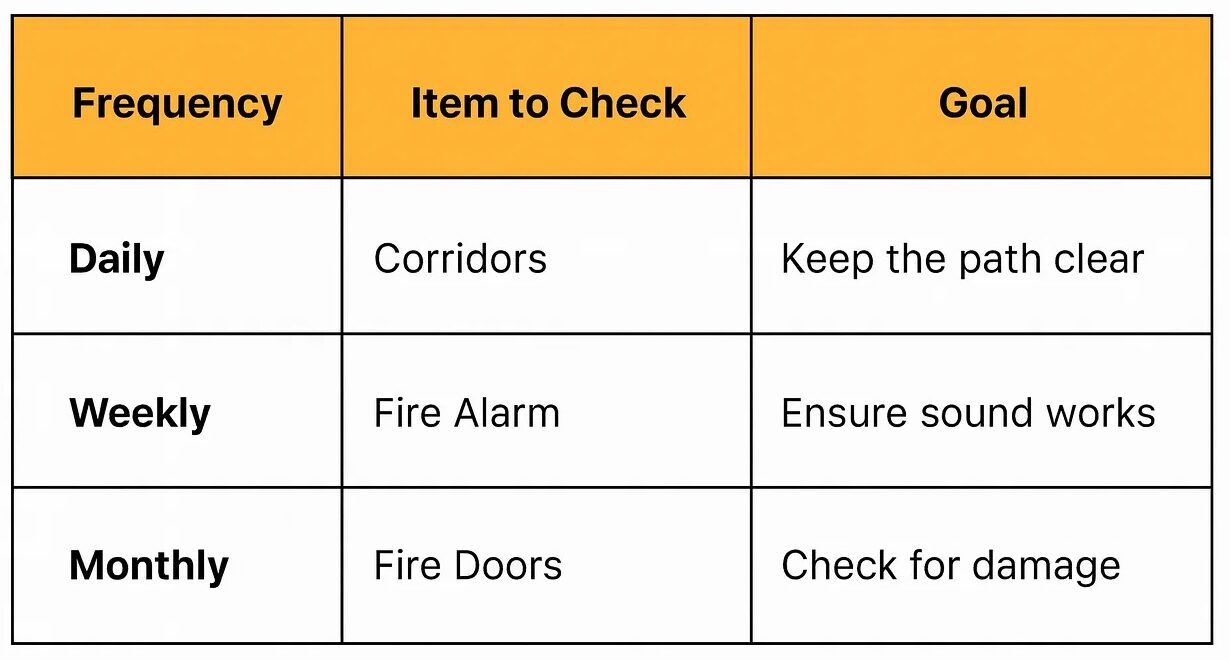
Daily and Routine Checks
These are quick visual checks. They happen every day.
- Escape Routes: They ensure stairs are clear. No boxes should be on the stairs.
- Doors: They check that fire doors are closed. They must not be wedged open.
- Signs: They ensure exit signs are visible.
- Hazards: They look for obvious dangers like rubbish build-up.
Weekly Checks
These checks are a bit more formal. Usually, the results are written down.
- Alarm Test: One call point is tested every week.
- Extinguishers: They check that the pressure gauge is green. They ensure the pin is in place.
- Lighting: They check that emergency lights turn on.
- Exits: They check that the final exit doors open easily.
Monthly Checks
Every month, a deeper check is needed.
- Door Seals: They look closely at fire doors. They check the seals and hinges.
- Signage: They do a detailed look at all signs.
- Logs: They check the logbook is up to date.
Record-Keeping
Writing things down is very important. Fire wardens often help keep a fire logbook. This book records alarm tests and drills. It records defects and when they were fixed. This helps prove compliance if an inspector visits.
What Training Does a Fire Warden Need?
A title is not enough. You need skills to save lives. Article 21 of the Fire Safety Order requires training. The responsible person must provide this.
Legal Basis for Training
Government guidance is clear. All staff must be told what to do. However, wardens need extra training. This happens when they start the job. It also happens if risks change.
Specific Topics Covered
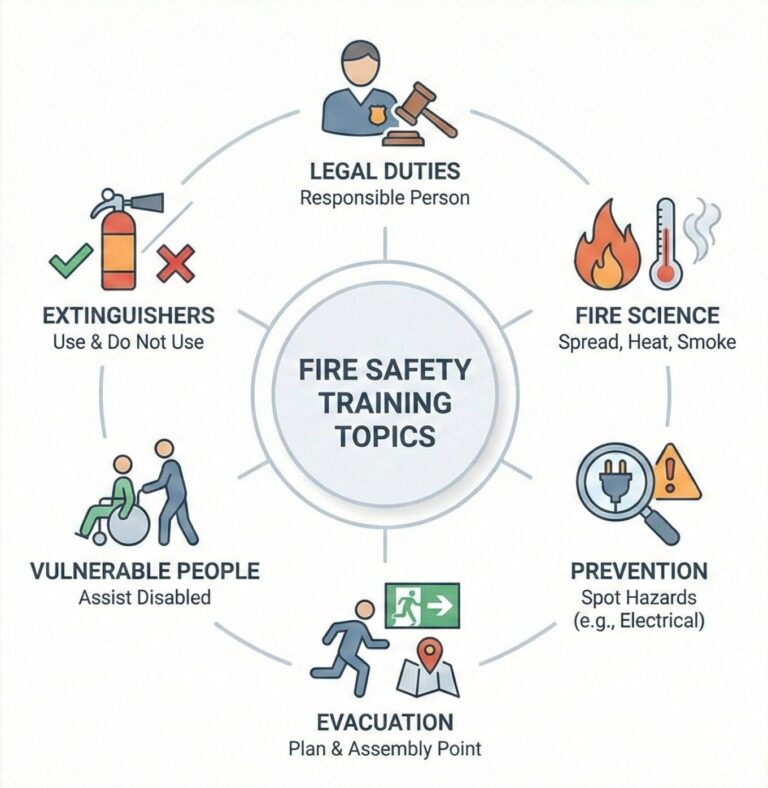
Training usually covers several topics.
- Legal Duties: They learn about the “responsible person”.
- Fire Science: They learn how fire spreads. They learn about heat and smoke.
- Prevention: They learn how to spot hazards. This includes electrical safety.
- Evacuation: They learn the specific building plan. They learn where the assembly point is.
- Vulnerable People: They learn how to help people with disabilities.
- Extinguishers: They learn when to use them. More importantly, they learn when not to use them.
Refresher Expectations
Memory fades over time. Therefore, training must be repeated. Government guidance suggests regular refreshers. Most providers recommend refreshing every 1 to 3 years. For high-risk places like care homes, it is more frequent. It might be every 6 months.
A fire warden must be a “competent person”. This means they need enough training and knowledge. Only then can they carry out their role safely.
Final Thoughts on Fire Warden Roles
We have covered a lot of information. Let’s bring the main facts back together: Fire wardens exist because fires still cause deaths and damage every year. Their job is to turn a fire plan into real action when people need help. The law doesn’t use the word “warden”, but they act as the “competent persons” that every workplace must appoint. They also need proper training so they can respond safely.
The key thing to remember is this: every workplace needs enough wardens to manage fire safety each day and to guide people out quickly during an alarm. A common guide is one warden per 50 people in low risk, one per 20 in medium risk, and one per 15 in high risk. In conclusion, the risk assessment confirms the final number.
Frequently Asked Questions (FAQ)
1. What is the role of a warden?
- A fire warden helps prevent fire risks and leads people to safety during an evacuation.
2. What should a fire warden never do?
- They should never fight large fires or take risks that put their own safety in danger.
3. Is a fire warden a trained firefighter?
- No. They receive safety training, but they are not firefighters.
4. What should a fire warden do immediately?
- Raise the alarm, guide people out, and report what they see.
5. What are the duties of a fire warden?
- Check escape routes, monitor risks, support drills, and lead evacuations.
6. How powerful is a warden?
- Their authority is limited to safety tasks, not management decisions.
7. What does a warden actually do?
- They spot hazards, help keep areas safe, and direct people during emergencies.
8. How do you identify a fire warden?
- They usually wear a marked vest, badge, or armband during emergencies.
9. What is a warden responsible for?
- They are responsible for safety checks and helping people evacuate safely.
10. Is a warden considered a boss?
- No. They guide safety, but they don’t have managerial power.