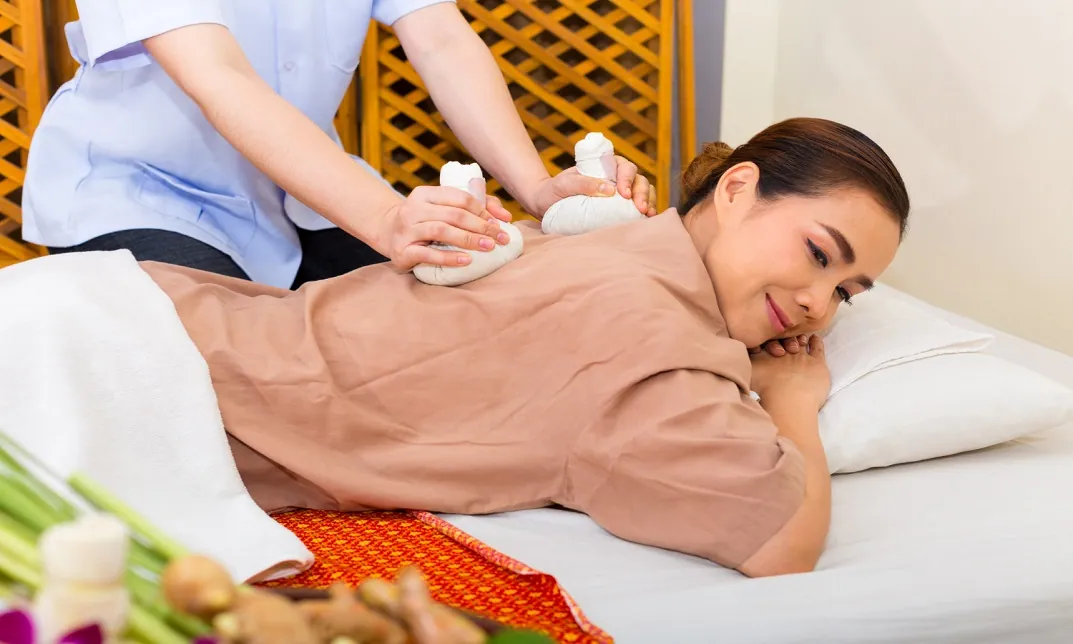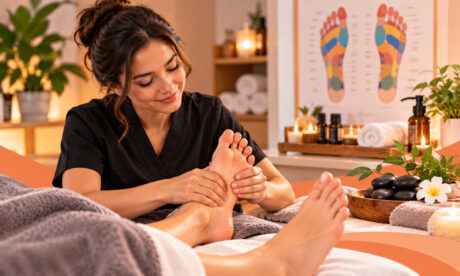
The benefits of Thai yoga massage attract many people who want simple help for body pain and stress. It may help improve flexibility. It can also ease muscle tightness and support easier movement in daily life. Many people also feel calm and relaxed after a session. It may also help reduce stress after a long and busy day.
Thai yoga massage is often called assisted yoga. The therapist gently moves and stretches your body. You stay relaxed on the mat the whole time. You just lie down and breathe normally while the therapist works on your body.
Now let’s dive in and explore Thai massage, its benefits, who it suits and how to prepare safely in the UK.
What Is a Thai Massage?
A Thai massage is a body treatment that uses movement, pressure and stretching. It is a simple way to relax your body without using oil.
You lie on a firm mat and stay fully relaxed. At the same time, you wear loose clothes, so you feel comfortable during the session. You do not need to move or do anything by yourself.
The therapist gently guides your body into different stretches. It feels like assisted yoga. They start with light pressure and then slowly move your body into deeper stretches based on what feels right for you.
They use hands, palms, thumbs, elbows and sometimes knees or feet. Each part helps them press and stretch tight muscles in a safe and controlled way.
Unlike a normal oil massage, Thai massage does not only rub the skin. Instead, it mixes stretching, pressure and movement together. As a result, your body feels looser, lighter and more relaxed.
What Is a Traditional Thai Massage?
Traditional Thai massage, also known as Nuad Thai, comes from Thailand’s old healing system. It has a long history and strong cultural roots in Thailand. At its core, this massage works on the whole body. It uses slow pressure, gentle stretching and guided movement. It also follows the idea of Sen lines, which are energy pathways in traditional Thai healing.
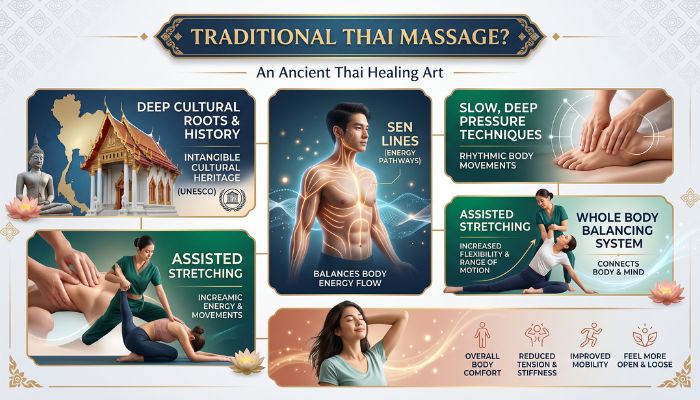
On a cultural level, UNESCO recognised Nuad Thai in 2019 as part of the Intangible Cultural Heritage of Humanity. This shows its long tradition and importance in Thai history.
Unlike a simple spa massage, it not only relaxes muscles. Instead, it treats the body as one connected system. It focuses on movement, balance and overall body comfort. It also includes assisted stretching. The therapist guides your body into safe positions. You may not reach these positions alone. As a result, your body feels more open, loose and easier to move.
What Is a Thai Massage Session Like?
A Thai massage description begins in a calm and simple setting. You lie on a firm mat or a low massage mattress. You stay fully dressed in loose, comfortable clothes. This helps your body move without any discomfort.
Before the session starts, the therapist has a short talk with you. They ask about pain, stiffness and tight areas. This helps them focus on what your body really needs. Then the massage begins. You lie back and relax. The therapist starts with light pressure to warm up your muscles. After that, they guide your body into slow stretches and gentle yoga-like movements.
During the session, you may feel a deep stretch in your muscles. This can feel strong at times. Still, it should never feel sharp or painful. A good therapist always checks your comfort and adjusts the pressure when needed.
As the session goes on, the movements slow down. The pressure also becomes softer and more calming. At the end, you rest for a short moment. Many people leave feeling lighter, looser and fully relaxed in their body.
What Are the Main Benefits of Thai Yoga Massage?
The benefits of Thai yoga massage come from slow movement, steady pressure and gentle stretching. Many people choose it to feel better in both body and mind. It may help reduce daily stress. It can also ease muscle tightness and support smoother movement in the body.
Here are the main benefits in simple points:
- Helps improve flexibility and makes body movement easier
- Relaxes tight muscles and reduces stiffness
- Eases tension in the back, neck, and shoulders
- Helps the mind feel calm and relaxed
- Improves posture and body awareness
- Makes the body feel lighter and less tight
- Helps breathing feel easier through chest opening stretches
- Improves joint comfort and reduces “stuck” feeling in the body
- Helps the body feel more balanced on both sides
- Reduces heavy and tired feeling after a long day
- Supports recovery after long sitting or standing
- Helps you notice tight areas in your body earlier
Many people also feel more relaxed after a session. This simple mix helps release tension and brings a calm and fresh feeling. As a result, some people sleep better and feel more balanced in daily life.
According to the Cleveland Clinic, Thai massage may support flexibility, back pain, headache pain, stress, anxiety and digestion (Cleveland Clinic). However, it does not treat or cure medical problems. It only supports general body comfort.
How Does It Improve Flexibility?
Thai yoga massage improves flexibility through assisted stretching. The therapist gently moves your body into different positions. Some stretches feel hard to do alone. Still, the therapist keeps everything safe and controlled.
As the session continues, the therapist works on tight muscles. At the same time, they guide your joints through natural movement. This helps reduce stiffness in the body.
When muscles relax, the body moves more freely. Simple actions like bending, turning, or reaching start to feel easier. As a result, office workers, active people and people with stiff bodies often choose this massage.
At the start, the stretch may feel deeper than expected. However, it should never feel painful or forced. A trained therapist always adjusts the pressure based on your comfort. Over time, the body feels more open. Movement becomes smoother. Daily activities also feel easier and less tight.
Can Thai Yoga Massage Help Muscle Pain?
Thai yoga massage may help ease muscle tightness with steady pressure, stretching and slow movement. Many people try it when they feel pain or stiffness in daily life. It often focuses on common tight areas, such as:
- Lower back
- Shoulders
- Neck
- Hips
- Legs
- Upper back
These areas often feel sore from long sitting, standing, or daily work strain.
According to NHS guidance, manual therapy can be one option for back pain care. This includes treatment where a trained therapist works on muscles, bones and joints (nhs.uk). Thai yoga massage uses a similar manual therapy style.
At the same time, results are different for each person. Some people feel relief after one session. Others notice a change after a few sessions as the body slowly loosens.
Overall, Thai yoga massage can support comfort and reduce muscle tightness. However, it should not replace medical care. If you have severe, new, or long-term pain, speak with a GP or physiotherapist before booking a session.
How Does Thai Yoga Massage Reduce Stress?
Thai yoga massage uses slow movement, steady pressure and calm breathing. This simple approach helps the body slow down after a busy day. As the body relaxes, the mind also starts to feel calmer.
During the session, you lie still and focus on your breathing. The therapist guides your body in a slow and gentle way. This gives you time to pause. It also helps release tension from daily stress. Many people feel mentally lighter after a session. Some feel clearer in their thoughts. Others feel calm and peaceful inside.
In simple terms, when the body relaxes, the mind follows. That is why many people use Thai yoga massage as a way to reset after stress. At the same time, it is important to stay realistic. Thai yoga massage may support feelings of stress and anxiety. However, it does not replace professional mental health care.
Overall, the benefits of Thai yoga massage include a slower mind, calm breathing and a deeper sense of relaxation.
Can Thai Yoga Massage Help Sleep and Energy?
After a Thai yoga massage, people feel different. Some feel sleepy and very relaxed. Others feel fresh, light, and more active. Both feelings are normal.
This depends on your body, the pressure used and the time of your session. For example, evening sessions often lead to sleepiness. At the same time, daytime sessions may leave you feeling more awake. After the session, give your body time to settle. Drink water to stay hydrated. Also, avoid rushing back into busy work straight away. A short rest helps your body adjust better.
Many people notice better sleep on the same night. Others feel steady, calm energy the next day. Overall, Thai yoga massage supports a natural balance in the body. It does not force sleep or energy. Instead, it helps your body return to its normal rhythm.
Does Thai Yoga Massage Improve Blood Flow?
Thai yoga massage uses steady pressure and gentle body movement. This can support blood flow by helping the body move better. As muscles stretch and relax, blood can move more easily through tight areas.
According to the Cleveland Clinic, Thai massage may support flexibility and range of motion by improving blood flow and oxygen supply to muscles (Cleveland Clinic).
During the session, many people feel warmth in their bodies. This warmth comes from better movement in the muscles. As a result, the body often feels looser and more relaxed.
At the same time, safety is important. Thai yoga massage does not treat circulation problems or diseases. If you have heart problems, blood pressure issues, or circulation concerns, speak with a GP before booking a session.
What Techniques Are Used in Thai Massage?
Thai massage uses simple body techniques. Each one has a clear purpose during the session. A trained therapist always adjusts pressure and movement based on your comfort, age, body type and health history.
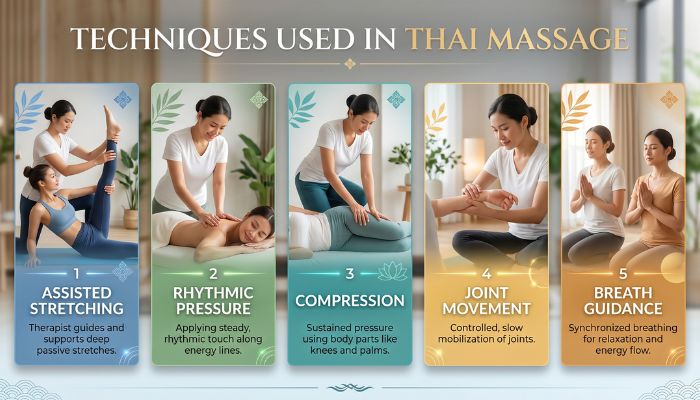
Assisted Stretching
- Guides your body into yoga-like stretches
- Keeps you relaxed while the body moves into position
Rhythmic Pressure
- Applies steady pressure in a slow rhythm
- Uses palms, thumbs, elbows and sometimes feet
- Movements stay slow, smooth and controlled
Compression
- Presses into tight muscle areas
- Holds pressure for a short time
- Releases slowly to reduce tightness
Joint Movement
- Gently moves joints through natural motion
- Keeps movements slow and careful
- Supports easier body movement
Breath Guidance
- May guide slow, deep breathing
- Matches breath with deeper stretches
- Helps you stay calm and steady during the session
Overall, these techniques work together to create a slow, safe and balanced full-body treatment.
Who Benefits Most from Thai Yoga Massage?
Thai yoga massage suits many people with busy or tired bodies. It often helps those who feel daily strain or stiffness. To begin with, office workers often benefit. Long hours of sitting can cause stiff necks, tight shoulders and lower back pain. At the same time, active people and gym users also find it helpful. Their muscles work hard, so they often need support for movement and recovery.
People with stress or tiredness may also benefit. The slow pressure and gentle movement help the body slow down and relax. In addition, people who feel stiff in their bodies may find relief. Assisted stretching helps the body move in a smoother and easier way.
Some people also prefer Thai yoga massage over oil massage. It usually uses no oil and you stay fully dressed in loose clothes. Overall, Thai yoga massage suits anyone who wants to feel more relaxed, flexible and comfortable in daily life.
Who Should Avoid Thai Yoga Massage?
Thai yoga massage may not suit everyone. But according to the Cleveland Clinic, people should speak with a doctor before having a Thai massage if they have heart disease, high blood pressure, osteoporosis, diabetes, or cancer. It is also not advised during pregnancy unless a doctor approves it (Cleveland Clinic).
In the UK, extra care is important. If you have strong pain, a health condition, or recent surgery, speak with a GP or physiotherapist first. They can guide you based on your health.
You should avoid Thai yoga massage if you have:
- Recent injury
- Broken bones
- Severe osteoporosis
- Uncontrolled high blood pressure
- Recent surgery
- Fever or infection
- Severe pain
- Pregnancy (unless a qualified professional approves it)
At the same time, a good therapist will always ask about your health before the session. They will change pressure or avoid certain areas if needed. This keeps the session safe and comfortable for you.
How Much Does Thai Massage Cost in the UK?
Thai massage prices in the UK change from place to place. Big cities like London usually cost more. Smaller towns often cost less. Mobile visits and spa settings also add extra charges because of travel and service level.
Here is a simple price guide:
- 30-minute session (£25 to £45): Good for a short try or quick tension relief
- 60-minute session (£45 to £75): Most common choice for general relaxation
- 90-minute session (£70 to £110): Longer session for full body focus
- Mobile Thai massage (£60 to £110+): Higher cost because the therapist travels to your home
- London salon or spa sessions (£55 to £110+): Prices depend on clinic and location
Overall, most people in the UK pay around £50 to £75 for a 60-minute Thai massage. Before you book, always check what the price includes. Some places include consultation and treatment time. Others may add extra charges for travel or aftercare advice.
Final Thoughts: Are the Benefits Worth It?
The benefits of Thai yoga massage can include better flexibility, relaxed muscles, less stress, easier movement and a calmer body. Many people choose it as a simple way to feel better in daily life.
At the same time, Thai yoga massage is different from a normal oil massage. It uses assisted stretching, steady pressure and guided movement. It does not use oil or rubbing. This gives the body a deeper stretch and a different type of relief.
Overall, it suits people who want to feel lighter, looser and more relaxed in their body. It can also help the body feel more balanced after a busy routine.
For the best experience, choose a trained UK therapist. Share your health history before the session. Also, speak up during the treatment if anything feels too strong. If you have a medical condition, severe pain, or recent injury, speak with a GP or physiotherapist before booking.
Want to bring Thai healing into modern therapy work? Learn the pressure, stretch and flow behind real pain relief with our Thai Massage Therapy & Techniques for Pain Relief course.
FAQs About Thai Yoga Massage
1. Is Thai yoga massage good for you?
- Yes. It may help with stiffness, stress, body tension and poor movement. Ask a GP first if you have pain, injury, pregnancy or a health condition.
2. How often should you get a Thai massage?
- Most people book it every 2 to 4 weeks. If you feel very stiff, you may start more often. For general relaxation, once a month is enough.
3. What happens to your body after a Thai massage?
- You may feel lighter, looser, sleepy or more relaxed. Mild soreness can happen after deep stretching. Drink water and rest after your session.
4. Does massage help muscle atrophy?
- Massage does not rebuild lost muscle. Exercise and medical care matter more. It may help with stiffness and comfort, but speak to a GP or physiotherapist.
5. What to avoid after a Thai massage?
- Avoid heavy exercise, alcohol, hot baths and rushing around. Also, avoid ignoring sharp pain, dizziness or strong soreness.
6. Which is better, deep tissue or Thai massage?
- Choose deep tissue for tight muscle knots. Choose Thai massage for stretching, movement and full-body stiffness.
7. What 5 parts of the body are not allowed to be massaged?
- Avoid private areas, open wounds, infected skin, swollen areas and broken or injured bones. A good therapist will always protect your safety and comfort.