
Commercial airline pilot pay in the UK is a popular topic for people exploring aviation careers. Pay is not the same for everyone. It depends on experience, the airline and the type of aircraft flown. New first officers usually earn around £30,000 to £50,000 per year. As pilots gain experience, their income rises quickly.
Senior captains at major airlines can earn £100,000 to over £200,000 annually. Long-haul captains often earn the most. With salaries commonly crossing £150,000. In this guide, we will break down how pilot pay works clearly and simply.
Let’s read the full blog to understand every detail step by step.
What Does a Commercial Airline Pilot Pay Include Beyond Base Salary?
Commercial airline pilot wages are more than just a base salary. Pilots earn money in several ways. First, they get a fixed monthly base salary. This gives a stable income. They also earn from duty pay for time spent on duty. After that, flight pay adds extra money based on flying hours.
In addition, airlines pay sector pay for each flight route. Pilots also receive travel allowances. This covers food, hotels and costs during stopovers. Overall, pilot pay changes every month. It depends on flying hours, routes and airline rules. More flying usually means higher total income.
How Does the Commercial Pilot Pay Chart Look in the UK?
A commercial pilot pay chart makes it easier to understand each salary stage. In most cases, pilot pay grows with experience, aircraft type and job role. Pilots usually start in smaller roles with lower pay. Then, as they gain more flying hours and move into larger aircraft, they earn much more. Senior captains at major airlines often receive the highest salaries.
- Flying instructor: £1,100 per month + £15 to £25 per hour.
- Turboprop pilot: £17,000 to £35,000 per year.
- Small business jet pilot: £17,000 to £35,000 per year.
- Short-haul First Officer: £35,000 to £60,000 per year.
- Long-haul First Officer: £55,000+ per year.
- Experienced pilots: £70,000 to £90,000 per year.
- Senior captains: £100,000 to £150,000+ per year.
What is the Average Commercial Airline Pilot Salary in the UK?
The average commercial airline pilot salary in the UK is around £72,262 per year. On an hourly basis, this works out to about £35 per hour.
Entry-level and lower-paid pilot roles usually start at around £58,602 per year. More experienced pilots often earn an average of £89,106 per year. Overall, commercial airline pilot salaries can range from £48,538 to £107,581 per year.
Most working pilots in the UK earn between £60,000 and £90,000 per year. However, senior captains and long-haul pilots can earn much more than the average salary.
If you want a clear breakdown of pay, ranks and real earning growth, read our full blog on Commercial Flight Pilot Salary in the UK?
How Does Experience Affect Commercial Airline Pilot Pay?
Experience plays the biggest role in pilot salary growth. In most cases, pilots earn more money as they build flying hours, move into bigger aircraft and reach higher positions.
Pilots with 1 to 3 years of experience usually earn between £65,000 and £83,000 per year. Those with 4 to 6 years of experience often earn between £59,000 and £75,000 per year.
After 7 to 9 years, pilot pay can rise to around £85,000 per year. Pilots with 10 to 14 years of experience often earn between £78,000 and £102,000 per year. Once a pilot reaches 15 or more years of experience, salary can grow to £111,000 to £130,000 or more. More flying hours usually lead to a higher rank and a higher rank leads to better pay.
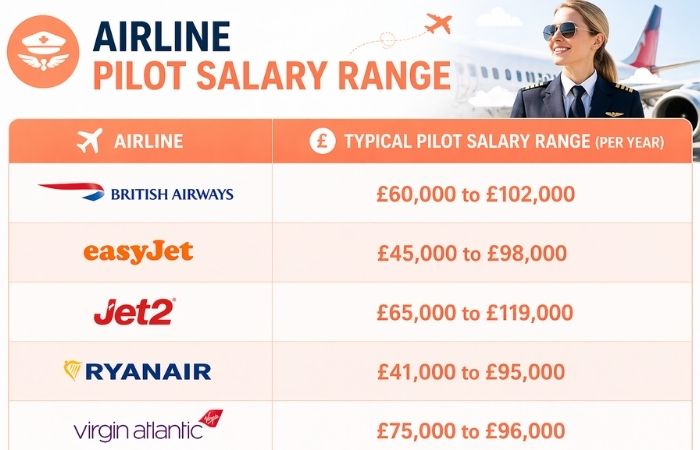
How Does Salary Change by Airline in the UK?
Commercial pilot salary can vary a lot between airlines in the UK. Some airlines offer higher starting pay. While others pay more for long-haul flying and senior roles. Full-service airlines often provide better salary growth and stronger benefits.
What is the Career Path for a Commercial Pilot License UK Holder?
A commercial pilot licence (CPL) in the UK is the first step into airline flying. It helps you start your pilot career. After that, pilots follow a clear path step by step.
Most pilots begin as first officers. People also call this role a co-pilot. Here, they fly with a senior captain and learn on real flights. They also build flying hours during this time.
Next, pilots need around 1,500+ flying hours. This helps them grow in skill and confidence. After that, they can upgrade to the ATPL licence. This licence helps a pilot become a captain.
Later, pilots move into the captain role. In this role, they take full control of the aircraft. They also get higher pay and more responsibility.
Why Do Commercial Flight Pilot Salaries Change So Much?
Pilot salary changes for many reasons. In simple words, bigger planes, more experience and longer routes all lead to better pay.
- Aircraft type: Small planes pay less. Big planes pay more.
- Flight hours: More flying hours often lead to higher pay.
- Experience: New pilots earn less. Senior pilots earn much more.
- Route type: International flights usually pay more than domestic flights.
What are Contract Pilot Jobs and How Do They Affect Pay?
Some pilots work on contract jobs. They do not work full-time. Airlines call them when they need extra pilots. They usually earn £20 to £100 per flight hour. Pay depends on aircraft and experience.
There is no fixed monthly salary. Income changes every month. They also do not get sick pay or holiday pay. So they miss extra benefits. Work depends on demand. Some months are busy. Some months are slow. In simple words, contract jobs can pay well. But income is not stable.
What Benefits Come With Commercial Airline Pilot Pay?
Pilot pay is not just a salary. It also comes with strong extra benefits. These benefits add real value to the job. First, pension plans help pilots save money for retirement. Also, life insurance protects the family if something goes wrong.
In addition, loss of licence cover is very important. It supports income if a pilot cannot fly again. Along with that, medical insurance helps pay health care costs. This reduces stress during illness or injury.
At the same time, paid leave gives 4 to 6 weeks off each year. This helps pilots rest and stay fresh. On top of that, staff travel discounts make flights cheaper for pilots and their families. This is a very useful benefit.
Finally, some airlines also give bonus payments. These depend on performance and company results. In simple words, pilot benefits make the job more than just a salary.
What is the Real Career Outlook for Commercial Airline Pilot Salaries?
Pilot pay grows in a steady way. Early salaries stay moderate, but they rise with experience. So, time matters more than anything.
Entry-level pilots: Usually earn around £47,000 to £60,000 per year.
Mid-career pilots: Earn about £70,000 to £90,000 per year as they gain experience.
Senior captains: Often reach £100,000 to £150,000 or more per year.
How is the Commercial Aviation Pilot Salary Changing Today?
The aviation industry is changing quickly. As a result, pilot pay systems are also changing. Final salary pension plans are slowly disappearing. Instead, airlines now offer simpler retirement options. At the same time, more flexible contracts are becoming common across airlines.
Now, pay depends more on flying hours and duty time. So income is less fixed than before. Some airlines also reduce extra benefits compared to the past. In simple terms, pilot income now follows performance and flying activity more than a fixed salary.
Are Commercial Airline Pilot Salaries Worth It?
Commercial airline pilot wages in the UK can be very rewarding over time. At the beginning, growth feels slow and steady. However, income increases as experience and rank build up.
As pilots move forward, their earnings rise step by step. Senior captains often reach some of the highest salaries in aviation. So, patience plays a big role in this career. In simple terms, this job rewards time, skill and long-term commitment.
Final Thoughts
The pay for commercial airline pilots starts low. Early income stays low. But it gets bigger little by little over time. With more experience, commercial airline pilot pay increases and higher ranks. It becomes a stable job with good pay in the long run.
Frequently Asked Questions (FAQs)
1. How much does a commercial airline pilot earn?
- Most commercial airline pilots earn between £35,000 and £150,000+, depending on experience and rank.
2. Do pilots make 700k?
- No, most pilots do not earn £700k. Only a very few top executives might reach close in special cases.
3. How much is a Ryanair pilot paid?
- A Ryanair pilot usually earns between £30,000 and £120,000, depending on experience and role.
4. How much do pilots get paid for commercial flights?
- Pilots get paid a salary plus extra for flight hours and long routes.
5. What do easyJet pilots earn?
- easyJet pilots typically earn around £40,000 to £140,000 based on seniority and flight experience.
6. What’s the highest paid airline pilot?
- The highest-paid airline pilots are long-haul captains at major airlines, earning over £ 150,000 per year.
7. Which pilot is a billionaire?
- No airline pilot is a known billionaire. Pilot salaries are high but not at that level.
8. Can a pilot fly 7 days in a row?
- No, strict aviation rules limit flying days to protect pilot rest and safety.
9. Why are pilots paid so much?
- Pilots are paid well because the job requires high skill, training and full responsibility for passenger safety.
10. Why is the pilot divorce rate so high?
- Irregular schedules and long time away from home can put pressure on pilot relationships.