
Legislation, policies and procedures help keep health and social care safe. They also help organisations follow the law and give good care. To describe the relationship between legislation, policies and procedures, you need to know how they work together. The order is simple. Legislation comes first. Policies explain the law. Procedures show staff what to do each day.
Legislation sets the legal rules. Policies explain how an organisation will follow those rules. Procedures give clear, step-by-step actions for staff. Together, they protect people, improve safety and support good care.
This guide explains what they mean, how they are different and how they work together in everyday health and social care.
How Do You Describe the Relationship Between Legislation, Policies and Procedures?
Legislation, policies and procedures work together to keep people safe. They also help health and social care services run well. Each one has a different job. Together, they help staff do the right thing every day.
Legislation sets the law. Policies explain how to follow the law. Procedures show staff what to do step by step. This helps workers protect people, reduce risks and give safe care. In simple words, legislation makes the rules, policies explain the rules and procedures show how to follow them.
What is Legislation in Health and Social Care?
Legislation means laws made by the government and Parliament. These laws tell organisations what they must do. They help keep people safe. They also protect people’s rights. In addition, they set clear rules for care workers.
As a result, every health and social care organisation must follow these laws. They use them to create workplace policies and procedures. For example, these rules cover safeguarding, equality, confidentiality and health and safety. Therefore, staff know what to do each day. This helps them give safe, fair and good-quality care.
Which UK Legislation Supports Health and Social Care Practice?
Several health and social care legislative laws help keep people safe. These laws also help organisations give good care. In addition, they tell care workers what they must do.
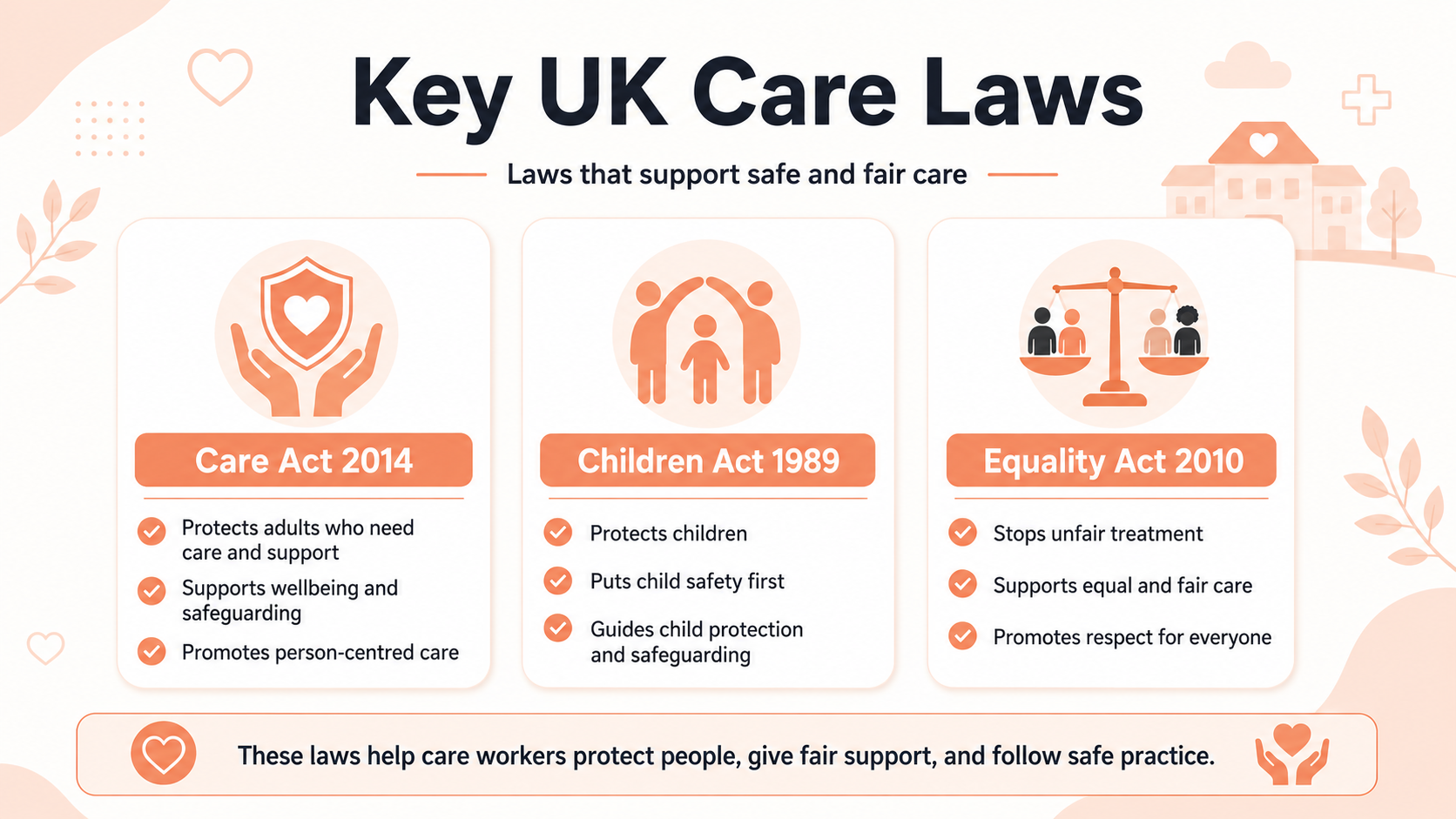
Care Act 2014
The Care Act 2014 helps protect adults who need care and support. It supports wellbeing, safeguarding and person-centred care. As a result, organisations create policies to keep people safe and plan their care.
Children Act 1989
The Children Act 1989 helps protect children. It says a child’s safety and well-being must come first. Therefore, organisations use this law to create child protection and safeguarding policies.
Equality Act 2010
The Equality Act 2010 helps stop unfair treatment. It gives everyone the right to equal and fair care. Because of this, organisations create equality and diversity policies to treat everyone with respect.
What are Policies in Health and Social Care?
Health and social care organisations use policies and procedures to provide safe, fair and consistent care. A policy is a written guide that explains how an organisation will follow the law and meet workplace standards.
A good policy helps staff:
- Understand the organisation’s values.
- Know what is expected at work.
- Understand their roles and responsibilities.
- Make the right decisions every day.
Unlike legislation, a policy is not a law. However, it helps care providers follow the law in the right way. As a result, staff know how to work safely and give good care to everyone.
What are the Main Types of Health and Social Care Policies?
Health and social care organisations use different policies every day. These policies help staff work safely. They also help protect the people they support. Each policy has a clear job.
- Safeguarding Policy: Keeps children and vulnerable adults safe from abuse and harm. It follows the Care Act 2014 and the Children Act 1989.
- Equality and Diversity Policy: Helps staff treat everyone fairly. It follows the Equality Act 2010.
- Health and Safety Policy: This helps keep the workplace safe. It protects staff, visitors and people who receive care.
- Data Protection Policy: Helps keep personal information safe. It also shows staff how to share information in the right way.
What are Procedures and How Do They Work?
Policies and procedures help health and social care workers follow rules in their daily work. A policy explains what an organisation wants to achieve, while a procedure shows how staff should achieve it.
Procedures provide clear steps about what action to take, who is responsible, when it should happen and how to complete tasks safely. They help care workers follow legal duties, maintain standards and provide consistent support.
How Do Legislation, Policies and Procedures Work Together?
The relationship between legislation and policies is simple. They work together to keep people safe. They also help health and social care services follow the law. Each one has its own job.
Step 1: Legislation Creates The Law
The government makes laws. These laws tell organisations what they must do.
Step 2: Policies Explain The Law
Organisations write policies based on these laws. The policies tell staff how to follow the law at work.
Step 3: Procedures Show The Steps
Procedures give staff clear steps to follow every day. They help workers do each task safely and correctly.
For example, safeguarding laws protect people from harm. A safeguarding policy explains staff duties. A safeguarding procedure shows the steps staff should follow if they have a concern.
How Does Legislation Inform Policies and Procedures?
How legislation informs policies and procedures is easy to understand. Laws give clear rules. Then organisations make policies and procedures. This helps staff know what to do each day.
These laws keep people safe. They also protect privacy, dignity and equal rights. In addition, they tell care workers about their job. As a result, staff can make safe choices. Clear rules help stop abuse, neglect, accidents and unfair treatment. This way, everyone follows the same steps and gives safe care.
How Does Safeguarding Show the Link Between Laws and Procedures?
Safeguarding policies and procedures help keep children and vulnerable adults safe. The law says organisations must protect people from abuse, neglect and harm. So, every organisation has a safeguarding policy. It explains how staff should keep people safe.
First, staff look for signs of abuse. Next, they write down their concerns. Then, they report them to the safeguarding lead. After that, they follow the correct process. As a result, staff act quickly and protect people from harm. This way, everyone receives safer care.
How Do Equality and Data Protection Laws Influence Policies?
Legislation and policies work together to keep people safe in health and social care. They help everyone get fair treatment. So, organisations make clear rules for staff. As a result, staff know what to do every day.
For example, the Equality Act 2010 says everyone should receive fair treatment. Also, data protection laws keep personal information safe. Staff learn how to keep records safe. They also learn when they can share information. This helps protect privacy. At the same time, it helps staff treat everyone with care and respect.
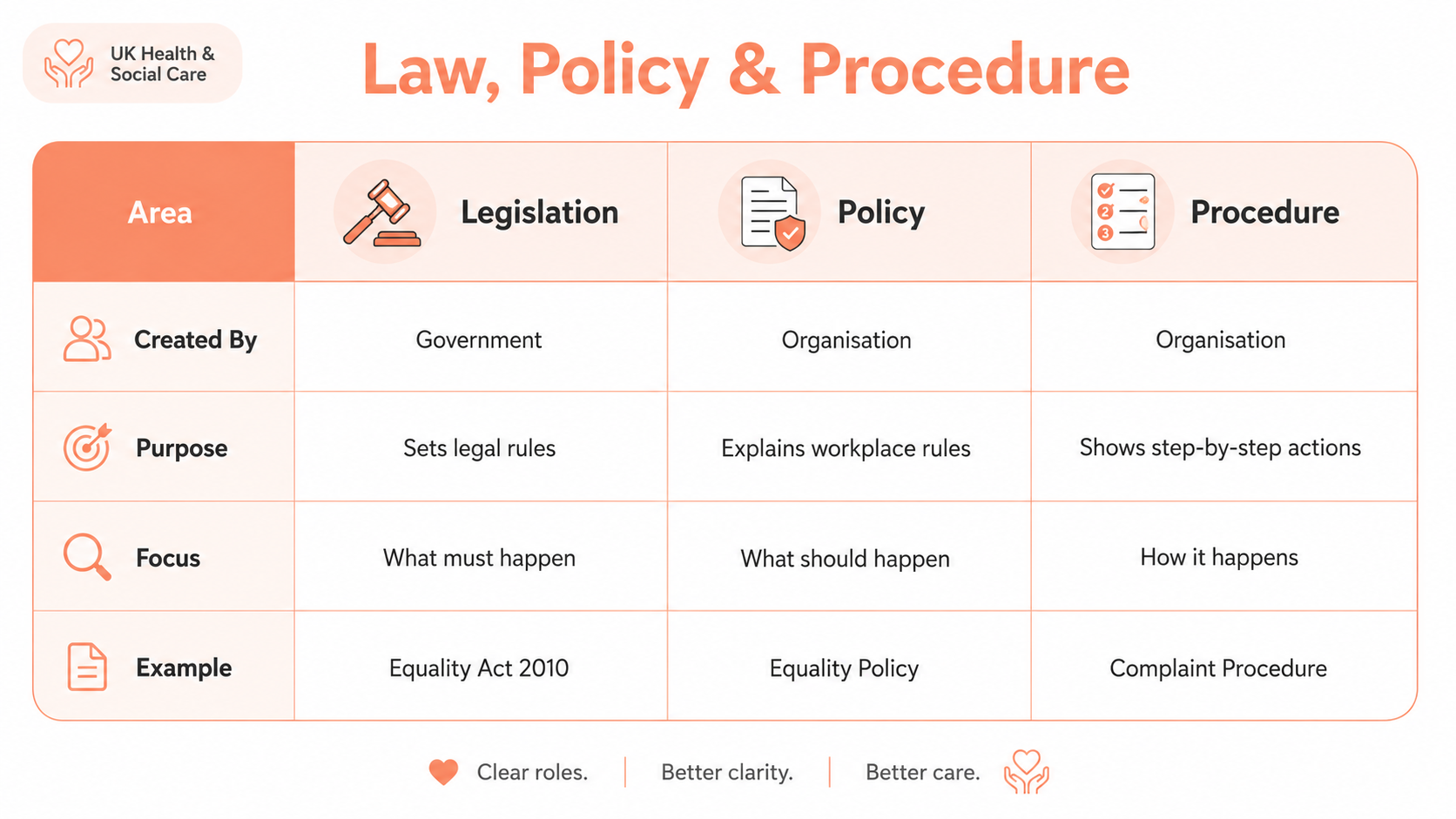
What is the Difference Between Legislation, Policies and Procedures?
The difference between legislation, policies and procedures is that each one has a different role, but they all work together to support safe and effective care.
Why are Legislation, Policies and Procedures Important?
Legislation, policies and procedures help keep people safe. They give clear rules for everyone to follow. As a result, care workers know what to do each day. This helps them give safe and good care.
In addition, these rules help organisations follow the law. They help stop mistakes and reduce risks. Most importantly, they protect people’s rights. They support privacy, dignity, equality and personal choice. Because of this, people feel safe, respected and well cared for.
What Happens if Organisations Ignore Policies and Procedures?
When organisations ignore policies and procedures, people can get hurt. Staff may make mistakes or give unsafe care. As a result, abuse, accidents or poor care can happen. People may not get the support they need.
In addition, the organisation may face legal action or fines. It may also lose people’s trust. To avoid this, organisations should check and update their policies and procedures often. This helps them follow current laws and official guidance. In turn, they can keep people safe and provide better care.
How Do Care Workers Apply Legislation in Daily Practice?
Care workers use policies and procedures in health and social care every day. They help people safely and respectfully. Staff follow safeguarding rules to protect children and vulnerable adults. They keep personal information private and complete risk assessments before tasks.
Care workers also treat everyone fairly. They listen to each person’s needs, choices and wishes to provide person-centred care. This approach helps workers make safe decisions. It also reduces risks and protects people’s rights. As a result, people receive better care and families build trust in the service.
Final Thoughts
Learning how to Describe The Relationship Between Legislation, Policies and Procedures is important in health and social care. Legislation sets the law. Policies explain how to follow the law. Procedures show the steps staff should take every day. Together, they keep people safe and protect their rights. They also help workers give fair, safe and high-quality care. When organisations follow this framework, they build trust and create a safe place for everyone.
FAQs
1. What’s the difference between policy and legislation?
- Legislation is a law from the government. A policy is a local rule that helps you follow the law.
2. What are the 4 types of policies?
- The four common types include safeguarding, health and safety, equality and privacy policies.
3. What policies and procedures relate to safeguarding?
- Safeguarding policies and procedures tell staff how to spot and report abuse.
4. Why are policies and procedures important in health and social care?
- They help workers provide safe, legal care while protecting rights.
5. How does legislation inform policies and procedures in health and social care provision?
- Legislation sets the law. Care homes then write matching policies and procedures to meet it.
6. What is policy and procedure in healthcare?
- A policy explains what staff should do. A procedure explains how they must do it.
7. What is legislation in health and social care?
- Legislation means the set of laws that protects people and sets care levels.
8. What is the importance of policy and procedure?
- They help teams follow the law, cut risks and keep work steady.