
The difference between legislation and policy can confuse many people in the UK. Legislation creates laws. People and organisations must follow them. A policy explains how to follow those laws each day. Both help keep workplaces safe, fair and well organised. The UK has more than 3,000 Acts of Parliament. This shows how important legislation is.
Moreover, this topic explains how legislation, policies and procedures work together. It also shows why organisations need clear policies after laws change. As a result, readers can understand legal duties and workplace guidance better.
This guide explores key examples from UK law and explains their importance in simple terms. These ideas support better decisions in workplaces.
What is Legislation and Why Does it Matter?
Legislation means laws that the government creates. These laws tell people and organisations what they can and cannot do. For example, workplace laws help keep employees safe. They also protect our rights, health and daily life.
In addition, legislation helps everyone follow the same rules. Without these laws, people and organisations could face confusion and more risks. Therefore, legislation plays a key role in creating a safe, fair and well-organised society.
What are the Main Characteristics of Legislation?
Legislation has key features that make it important. First, it creates rules that people must follow. The government or parliament makes these rules. Also, it covers areas like health, safety and work. It protects people and their rights.
Moreover, legislation has legal power. This means people must obey these rules. If they break them, they may face penalties. Therefore, legislation helps create a safe and fair society for everyone.
What are the Examples of UK Legislation?
UK legislation means laws made by the government. These laws help keep people safe. They also give clear rules for people and businesses to follow.
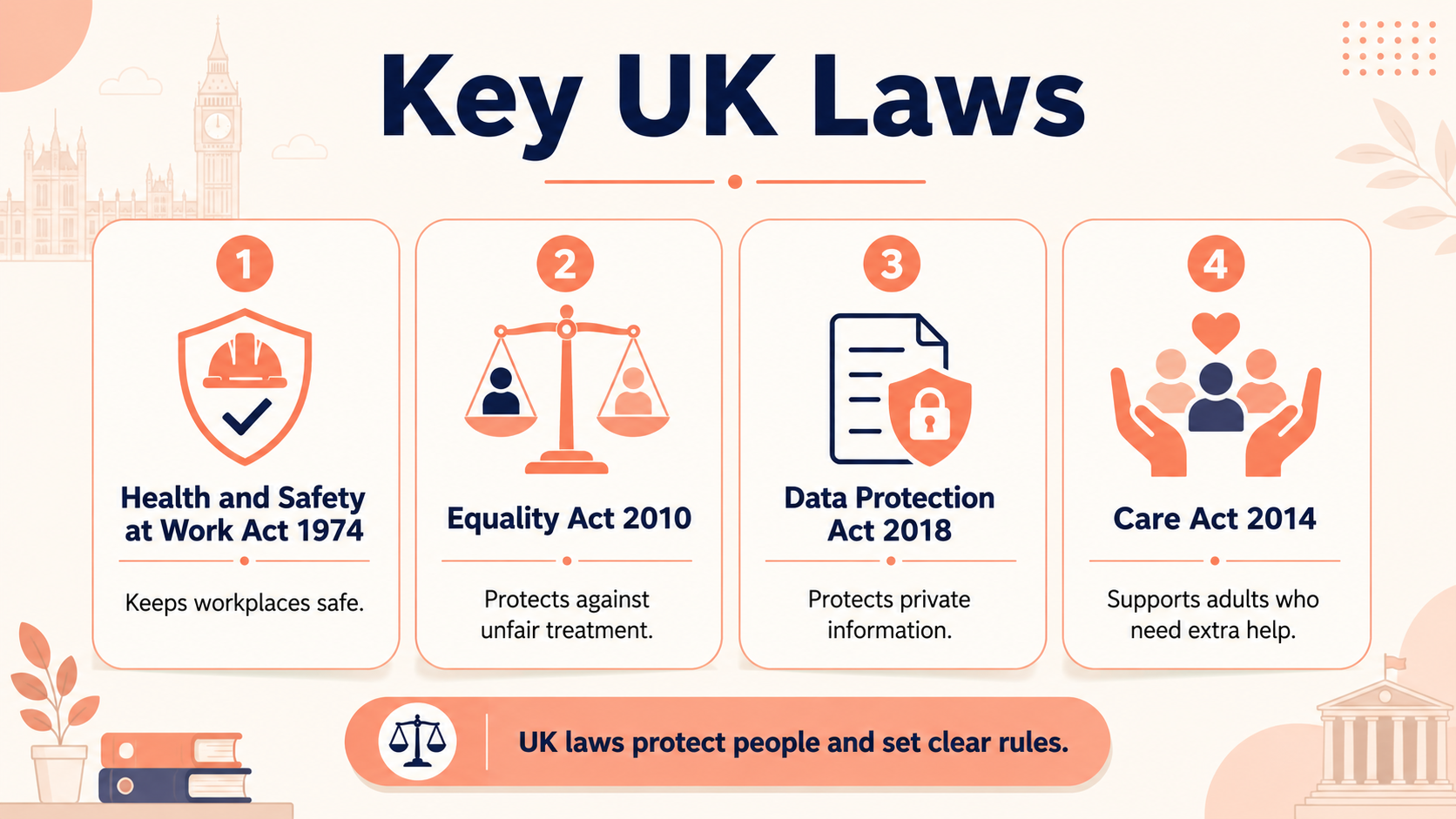
Some common examples of UK legislation:
- Health and Safety at Work Act 1974: This law keeps workplaces safe for workers.
- Equality Act 2010: It protects people from unfair treatment and discrimination.
- Data Protection Act 2018: This law protects people’s private information.
- Care Act 2014: It supports older people and adults who need extra help.
What is a Policy and How Does it Work?
A policy is a set of rules that guides people at work. It helps everyone make the right decisions and follow the same standards. For example, a safety policy explains how workers can stay safe. A privacy policy shows how a company protects personal information.
In addition, policies make daily work easier and more organised. They clearly explain each person’s duties and responsibilities. As a result, everyone knows what to do and can work in a safe, fair and consistent way.
What are the Main Characteristics of Policy?
A good policy is clear and easy to follow. It tells people what to do. It also explains what the organisation expects. As a result, everyone can work in the same way. This reduces mistakes and avoids confusion.
The main characteristics of a policy include:
- Clear purpose: Explains why the policy is needed.
- Simple rules: Use easy steps that people can follow.
- Consistency: Helps everyone work in the same way.
- Flexibility: Allows changes when laws or needs change.
What are the Examples of Workplace Policies?
Workplace policies are simple rules. They guide everyone at work. Employees use them to know what to do each day. As a result, the workplace stays safe, fair and well organised. Everyone also follows the same rules.
A health and safety policy shows workers how to stay safe. An equality policy says everyone should receive fair treatment. A data protection policy explains how to keep personal information safe. An attendance policy tells staff about working hours and leave. These policies reduce mistakes. They improve teamwork. They also help the workplace run well every day.
What is the Difference Between Legislation and Policy?
Legislation and policy both help guide people’s actions. However, they have different purposes. Legislation creates legal rules, while policies explain how people should act in a specific place.
Legislation:
- It means laws made by the government.
- People and organisations must follow these legal rules.
- It applies to the public and different sectors.
- Breaking the law could result in fines or legal penalties.
Policy:
- A policy means guidelines created by an organisation.
- Staff can use it to understand what they should do.
- It supports daily work and helps people make better decisions.
- Ignoring a policy may create problems in the workplace.
How Do Legislation, Policy, and Procedures Work Together?
Legislation, policies and procedures work as a team. First, legislation creates the law. It tells people what they must do. Next, policies explain how an organisation follows the law. They give clear rules for daily work. Then, procedures show each step people should take to follow those rules.
For example, a safety law protects workers. A safety policy explains the workplace rules. A procedure shows how to report an accident. Together, they help people work safely, follow the law and do their jobs the right way.
What are Procedures and Why are They Important?
Procedures are simple step-by-step instructions. They show people how to do a task. They also help employees know what to do. As a result, daily work becomes easier and more organised.
For example, a procedure can explain how to report an accident. It can also show how to help a customer or handle a problem. In addition, everyone follows the same steps each time. This reduces mistakes and keeps people safe. Therefore, procedures help organisations follow their policies and work more smoothly every day.
How Does Legislation Shape Organisational Policies?
Legislation helps organisations make clear rules. These laws tell them what they need to do. They also help protect workers, customers and other people. First, an organisation checks the laws it must follow. Next, it creates policies that match these laws.
For example, health and safety laws help create safety rules at work. Data protection laws help keep personal information safe. Also, policies show staff what they should do each day. As a result, legislation helps organisations stay safe and fair and follow the rules.
Who Creates Legislation and Policies in the UK?
The UK Parliament creates legislation. It includes the House of Commons and the House of Lords. A new law starts as a bill. Next, both Houses check, discuss and improve it. Finally, the King gives Royal Assent and the bill becomes law.
Policies come from different groups. The UK Government creates national policies to meet public needs. At the same time, local councils, the NHS, schools and businesses create their own policies. These policies explain how people should follow the law in their daily work. As a result, they help organisations stay consistent, fair and safe.
What are Primary and Secondary Legislation?
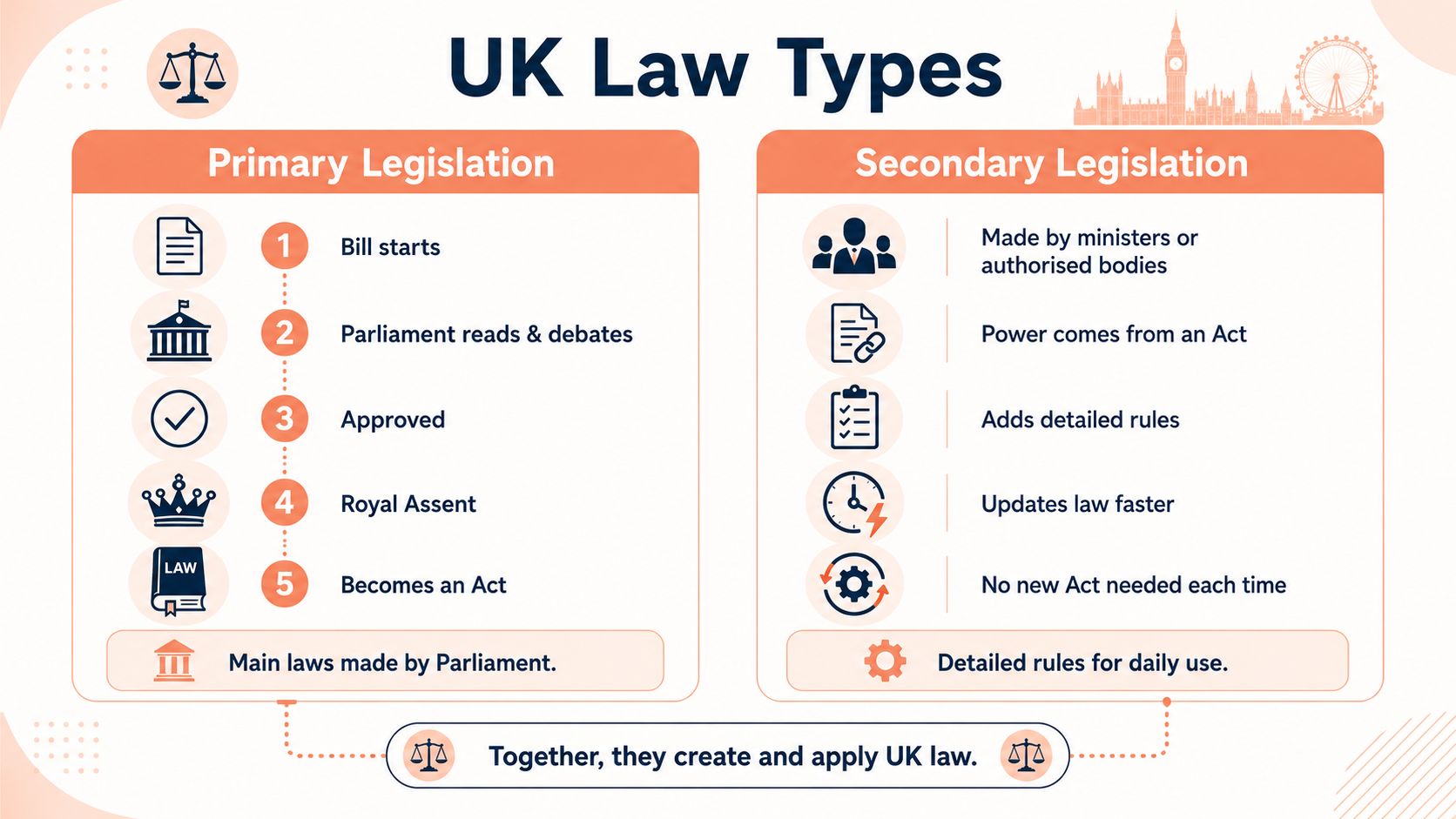
The UK has two types of legislation. Both help create and apply the law. However, each type has a different role. Primary legislation makes the main laws. Secondary legislation adds more detailed rules. Together, they help people and organisations follow the law every day.
Primary legislation
- The UK Parliament makes primary legislation.
- Every new law starts as a bill.
- Parliament reads, discusses and approves the bill.
- The King gives Royal Assent.
- The final step makes the bill an Act of Parliament.
- These Acts become the main laws of the UK.
Secondary legislation
- Government ministers or other authorised bodies make secondary legislation.
- An Act of Parliament gives them the power to do this.
- These rules explain how the law works in real life.
- They also help update the law more quickly.
- This means Parliament does not need to pass a new Act every time.
How are Acts, Regulations and Guidance Different From Policies?
Acts, regulations, guidance and policies all have different jobs. However, they work together. Acts and regulations are laws, so people and organisations must follow them. Guidance gives helpful advice. It shows the best way to follow the law. In contrast, policies explain how an organisation puts those laws into daily practice.
For example, an Act says employers must protect workers. Regulations add more detailed legal rules. Guidance gives simple advice on meeting those rules. A workplace policy tells staff what to do every day. As a result, everyone follows the same approach. This helps keep the workplace safe, fair and well organised.
What Happens if Organisations Ignore Legislation and Policies?
Ignoring legislation and policies can cause serious problems. Staff may break the rules. They may also make unsafe choices. As a result, people can get hurt. They may also receive poor care or poor service. The organisation may face fines or legal action. In some cases, it may even close.
People may also lose trust in the organisation. Staff may feel confused. They may not know what to do. This can lead to more mistakes. Therefore, every organisation should follow the law. It should also review its policies often. This keeps people safe. It also helps the organisation work well every day.
Conclusion: Why Understanding Legislation and Policy Matters
So, what is the difference between legislation and policy? Legislation is the law. People and organisations must follow it. A policy shows how to follow the law every day. Both are very important. They help keep people safe. They also make work easy to understand. When you know the difference between legislation and policy, you can follow the rules, make good choices and help create a safe and fair workplace.
FAQs
1. What are the differences between legislation, policies, and procedures?
- Legislation creates legal rules, policies explain an organisation’s rules, and procedures show the steps to follow those policies.
2. What are the 4 types of policies?
- The four common types are public policies, organisational policies, operational policies and workplace policies.
3. What’s the difference between a law and legislation?
- A law is a legal rule in force, while legislation is the process or result of creating those laws.
4. Is there a difference between policy and legislation?
- Yes, legislation creates legal requirements, while policies explain how an organisation follows those legal requirements.
5. What is a better word for legislation?
- Common words for legislation include laws, legal rules, statutes and Acts.
6. What is policy?
- A policy is a set of rules or guidelines that helps people make decisions and work consistently.
7. Is a UK act a law?
- Yes, a UK Act becomes a law after Parliament approves it and the King gives Royal Assent.
8. What are the two types of law in the UK?
- The two main types of UK law are criminal law and civil law.