
Employment law covers the rules that protect workers and guide employers across the UK. It explains workers’ rights to fair pay, paid holidays, sick leave and safe working conditions. It also sets rules for working hours, contracts, breaks and unfair dismissal. These laws make sure employers treat their staff fairly and follow their legal duties.
However, both workers and employers need to understand these rules. Workers can learn what they should expect at work. Employers can avoid legal problems by following the right steps. In this article, we explore key UK employment laws, employee rights and employer responsibilities.
What is Employment Law in the UK?
Employment law explains the rights and responsibilities of both employers and employees. It protects workers from unfair treatment and explains employers’ duties. These laws help make workplaces safer and fairer for everyone. They also make sure everyone understands their rights and responsibilities.
From hiring staff to ending a job, these rules cover many areas. They include job contracts, wages, working hours and workplace safety. Employers must also handle complaints and dismissals fairly. Most rules apply across Great Britain, while Northern Ireland has separate laws in several areas.
What are the Main Employment Laws in the UK?
Several laws protect workers and explain what employers must do. Each law covers a different part of working life. Some focus on fair treatment, while others cover wages, working hours and safety. Here are seven important laws everyone should know:
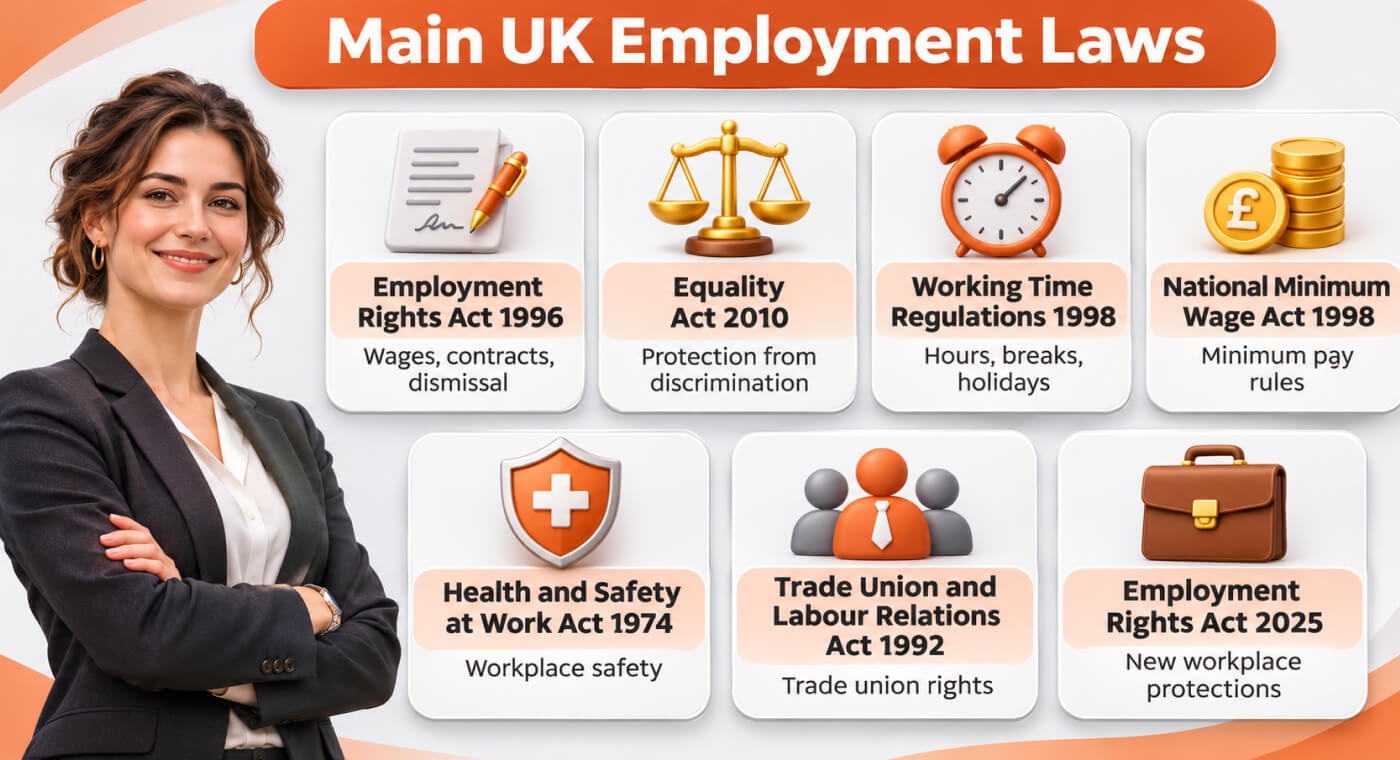
- Employment Rights Act 1996: Wages, contracts and dismissal.
- Equality Act 2010: Protection against discrimination.
- Working Time Regulations 1998: Working hours, breaks and holidays.
- National Minimum Wage Act 1998: Minimum pay rules.
- Health and Safety at Work Act 1974: Workplace safety.
- Trade Union and Labour Relations Act 1992: Trade union rights.
- Employment Rights Act 2025: New workplace protections.
What are the Different Employment Statuses and Contracts?
Your job type affects the rights you get at work. UK law recognises five main groups. These include employees, workers, self-employed people, employee shareholders and office holders. Each group has different rights and duties. So, your employment status matters. Job contracts can also take different forms.
Common types include permanent, part-time, fixed-term, zero-hours and agency contracts. You can agree to a job verbally or in writing. However, your employer must give you key job details in writing from your first day. Your length of service also matters. It can affect when you gain certain rights, such as protection against unfair dismissal.
What Rights Do Employees Have in the UK?
Employees have several legal rights that protect them at work. These include fair pay, paid holidays and clear payslips. They also have protection against unlawful wage deductions. Eligible workers can join a workplace pension scheme. Employers must also treat staff fairly and prevent workplace discrimination.
Workers can join trade unions and report serious workplace problems. The law protects them from unfair treatment for raising certain concerns. Minimum wage rules also protect workers from low pay. The minimum hourly pay for workers aged 21 or older is £12.71. The rate is £10.85 for ages 18–20 and £8 for under-18s and eligible apprentices.
What are the Legal Working Hours and Break Rules?
UK employment law sets limits on how long employees can work. Most adult workers cannot work more than 48 hours a week on average. Employers usually calculate this over 17 weeks. However, employees can agree to work beyond this weekly limit. Some jobs also have different working time rules.
Employees also have legal rights to rest breaks. Workers get a 20-minute break if their shift lasts more than six hours. They must also get 11 hours of rest between working days. In addition, workers usually get one full day off each week. These rules help protect staff from long hours and tiredness.
What are the Rules for Holidays, Sick Pay and Family Leave?
UK workers have the right to take time off for holidays, illness and family needs. Most workers get 5.6 weeks of paid holiday each year. They may also receive sick pay when they cannot work due to illness. Parents have separate rights to take time off after having or adopting a child.
- Annual leave: 5.6 weeks of paid holiday yearly.
- Sick pay: SSP from the first sick day.
- Maternity leave: Up to 52 weeks off.
- Paternity leave: Time off after a birth.
- Parental leave: Unpaid time off to care for children.
What are the Laws on Workplace Discrimination and Harassment?
The Equality Act 2010 helps prevent discrimination and unfair treatment in the workplace. It covers nine things, such as age, sex, race, disability and religion. The law stops unfair treatment, harassment and bullying linked to these traits. It also protects workers from direct and indirect discrimination.
Employers must make changes to support disabled staff. Everyone deserves fair treatment when applying for jobs or getting paid. Equal pay rules help stop unfair wage gaps. Employers must also act to prevent sexual harassment at work. This helps create a safe place where all workers feel welcome and respected.
What are the Health and Safety and Whistleblowing Rights?
Employers must keep workers safe at work. They should identify risks and teach staff how to stay safe. They must also provide safety tools and equipment. RIDDOR rules require employers to report certain serious accidents, injuries and work-related illnesses.
Whistleblowing means reporting serious problems or injuries at work. This may include fraud, unsafe working conditions or illegal activities. The law protects employees who report these concerns. Employers must not punish, treat unfairly or dismiss them for raising concerns. This allows employees to report workplace problems without fear of unfair treatment.
What are the Five Fair Reasons for Dismissal?
UK law allows employers to dismiss workers for five main reasons. However, they must have a fair reason and follow the right steps. A fair reason alone does not make every dismissal lawful. Employers must also investigate the issue and treat workers fairly. The five fair reasons for dismissal are:
- Conduct: Breaking workplace rules or behaving badly.
- Capability: Failing to do the job properly.
- Redundancy: The employer no longer needs the job.
- Legal restrictions: The law prevents someone from doing their job.
- SOSR: Another serious reason justifies dismissal.
What are Redundancy and Notice Rights?
Redundancy happens when a business needs fewer staff or shuts down. However, employers must follow fair rules before job cuts. They must choose workers fairly and talk to them first. Employers should also look for other suitable jobs. Some workers may also have the right to redundancy pay.
Explain when an employer can make staff redundant. Cover how they should choose workers and discuss job cuts. Explain the right to another suitable job. Also cover who can get redundancy pay and how much they may receive. Discuss notice periods and pay instead of notice.
What are Employers’ Legal Responsibilities?
Employers must follow the law and treat all workers fairly. Employers must provide written contracts and clear job details. They also need to pay fair wages and follow working-hour rules. A safe workplace is another key duty. Staff must also feel safe from bullying, harassment and unfair treatment.
Explain how employers should deal with complaints and workplace issues. Cover fair rules for warnings, discipline and staff complaints. Also explain why employers must keep staff records safe. Include data protection, TUPE rules and anti-bribery laws. These rules help protect workers and create a fair workplace.
What are the New Employment Laws for 2027?
The UK plans to bring in more employment law changes in 2027. These changes aim to give workers better rights at work. From January, workers will get more protection against unfair dismissal. Employers must also tell staff about their right to join a trade union. New rules will also cover workplace tips and fire and rehire practices.
Other changes will cover unpaid bereavement leave and workplace rights. Employers will face new rules on flexible working and pregnancy protection. The government also plans to bring in rules for umbrella companies. These changes will affect workers and employers across the UK.
Where Can You Get Free Employment Law Advice in the UK?
You do not always need to pay for legal help with work problems. Several UK services offer free advice about employee rights and workplace issues. They can help with problems such as unfair dismissal, unpaid wages and discrimination. Some services also explain how to make a complaint or claim.
- Acas: Free workplace advice. It also offers early conciliation.
- Labour Relations Agency: Helps workers in Northern Ireland.
- Citizens Advice: Gives advice on pay, contracts and workplace rights.
- Trade unions: Offer advice and support to their members.
- Employment tribunals: Provide information about workplace claims.
- GOV.UK: Shares free information about employment rights and legal rules.
Final Thoughts
Understanding employment law helps both workers and employers know their rights and duties. These laws create a fair and safe workplace for everyone. They also help prevent disputes and protect people from unfair treatment. Therefore, every worker and employer should learn the basic rules. This knowledge makes it easier to handle workplace issues and follow the law.
Frequently Asked Questions (FAQs)
1. What are the employment laws in the UK?
- Employment laws in the UK make sure workers get fair treatment. They also tell employers what rules to follow for pay, working hours and holidays.
2. What are the new employment laws for 2027?
- The 2027 changes will cover unfair dismissal, trade union rights, bereavement leave, flexible working and workplace protection.
3. What are the 5 fair reasons for dismissal in the UK?
- The five fair reasons include misconduct, poor performance, redundancy, legal reasons and another serious business reason.
4. Where can I get free advice about employment law in the UK?
- You can get free employment law advice from Acas, Citizens Advice, trade unions and local law centres.
5. Do you still get 30 minutes free legal advice?
- There is no general right to 30 minutes of free legal advice, but some solicitors offer a free first meeting.
6. What rights do I have as an employee in the UK?
- You have the right to fair pay, paid holidays, rest breaks, a safe workplace and protection from discrimination.



