Flying planes is an exciting and challenging career that many people dream about. Pilots are highly skilled professionals responsible for the safety of passengers, crew and the aircraft. They plan flights, check the weather, follow strict safety rules and handle emergencies, making their role very important in aviation. In the UK, new First Officers usually earn around £24,000–£35,000, while experienced captains at major airlines can make over £150,000, and some jobs abroad pay even more. Learning how much does a airline pilot get paid helps show the rewards of this skilled and responsible career.
Let’s take a closer look at what a pilot can earn in a year and how pay grows with experience.
How Much Do Entry-Level Pilots Earn?
Entry-level pilots in the UK, called First Officers, usually earn £24,000–£60,000 in their first year. For example, small airlines pay around £24,000–£35,000, while bigger airlines can pay £45,000–£60,000 or more. As a result, pay starts lower but rises quickly as pilots gain experience and flight hours.
Entry-Level Pilot Salary Breakdown (UK)
- Training / Flight Instruction: Pay is lower at first because pilots are building flight hours, around £30,000+.
- First Officer (Year 1–2): Typically £24,000–£60,000, depending on the airline.
- Regional or Low-Cost Airlines: Usually pay £24,000–£40,000.
- Major Airlines: Can start at higher pay, sometimes reaching £60,000 in the first year.
What Skills and Qualities Do You Need to Be a Pilot?
To become a pilot in the UK, you need the right skills, good grades and the ability to stay calm under pressure. First, you need a CAA Class 1 Medical Certificate to show you are healthy and fit to fly. Next, you need at least 5 GCSEs (Grade 4/C or above), including Maths, English, and Science. These subjects are important because they help with navigation, fuel calculations, and understanding how planes work.
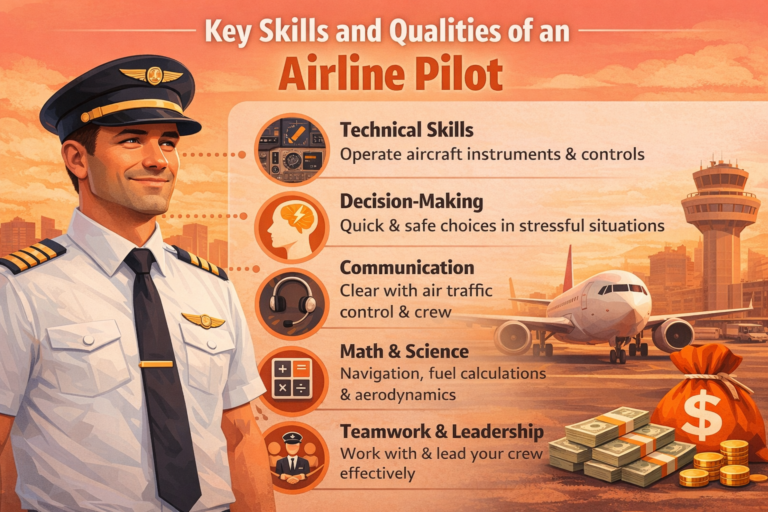
Key Skills and Qualities
- Technical Skills: Pilots must know how to operate aircraft instruments and controls. For example, understanding the cockpit instruments helps in safe flying.
- Decision-Making: You must make quick and safe choices, especially in stressful situations.
- Communication: Pilots need to speak clearly with air traffic control and their crew.
- Math and Science: Maths is used for navigation and fuel calculations, while basic physics helps you understand aerodynamics.
- Teamwork and Leadership: You must work well with your crew and lead when needed.
- Attention to Detail: Following safety rules and checklists carefully is essential. Finally, these habits keep everyone safe in the air.
Also, pilots need to stay alert, manage long hours, and adapt to changing weather or flight conditions. However, with training and experience, they can grow into senior roles with higher pay and more responsibility.
What Are the Key Responsibilities of a Pilot in the UK?
In the UK, a pilot’s main job is to keep passengers, crew, and the aircraft safe. The pilot is in charge and makes all final decisions during the flight.
Key Responsibilities of a Pilot
- Flight Safety & Command: The captain is responsible for everyone on board. For example, they can refuse cargo or passengers if they could be unsafe.
- Pre-Flight Planning: Pilots check the weather, plan the route, review weight limits, and inspect instruments. Next, they make sure all systems are working correctly before take-off.
- Flying the Plane: Pilots navigate, control speed and height, and monitor the engines. Also, they must follow air traffic control instructions carefully.
- Emergency Handling: In an emergency, pilots act quickly to protect everyone. However, they may need to adjust rules or take unusual steps to stay safe.
- Communication: Pilots speak with cabin crew and passengers, and stay in contact with air traffic control. Meanwhile, they must stay focused on flying.
- Post-Flight Reports: After landing, pilots write reports about flight problems, technical issues, or incidents. Finally, these reports help improve safety for future flights.
For commercial pilots, following strict rules and staying disciplined is important at every stage of the flight. In addition, pilots must be alert, flexible, and ready to handle long hours or unexpected challenges.
How Much Can Experienced Pilots Make?
Experienced pilots in the UK can earn a lot, especially captains at big airlines. Their pay usually ranges from £100,000 to £178,000+ per year. Senior first officers can earn up to £85,000, while top long-haul captains can make over £150,000 to £170,000, depending on the airline and type of aircraft. For example, salaries increase as pilots gain more experience, flight hours, and responsibility.
What Affects Experienced Pilot Pay?
- Rank and Seniority: Captains earn the highest salaries, while senior first officers earn slightly less. For instance, senior first officers can earn £75,000 to £85,000, while captains at major airlines can earn over £150,000.
- Type of Airline: Large airlines, long-haul, and cargo carriers usually pay more than low-cost or regional airlines. Also, pilots at major airlines often get extra allowances.
- Extra Pay: Pilots often receive bonuses and allowances, called sector pay. This means they can earn thousands more, especially on long flights.
- Location: Pilots based in London or at major airports usually earn higher salaries than those in smaller cities. Meanwhile, smaller airports tend to have lower pay.
Salary Progression in the UK
- New Pilot or Second Officer: £24,000 to £58,000. This is for pilots just starting their careers.
- Experienced First Officer: £55,000 to £85,000. Next, pay rises with more experience and flight hours.
- Captain at Medium or Low-Cost Airline: £55,000 to £100,000. Captains earn more than first officers.
- Captain at Major or Long-Haul Airline: £100,000 to £178,000. Finally, top pilots at major airlines earn the highest salaries and benefits.
Overall, the more experience and responsibility a pilot has, the higher the pay. In addition, long-haul routes and senior roles often lead to the best earnings.
What Qualifications Are Required to Become a Pilot?
Becoming a commercial pilot takes training, licences, and skills. First, you need a Commercial Pilot Licence (CPL) or an Airline Transport Pilot Licence (ATPL). You must also get a Class 1 Medical Certificate to show you are healthy and fit to fly.
Next, most pilots start with a high school education. You should have good grades in English, maths, and science. Then, you need flight training, usually 150 to 200 hours or more, including night flying and instrument practice. Also, pilots must pass background checks and security vetting. Meanwhile, they need technical skills, teamwork, and the ability to stay calm under pressure.
Core Pilot Requirements
- Licensing: Start with a Private Pilot Licence (PPL). After that, get a CPL. Finally, you can earn an ATPL for airline flying.
- Medical Fitness: A Class 1 Medical Certificate is required. It checks vision, hearing, and overall health.
- Age and Education: You must be old enough to start training. Most pilots have 5 GCSEs, including maths, English, and science, or equivalent A-levels.
- Flight Experience: A CPL usually needs 150–200 hours of flying. This includes night flying and instrument training.
- Background Check: Pilots must pass criminal record checks and security vetting.
Specific Requirements for Different Career Paths
- Commercial Airline Pilot: Need a CPL or ATPL, Instrument Rating (IR), Multi-Engine Rating, and 150–200+ flight hours.
- Military Pilot (UK RAF or Navy): Must meet nationality rules, have at least 5 GCSEs, and meet specific age limits.
- Skills Needed: Discipline, good spatial awareness, and staying calm under pressure are very important.
Overall, training and licences take time. In addition, experience and flight hours help pilots advance in their careers. For example, senior captains earn much more than new pilots.
How Much Does an Airline Pilot Get Paid in the UK?
In 2026, pilot salaries in the UK vary a lot. Pay depends on experience, rank, and the airline. First, new pilots usually earn less, while experienced captains at big airlines can earn over £150,000 a year. Next, salaries generally range from £24,000 to over £178,000 per year.
Pilot Salary Breakdown
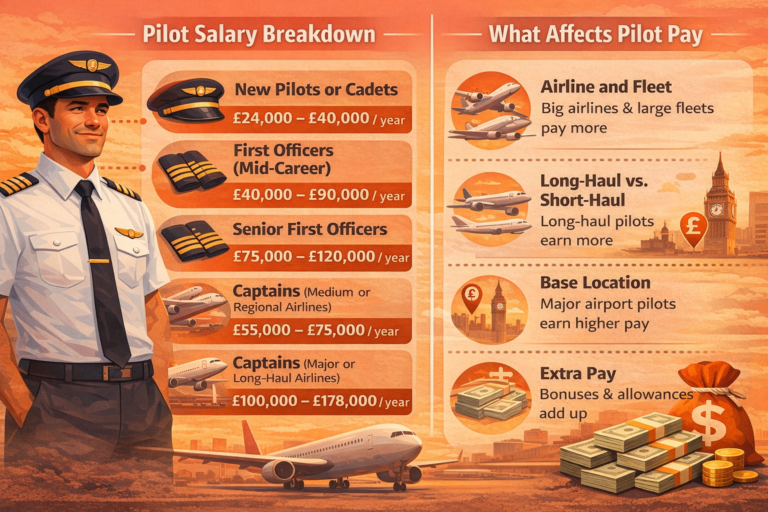
- New Pilots or Cadets: £24,000 to £40,000 per year. For example, pilots just starting their careers earn at the lower end.
- First Officers (Mid-Career): £40,000 to £90,000 per year. Also, their pay rises as they gain more flight hours.
- Senior First Officers: £75,000 to £120,000 per year.
- Captains (Medium or Regional Airlines): £55,000 to £75,000 per year.
- Captains (Major or Long-Haul Airlines): £100,000 to £178,000 per year. Meanwhile, top long-haul captains earn the highest salaries.
What Affects Pilot Pay
- Airline and Fleet: Big airlines like British Airways, Virgin Atlantic, and Jet2 usually pay more. However, smaller or budget airlines pay less.
- Long-Haul vs Short-Haul: Pilots flying long-haul planes like Boeing 787 or Airbus A350 earn more than short-haul pilots.
- Base Location: Pilots based in London or major airports often earn higher pay. In addition, extra allowances can increase total income.
- Extra Pay: Pilots also get bonuses, sector pay (per flight) and overnight allowances. Finally, these extras can add thousands to yearly salaries.
Examples by Airline
- British Airways: New First Officers usually earn about £40,000, while experienced captains can make £100,000 to over £167,000.
- easyJet: First Officers earn £30,000 to £60,000, captains earn £80,000 to £130,000+.
- Ryanair: UK First Officers earn £38,000 to £78,000, while captains can earn over £150,000. Overall, pay increases with experience and seniority.
How Can Pilots Increase Their Earnings?
Do you want to know how pilots can earn more money? First, pilots can get type ratings. This is special training to fly certain planes, like a Boeing 787 or Airbus A350. With this training, airlines pay more because you can fly bigger planes. Pilots feel proud after finishing a type rating.
Next, flying long-haul flights can increase pay. Long flights take more skill and time, so pilots get extra money. Also, airlines give allowances for overnight stays and meals. Many pilots like long flights because they visit new places and earn more. However, long flights can be tiring. In addition, taking leadership roles helps pilots earn more. Captains and senior first officers lead the crew and are responsible for the plane. While this is a big responsibility, it also comes with higher pay. Pilots feel proud when they become captains.
Finally, combining type ratings, long-haul experience, and leadership roles can help pilots earn much more over time. For example, a captain flying long-haul on a big plane can make over £150,000 a year in the UK. Overall, earning more as a pilot is about learning new skills, gaining experience, and taking responsibility. In fact, it feels great to see your hard work rewarded with a higher salary.
Final Thought
Becoming a pilot can be exciting and rewarding. Firstly, pay grows as you gain experience and take on more responsibility. Also, new pilots start with lower salaries, but with training, long flights, and leadership roles, earnings can rise a lot. Flying planes needs skill, focus and teamwork, however, it can be a proud and well-paid career. Finally, being a pilot offers adventure, learning, and a good salary if you work hard and keep improving. In addition, pilots get to see new places and meet different people. Therefore, a career in aviation can be both exciting and fulfilling.
Frequently Asked Questions (FAQs)
1. Are pilots richer than lawyers?
- It depends on experience and location. Experienced airline pilots can earn more than many lawyers, but starting pay is usually lower.
2. Is being a pilot a stressful job?
- Yes, being a pilot can be stressful. They work long hours and are responsible for keeping everyone safe, dealing with weather, and handling emergencies.
3. What is a pilot retirement age?
- In the UK, commercial pilots must retire at 65, as per Civil Aviation Authority rules.
4. How many hours a month do pilots work?
- Pilots usually fly 75–100 hours per month, but total working hours including prep and admin are higher.
5. How much is a RAF pilot paid?
- A UK RAF pilot earns around £28,000–£52,000 early in their career, rising to £80,000+ as a squadron leader.
6. Is it hard to become a pilot?
- Yes, it requires training, licences, good medical fitness and skills in maths, physics and decision-making.
7. How much do airline pilots get paid in the UK?
- In the UK, senior first officers can earn up to £85,000, captains at medium airlines £55,000–£75,000, and major airline captains £100,000–£150,000+.