The dream of soaring through clouds at 35,000 feet while earning a substantial income attracts thousands to the aviation industry each year. But how much does a pilot make a year in reality? The answer isn’t straightforward. However, the reality is that pilot salaries are not the same for everyone. They can vary a lot depending on experience, airline and type of aircraft. For example, in 2026, UK airline pilots typically earn between £52,000 and £90,000 on average. Entry-level First Officers usually start around £21,000 to £40,000 per year. Senior Captains at major airlines often earn over £100,000 to £167,000. This wide range shows that a pilot’s pay can grow significantly with experience, promotions, and working for larger airlines.
This guide will show you real pilot salaries. We will explain what affects your pay and how to earn more. Let’s discover the true earning potential of being a pilot.
What is the Average Pilot Salary in a Year?
Picture this: you’re sitting in the cockpit of a Boeing 777, cruising at 35,000 feet, and your bank account is just as high as your altitude! Sounds amazing, right? Well, pilot salaries in 2026 are just as impressive.
The big picture for pilots worldwide
Pilots are making serious money these days. In the US, airline pilots earn around $226,600 per year on average. That is more than most doctors! New First Officers start at $90,000 to $120,000. Experienced captains at Delta can earn up to $465,000. Can you imagine that paycheck?
Commercial airline pilots live the dream
Commercial pilots enjoy great pay. Salaries range from $122,670 to $226,600 per year. At Southwest Airlines, first-year pilots take home about $133,000. Senior captains can earn up to $364,000. Honestly, those numbers are thrilling!
Cargo pilots fly high too
Cargo pilots also earn well, between $50,000 and $130,000 on average. Top cargo pilots on international routes can match airline captains at over $200,000. For example, Omni Air pays new First Officers $128,000 to start. Not bad for flying boxes around the world!
Private jet pilots enjoy luxury pay
Private jet pilots earn slightly less but still make good money. They average around $202,499 per year. Citation Latitude pilots make about $114,600, while top captains can reach $319,200. NetJets pays between $77,000 and $200,000. Imagine flying celebrities and billionaires for that kind of pay!
What makes the difference?
Experience changes everything. New pilots start lower, but veterans earn big. Major airlines pay much more than small companies. Also, location matters because US pilots usually earn more than pilots in other countries.
How Much Does a Pilot Make a Year in the UK ?
In the UK, how much does a pilot make a year depends on experience, rank, and airline type. Pilots can earn between £25,000 and over £150,000 a year, with an average of around £72,000. For example, new First Officers usually start at £24,000 to £40,000, while experienced First Officers earn £50,000 to £90,000 or more. Meanwhile, captains at major airlines often make £100,000 to £150,000 or higher.
Pay also changes depending on the airline. Big airlines like British Airways pay more, with captains earning £90,000 to £120,000. In contrast, low-cost airlines pay less, with captains earning £60,000 to £80,000. Regional and smaller airlines often start pilots at £25,000 to £50,000.
Pilots can earn extra money. They get sector pay for each flight leg and may receive bonuses. Additionally, long-haul flights usually pay more than short flights. Therefore, gaining experience and working for bigger airlines helps pilots earn higher salaries.
How Much Do Different Types of Airlines Pay Pilots?
Pilot pay changes based on the type of airline. First, let’s look at the main types in the UK and what they pay.
Budget airlines
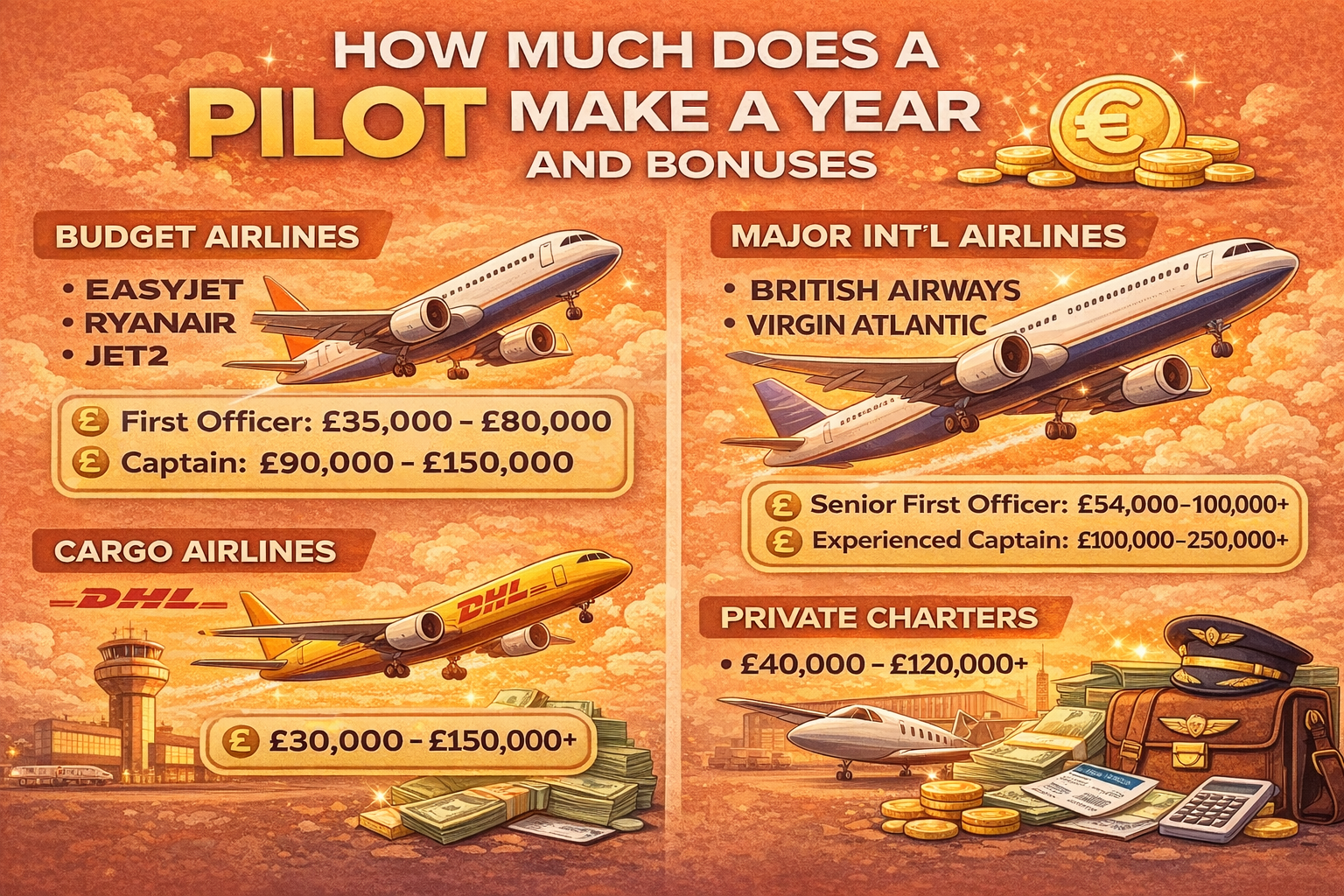
To start, budget airlines like EasyJet, Ryanair, and Jet2 pay good money, but less than big airlines. First Officers earn about £35,000 to £80,000. Captains earn around £90,000 to £150,000. Also, pilots can earn extra money from bonuses and more flight sectors.
Major international airlines
Next, major airlines like British Airways and Virgin Atlantic pay the highest salaries. Senior First Officers earn £54,000 to £100,000 or more. Experienced Captains earn between £100,000 and £250,000 or even more. Because they fly big planes and long routes, they pay more.
Cargo airlines
After that, cargo airlines such as DHL also offer good pay. Salaries range from £30,000 to £150,000. Pay depends on experience and flight hours. Over time, long flights can increase earnings.
Private charter services
Finally, private charter pilots earn good pay too, but the amount can change a lot. Some earn £40,000 to £120,000. Experienced captains can earn much more. So, the plane size and client type matter a lot.
In the UK, new regional First Officers may start at about £25,000 a year. However, senior captains at major airlines can earn over £250,000. Overall, airline type and experience play a big role in pilot pay.
How Does a Pilot’s Career Growth Affect Salary?
A pilot’s career growth skyrockets their salary. You start low but climb huge as you gain experience. Let me break it down in simple steps with 2026 numbers.
- Entry-level (Flight Instructor or Junior FO): $35K–$90K
You begin building hours as a flight instructor or regional first officer. Pay stays modest at $35,000 to $90,000. You feel the grind but get excited for what’s next. - Regional First Officer: $55K–$120K
After 1,500 hours, you join regionals. Salary jumps to $55,000–$120,000. Experience boosts your pay fast here. - Regional Captain: $85K–$150K
Promotion to captain doubles your money. You earn $85,000–$150,000. More responsibility means bigger checks! - Major Airline First Officer: $90K–$160K
Move to majors like Delta. Pay hits $90,000–$160,000. You fly bigger planes and see quick growth. - Major Airline Captain: $200K–$450K+
Senior captains rule at $200,000–$450,000. Long-haul pros top $400K with bonuses. You feel like a boss!
Career growth triples your pay in 6-15 years. Experience, hours, and promotions drive it all. The sky’s your limit!
What Are the Key Factors Influencing Pilot Pay?
Pilot pay depends on many things. First, airlines reward experience, responsibility, and skills. Total pay usually includes a base salary, flight-hour pay, per diem, and bonuses. Also, pilots with more seniority or who fly bigger aircraft usually earn higher salaries.
- Experience and seniority: Experience is very important. New pilots earn less at first. However, as they gain years and more flight hours, their pay rises. Senior pilots also get better schedules, promotions, and higher base pay.
- Rank (Captain vs First Officer): Captains earn much more than First Officers because they are responsible for the aircraft, passengers, and crew.
- Aircraft type and size: For example, flying a Boeing 787 or Airbus A350 pays more than smaller regional jets.
- Airline type and location: Major airlines usually pay the most, while regional or low-cost airlines pay less. Cities like London or New York often offer higher salaries.
- Extra pay and benefits: Finally, pilots can earn extra money for training, night flights, or special duties. Total pay can also include insurance, retirement contributions, and travel perks. Therefore, all these factors together determine how much a pilot earns.
What Factors Affect a Pilot’s Pay?
A pilot’s salary is not the same for everyone. Actually, several important things decide how much you can earn. First, let’s look at them one by one.
Experience level
New pilots usually start with lower pay, while senior pilots earn much more. For example, a First Officer might make $90,000 a year, but a Captain at a big airline can earn over $400,000. Really, gaining experience is like unlocking higher salary levels.
Type of aircraft
Flying a small plane is exciting, but flying large jets usually pays more. Also, bigger planes carry more passengers or cargo, so airlines give higher pay for more responsibility.
Airline type
Budget airlines often pay less than major international carriers. For example, Delta, United, or British Airways pay more than smaller airlines. Cargo airlines pay differently too. Another thing, private jet companies can pay a lot for experienced captains, especially if you fly VIP clients.
Route type
Long flights often pay more. However, short flights let you fly more trips each day, which can also boost your income.
Location
Where you work can change your salary a lot. Domestic flights usually pay less than international routes. US pilots generally earn more than pilots in other countries. Even within a country, some cities or airports pay more.
Flight hours and overtime
The more you fly, the more money you can make. Long-haul flights, night flights, or extra hours can increase pay a lot. Some airlines give bonuses for overtime or flying in tough conditions.
To sum up, experience, plane type, airline, location, and extra flight hours all affect a pilot’s paycheck. So, if you aim high, you can earn six figures or more.
How Do Location and Country Affect Pilot Pay?
Pilot pay in the UK depends on where you work and the airline you fly for. First, pilots in London earn more because living costs are higher. Also, pilots on long-haul flights usually earn more than those on short flights.
1. Location
- London airports (Heathrow, Gatwick): Pilots here earn the most. Many senior pilots make over £100,000 a year.
- Regional airports (Manchester, Luton): Pay is lower than London. However, some experienced captains can also earn around £100,000.
- Extra pay: London pilots often get money for housing and travel.
- Other airports: Pay can be different. For example, smaller airports may pay less.
2. Airline Type
- Long-haul airlines (e.g., British Airways, Virgin Atlantic): Pay is high. Senior captains can earn over £150,000.
- Short-haul or budget airlines (e.g., Ryanair, easyJet, Jet2): Basic pay is lower, but flying many flights can give a good total income.
- Cargo or private jets: Pay can be higher because the work is harder and more specialised.
3. Other Factors
- Seniority and rank: Captains earn more than first officers. Experience is very important.
- Allowances: Pilots get extra for meals, overnight stops and time away from home.
- Union (BALPA): Union members often get better pay and benefits at big airlines. Finally, these factors all work together, therefore affecting the total pilot salary.
How Do Bonuses and Overtime Work for Pilots?
Pilots in the UK get a base salary. First, they also earn extra money through bonuses, allowances, and overtime. These extras can add 3%–10% or more to yearly pay because airlines reward extra work and loyalty. Overtime is paid when pilots work extra hours or on days off. In addition, bonuses and extra pay for flights can make the total income much higher.
Bonuses and Extra Pay
- Performance & Profit-Share: Some airlines give 3%–10% extra pay if the company does well. For example, British Airways gives performance bonuses.
- Loyalty Bonuses: Paid when pilots reach certain work anniversaries.
- Allowances & Sector Pay: Extra money for each flight, night flights, or staying away from home.
- Sign-on Bonuses: Some airlines give money to new pilots.
Overtime and Extra Duty
- Day Off Pay: Pilots get extra pay for working on scheduled days off.
- Extended Duty Pay: Extra money for flights that take longer than planned.
- Standby/On-Call Pay: Pilots get paid for being ready to work if needed. However, not all standby shifts pay the same.
Typical Benefits
- Flight Perks: Free or cheap flights for pilots and their families.
- Insurance & Pension: Includes medical insurance and pension (7% from the employer, 2% from the employee).
- Annual Leave: Usually 4–6 weeks per year.
Finally, these extras can greatly boost a pilot’s income. Therefore, pilots who work extra hours, earn bonuses, and get allowances can make much more than their base salary.
How Do Private vs Commercial Pilots’ Salaries Compare?
Commercial pilots usually earn more steady money than private pilots. First, airline pilots have fixed salaries with bonuses and benefits. Also, private jet pilots’ pay can change depending on how much they work. However, top private jet captains can sometimes earn more than airline pilots because they fly big, complex jets.
Commercial Pilot Salaries (Airline)
- Pay: Steady salary with bonuses and union benefits.
- Earnings: Long-haul captains earn more than new pilots. For example, new first officers earn less, while experienced captains can earn much more.
- Pros: Stable pay, clear career path, union protection, and travel perks.
Private Pilot Salaries (Business/Corporate)
- Pay: Can change because it is often contract-based.
- Earnings: New pilots earn less, but senior captains on big jets can earn a lot. In addition, elite private pilots can sometimes earn more than commercial captains.
- Pros: Can earn very high money, better lifestyle and less time away from home.
Key Comparison Factors
- Aircraft Size: Bigger jets pay more than small jets.
- Experience: More years matter most. Private pilots can grow pay faster.
- Income Stability: Commercial pay is guaranteed, while private pay can go higher at the top.
Finally, choosing between commercial and private flying depends on your priorities. Therefore, you should decide if you want steady pay or a chance to earn more money.
Final Thought
Being a pilot can be exciting and rewarding. At first, pay is modest, but as you gain experience and promotions, it grows significantly. For example, new first officers may start with lower salaries, while senior captains at major airlines can earn over £250,000 a year. In addition, bonuses, allowances and extra flight hours can increase earnings even more. Moreover, your salary depends on the airline, aircraft type, and the routes you fly. Therefore, whether you choose commercial airlines, cargo flights, or private jets, gaining experience and moving up the ranks is the key to a successful and well-paid career in aviation.
Frequently Asked Questions (FAQs)
1. Is a pilot a stressful job?
- Yes. Pilots face long hours, strict schedules, and high responsibility for passengers and aircraft safety.
2. Do I have to be rich to be a pilot?
- No. You need to invest in training and licences, but scholarships, loans, and airline programs make it possible without being rich.
3. Which pilot gets the most money?
- Senior captains at major international airlines usually earn the most, followed by experienced private jet pilots on large jets.
4. What is a pilot retirement age?
- In most countries, airline pilots retire around 65 years old. Some private or cargo pilots may work longer if healthy.
5. Is being a pilot a risky career?
- Flying is generally safe due to strict regulations and training. However, it involves some physical and mental risks, like fatigue and weather challenges.
6. What is the #1 most stressful job?
- Jobs like air traffic controllers, military personnel, and emergency medical workers are usually ranked as the most stressful. Pilots are also considered high-stress.
7. What is the survival rate of pilots?
- Commercial aviation is very safe. Pilot survival rates in accidents are high, often over 95% in controlled flight incidents.
8. Do pilots age more slowly?
- No. Pilots do not age more slowly, but they may maintain good health through regular medical checks and fitness routines.
9. Is it rare to be a pilot?
- Yes. Only a small percentage of people become professional pilots, making it a specialised and competitive career.