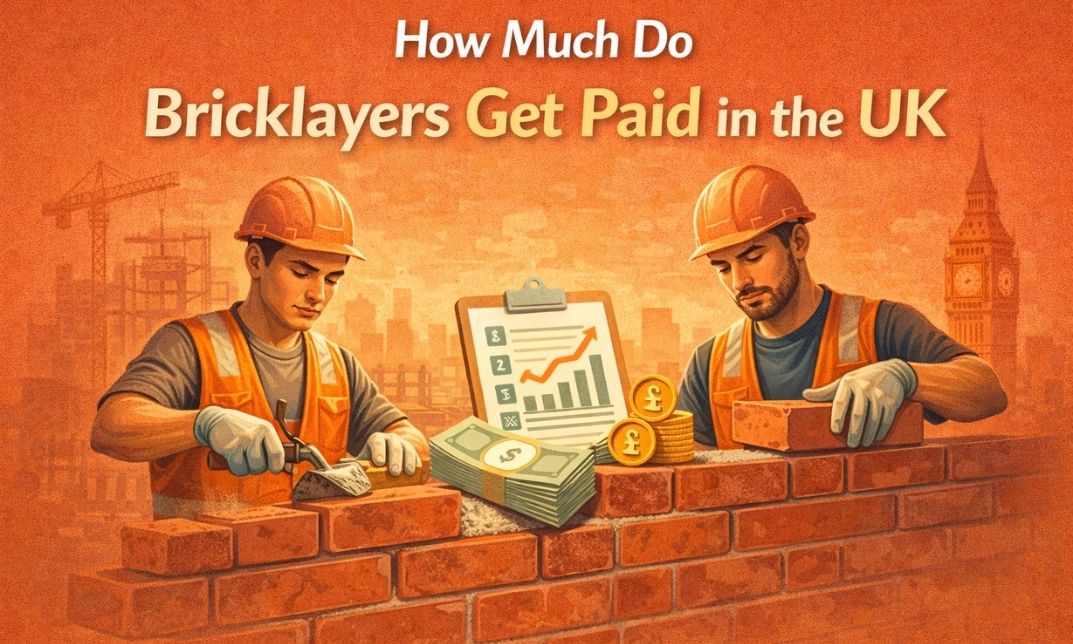
A lot of people have aspirations of becoming pilots since it seems like an exciting and fulfilling career. At the same time, how much pilots earn often drives that choice. A pilot is a trained professional who flies an aircraft and keeps everyone safe on board. They control the plane during takeoff, flight, and landing. They also plan routes, check the weather, and inspect the aircraft before flying. Pilot pay changes a lot, and honestly, it can feel like a long climb at first. Most new First Officers start on lower pay, usually £25k to £40k in the UK. In the US, they often earn around $35k to $60k to begin with.
However, pay rises quickly as pilots gain experience and confidence. Experienced Captains at large airlines often earn £100k to £150k or more. Some top pilots even pass £200k with bonuses and extra flights. So, airline size, aircraft type, and seniority strongly shape how much pilots are paid.
Let’s explore how much airline pilots make each year, from starting salaries to senior pay, and what factors can affect their income.
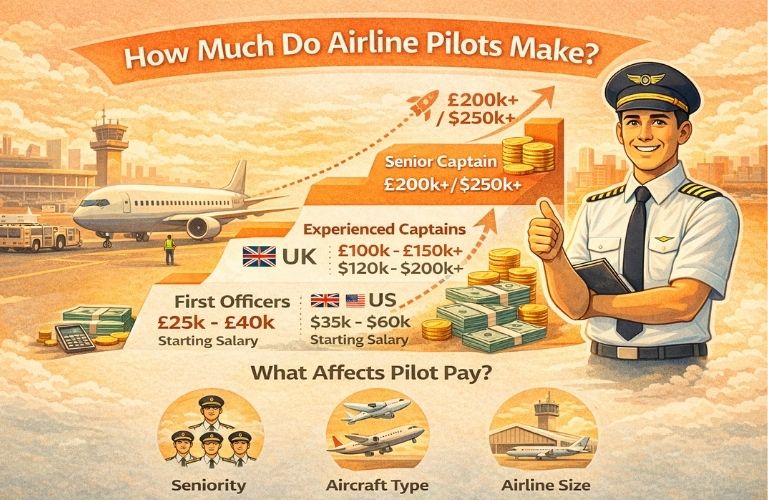
What qualifications do you need to be a pilot in the UK?
Becoming a pilot in the UK is exciting but needs the right education, health, and training. However, you also need the right skills and licences to fly safely and professionally.
Basic requirements
- Minimum age: 17 to start training, 18 for paid flying
- Right to live and work in the UK or EU
- Fluent English, both spoken and written
Education
- At least 5 GCSEs at Grade 4/C or above
- Must include Maths, English, and Science
- Physics helps, but is not required
Medical
- CAA Class 1 Medical Certificate
- Checks eyesight, hearing and overall fitness
- Best to complete this before training
Pilot licences and training
- PPL (Private Pilot Licence): for leisure flying
- CPL (Commercial Pilot Licence): required for paid work
- ATPL (Airline Transport Pilot Licence): needed for airline pilots
- Start with a “frozen ATPL”, then gain hours to qualify fully
- Training takes 18 months or more
- Costs usually range from £70k to £130k
Training routes
- Integrated training: full-time and faster
- Modular training: part-time and more flexible
Skills you need
- Strong focus and hand-eye coordination
- Good communication and teamwork
- Calm thinking under pressure
- Confident decision-making
Next steps
- Get a Class 1 medical first
- Check your GCSE results
- Choose a training route and flight school
How to Become a Pilot Step by Step in the UK (2026)
Becoming a pilot in the UK is exciting, but it takes training, skills, and hard work. First, you need a CAA Class 1 Medical Certificate and must pass aptitude tests. Next, you choose either Integrated (fast) or Modular (flexible) training to get a Commercial Pilot Licence (CPL) with an Instrument Rating (IR). Training costs about £70,000 to £130,000 and takes 16 to 24 months.
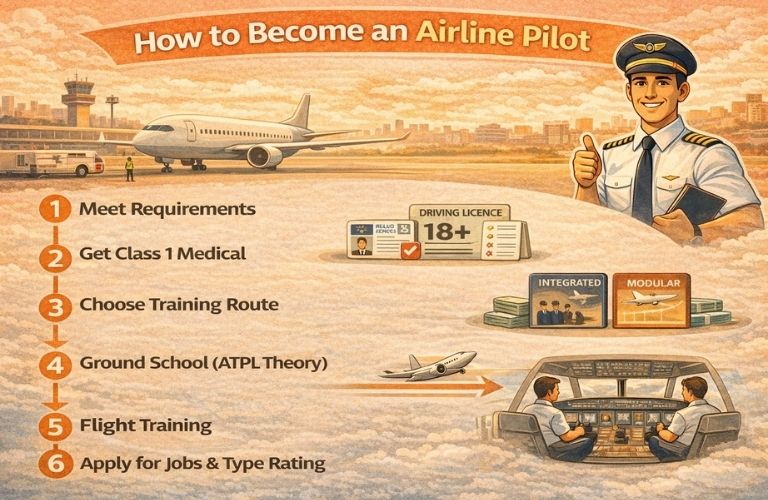
Step-by-Step Guide
- Meet requirements: Be 17+ to start, 18+ for a licence, and have 5 GCSEs, including Maths, English, and Science
- Get Class 1 Medical: Checks fitness, eyesight, and hearing
- Choose training route: Integrated (fast) or Modular (flexible)
- Ground School (ATPL Theory): Learn navigation, meteorology, and air law
- Flight Training: PPL → Night Rating & hours → CPL → Instrument Rating → Multi-Crew Cooperation
- Apply for jobs & Type Rating: Train on a specific aircraft once hired
Finally, good teamwork, calm decision-making, and fluent English are essential. In addition, gaining experience through flight hours will help you reach airline jobs faster. Overall, careful planning and dedication make becoming a pilot achievable.
What Factors Affect Pilot Salaries?
A BA pilot’s salary depends on several factors, and pay can vary a lot. In the UK, pilots can earn £32,000 to over £120,000 a year, depending on experience and role.
- Seniority and Experience: Pilots with more years of service and flight hours earn higher pay. As a result, captains make more than First Officers.
- Employer Type: Big airlines like British Airways or Delta usually pay more and offer better benefits. On the other hand, smaller or budget airlines may offer lower pay and slower career growth.
- Aircraft Size and Type: Flying large long-haul planes generally pays more than smaller short-haul or turboprop aircraft. Additionally, more complex aircraft can increase salary.
- Rank: Captains earn much more than co-pilots.
- Location and Base: Salaries vary by country and city. For instance, pilots in major cities like London often earn higher pay.
- Union Contracts: Many airlines follow agreements that decide pay scales and increases.
- Operational Demand: When airlines need more pilots, pay can rise, and signing bonuses may be offered.
- Allowances and Extras: Pilots can earn extra through per diem, overtime, or night flight premiums.
Overall, experience, airline type, aircraft, rank, location, and extra pay all combine to shape a pilot’s salary.
What is the starting salary for a pilot in the UK?
Starting as a pilot in the UK is exciting, but pay can vary depending on the airline, aircraft, and route. Most new First Officers earn between £30,000 and £60,000 a year. Some cadet roles start lower, around £16,000 to £30,000. At the same time, pay usually rises quickly as pilots gain experience. When promoted to Captain, salaries can go over £100,000, and senior Captains can earn £150,000 or more.
Typical Starting Salaries in the UK:
- Average First Officer: £30,000 to £45,000
- Budget/Short-haul airlines (e.g., Ryanair, EasyJet): £30,000 to £60,000
- Long-haul/Major airlines (e.g., British Airways, Virgin Atlantic): £55,000 to £70,000
- Turboprop or small business jets: £17,000 to £35,000
- Flying instructors: About £1,100 per month + hourly pay
How salaries grow:
- After 2 to 5 years, experienced First Officers can earn £50,000 to £70,000
- Then, promotion to Captain usually takes 5 to 10 years and pay rises to £100,000 to £150,000+
- Senior Captains on long-haul routes can earn over £200,000, including bonuses
Factors that affect pay:
- Airline type: Big airlines pay more than budget carriers
- Route & aircraft: Long-haul planes usually pay more than short-haul or small planes
- Experience & hours: More flying hours and seniority increase pay
- Also, many pilots start with training debt, sometimes around £100,000
In short, starting salaries depend on the airline, route, and role. Overall, pay grows quickly with experience and promotion.
What responsibilities do pilots have before a flight?
Airline pilots have an important and responsible job. They make sure passengers and cargo travel safely and on time. Before starting a flight, pilots plan the route, check the aircraft, communicate with air traffic control and crew and prepare for emergencies. They usually work with a co-pilot, sharing duties to keep flights safe and smooth.
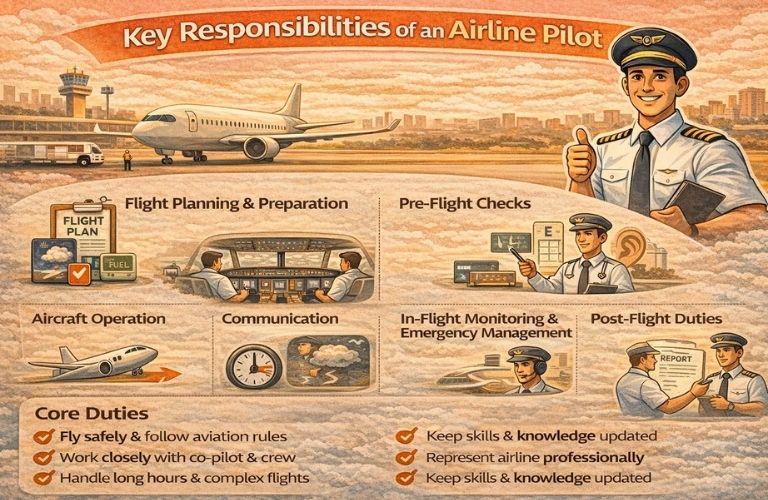
Key Responsibilities:
- Flight Planning & Preparation: Pilots check the weather, calculate fuel, create a flight plan, and make sure the plane is not overloaded. Then, they plan the safest and fastest route.
- Pre-Flight Checks: Inspect the plane’s exterior, instruments, engines, and safety systems. After that, they make sure everything is ready for the flight.
- Aircraft Operation: Fly the plane safely, especially during takeoff and landing. During the flight, they monitor speed, altitude, and instruments continuously.
- Communication: Stay in constant contact with air traffic control, brief the cabin crew and update passengers. Also, they report any issues immediately.
- In-Flight Monitoring & Emergency Management: Keep an eye on fuel, weather, and position. If needed, adjust the route or respond to technical problems and emergencies calmly.
- Post-Flight Duties: Complete flight reports, review any issues and debrief with the crew to improve safety and efficiency.
Core Duties:
- Fly the aircraft safely and follow aviation rules at all times.
- Work closely with a co-pilot and flight crew to share responsibilities.
- Handle long hours, irregular schedules, and complex flight conditions.
- Represent the airline professionally and maintain passenger trust.
- Continuously update skills and knowledge to meet safety and regulatory standards.
In short, pilots are responsible for planning, flying, and ensuring every flight is safe, efficient, and smooth. Overall, their work combines skill, focus, and teamwork.
Factors That Increase Pilot Earnings
Becoming a pilot is exciting, but pay can vary a lot. First of all, one of the main factors is the type of airline. Flying for a major airline usually pays more than working for a budget or low-cost carrier. For instance, long-haul flights on big airlines often bring higher salaries than short domestic routes.
Next, the number of flight hours and the types of routes pilots take can increase pay. Pilots who fly more hours, night flights, or challenging routes often receive extra bonuses. In the same way, gaining additional certifications, like type ratings for specific aircraft, can make a pilot more valuable to airlines and increase earnings.
Moreover, moving into leadership or management roles can boost pay significantly. Captains or senior pilots enjoy higher salaries, extra perks, and better benefits. Overall, choosing the right airline, flying more hours, getting extra certifications, and taking on leadership duties are key ways pilots can earn more money.
Pilot Benefits Beyond Salary
- Health and Insurance: To begin with, pilots get coverage for themselves and their families, which gives peace of mind.
- Travel Perks: Along with that, pilots can fly at discounted rates or sometimes even for free, making travel fun and exciting.
- Pension Schemes: As well, many airlines also provide pensions, helping pilots save and plan for the future.
- Flexible Schedules and Time Off: On top of that, pilots often enjoy days off to rest, spend time with family, or explore new places.
All in all, pilots enjoy more than just a pay cheque. These benefits make the job both rewarding and enjoyable.
How Much Do Senior Pilots Earn?
Senior pilots, especially captains at big airlines, earn a lot in the UK. Their pay usually ranges from £100,000 to £250,000+ a year. Some long-haul captains earn over £170,000. Senior First Officers usually make £65,000 to £120,000. How much a pilot earns depends on experience, airline, type of plane and bonuses.
Key Points:
- Top Salaries: Experienced senior captains can earn over £170,000, and with bonuses, they can reach £250,000+.
- Big Airlines: Captains at major airlines like British Airways often start around £100,000 to £167,000.
- Flight Type & Experience: Flying long-haul planes and working for many years increases pay.
- Extra Pay: Pilots can get extra money for each flight, bonuses, and sometimes profit-sharing.
- Worldwide: Some senior captains at top airlines, like Emirates, can earn about $350,000 (~£270,000+).
In short, aeroplane drivers earn high salaries, and pay grows with experience, airline, and extra responsibilities.
What Benefits Do Pilots Get Besides Salary?
Being a pilot is exciting, and the benefits are more than just a salary. First, most airlines provide health insurance for pilots and their families. This gives peace of mind and security. Next, pilots often enjoy travel perks. They can fly at cheaper rates or sometimes even for free, which makes travelling fun and easy. Besides that, many airlines offer pension plans. This helps pilots save money for the future and feel safe after retirement.
Finally, pilots usually get flexible schedules and time off. Even though the hours can be long, they can rest, spend time with family, or enjoy hobbies. In short, pilots get more than money. Health coverage, travel perks, pensions, and flexible schedules make the job exciting and rewarding.
Final Thoughts: How Much Pilots Earn?
Being a pilot is a thrilling profession that blends responsibility, skill, and adventure. Firstly, the pay that pilots receive can start modestly, but with experience, seniority, and the right airline, salaries grow quickly. Additionally, the job comes with great benefits like travel perks, health coverage, pensions, and flexible schedules. Finally, if you love flying and want a rewarding career, becoming a pilot could be the right choice. This blog covers everything you need to know about pilot salaries, training, and career steps in 2026, so check out our full guide to start your journey and reach new heights in your aviation career.
FAQs: How Much Pilots Earn?
1. What is a pilot’s salary in the UK?
- New pilots earn around £30,000 to £60,000 a year. Experienced captains can earn £100,000 to £250,000+ with bonuses.
2. Do pilots make good money?
- Yes, pilots earn well, especially after gaining experience and flying for big airlines.
3. How much is a Ryanair pilot paid?
- Ryanair First Officers earn about £30,000 to £60,000, while captains can earn £80,000 to £120,000+.
4. How long is pilot school in the UK?
- Training takes 16 to 24 months, depending on the route (Integrated or Modular).
5. Why do so many pilots quit?
- Long hours, irregular schedules, stress, and time away from family make some pilots leave the job.