If you are asking how much is the pilot’s salary, the answer depends on several key factors like rank, experience, airline, and aircraft type. In the UK, pilot salaries usually start around £30,000 for newly qualified cadets. As pilots gain experience and flight hours, they move into First Officer roles where earnings can increase to between £40,000 and £85,000. Senior First Officers and experienced pilots flying larger or long-haul aircraft often earn much more.
At the top level, captains in major airlines can earn over £150,000 each year, especially on international flights. Smaller regional airlines usually pay less than big global airlines. Flight hours, overtime and travel or overnight allowances also increase total income. Pilots also get extra benefits like pensions, travel perks, and bonuses, which add more value. Overall, a pilot’s salary grows step by step with experience, skill, and time in the cockpit. It is a rewarding but very competitive career.
What Is The Average Pilot Salary?
When people ask how much is the pilot’s salary, they want a simple answer. Pilot pay is not the same for everyone. It changes by experience, airline, and job role.
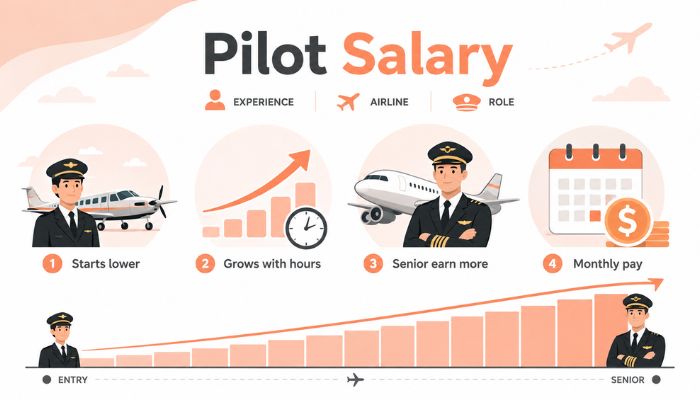
The average pilot salary around the world is quite wide. Some pilots earn a lower starting pay, while senior pilots earn a very high income. So, it depends on where they are in their career.
Entry-level pilots earn less because they are still learning and building flying hours. As they gain experience, their salary goes up step by step. This is a normal path in aviation.
Experienced pilots earn much more. They fly bigger planes and take more responsibility, so they get higher pay.
Most pilots get paid monthly, and this adds up to a good yearly income. Over time, salary increases with experience, rank, and flight hours.
How Much Do Pilots Earn In The UK?
How much do pilots get paid UK? Commercial pilot salaries in the UK change a lot, and it often surprises people. Pay depends on experience, job role, and the type of airline. A newly qualified First Officer earns about £25,000 to £45,000+ per year at the start. This stage focuses on learning, building skills, and gaining flying hours.
A Senior First Officer can earn around £50,000 to £120,000 with more experience. This role brings more confidence and greater responsibility in the cockpit. Captains in short-haul or budget airlines usually earn £55,000 to £120,000. They lead flights and make key decisions during travel.
Captains in major or long-haul airlines can earn £100,000 to £170,000+ at the top level. This stage includes complex routes and larger aircraft. Overall, pay increases step by step. Income grows with training, experience, and responsibility over time.
What Factors Affect Pilot Salary?
Pilot’s salary is not fixed. It changes for many reasons. Some pilots earn less, while others earn very high pay. Let’s look at the main factors in simple words.
Airline type (budget vs premium airlines)
Budget airlines usually pay less. They focus on low-cost travel and high flight numbers. Premium airlines pay more. They offer better salary, better benefits, and long international routes.
Flight hours and experience level
Experience matters a lot. New pilots earn less because they are still learning. As flight hours increase, salary also goes up. More experience brings more trust and more responsibility, so pay increases step by step.
Aircraft type and size
Bigger planes need more skill and training. Pilots who fly large aircraft usually earn more money. Small aircraft jobs often pay less because they are less complex.
Domestic vs international routes
Domestic flights usually pay less. They are shorter and simpler. International flights pay more because they take longer and require more planning. Pilots also spend more time away from home, so airlines give extra pay.
How Does Pilot Salary Change By Experience Level?
In the UK, pilot jobs UK salary increase a lot with experience and rank. Pay usually starts around £30,000 to £50,000 for newly qualified First Officers and can rise to over £150,000 for senior Captains. The exact amount depends on experience, aircraft type, and the airline’s pay structure.
- Entry-level First Officers (0–3 years): earn about £30,000 to £60,000. They are new pilots who focus on learning, building flight hours and gaining confidence on short-haul or regional routes.
- Mid-career First Officers (3–7 years): earn around £60,000 to £85,000. At this stage, pilots gain more experience and often move to larger aircraft or longer international flights.
- Senior First Officers: earn about £85,000 to £120,000. These pilots have strong experience and work closely with the Captain while preparing for promotion.
- Captains: earn around £100,000 to £150,000+. They take full control of the aircraft, lead the crew, and handle important decisions during flights.
- Senior long-haul Captains: earn £150,000 to £250,000+. These are highly experienced pilots who fly large aircraft on long international routes for major airlines.
How Much Do International Pilots Earn?
International pilot salaries can be very different from country to country. Some airlines pay very high wages, while others offer more moderate income. Experience and airline type also matter a lot.
Pilots in the Middle East often earn some of the highest salaries in the world. Big airlines in this region also give extra benefits like free housing, travel, and tax-free income. This makes the total package very attractive.
Pilots in Europe earn good and steady salaries. However, taxes and living costs are higher, so take-home pay can feel lower compared to other regions. Still, major airlines offer stable income and good job security.
Pilots in the United States often earn very high salaries. Big US airlines pay well, especially for experienced pilots on long flights. Salary increases a lot with seniority and flight hours.
International pilots also get extra benefits. These include travel discounts, health insurance, retirement plans, and flight allowances. These benefits add extra value and make the job more rewarding.
What Extra Pay And Benefits Do Pilots Get?
Pilot pay is not only a fixed salary. They also get extra money and benefits, which make the job more rewarding.
Flight hour allowances give extra pay for every hour a pilot flies. So, more flying means more money. This helps pilots earn more when they have busy schedules.
Overtime pay also increases income. When pilots work extra flights or longer hours, airlines pay extra. This adds more to their monthly salary.
Travel perks are a big benefit. Many airlines give free or cheap flights for pilots and their families. This lets them travel to many places around the world.
Pension and insurance benefits also matter a lot. Pilots get retirement savings and health insurance. These help them feel safe about their future and reduce financial stress.
What Extra Pay And Benefits Do Pilots Get?
Pilot income does not come from salary only. Airlines also give extra payments and valuable benefits. These rewards make the career feel more exciting, stable and financially secure. How much do BA pilots earn?
- Flight hour allowances give pilots extra money for the hours they spend flying. Therefore, pilots who fly more often can earn a much higher income.
- Overtime pay helps pilots increase their monthly earnings. Extra shifts, longer duties and busy travel seasons usually bring additional pay.
- Free and discounted flights are one of the biggest job perks. Pilots and their families often travel at a lower cost and enjoy more holidays.
- Hotel stays and meal allowances also support pilots during work trips. This benefit reduces personal travel expenses and adds comfort.
- Pension schemes help pilots save money for retirement. Over time, these savings provide better financial security for the future.
- Health and life insurance benefits protect pilots and their families. Because of this support, many pilots feel less financial stress.
Is Pilot Salary Worth The Training Cost?
Becoming a pilot costs a lot of money. Training, exams, and flying hours are expensive. This can feel difficult at the start, especially for students.
Pilot training can cost tens of thousands of pounds. Many people save for years or take loans to complete it. So, the pressure is real in the beginning.
But the salary can be very good after training. Pilots earn more as they gain experience. Over time, the income becomes much higher, especially in big airlines.
It also takes time to become a pilot. Most people spend several years learning, training, and building flight hours. This needs patience and hard work every day.
Career growth is strong in this job. Pilots start with lower pay, but their salary grows step by step. Later, they can become captains and earn a very high income with extra benefits.
Final Words on How Much is the Pilot’s Salary
A pilot’s salary can grow a lot with experience, skill, and flight hours. New pilots usually start with lower pay, but income increases step by step over time. Major airlines also offer extra benefits like travel perks, bonuses, pensions, and insurance. Although pilot training costs a lot, many people feel the career is worth the effort. Pilots enjoy strong career growth, exciting travel opportunities and good long-term earnings. However, the job also needs hard work, patience and responsibility every day. For people who love flying, becoming a pilot can be both financially rewarding and personally exciting.
Frequently Asked Questions (FAQs)
1. How much do UK pilots get paid?
- UK pilot pay varies by experience. New pilots earn around £30,000–£50,000. Experienced captains can earn £100,000–£150,000+, especially at major airlines.
2. Can I become a pilot at 40?
- Yes, you can. There is no strict age limit. But you must pass medical tests, training, and meet airline requirements.
3. Do pilots make 700k?
- Rarely. Most pilots do not earn £700k. Only a few senior airline captains or executives in top airlines may reach very high packages.
4. Is pilot a good career in the UK?
- Yes, it is a strong career. It offers good pay, travel benefits, and long-term growth. But training is expensive and competitive.
5. Do pilots make good money?
- Yes. Pilot salaries are generally high, especially after gaining experience. Captains and long-haul pilots earn very good incomes.
6. Can you be a pilot without GCSEs?
- It is difficult. Most airlines and flight schools prefer GCSEs in maths, English, and science. Some alternative routes may exist.
7. Can a pilot fly 7 days in a row?
- Usually no. Pilots have strict safety rules and rest limits. They must take regular rest days between duty periods.
8. What age is best to become a pilot?
- The best age is usually the early 20s. But you can start later if you meet medical and training requirements.