
A lifeguard is a trained professional who keeps swimmers safe in pools, water parks and beaches. They watch the water, respond to emergencies and help prevent accidents before they happen. Lifeguards also enforce safety rules and provide first aid when required. As a result, many people want to learn more about the lifeguard salary UK and the earning potential in this role.
Most lifeguards in the UK earn between £12 and £14 per hour. Full-time workers typically make between £20,000 and £27,000 a year. Pay often rises with experience, qualifications and extra responsibilities.
This guide breaks down lifeguard salaries and explains how to earn more in the role.
What is the Average Lifeguard Salary UK Right Now?
Lifeguards are very important people who keep us safe while we swim. They work at local pools, sunny beaches and fun water parks. Many people are curious about the lifeguard salary in the UK before they start their training.
On average, a full-time lifeguard earns about £24,364 every year. This usually means you get paid £11.43 for every hour you work. Some pools pay a bit more if they are very large or busy. In addition, you might earn extra money for working late at night.
Most guards find the pay is very fair for the work they do. You get to help others and stay active every day. As a result, many people stay in this job for many years. Therefore, it is a great way to start your career.
How Much Does a Beginner Earn at the Pool?
If you are a new lifeguard, you might earn between £15,000 and £19,000 a year. This depends on where you work and how many hours you work. Some leisure centres offer a little more to attract new staff. At first, you will focus on learning all the safety rules. You will also learn how to talk to the public in a friendly way.
Besides that, your pay will grow as you get more experience. Many employers pay extra for weekend shifts or holiday work. This is a good way to boost your bank account quickly. Moreover, you will gain confidence while you watch the pool. Therefore, this entry-level wage is just the first step.
Does Your Work Location Change Your Pay?
Your location plays a huge part in how much money you take home. For example, guards in London often earn more than those in smaller towns. They usually make about £12.44 per hour to help with high city costs. Many experienced London guards can earn over £26,800 every year. Private clubs in big cities might even pay a much higher rate.
In addition, some companies give travel support or staff discounts. However, living in a big city is more expensive than the countryside. As a result, you should think about your bills before picking a place to work. Moreover, there are many jobs available in busy tourist areas. Therefore, checking different locations is a very smart move for your future career.
Why Do Different Lifeguard Jobs Pay Different Amounts?
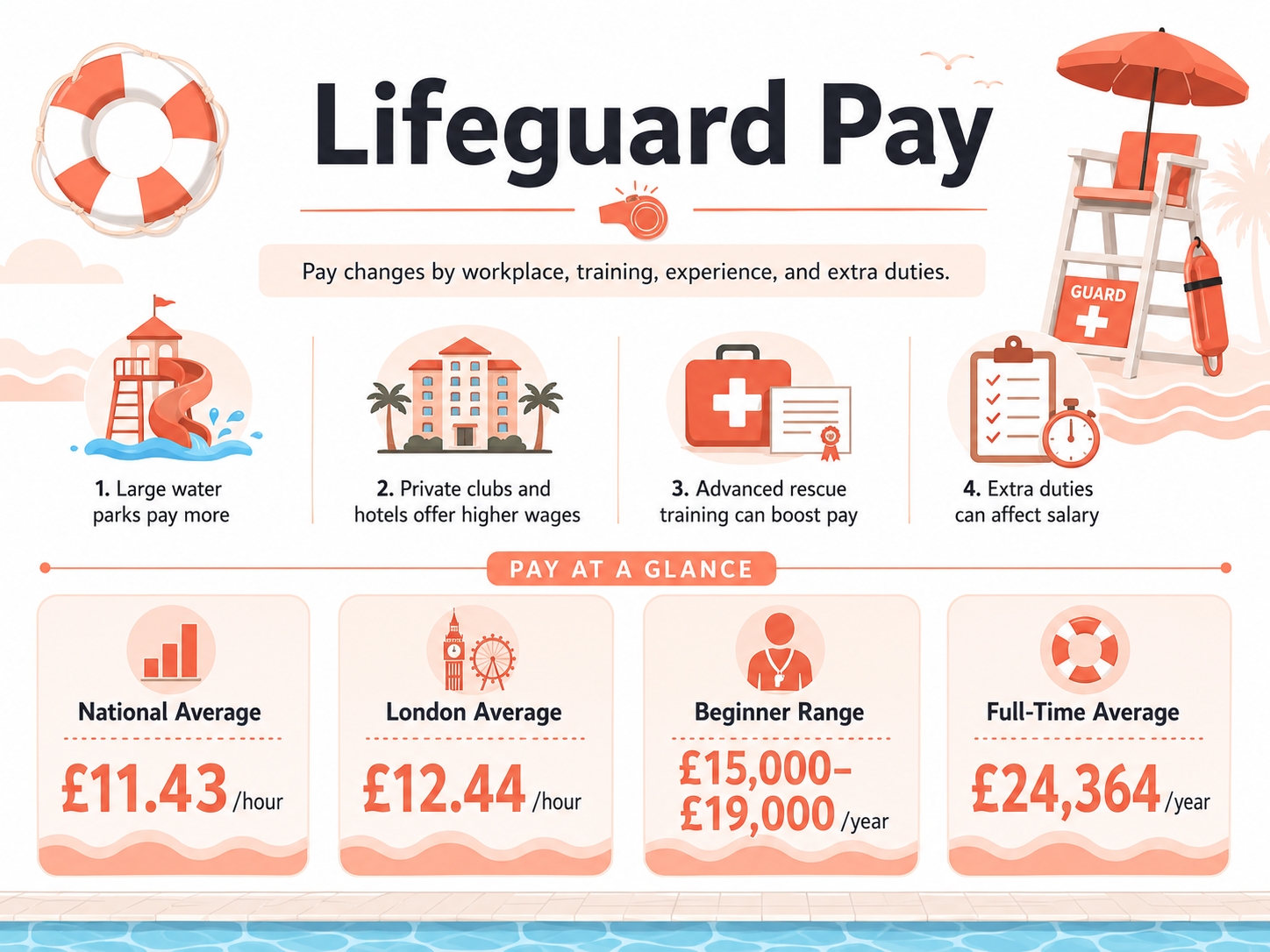
Pay depends on the type of workplace. Large water parks usually pay more than small local pools. Private clubs and luxury hotels also offer higher wages to attract skilled staff. Your experience matters too.
Lifeguards with advanced rescue training often earn more. Some jobs include extra duties like cleaning or admin work, which can affect pay. So, always compare different roles before applying.
- National Average: £11.43 per hour.
- London Average: £12.44 per hour.
- Beginner Range: £15,000 to £19,000 per year.
- Full-Time Average: Around £24,364 per year.
Can You Move Up to Higher-Paid Roles?
You can grow your career very quickly if you work hard every day. Many guards move up to become team leaders or supervisors. These roles offer more responsibility and much better pay. In many cases, a duty manager can earn more than £30,000 a year.
You can also train to be a swimming instructor. Teaching children how to swim often pays a very high hourly rate. This is a great way to earn extra money during your normal week. Moreover, some managers started their journey as part-time lifeguards. As a result, there is plenty of room to move up the ladder. Therefore, you should always look for new ways to learn at work. Next, consider taking a management course.
Which Skills Help You Earn More Money?
Building the right skills is the key to a higher income. Employers look for people who stay calm and act very fast. Strong swimming ability helps you handle emergencies with total confidence. In addition, knowing advanced first aid is a very valuable skill. Good communication helps you work well with your team and the public.
You must be able to give clear instructions to swimmers. Moreover, being reliable and punctual shows that you are a professional. As a result, your manager might give you a raise or a promotion. Therefore, you should always try to improve your skills every day. Next, ask your boss for feedback on how you are doing. Overall, hard work always pays off in the end.
What are the Typical Working Hours for Guards?
Most full-time guards work about 37 to 40 hours each week. However, the schedule can change depending on the time of year. For example, you might work more hours during the summer holidays. Many pools open early in the morning for fitness swimmers. Others stay open late at night for adult classes.
In addition, you will likely work some weekends and bank holidays. Many people love this because they get days off during the week. This makes it easier to visit shops when they are quiet. Moreover, you can often swap shifts with your teammates if needed. As a result, the job offers a very flexible routine for everyone.
How Does Your Age Affect Your Minimum Wage?
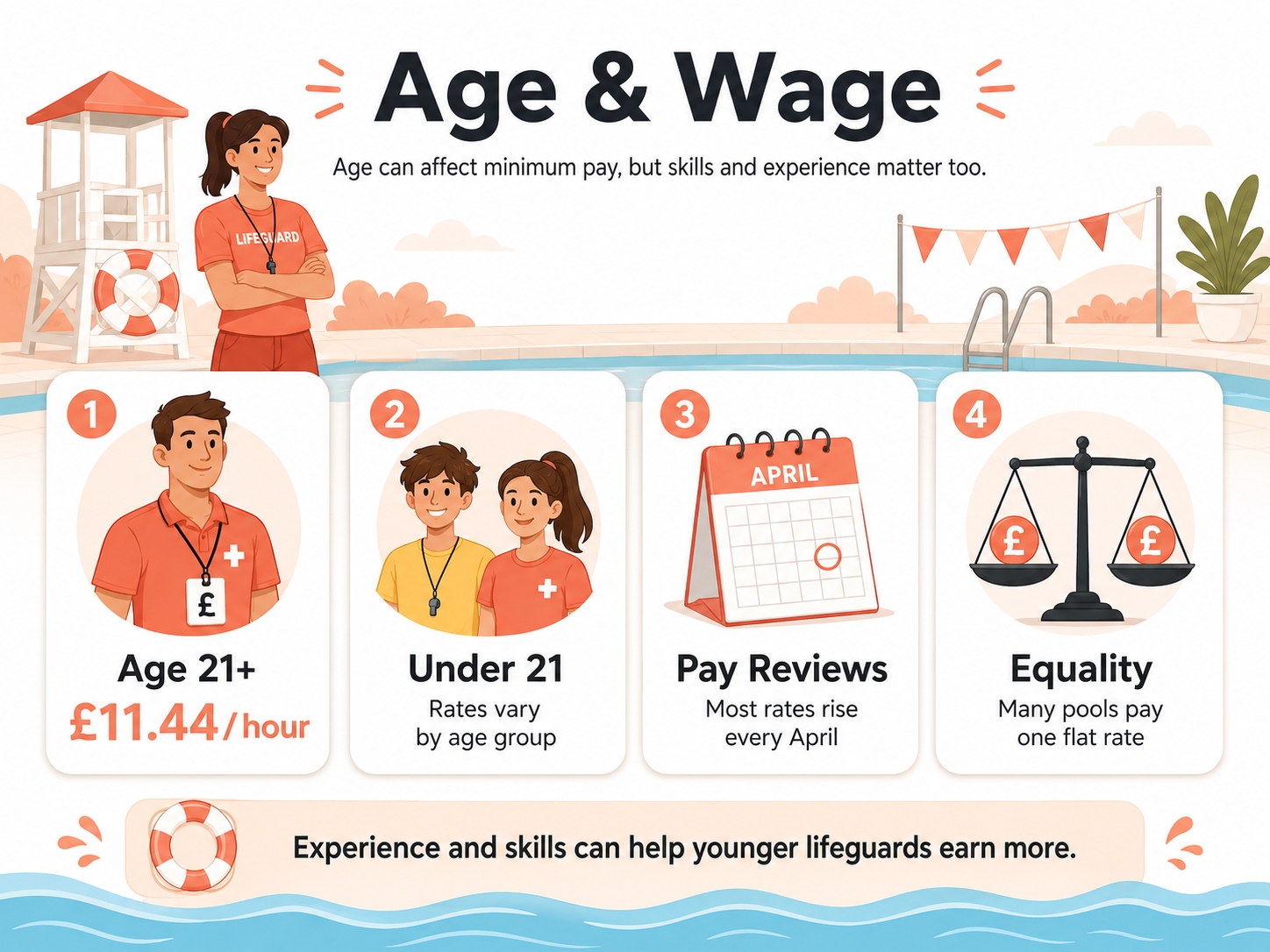
Age affects the minimum wage in the UK. Workers over 21 usually earn at least £11.44 per hour. Younger workers may start on a lower legal rate. However, many leisure centres still pay everyone the same fair wage.
Also, pay can increase when you move into a new age group or gain experience. Many companies update wages every April. So, skills and experience matter more than age. As a result, even younger lifeguards can earn well. Always know your rights to make sure you get fair pay.
- Age 21+: Minimum of £11.44 per hour.
- Under 21: Rates may vary by age group.
- Pay Reviews: Most rates increase every April.
- Equality: Many pools pay one flat rate to all staff.
Is the Cost of Training Worth the Investment?
Is it worth spending money on the NPLQ training course? Most people say yes because it is the key to the job. The course usually takes about one week to complete. You will learn how to save lives and use first aid equipment. In addition, some employers will pay for the course for you. This means you can start your career without any personal costs.
Once you have the certificate, you can work at almost any pool. Moreover, the skills you learn will stay with you forever. As a result, you become a very important person in your community. Therefore, the training is a great investment in your own future.
What Benefits Do You Get Besides Basic Pay?
Lifeguarding offers many perks that go beyond your monthly salary. Many leisure centres give their staff free gym memberships. This is a great way to stay fit and save money. In addition, you might get free or cheap swim sessions for your family. Some places offer discounts at the on-site cafe or shop.
You will also get paid holidays and a pension plan. Moreover, working in a friendly environment makes the day more enjoyable. As a result, the total value of the job is very high. Therefore, you should look at the whole package before you decide.
Why is Teamwork So Important for Your Success?
Teamwork is one of the most important parts of being a lifeguard. You are never alone when you are watching the water. You work with other guards to make sure every swimmer is safe. In addition, a strong team can respond to emergencies much faster. Good communication helps everyone know exactly what to do.
Moreover, your teammates will support you during very busy shifts. A happy team makes the workplace feel like a second home. As a result, you will enjoy coming to work every single day. Therefore, you should focus on being kind and helpful to your colleagues. Next, practise your rescue drills with your team to stay sharp. Overall, working together saves lives and makes the job better.
How Can You Apply for Your Very First Job?
Applying for your first lifeguard job is simple if you follow a few steps. First, keep your NPLQ certificate ready. Next, create a short CV that shows your swimming skills. You can also check local pools, job websites and social media for vacancies.
When you get an interview, dress smart and stay confident. Most jobs also include a swim test, so practise your strokes before you go. So, good preparation helps you get hired faster.
- CV Tip: Highlight your fitness and first aid skills.
- Swim Test: Practise your treading water and reaching techniques.
- Online Search: Use leisure centre websites to find roles.
- Direct Contact: Visiting in person shows great confidence.
Is Lifeguarding a Good Long-Term Career Choice?
Can you stay in this profession for a long time? Many people start at the pool and work there for years. It is a stable job with many chances to grow. You can move into management, teaching or health and safety.
In addition, the skills you learn are useful in many other industries. For example, first aid and leadership are valued by every employer. Moreover, you get to work in a fun and active environment.
As a result, you will never have a boring day at work. Therefore, it is a very strong choice for a long-term career. Next, think about where you want to be in five years. Overall, the future looks very bright for professional lifeguards.
Final Thoughts
Lifeguard salary UK gives a balanced earning path for many workers. Entry-level pay is modest, but it rises with experience and skill. Working in busy pools or on beaches can increase income. Extra certifications also help improve wages. Senior lifeguards and supervisors earn the most.
Overall, a lifeguard’s salary in the UK is a reliable option for people looking for stable work and gradual income growth.
FAQs
1. How much does a 16 year old lifeguard get?
- A 16-year-old lifeguard in the UK usually earns around £6 to £10 per hour.
2. What jobs pay 500 pounds an hour?
- Jobs like top surgeons, senior lawyers and specialist consultants can earn around £500 per hour in some cases.
3. What jobs pay 70k a year in the UK without experience?
- Some roles in tech sales, air traffic training paths and graduate schemes can reach £70k over time, but not instantly.
4. Is 22 too old to be a lifeguard?
- No, 22 is a normal age to start or continue working as a lifeguard in the UK.
5. Do UK lifeguards get paid?
- Yes, UK lifeguards get paid hourly or yearly and pay increases with experience and extra qualifications.
6. What is the 10-20 rule in lifeguards?
- The 10-20 rule means a lifeguard should notice danger and reach the swimmer within 10 to 20 seconds.