TILEE Manual Handling is a simple way to check risks before moving a load. TILEE stands for Task, Individual, Load, Environment and Equipment. These five areas help you think about safety before you lift, carry, push, pull, or lower something. You may also hear the question, “What does TILEE stand for?” during workplace safety training. The answer is the five areas above. Each one helps you spot possible risks before you start a task. For example, you should think about what the task involves. You should also check who will do it and what they need to move. The space around you and any equipment also matter.
Using TILEE can help reduce the risk of injury. It can also make manual handling safer and easier in many workplaces.
What Does TILEE Stand For?
TILEE gives you five simple things to check before you move a load. Each one helps you spot risks and work more safely.
- T – Task: Think about the job. What do you need to do? Can you do it safely?
- I – Individual: Think about the person doing the task. Can they move the load safely? Do they need help?
- L – Load: Look at what you need to move. Is it heavy, large, awkward, or difficult to hold?
- E – Environment: Check the area around you. Is the floor clear? Do you have enough space to move?
- E – Equipment: Check if any equipment can make the task easier and safer.
By checking these five areas, you can spot problems before you start. This can help you handle loads more safely and avoid harm.
T: Task—What Are You About to Do?
Before you lift anything, stop for a moment and think. What does the job involve? Will you lift, lower, carry, push, or pull something? You may also need to bend, twist, reach, or use stairs. Each movement can add extra strain.
So, ask yourself if you can make the task easier. Can you change the way you do it? Can someone help you? Taking a moment to plan can help prevent pain.
I: Individual—Are You Ready for the Task?
Now, think about the person doing the job. Everyone has different strengths and abilities. What feels easy for one person may feel hard for another. Check their training, experience, strength and ability. Also, think about any injury or health need that may affect the task.
If the job feels too difficult, speak up. Asking for help is a smart choice, not a weakness. Good teamwork keeps everyone safer.
L: Load—What Are You Moving?
Next, take a good look at the load. How heavy is it? Is it large, awkward, or difficult to grip? Think about what could happen while you move it. Could it shift, spill, or block your view?
If the load feels too much, do not rush. Can you split it into smaller parts? Could someone help you? Small changes like these can really help.
E: Environment—Is Your Route Safe?
Before you move, look around. You need enough space to walk and turn safely. Check the floor. Is it dry and level? Look for stairs, slopes, boxes, cables, or other obstacles. Make sure the lighting lets you see clearly.
Working outside? Then check the weather too. Clear your route before you start. A safe path makes the whole job easier.
E: Equipment—Can Something Help You?
Finally, think about equipment. The right tool can take some of the hard work off your body. A trolley, hoist, lifting aid, or slide sheet may help. However, always check the equipment before you use it.
Make sure it works well and suits the task. Check the brakes and battery where needed. Most importantly, make sure you know how to use it safely. Taking a few moments to check can help you work with less strain and more confidence.
Why Is TILEE Manual Handling Important?
Manual handling can sometimes look like a simple job. However, a wrong move can cause pain or injury. This is where TILEE can help. It gives you a quick and easy way to check the task before you start.
- Find risks early: TILEE helps you spot problems before you begin.
- Help avoid injuries: A quick check can help reduce strain and injury risks.
- Use the right equipment: It reminds you to use tools that can make the job easier.
- Know when to ask for help: Some loads may feel too heavy or hard to move alone. TILEE helps you see when you need support.
- Work more safely: It helps you make safer choices during daily tasks.
- Build a good habit: You can use the same five checks every time you move a load.
In simple words, TILEE helps you stop, check and think before you move. Just a few seconds can help make the job safer and easier.
What Are the TILEE Principles?
The TILEE principles help workers handle manual tasks more safely. They give you a simple way to check a task before you begin. This can help you spot problems early and avoid needless strain.
A simple way to remember the process is: Stop → Check → Assess → Reduce → Move safely.
Stop
First, stop before you start the task. Do not rush into lifting, pushing, pulling, or carrying. Take a moment to look at the job. Think about what you need to move. Also, think about how you will move it. A few seconds of planning can help you avoid a painful mistake.
Check
Check the task and the area around you. Look at the load, floor, space and any equipment. Also, think about yourself. Do you have the right training? Can you manage the task safely? Do you need help from another worker?
For example, a narrow space can make a simple task much harder. A wet floor can also increase the risk of slipping.
Assess
Now, assess the risks before you move anything. Ask yourself a few simple questions.
- Is the load heavy or awkward?
- Can you get a good grip?
- Do you need to bend or twist?
- Is the route clear?
- Could you trip or slip?
- Do you need another person to help?
Think about what could go wrong. Then, decide what you can do to make the task safer.
Reduce
Next, look for ways to avoid or reduce the risk. You may not need to move the load by hand. Could you use a trolley, hoist, or other suitable equipment? You could also split a heavy load into smaller parts. In some cases, another worker can help you move it safely.
Workers should avoid hazardous manual handling where reasonably practicable. When they cannot avoid it, they should take steps to reduce the risk. Remember, asking for help does not mean you cannot do the job. It shows that you care about your safety.
Move safely
Finally, move the load in a safe and controlled way. Keep your route clear before you begin. Use suitable equipment when needed. Try to keep the load close to your body. Avoid sudden movements and unnecessary twisting. Move at a steady pace and do not rush.
If something feels too heavy or unsafe, stop. Do not try to prove that you can manage it alone. Overall, the TILEE principles help you stop, check, assess, reduce and move safely. They turn manual handling into a simple routine. With practice, these checks can become a natural part of your working day.
How Do You Complete a TILEE Risk Assessment?
A TILEE risk assessment helps you check a manual task before you start. It gives you a clear way to spot problems and make safer choices. You do not need to make it hard. Simply work through each step and take your time.
1. Identify the task
First, look closely at the job. Think about what you need to do from start to finish. Will you lift, carry, push, pull, lower or move something? You may need to bend, reach, twist, or walk while carrying the load. Think about all these movements before you begin. This helps you spot problems early.
2. Check who will complete it
Next, think about the person doing the task. Do they have the right training and skills? Also, think about their strengths and abilities. Some tasks may feel easy for one person but hard for another. If someone needs help, do not ignore it. Give them the right support before the task starts.
3. Look at the load
Now, check the item you need to move. Look at its weight, size, shape and grip. A load may feel heavy, awkward, or hard to hold. It may also have sharp edges or loose parts. Check if the load could move, spill, or block your view. If it looks difficult to handle, think about a safer way to move it.
4. Check the environment
Look around the work area before you move anything. Make sure you have enough room to move safely. Check the floor, lighting, stairs, doors and walkways. Look for wet floors, boxes, cables, or other things that could cause a trip. A clear route can make a big difference. So, remove obstacles before you start, when you can.
5. Check available equipment
Next, check if you have equipment that can make the task safer. You may use a trolley, hoist, lifting aid, or other suitable tool. Check that the equipment works properly. Look for any damage before you use it. Also, make sure you know how to use the equipment. If you have any doubts, ask a trained person.
6. Identify the main risks
Now, think about what could go wrong. Could you slip, trip, fall, twist or hurt your back? Could the load fall or move suddenly? Also, could you hit something while carrying it? Look at the whole job, not just the lift. Even a simple task can become risky if you rush.
7. Find safer ways to complete the task
Once you spot the risks, think about safer options. First, ask if you can avoid the manual handling task. If you cannot avoid it, look for ways to reduce the risk. You could use equipment, change the route, split the load or move fewer items at once. Small changes can make the task much easier. So, always look for a safer and simpler way.
8. Ask for help when needed
Do not struggle with a task just to finish it alone. If the load feels too heavy or awkward, stop and ask for help. You may need another worker or suitable lifting equipment. Getting help can reduce the chance of injury. Remember, asking for help is a sensible choice. It helps protect you and the people around you.
9. Review the task if conditions change
Finally, check the task again if anything changes. The load, work area, equipment, or people involved may change. For example, someone may leave a box in your route. The floor may also become wet during the task. When something changes, stop and check again. Do not carry on just because you already started.
A TILEE risk assessment does not need to feel difficult. Take your time and check each part carefully. Most importantly, stop if something does not feel safe. A few extra moments can help you work with more care and confidence.
What Is the Difference Between TILE and TILEE?
TILE and TILEE help workers check manual handling tasks. Both give you a simple way to spot risks before you start. The main difference is easy to remember. TILEE adds Equipment to the four TILE checks.
What does TILE mean?
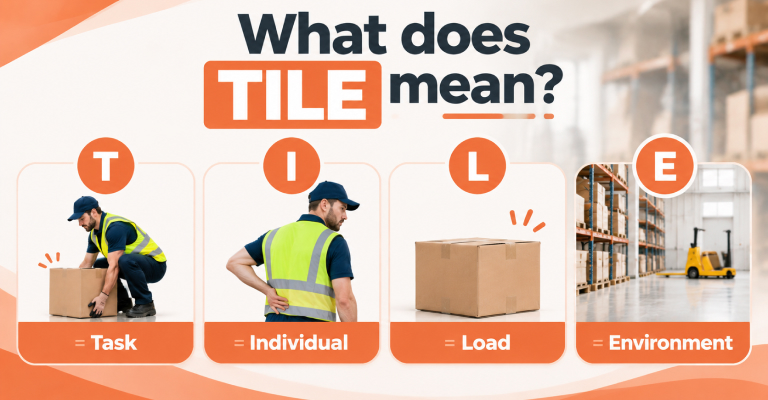
TILE stands for four simple checks:
- T = Task: Think about what you need to do. You may need to lift, carry, push, pull, or lower something.
- I = Individual: Think about the person doing the job. Check their training, skills, strength and ability.
- L = Load: Look at the item you need to move. Check its weight, size, shape and grip.
- E = Environment: Look at the area around you. Check the floor, space, stairs, lighting and route.
These checks help you spot problems before you begin. They also help you think about safer ways to do the job.
What does TILEE add?
TILEE uses the same four checks. However, it adds another E for Equipment.
Equipment can make some manual handling tasks easier. It can also reduce the effort needed to move a load.
For example, equipment may include:
- Trolleys
- Hoists
- Lifting aids
- Slide sheets
- Other suitable mechanical aids
Always choose equipment that suits the task. Also, check that it works properly before you use it.
Why is the Equipment check useful?
The extra E reminds workers to think before they lift. You may not need to move a heavy load by hand. For example, a trolley may help you move a heavy box. A hoist may help with some lifting tasks.
So, ask yourself a simple question: “Can equipment make this task safer or easier?” This small check can help you avoid unnecessary effort. It can also help you spot a safer way to complete the job.
Are TILE and TILEE the same?
TILE and TILEE follow the same basic idea. Both help workers think about manual handling risks. The main difference is the extra E for Equipment in TILEE. Many sources describe TILEE as an expanded version of TILE.
However, workplaces may use different procedures. Your employer may use TILE, TILEE, or another risk assessment method. Therefore, always follow your workplace guidance and safety procedures. In simple words, TILE checks four areas, while TILEE checks five. The extra Equipment check helps workers think about safer ways to handle loads.
What Equipment Can Help With Manual Handling?
The right equipment can make manual handling much easier and safer. It can also reduce strain on your body. So, always think about the equipment before you start.
Common manual handling equipment includes:
- Trolleys: Useful for transporting boxes, bags and other items over short or long distances. A trolley reduces the need to carry heavy loads by hand.
- Sack trucks: Designed for moving bulky or heavy objects. The wheels and handle make lifting and moving large items much easier.
- Hoists: Used to lift and transfer people or heavy loads safely. Hoists help reduce the risk of injury caused by manual lifting.
- Transfer boards: Support safer movement between surfaces, such as beds and chairs. They are often used when helping people with limited mobility.
- Sliding sheets: Help move people with less pulling and physical effort. This equipment can reduce pressure on care workers during transfers.
- Pallet trucks: Make it easier to move heavy pallets across flat surfaces. They are commonly used in warehouses and industrial workplaces.
- Other mechanical aids: Different tasks may require specific lifting or moving solutions. Always choose equipment that matches the load, environment and level of risk.
However, the right equipment matters. A trolley may work well for one job but not another. Before using any aid, check that it suits the load, area and task.
How Can You Use TILEE in Health and Social Care?
TILEE can help care workers move people safely. Before moving a service user, check their needs, strength, balance and movement. Also, think about their comfort and the help they need.
When helping someone into or out of a chair, check the chair, floor and space around it. Make sure the area is clear. Give simple instructions and offer the right support. The same checks can help when moving someone into bed or turning them in bed. Take your time and move with care. A sliding sheet may help make the task easier.
When using a hoist, check that it suits the person and the task. Use it only if you know how to use it safely. Also, check the room for cables, furniture and other hazards. Finally, choose equipment that fits the task and the person’s needs. This may include a hoist, transfer board, sliding sheet, or other moving aid. A quick TILEE check can help keep everyone safer.
What Are Common Manual Handling Mistakes?
Manual handling mistakes can cause pain and injury. Some mistakes may seem small but they can still cause harm. So, always stop and think before you move something. One common mistake is lifting without checking the load. Check how heavy it is. Also, check its size, shape and grip. If it feels too heavy, ask for help.
Twisting while lifting can hurt your back. Try to keep your body straight. Turn your whole body instead of twisting your back.
Keeping a load far from your body can also make lifting harder. Keep the load close to you. This can help you stay balanced and reduce strain.
Rushing the job can lead to mistakes. Take your time and follow the right steps. Also, check the area around you. Look for wet floors, cables, boxes, or other things in your way.
Do not lift alone when you need help. Use suitable equipment when needed. Always check the equipment before you use it. Also, make sure you know how to use it. Finally, do not keep doing a movement that feels unsafe. Stop and find a safer way. A small change can make the job much easier and safer.
What Are Safe Manual Handling Techniques?
Safe lifting starts before you pick up a load. Stop for a moment and plan the job. Check the load, the floor and the space around you. Stand with your feet apart before you lift. Keep your balance and stay steady. Then, keep the load close to your body. This can make it easier to control.
Try not to twist your body while lifting. Move your feet instead. Turn your whole body when you need to change direction. Also, avoid reaching too far. Move slowly and smoothly. Do not rush the job. If the load feels too heavy, ask someone to help you. You can also use a trolley, hoist, or other suitable aid.
If your grip feels wrong, stop and put the load down safely. Adjust your grip before you try again. Never force yourself to carry a load that feels unsafe. These simple steps can help protect your body. They can also make the job feel easier and safer.
What Does UK Law Say About Manual Handling?
The Manual Handling Operations Regulations 1992 set rules for manual handling at work. They help employers reduce the risk of injury from lifting, carrying, pushing and pulling. The law says employers should avoid hazardous manual handling when they reasonably can. If they cannot avoid it, they must assess the risk. They must then take steps to reduce the risk as far as reasonably possible.
Employers should look at the task, the load, the work area and the person doing the job. They should also think about training, equipment and any workers who may face extra risk.
Workers also have an important role. Follow workplace safety rules and use equipment in the right way. Take care when moving loads and tell your employer about problems or risks.
TILEE can help workers check a manual handling task. However, using TILEE alone does not mean an employer follows the law. Employers must follow the full legal duties and use a suitable risk assessment. The main aim is simple. Avoid risky handling when possible. If you cannot avoid it, find safer ways to do the job.
Final Thoughts
TILEE manual handling helps you check a job before you start. It helps you think about the task, person, load, area and equipment. These simple checks can help you spot risks early. Always take your time when moving a load. Check the floor and your route. Use the right equipment when needed. Ask for help if the load feels too heavy or hard to move. Also, follow your workplace safety rules. A few simple checks can help keep you and others safe.
FAQs About TILEE Manual Handling
1. What are the 7 steps to safe manual handling?
Plan the task, check the load, check the area, use suitable equipment, get help, lift safely and move carefully.
2. What are 9 safe manual handling techniques?
Plan the lift, check the load, clear the route, keep a stable stance, get a good grip, keep the load close, avoid twisting, move smoothly and ask for help when needed.
3. What are 5 hazardous manual handling tasks?
Common risky tasks include lifting heavy loads, carrying bulky items, pushing heavy objects, pulling heavy objects and moving people.
4. What are the 6 steps to manual handling?
Assess the task, check the load, check the person, check the area, choose suitable equipment and move safely.
5. What are the 5 P’s of lifting?
The five P’s are Prepare, Position, Pick up, Proceed and Place. They help workers plan and control a lift.
6. How to lift a heavy person?
Do not lift a person alone if the task feels unsafe. Assess their needs and use suitable moving equipment, such as a hoist, when required. Follow your workplace training.
7. What are the 7 safe lifting techniques?
Plan the lift, check the load, keep your feet stable, get a good grip, keep the load close, avoid twisting and move smoothly.