
Over 80% of bids fail to win contracts because they are not written well. This is why having someone who knows how to write a bid matters. So, what is a bid writer and why do you need one? A bid writer helps your business show its best side. They make proposals clear, easy to read, and convincing. Just sending a proposal is not enough. You must answer questions carefully, follow the rules, and meet deadlines. Even strong companies can lose if their bids are unclear or missing important details.
A bid writer takes hard information and turns it into simple, strong answers. They know how bids are scored and how to make your business look professional. With a bid writer, your chances of winning contracts go up. Without one, even great products or services can be missed by buyers.
Let’s look closer at what a bid writer does and how they can help your business win.
What Is a Bid Writer?
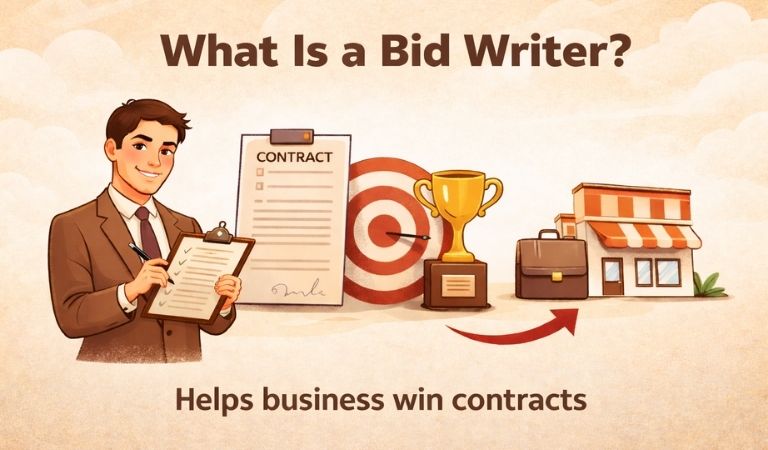
A bid writer is a person who helps your business win contracts. They take your ideas and information and turn them into clear and strong proposals. This means your answers are easy to read and follow all the rules. If a proposal is unclear or missing information, it can be rejected, no matter how good your business is.
Some businesses have bid writers as part of their team. Others hire experts or consultancies for extra help. Either way, a bid writer knows what buyers want and how bids are scored. This helps your business look professional and increases your chances of winning contracts. In short, a bid writer can make the difference between winning or losing valuable opportunities.
What Does a Bid Writer Do?
These are the main ways a bid writer helps your business win contracts:
- Finding the right opportunities – Spotting contracts that match your business needs.
- Planning the bid – Creating clear timelines to make sure everything is ready on time.
- Collecting proof – Gathering documents, case studies, and examples to show your strengths.
- Writing clear answers – Turning complicated information into simple, convincing responses.
- Handling portals and questions – Submitting bids correctly and responding quickly to buyer queries.
- Keeping everything organised – Maintaining templates and past bids for future use.
- Managing the whole process – Ensuring the bid is complete, accurate, and professional.
Essential Skills Every Successful Bid Writer Needs
A bid writer needs these skills to write clear and strong bids:
- Clear and Simple Writing – Use short, easy sentences. Make every idea easy to understand.
- Good Research – Learn about buyers, competitors, and the market. Use this to strengthen your bid.
- Smart Planning – Focus on answers that matter most to the buyer.
- Time Management – Keep tasks on track and meet all deadlines.
- Teamwork and Communication – Work with experts, clients, and colleagues to get the best information.
- Using Evidence – Add examples, data, or case studies to support your points.
- Adaptable – Work on bids for different industries, like healthcare, tech, or construction.
- Attention to Detail – Check rules, word limits, and documents carefully.
- Learning from Feedback – Use comments to improve each bid.
Why Businesses Rely on Professional Bid Writers
Winning contracts is not easy. The rules are strict, deadlines are short, and small mistakes can make a business lose. That is why many companies hire professional bid writers. They know the process well and make sure every bid is complete, correct, and easy to read.
Scoring is very important because buyers give points for what matters most to them. A good bid writer shows the right information clearly. This helps the business stand out and get a higher score.
Winning a contract can bring in money and new opportunities. Professional bid writers turn complicated information into clear and strong proposals. With their help, businesses can win more contracts and build better relationships with buyers.
The Growing Demand for Bid Writers in the UK
Winning contracts in the UK is very competitive. Buyers in both public and private sectors follow strict rules, use scoring systems, and set tight deadlines. Because of this, even a good company can lose if its bid is not clear or complete.
Small and medium-sized businesses (SMEs) face extra challenges. The UK government wants to give over £96 billion to smaller businesses. To get a share of this, many SMEs need help from a bid writer. A bid writer turns a company’s strengths into clear and easy-to-read proposals. This helps businesses follow the rules and stand out from others.
Both small and large businesses use bid writers for the same reason. A well-written bid can bring more contracts, increase income, and make a company look professional. With so much competition, having a bid writer can be the difference between winning or losing a contract.
How to Become a Bid Writer?
Do You Need a Degree?
Many people think you need a degree to become a bid writer. The truth is, you don’t always need one. Some employers prefer degrees in business, marketing, or English, but what matters more is skill. You need to write clearly, stay organised, and understand what buyers want.
Suitable Backgrounds
You can come from many different backgrounds. People from sales, administration, project management, marketing, or customer service can all become successful bid writers. The key is spotting what makes a business strong and explaining it clearly. Good research, writing, and organisation skills make all the difference.
Entry-Level Routes
Most people start with entry-level roles. Companies often hire junior bid writers or coordinators to help with research, documents, or parts of proposals. Internships and apprenticeships are another great option because they give hands-on experience and show how winning bids are created.
Learning Procurement Basics
Understanding tenders, requests for proposals, and scoring is very important. When you know how buyers think, you can focus on what matters most. You can learn these basics through online courses, workshops, or on-the-job training.
Training and Certifications
Training and certifications help you stand out. Courses in bid writing, procurement, or project management show employers you can create strong, professional bids. They also teach practical tips that top bid writers use every day.
Gaining Experience
Experience is where you really grow. Start small by helping with research, collecting documents, or writing sections of a bid. As you gain confidence, manage full bids and projects. Each bid teaches you how buyers think and what makes a proposal successful.
Common Challenges Bid Writers Face and How to Handle Them
Bid writing can be hard, but you can manage it with the right approach. Here’s how to handle common challenges:
- Tight Deadlines – Start early and plan each step. Breaking tasks into small pieces helps you avoid stress.
- Multiple Bids – Work on one task at a time, use checklists, and keep everything organised.
- Industry Jargon – Learn the important terms and ask for help if something is confusing.
- Feedback and Revisions – Listen to feedback, make changes quickly, and keep track of edits.
- Staying Organised – Keep documents, templates, and past bids neat and easy to find.
How Technology Is Changing Bid Writing
Technology is changing the way bid writers work and making their jobs faster. Rules for bids are getting stricter, and buyers want accurate and complete proposals. AI tools can help by drafting answers, checking documents, and doing repetitive tasks. This saves time and reduces mistakes, so writers can focus on making the bid clear and strong.
Even with AI, human skill is still very important. A bid writer makes sure answers are easy to read, clear, and match what the buyer needs. Technology also helps manage many bids and tight deadlines without losing quality. In short, tools make the work easier, but human insight and careful writing are what help win contracts.
Bid Writing Jobs, Roles, and Career Progression
Bid writing has many jobs and clear ways to grow. A Bid Writer writes strong and convincing proposals. A Bid Manager leads the process, plans the strategy, and guides the team. Many beginners start in junior roles like Bid Coordinator. They do research, handle documents, and support the team. These roles help you learn the skills needed to move up in your career.
You can work in-house for one company or join a consultancy that works with many clients. In-house jobs help you understand one business well. Consultancy jobs give experience in different industries and projects. With time and experience, you can move to senior bid writer or bid manager roles. Later, you can lead teams, manage bigger contracts, or specialise in strategy and training. In short, bid writing gives variety, career growth, and a chance to learn important skills while helping businesses win contracts.
Bid Writer Salaries in the UK
Bid writer salaries in the UK depend on experience, role, and location. Most earn between £26,000 and £70,000, with a median of around £65,000, showing steady growth over recent years.
Salary by Experience Level
- Graduate/Starter: £26,000 – £30,000
- Mid-Level: £37,500 – £55,000
- Senior/Experienced: £55,000 – £90,000
- Bid Manager: £55,000 – £70,000+
Location affects pay a lot. London pays the most, with senior roles around £90,000 and junior roles starting at £31,000. The South East averages £62,500, and the North of England around £60,000. The Midlands and North West usually pay between £40,000 and £42,500. Remote roles are growing and have a median salary of £70,000. Freelancers can earn £250–£400 per day, while senior experts may charge £550–£800. Hourly rates are often around £110.
The industry also changes pay. Public sector and IT roles can reach £70,000 because tenders are complex. Construction and engineering senior roles often pay £60,000–£75,000, sometimes with extra benefits. Charity or third sector funding bid writers usually earn £28,000–£45,000. Overall, bid writing offers good pay, clear growth, and a chance to build a strong career.
Understanding the Tender and Procurement Process
Winning contracts starts with knowing how the process works. Businesses get opportunities through documents like:
- ITT (Invitation to Tender): A request to send a complete bid.
- RFP (Request for Proposal): Buyers ask how you will do the work.
- PQQ (Pre-Qualification Questionnaire): Shows you meet the basic rules to bid.
- SQ (Selection Questionnaire): Checks if your business is suitable to take part.
Each document asks for specific information so buyers can see if your business fits their needs. Public contracts follow strict rules to keep things fair, while private contracts are often more flexible. Knowing this helps you plan your bid the right way.
Deadlines and rules are very important. Missing a deadline or not following instructions can make you lose a contract, even if your business is strong. Every answer should be clear, complete, and follow the rules. When you understand the process, you can prepare a stronger bid, show your services clearly, and improve your chances of winning contracts.
Analysing Tender Requirements and Compliance Rules
Winning depends on understanding exactly what the buyer asks for. Every tender has rules and requirements. By reading them carefully, you can show how your business meets their needs. Also, check the scoring criteria. This shows what the buyer thinks is most important and helps your bid stand out.
Next, follow all the rules carefully. Use a checklist to make sure every document is included, word limits are followed, and the format is correct. Missing even one detail can make your bid rejected. Paying attention to these small points shows your business is professional and increases your chances of winning. Doing this makes your bids clear, strong, and more likely to succeed.
Planning a Winning Bid Response
Before writing, take a moment to plan. Break each question into small points so your answers are clear and easy to read. At the same time, learn about the buyer and their sector. Knowing what they need helps you show why your business is the right choice.
Next, make sure your answers focus on what matters most to the buyer. Add examples or documents to prove your strengths. Getting everything ready before you start writing saves time and avoids mistakes. This way, your bid looks professional, strong, and convincing, giving you the best chance to win.
Working With Experts and Clients
Winning a bid starts by working closely with the right people. First, talk to your teams and experts inside the business. Their knowledge helps make your bid stronger. Next, speak with clients to get real examples and feedback. This shows what makes your business special and makes your answers stand out.
After that, turn this information into clear and simple answers. Break complex ideas into easy points so anyone can understand them. Finally, using expert knowledge and client insights together shows your business at its best and increases your chance to win contracts.
Writing a Persuasive and High-Scoring Bid
Here’s how a bid writer helps your bid stand out:
- Keep it simple – Use plain, clear English that anyone can understand.
- Spot your wins – Highlight the strongest points that make your business shine.
- Show real benefits – Explain exactly what the buyer will gain.
- Prove your claims – Add examples, success stories, or data for trust.
- Stand out from the crowd – Show what makes you different from competitors.
- Stay neat and clear – Keep it organized and easy to follow every rule.
Quality Assurance and Bid Review Processes
A strong bid doesn’t happen by chance. First, your team reads the bid to make sure it is complete and clear. Then, an outside reviewer checks it again. This step finds mistakes or unclear points that may have been missed.
Next, critical friend reviews give honest advice to make your answers stronger. Following quality standards, like ISO, keeps your bid professional. Using feedback helps improve your score and increases your chance of winning. Careful review shows buyers that your business is ready and reliable.
Compiling and Submitting the Bid
Now let’s move to the final step. This step needs care and focus. First, collect all policies, procedures, and accreditations. Buyers check these to see if they can trust your business. If one document is missing, they may reject the bid. Next, check the pricing. Keep prices clear and simple. Make sure they match what you wrote in your answers. Confusing numbers can make buyers lose trust.
After that, submit the bid through the online portal. Most buyers use online systems, but each one works in a different way. Some ask you to fill in forms. Others ask you to upload files. Read the instructions carefully and follow every step. Small mistakes can cause big problems. Late uploads, wrong file names, or missing pages happen often. This is why early submission is very important. It gives you time to fix mistakes and stay calm. An early and careful submission shows your business is organised and professional.
Final Thoughts on Becoming a Bid Writer
So, what is a bid writer? A bid writer helps businesses win contracts by turning complicated information into clear and simple proposals. They follow the rules and meet deadlines. They make sure every answer is easy to read and understand. This job is good for people who like writing, researching, and solving problems. Staying organised, checking details carefully, and communicating well will help you do well in this career.
Bid writing also gives stability and chances to grow. Skilled bid writers are needed in many industries like construction, IT, healthcare, and charities. With experience, you can move into senior roles, lead teams, or work as a specialist consultant. If you enjoy turning ideas into winning bids and helping businesses succeed, bid writing is a rewarding job with many long-term opportunities.
FAQs
- How much do bid writers earn?
Usually between £26,000 and £70,000 a year. Pay grows with experience, role, and location. - Is being a bid writer hard?
It can be busy and detail-heavy, but with planning and focus, it’s manageable and rewarding. - What skills do bid writers need?
Clear writing, research, planning, teamwork, attention to detail, and using evidence well. - What does a bid writer do in construction?
They turn project details, budgets, and timelines into clear, winning proposals. - Do you need a degree to be a bid writer?
No. Experience, writing skills, and procurement knowledge matter more. - What are the 5 basic writing skills?
Grammar, clarity, structure, tone, and proofreading. - What are the 3 C’s of writing?
Clear, Concise, Correct – simple, short, and accurate writing.