
What is protection in health and social care? It simply means keeping people safe from harm, abuse and neglect. Protection also helps people live with dignity and respect. Every care service follows rules to keep people safe. Good protection builds trust and improves care every day.
Protection matters in hospitals, care homes, schools, and the community. Also, it helps staff spot problems early and take the right action. Families and care workers work together to keep people safe. As a result, people receive better care and support.
This guide explains how protection works and why it is important in health and social care.
What is Protection in Health and Social Care?
Protection in health and social care is the act of keeping people safe from harm and abuse. It focuses on taking action when someone is at risk of being hurt. This helps vulnerable people live safely and with dignity.
In the UK, this is a legal duty for all care providers. It involves spotting dangers early and stopping them before they get worse. Workers must monitor care quality and report any issues. This ensures that everyone receives high-quality support. It also protects the human rights of every individual. By following these steps, care workers create a safe space for those they help.
How Does Protection Differ From Safeguarding?
The main difference is that safeguarding is about prevention, while protection is about responding to harm. Safeguarding includes all the things we do to keep people safe every day. Protection is the specific step taken when someone is already in danger.
Safeguarding creates a safe environment for everyone. It stops abuse from happening in the first place. Protection happens when a person is currently facing a threat. Both work together to keep people healthy and happy. For example, a safe building is safeguarding. Reporting a bruise is protection. Both are very important in the care sector.
Why is Protection Important in Health and Social Care?
Protection is important because it prevents abuse and neglect. It helps people feel secure and cared for. Without it, vulnerable adults could be treated badly or ignored. Good protection builds trust between the carer and the person they support.
When people feel safe, their health and wellbeing improve. It allows them to make choices without fear. It also maintains their dignity and respect. Effective protection systems also improve the standards of care across the country. In 2024 to 25, an estimated 640,240 safeguarding concerns were raised in England. This shows how many people need our help to stay safe.
Who Needs Protection in Health and Social Care?
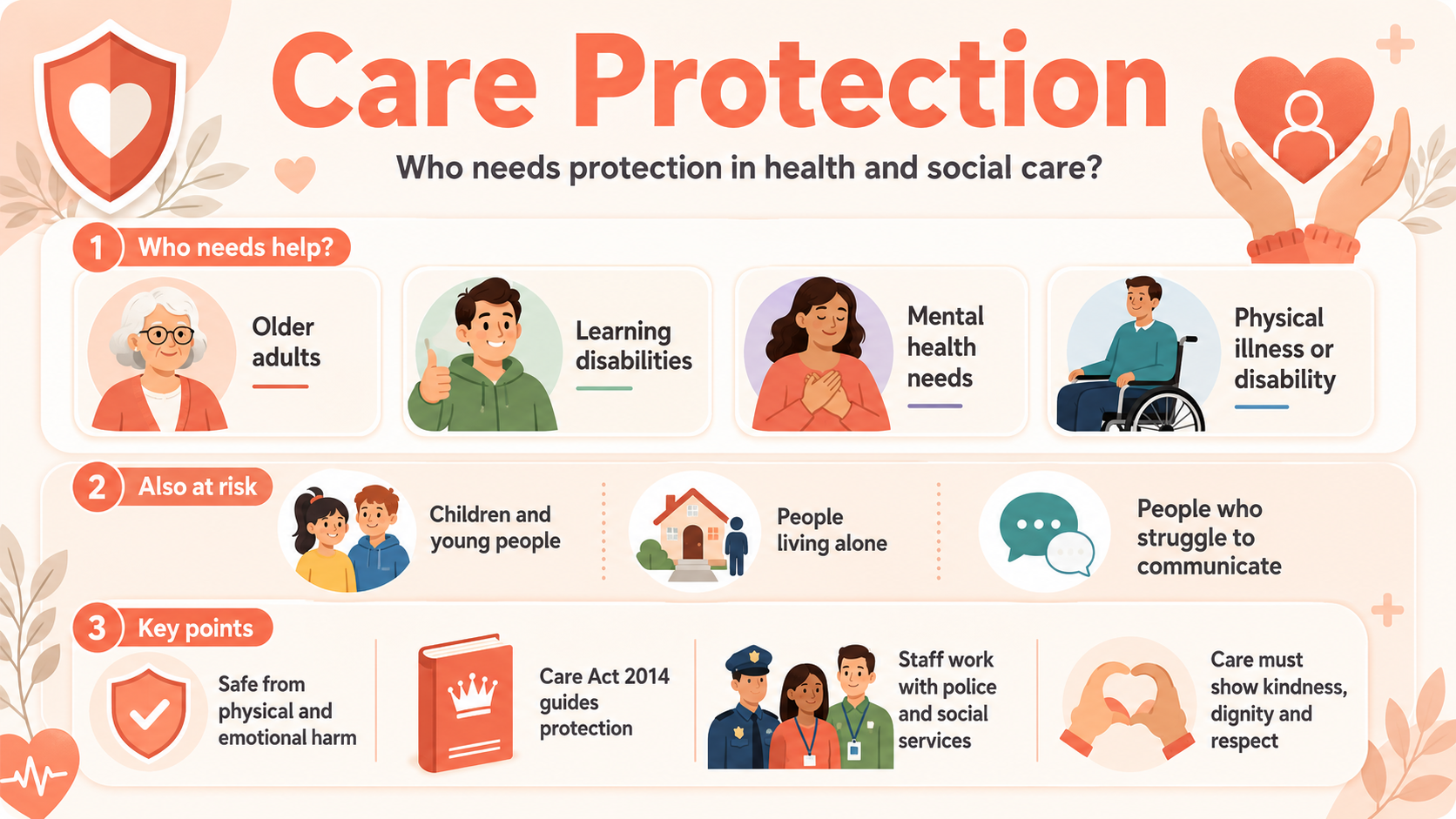
People who need protection are often called “adults at risk”. These are people who cannot protect themselves because of their health or age. This includes older people and those with learning disabilities. It also includes people with mental health conditions or physical illnesses.
Children and young people also need special protection. They may be at risk of neglect or exploitation. Some people are more at risk because they live alone. Others might find it hard to communicate their feelings. It is our job to watch over them. We must make sure they are not taken advantage of by others.
Key Points About Care Protection:
- Protection keeps people safe from physical and emotional harm.
- The Care Act 2014 sets the rules that guide this protection.
- Health and care staff work with the police and social services when needed.
- Every person should receive care with kindness, dignity, and respect.
What are the Signs that Someone Needs Protection?
The signs that someone needs protection can be physical or emotional. Physical signs include bruises, cuts, or broken bones that have no explanation. You might also notice that the person is very dirty or wearing old clothes. These are signs of neglect.
Emotional signs are also very important to watch for. A person might become very quiet or seem scared. They may stop talking to their friends or family. You might see a sudden change in their mood or behaviour. Financial signs include missing money or unpaid bills. Noticing these signs early can save a person from more harm.
What are the Different Types of Abuse?
There are ten main types of abuse in health and social care. Physical abuse involves hitting or hurting someone. Sexual abuse is any sexual act without consent. Psychological abuse includes bullying or making someone feel small. Neglect is when a person does not get the food or medicine they need.
Other types include financial abuse, where money is stolen. Domestic abuse happens between family members or partners. Discriminatory abuse is treating someone badly because of their race or age. Modern slavery and organisational abuse are also serious risks. Finally, self-neglect is when a person cannot look after themselves. All of these must be reported right away.
What are the Six Safeguarding Principles?
The six safeguarding principles are Empowerment, Prevention, Proportionality, Protection, Partnership, and Accountability. Empowerment means letting people make their own choices. Prevention means stopping harm before it starts. Proportionality means only stepping in as much as is needed.
Protection means giving help to those who are in danger. Partnership means different groups working together to stay safe. Accountability means being responsible for the decisions you make. These principles come from the Care Act 2014. They help care workers do the right thing every day. They ensure that the person’s needs always come first.
Which UK Laws Protect People in Health and Social Care?
The most important law is the Care Act 2014. This law says that councils must protect adults at risk. Another law is the Mental Capacity Act 2005. This helps people who cannot make their own decisions. It ensures their best interests are always considered.
The Safeguarding Vulnerable Groups Act 2006 is also vital. It created the DBS check system for workers. This stops dangerous people from working in care. The Health and Social Care Act 2008 sets the standards for quality. These laws work together to create a safe system. They hold everyone accountable for the care they provide.
Key Safeguarding Responsibilities:
- Always listen to what the person tells you.
- Write down any concerns as soon as you see them.
- Share information only with people who need to know.
- Attend all training sessions to keep your skills fresh.
How Do Health and Social Care Workers Protect People?
Care workers protect people by being very observant. They look for any changes in a person’s body or mind. They record every concern in a clear and honest way. If they see something wrong, they report it to their manager.
They also follow safety plans and risk assessments. This helps them know what dangers to look out for. They work with doctors and social workers to solve problems. Workers also support people to make their own choices. This gives the person more control over their own life. Every worker has a role in keeping people safe.
How Does Safeguarding Training Improve Protection?
Training helps staff understand what to do in a crisis. It teaches them how to spot the signs of abuse. Without training, a worker might miss something very important. It gives them the confidence to speak up when they see bad practice.
Training also explains the latest laws and rules. It teaches workers how to handle difficult situations calmly. This leads to better care for the vulnerable person. It also ensures that the care home or hospital follows the law. Regular training keeps the staff alert and ready to help.
How Does Technology Support Protection in Care?
Technology helps carers monitor safety more easily. Assistive technology like fall sensors can alert staff to an accident. Emergency buttons allow a person to call for help at any time. This gives people more independence in their own homes.
Smart home devices can monitor if someone has eaten or taken their pills. Communication apps help people with speech problems tell others their needs. These tools do not replace human care. Instead, they provide an extra layer of safety. They allow carers to respond faster in an emergency. Technology is making the care world a much safer place.
How Do Organisations Handle Safeguarding Concerns?
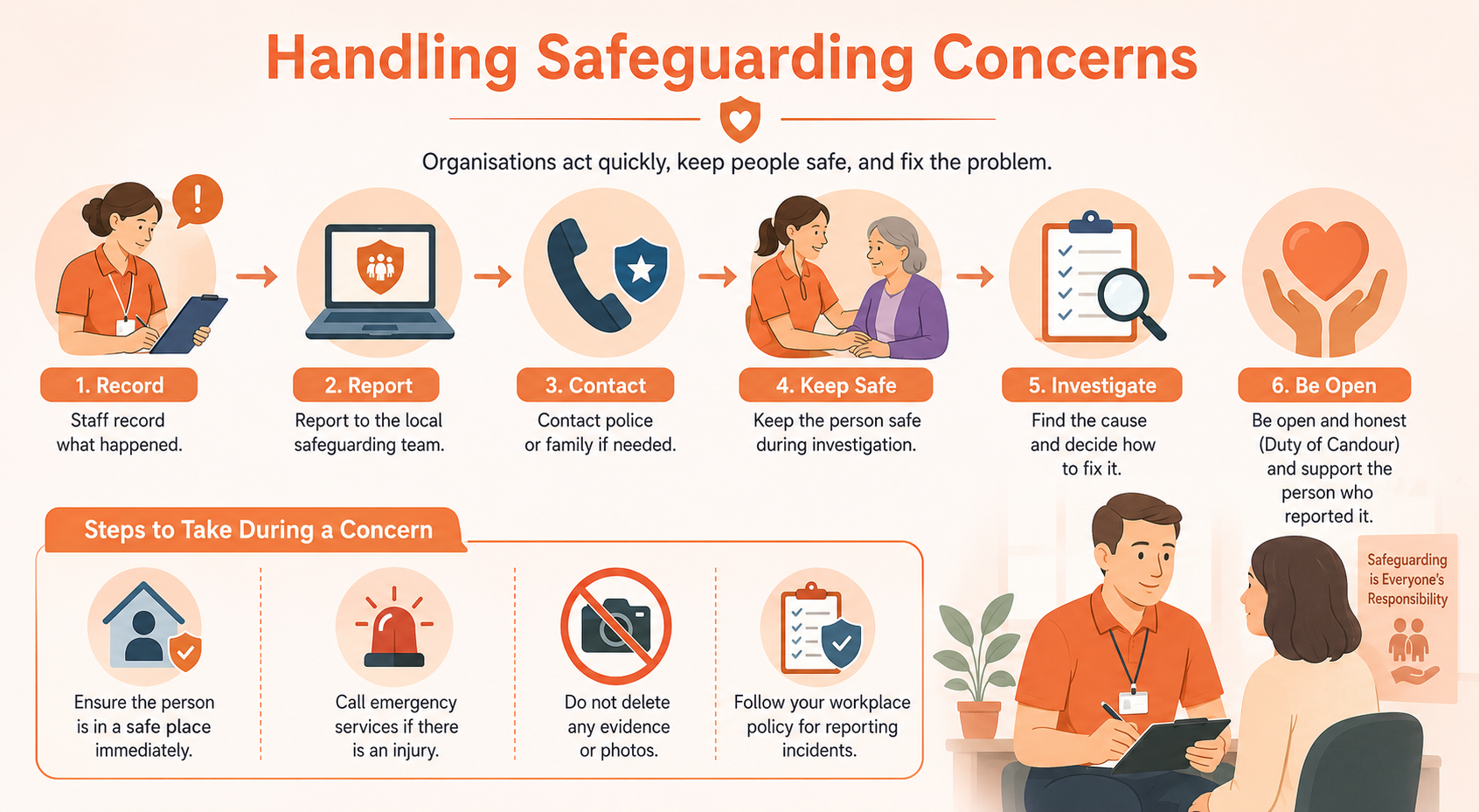
When someone raises a concern, the organisation acts quickly. First, staff record what happened. Next, they report the concern to the local safeguarding team. If needed, they contact the police or the family.
Staff keep the person safe during the investigation. They find the cause of the problem and decide how to fix it. They stay open and honest throughout the process. People call this the Duty of Candour. They also support the person who reported the concern. This helps stop the same problem from happening again.
Steps to Take During a Concern:
- Ensure the person is in a safe place immediately.
- Call emergency services if there is an injury.
- Do not delete any evidence or photos.
- Follow your workplace policy for reporting incidents.
What Challenges Affect Protection in Care?
Protecting people is not always easy for care workers. Sometimes abuse is hidden behind closed doors. It can be hard to spot when a person is being neglected slowly. Busy schedules can also make it hard for staff to see small changes.
Another challenge is when a person refuses help. Workers must respect their choice but also keep them safe. This can be a very difficult balance to find. Limited money and staff shortages can also cause problems. Sharing information between different offices can sometimes take too long. We must work hard to overcome these hurdles every day.
How Does Making Safeguarding Personal Help?
Making Safeguarding Personal (MSP) is a person-centred approach. It means talking to the person about what they want to happen. Instead of just following a process, we listen to their wishes. This helps them feel in control of their own safety.
MSP aims to reach the goals that the person chooses. For example, they might want to move to a new house, or they might just want an apology from someone. This approach makes the person feel respected and heard. It turns a scary process into a supportive one.
What is the Role of the CQC in Protecting People?
The Care Quality Commission (CQC) is the regulator for care in England. It visits hospitals and care homes to make sure they are safe. Inspectors check if staff have the right training. They also make sure staff follow safeguarding rules and provide safe care.
If a care provider is not keeping people safe, the CQC can take action. They can give the home a bad rating or even close it down. They also provide guidance on how to improve care standards. Their goal is to make sure every person gets safe and high-quality care. They are the “watchdog” for the health and social care sector.
What is the Duty of a Whistleblower?
A whistleblower is a worker who reports bad practice in their own job. They have a duty to speak up if they see a colleague hurting someone. The law protects them so they do not lose their job for being honest. This is a vital part of protection in care.
Whistleblowing helps uncover abuse that might be hidden. It ensures that the workplace stays professional and safe. If a worker is worried, they should tell their manager or the CQC. Being brave and speaking up can save a person’s life. It is the right thing to do for the people we care for.
Common Protection Tools:
- Risk assessment forms for every patient.
- Incident reporting books in every ward.
- Confidential phone lines for whistleblowing.
- Staff identity badges and secure entry systems.
How Do We Support Someone After Harm has Occurred?
After a person has been hurt, they need lots of support. We must offer them comfort and a safe place to stay. They might need to talk to a counsellor or a doctor. It is important to be patient and kind with them.
We also need to review their care plan to make it safer. This might mean having more staff around them. We should help them regain their confidence and trust in others. Recovery can take a long time, so we must be there for them. Our goal is to help them feel happy and safe again.
Final Thoughts: Why Does Protection Matter In Health And Social Care?
Finally, understanding what is protection in health and social care helps us see why it matters every day. Protection keeps children and adults safe from harm, abuse, and neglect. It also helps people receive kind, safe, and respectful care. When health and social care teams follow the right rules and work together, they can protect people better and provide the support they need.