A workplace first aid kit helps staff deal with injuries quickly and safely. It keeps important medical supplies ready during accidents or sudden health problems. Also, UK workplaces still report thousands of injuries every year. HSE data showed around 680,000 workers suffered non-fatal workplace injuries. Therefore, every business should keep a suitable first aid kit nearby.
Different workplaces need different first aid supplies based on daily risks and work activities. For example, offices need basic items, while construction sites need extra safety supplies. Clear first aid planning also helps workers stay calm during emergencies. A well-stocked kit creates a safer and more prepared workplace every day.
Now, let’s explore what a workplace first aid kit should contain and why every item matters.
What is a Workplace First Aid Kit?
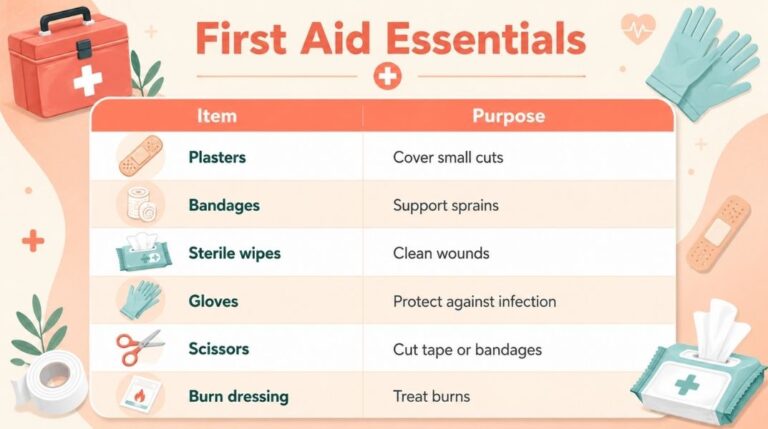
A work-related first aid kit is a box that holds important medical supplies for emergencies. Workers use it to treat small injuries before professional help arrives. For example, the kit may contain bandages, gloves, plasters, wipes and scissors. These items help control bleeding, clean wounds and protect injured areas quickly.
Every workplace needs a first aid kit because accidents can happen at any time. In addition, fast treatment helps workers feel safer and more supported at work. Offices, schools, shops and factories may need different supplies based on daily risks. Therefore, employers should check the kit often and replace missing items immediately. A clean and fully stocked kit helps create a safer workplace for everyone.
Why Do You Need a First Aid Kit?
A work-related first aid kit helps people get quick care during accidents or sudden illness. Small injuries can happen at any time in busy workplaces. For example, workers may suffer cuts, burns, slips or eye injuries. Therefore, fast treatment helps stop problems from getting worse. It also helps people feel calm during stressful situations.
In addition, UK employers must protect staff health and safety at work. A proper first aid kit supports this responsibility every day. Workers can also return to work faster after small injuries. Moreover, a ready kit shows that a business cares about employee safety. This creates a safer, more confident and better working environment for everyone.
What Needs to Be in a First Aid Kit?
A first aid kit must include basic items for quick care. These items help treat small injuries at work. Also, they support fast action during emergencies. Every workplace should keep the kit fully stocked. In addition, workers should know where the kit stays. The right items depend on workplace risks. So, a good kit always includes essential medical supplies for common injuries.
How Do Workplace First Aid Kit Requirements Work?
Office first aid kit requirements depend on workplace size and risk level. Every employer must first evaluate everyday workplace risks. The employer chooses the right kit for their team. For example, an office needs basic supplies.
UK rules expect employers to keep kits easy to reach at all times. Also, they must place them in clear and visible locations. Workers should know where the kit sits. So, training plays an important role here. Employers must check the kit regularly and replace used or expired items.
In addition, they must update the kit when work risks change. This simple process keeps everyone safer. It also ensures quick help during emergencies.
If you want to know further requirements. Read our blog on Workplace First Aid Kit Requirements.
Who Takes Care of the First Aid Kit Supplies?
The employer takes full responsibility. Employer must provide the kit and keep it ready at all times. In many workplaces, a trained first aider also helps manage it day to day. This person checks items and reports missing supplies quickly.
Managers or supervisors also check the kit often. They make sure all items stay safe to use. They also check expiry dates. After every use, someone must replace the used items. This keeps the kit full and ready for the next emergency.
Everyone at work should help with these small checks. A quick weekly check can stop bigger problems later. As a result, the workplace stays safe and people feel more confident every day.
How Often Should You Check the Dates?
You should check the dates in a standard office first aid kit on a regular schedule. This keeps every item safe and ready to use. Most employers check it every month. However, busy workplaces may need weekly checks.
Also, expiry dates can pass without notice if you ignore them. So, regular checking helps avoid using unsafe items during emergencies. Here’s what you should always check:
- Sterile dressings and bandages for expiry dates.
- Eye wash solution for freshness and safety.
- Pain relief tablets for expiry and storage conditions.
- Gloves and wipes for damage or contamination.
- Any sealed items for broken packaging or leaks.
Do You Need a Trained Person?
Yes, every workplace should have a trained first aider. This person knows how to act fast during an injury or illness. Also, they stay calm and guide others in an emergency. Therefore, they can reduce panic and help save time.
In the UK, the law says employers must provide “adequate and appropriate” first aid support. However, it does not always mean a full medical team. Instead, the number of trained people depends on workplace size and risk level. For example, a small office may need one trained person. But a busy site may need several.
In addition, training helps staff handle cuts, burns or fainting safely. So, a trained person makes the workplace safer and more confident.
What Happens During a Real Emergency?
During a real emergency, things move very fast. First, someone notices the injury and calls for help. Then, a trained worker or colleague reaches the person quickly. They open the first aid kit and choose the right item. Next, they clean the wound or support the injury with care. At the same time, another person may call emergency services if needed. This teamwork keeps the situation under control.
After that, the injured person gets basic treatment until help arrives or the pain reduces. Meanwhile, calm actions make a big difference. Clear thinking helps stop panic and confusion. So, a well-prepared team and a ready first aid kit can save time and reduce harm during any workplace emergency.
Should You Keep Tablets in the Kit?
You should think carefully before adding tablets to a first aid kit. Pain relief tablets can help with minor headaches or small body pain. However, you should not keep strong medicines in every kit.
Always follow your workplace rules and UK safety guidance. Also, only trained staff should give any medicine to workers. This step helps avoid wrong use and safety risks. In addition, always check expiry dates if your kit includes tablets. Because old medicine can lose its strength and may not work well.
What if an Item is Missing?
If an item is missing from a first aid kit, quick care becomes harder. This can slow down treatment during an accident. As a result, small injuries may turn into bigger problems. Therefore, regular checks matter a lot in every workplace.
First, someone should inspect the kit on a fixed schedule. Next, they should replace used or expired items without delay. Also, staff should report missing supplies as soon as they notice them. This simple habit keeps the kit ready all the time. In addition, employers should assign clear responsibility for kit checks. A complete first aid kit helps workers feel safe and supported at work.
How Do You Record an Injury?
Recording an injury at work helps keep everyone safe and informed. It also supports proper follow-up and treatment. First, you should report the injury as soon as it happens. Then, you should write clear and simple details in the accident book.
After that, a responsible person should check and sign the record. This process helps prevent the same mistake in the future. When recording an injury, include these key details:
- Name of the injured person involved.
- Exact date and time recorded.
- The exact location where the accident happened.
- Clear cause of the injury incident.
- Type of injury and first aid.
- Name of person completing record form.
Who Pays for the Safety Tools?
Employers pay for safety tools in most workplaces. This includes first aid kits, gloves and other safety items. In the UK, the law expects employers to provide these tools for workers. So, staff do not need to buy any safety kit with their own money. This rule helps everyone stay safe without extra cost.
In addition, employers must keep safety tools for emergencies. Employers should check items regularly and replace used or expired supplies. Every workplace provides safety tools for its employees. Also, managers must make sure every worker can find the kit easily. This simple step saves time during emergencies. It also builds a safer and more responsible workplace for everyone.
How Can You Stay Safe Today?
Staying safe at work starts with small safety concerns. First, always check your surroundings before you begin any task. Next, use the right tools and follow simple safety rules. Also, keep a first aid kit nearby and know where it is placed. This helps you act fast during small injuries.
In addition, report if you see any hazards. Do not ignore wet floors, broken tools or unsafe setups. If you see these types of hazards, quickly inform your supervisor. Moreover, follow training steps and listen carefully during safety briefings. Finally, stay alert and avoid rushing your work. Careful actions today can stop many accidents and keep everyone safe at work.
Final Thoughts
A workplace first aid kit is important for keeping employees safe every day. A first aid kit helps treat small injuries quickly and reduces health risks. Also, every workplace should check it every week. In the end, a well-prepared and ready first aid kit supports faster response during emergencies. It also builds a safer work environment where people feel protected and confident at work.
If you want to improve safety skills. Enrol in our Workplace First Aid Training. It helps you respond faster and handle emergencies with more confidence.
FAQs
1. What should a workplace first aid kit include?
- A work-related first aid kit should include plasters, bandages, antiseptic wipes, gloves, scissors and basic medical supplies for small injuries.
2. What is the legal requirement for first aid kits at work?
- UK law says every workplace must have suitable first aid equipment based on risk level and the number of workers.
3. What is needed in an office first aid kit?
- An office first aid kit should have plasters, sterile dressings, wipes, gloves and basic pain relief items for minor injuries.
4. What is the minimum requirement for a first aid kit in the workplace?
- The minimum requirement is a well-stocked kit with basic items to treat common injuries like cuts, burns and minor wounds.
5. How many first aid kits are required in the workplace?
- The number of first aid kits depends on workplace size, risk level and how quickly workers can access them.
6. What is the rule 44 in employment law?
- Rule 44 refers to the need for employers to provide safe working conditions, including proper first aid arrangements for employees.