Commercial pilots earn different salaries based on experience, airline and aircraft type. Also, pilot pay grows with training, flying hours and job position. Some pilots earn basic salaries, while others receive extra flight allowances. Many people ask how much do commercial pilots earn in the UK today. Commercial pilots in the UK usually earn between £24,000 and £150,000 yearly. Therefore, many students now consider aviation a strong career choice.
Meanwhile, senior captains usually earn much higher yearly salaries. Some airlines also offer bonuses, hotel stays and pension support. In addition, pilot demand continues to grow across many UK airlines. So, pilot careers attract people who enjoy travel and responsibility.
How Much Do Commercial Pilots Earn at the Start?
New commercial pilots in the UK usually start as First Officers. Most newcomer pilots earn between £30,000 and £60,000 yearly. However, salaries change based on the airline and flight type. Some regional airlines pay around £24,000 to £35,000 at the start. Meanwhile, major airlines often offer salaries above £55,000.
Newly qualified pilots may also receive extra payments for overnight stays and long flights. In addition, many airlines provide travel discounts and other benefits. Pilot salaries usually grow fast after gaining flying hours and experience. Therefore, many commercial pilots earn much higher pay later in their careers.
What is the Average Pay for UK Airline Pilots?
Commercial pilots in the UK can earn very good salaries over time. Most airline pilots earn between £70,000 and £90,000 yearly. However, salaries change with experience, airline and job role. New pilots often start with salaries between £24,000 and £35,000 each year. After that, First Officers may earn between £35,000 and £85,000 yearly.
Meanwhile, experienced captains can earn more than £150,000 per year. Many airlines also offer extra payments and travel benefits to airline pilots. In addition, pilots earn more after gaining flying hours and better positions. Therefore, commercial aviation gives strong career growth and long-term earning opportunities for skilled pilots.
If you want a deeper breakdown of pilot earnings and career stages. Visit our blog on Commercial Airline Pilot Pay
Why Do Different Airlines Offer Different Pay Rates?
Airline pilot salaries can change from one airline to another. Some airlines pay higher salaries and better benefits than others. Also, pilot pay depends on experience, company size and airline business style.
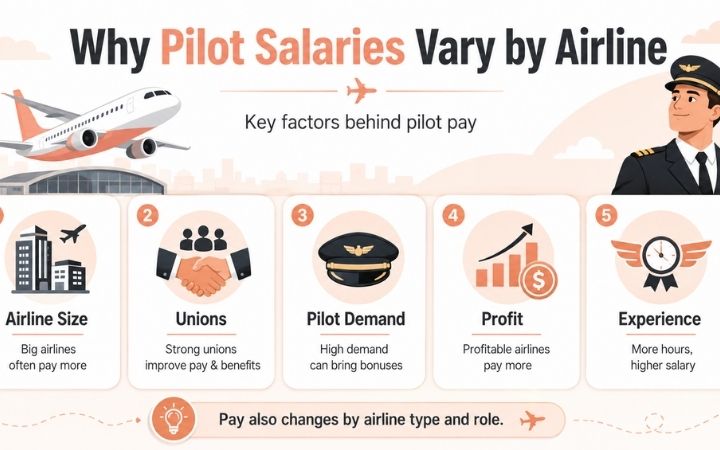
- Business Model: Large airlines usually pay more because they earn higher profits. However, small airlines focus on lower costs and cheaper tickets.
- Union Agreements: Major airlines often have strong staff unions. Therefore, pilots may receive better salaries and work benefits.
- Pilot Demand: Regional airlines need new pilots regularly. So, they sometimes offer joining bonuses to attract workers.
- Company Profit: Airlines with strong profits can pay employees more money. Meanwhile, smaller airlines may offer lower salaries.
- Experience Level: Senior pilots earn much higher salaries over time. Pilots with more flying hours often receive better positions and pay.
How Does Your Flight Rank Affect Your Salary?
Your flight rank plays a big role in your pay. First Officers earn less than Captains because they have less responsibility. As you gain experience, your rank moves up and your salary increases. For example, new pilots start as First Officers and learn daily flying skills.
Then, they move to senior First Officer roles with better pay. After that, they can become Captains, which offers the highest salary. Also, Senior Captains often earn extra bonuses and long-haul pay. So, higher rank always means higher income in aviation.
What are the Best Extra Benefits for Commercial Pilots?
Commercial pilots get many extra benefits along with their salary. First, most airlines offer free or discounted flight tickets. Pilots and their families can travel easily around the world. This makes the job more exciting.
Next, pilots get paid leave and long holidays. So they get enough time to rest after flights. In addition, airlines often give health insurance and pension plans. This helps pilots stay safe and secure in the long run.
Moreover, pilots get hotel stays and meal allowances during layovers. So travel becomes more comfortable. Overall, these benefits make the pilot career more rewarding and stable.
How Much Do Commercial Pilots Earn at Major Airlines?
Commercial pilots earn strong salaries at major airlines. First of all, big airlines like British Airways and easyJet pay higher wages than smaller airlines. New pilots usually start with lower pay, but it grows fast with experience. First Officers can earn a solid middle income after a few years.
Next, senior captains earn the highest salaries in aviation. In many cases, they can earn over £150,000 per year. In addition, pilots also receive bonuses, travel perks and allowances. So overall, major airlines offer stable work, good pay and strong career growth.
Which UK Airlines Pay the Most to Captains?
British airlines offer different captain salaries based on route type and experience. Long-haul pilots usually earn more than short-haul pilots. Also, major airlines often pay higher due to strong demand and bigger operations.
- British Airways: They are the highest-paying airline. Senior captains can earn up to £167,000 to £189,000+.
- Virgin Atlantic: Long-haul captains usually earn around £126,000 to £160,000+ with extra benefits.
- easyJet: Short-haul captains can earn around £100,000 to £145,000+ yearly.
- Ryanair: Experienced captains get paid around £150,000+ in UK bases.
- Jet2: Captains can earn over £140,000 depending on experience and role.
How Do Training Costs Impact Your Take-Home Pay?
Training costs play a big role in a pilot’s early earnings. First, most student pilots spend a large amount on flight school. This can range from £60,000 to £150,000 in the UK. So, many new pilots start their careers with financial pressure.
Next, this cost affects take-home pay in the beginning years. New pilots often focus on repaying loans instead of saving money. However, salaries increase as experience grows. Also, airlines may offer better pay after training is complete. In the end, long-term earnings usually balance the early training cost over time.
Which Pilot Jobs Offer the Most Stability?
Airline pilot jobs give the most stable careers in aviation. First, big airlines like British Airways and easyJet offer long-term contracts. They also give fixed schedules so pilots can plan life better. Next, cargo airlines such as DHL and FedEx fly all year. So pilots get steady work even in slow travel seasons.
In addition, government and military pilot jobs give strong job security and steady income. However, regional airlines can change routes and schedules more often. Still, many pilots start there and move to bigger airlines later. Overall, experience and skill help pilots build a more stable and secure career.
What is the Difference between Short and Long Flights?
Flights are mainly divided into short-haul and long-haul types. Each type affects flying time, work style and pay. Also, pilots experience very different routines in both roles.
- Short flights: Travel between nearby cities or countries and last a few hours.
- Long flights: Cover far destinations and often take many hours or overnight.
- Work routine: Short flights include more take-offs and landings in a day.
- Fatigue level: Long flights need longer focus and rest breaks during travel.
- Salary impact: Long-haul pilots usually earn higher pay than short-haul pilots.
Where Can You Find the Best Commercial Aviation Jobs?
You can find good aviation jobs in the UK and abroad. Start with major airlines like British Airways and Virgin Atlantic. They offer strong pay and good benefits.
Also, check low-cost airlines such as easyJet, Ryanair and Jet2. They often give faster career growth for pilots. Regional airlines also help new pilots gain flying hours quickly. Check airline websites and job boards regularly. Also, flight schools and aviation groups can help you find jobs. They guide both new and experienced pilots.
Is a Pilot Career Worth the Financial Investment?
A pilot career often looks expensive at the start. Training costs can feel like a big step. Still, many people see it as a long-term investment. At the same time, strong earning potential attracts many students.
In addition, pilots get travel discounts and health insurance too. Many airlines add bonuses and extra allowances too. So, the investment often pays back over time. In short, this career gives an advantage to people who stay patient and keep improving their skills and knowledge in this aviation sector.
What is a Career Growth Path For Pilots?
A pilot career grows step by step over time. First, you start as a trainee pilot and learn basic flying skills. Then, you move to a First Officer role and gain real flight experience. After that, you build flying hours with airlines and different aircraft.
Next, you can become a Senior First Officer with more responsibility and working hours. Later, you get promoted to Captain and lead the flight. Finally, experienced captains can move into training roles most of the time. So, pilot careers grow with time, skill and strong performance in every flight.
Final Thoughts
So, how much do commercial pilots earn depends on experience, airline and role. First, starting-level pilots earn a lower salary. Then, pay increases day by day with flying hours and senior positions. In addition, major airlines offer higher income and extra benefits. Senior captains earn the most in this career. Overall, commercial pilots enjoy strong earning possibilities and stable growth over time in the UK aviation industry.
Frequently Asked Questions (FAQs)
1. How much do UK commercial pilots earn?
- UK commercial pilots usually earn between £35,000 and £180,000.
2. Do commercial pilots make good money?
- Yes, commercial pilots earn good money.
3. How much do British airlines pilots get paid?
- British airline pilots typically earn around £50,000 to £150,000 per year on average.
4. What is the highest paying pilot job?
- Long-haul airline captain and training captain roles are the highest-paying pilot jobs.
5. Which pilot is a billionaire?
- No airline pilot is a billionaire, as pilot salaries do not reach that level.
6. Do pilots make 700k?
- Most pilots do not make £700k, as even top captains usually earn under £200k.
7. Why do so many pilots quit?
- Many pilots leave due to high training costs, stress and irregular working hours.
8. Is 25 too old to be a pilot?
- No, 25 is a good age to start pilot training and build a career.
9. Do pilots get free flights?
- Yes, many pilots get discounted or free flights as part of airline staff benefits.