
How to prevent blocked drains at home starts with a few simple habits, but those habits can save you hundreds in repair costs. A blocked drain can cause bad smells, slow water flow and even water damage. Fortunately, you can prevent most drain problems with regular care and a few smart changes. Small actions now can protect your plumbing for years.
The numbers speak for themselves. UK water companies clear more than 300,000 sewer blockages every year, and around 75% result from items that should never go down drains or toilets.
This guide explains practical ways to keep your drains clear, avoid common mistakes, and reduce the risk of costly plumbing repairs.
Why Do UK Homeowners Experience Constant Drainage Issues?
UK houses often feature very old and narrow clay pipes. These pipes struggle to handle modern waste and high water volumes. Most blockages occur because people throw the wrong items away. Experts say that grease causes nearly 40% of UK clogs. You can avoid these problems by changing your daily habits.
How Does Cooking Oil Destroy Your Kitchen Pipes?
Hot cooking oil looks like a harmless liquid in the pan. However, the oil turns into a solid wax inside cold pipes. This waxy layer catches every small bit of food you flush. Eventually, a massive fatberg grows and stops all water from moving. You must scrape your pans into a bin before washing them.
Which Specific Foods Create the Worst Sink Clogs?
Starchy foods like rice and pasta grow much larger in water. These items expand inside your pipes and create a dense plug. Even small crumbs can trap grease and cause a major backup. You should scrape every plate into the food waste bin first. This simple rule keeps your kitchen sink flowing freely every day.
Why Should You Never Flush Modern Wet Wipes?
Wet wipes do not dissolve like standard toilet paper in water. These products stay solid and catch on the rough pipe edges. They form a thick wall that stops all water from passing. Most UK sewer blockages involve these stubborn and non-flushable wet wipes. You should always put used wipes in a small bathroom bin.
How Does Human Hair Cause Shower Drain Failures?
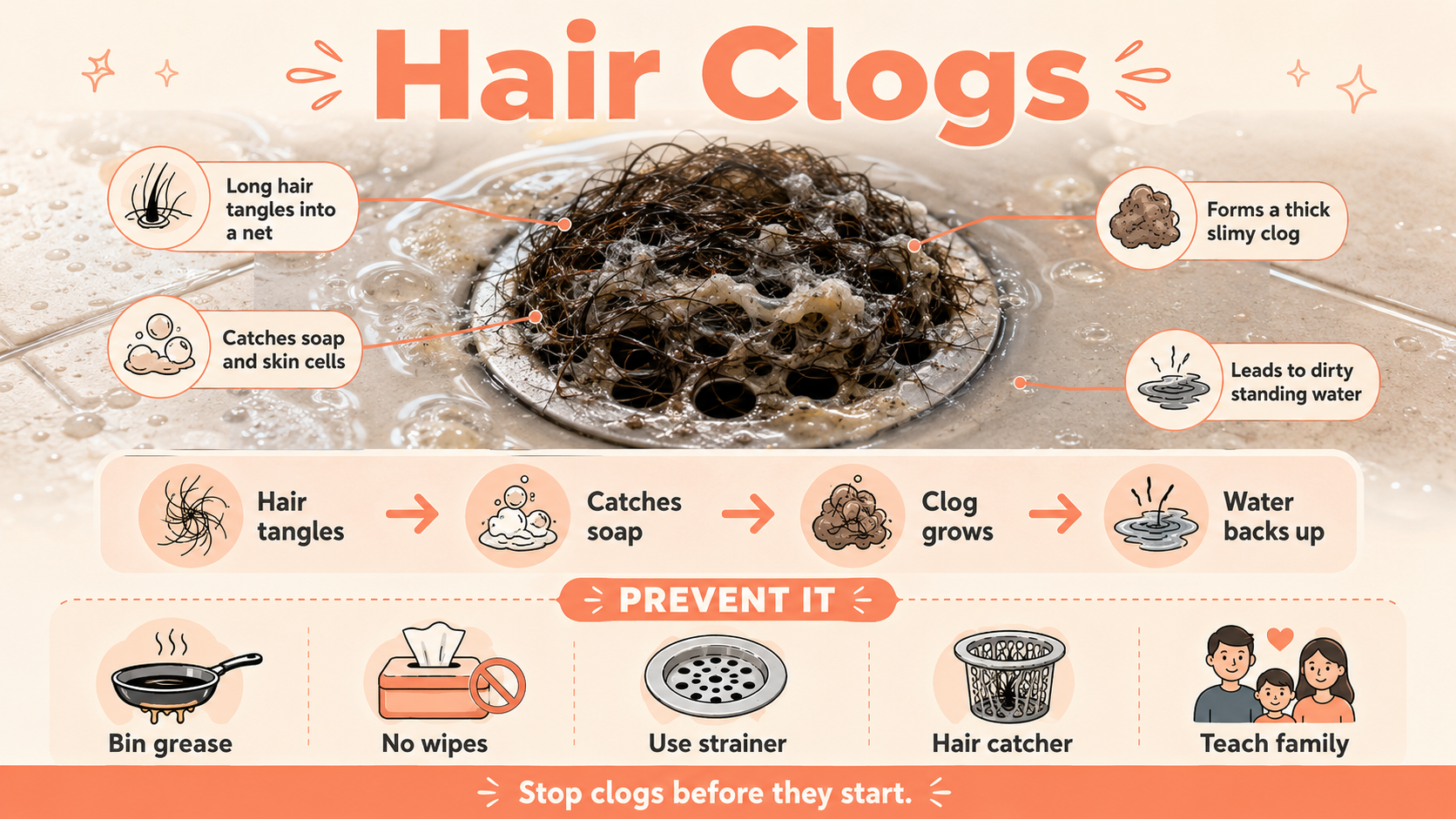
Long strands of hair tangle together to form a strong net. This net catches soap and skin cells every time you wash. A thick and slimy clog grows inside the shower pipe quickly. Eventually, you will stand in a pool of dirty bathwater. You must use a silicone hair catcher to protect your shower.
- Scrape every kitchen pan into a bin to remove grease.
- Avoid flushing any wipes regardless of the marketing labels.
- Use a mesh strainer to catch rice and pasta bits.
- Install silicone hair catchers in every shower and bathtub.
- Educate your family about the dangers of non-flushable waste.
Can Soap Scum Damage Your Bathroom Plumbing Joints?
Soap scum forms when bar soap reacts with minerals in water. This waxy substance sticks to the walls of your bathroom pipes. It creates a rough surface that makes hair stick very easily. Switching to liquid body wash helps reduce this sticky buildup significantly. Rushing plenty of hot water down the drain also helps wash scum.
Why Does Boiling Water Benefit Your Kitchen Drains?
Boiling water provides a powerful tool for melting away soft grease. Pour a full kettle of hot water down the sink weekly. This heat liquefies any oils that stick to your kitchen pipes. Consequently, the waste washes away into the main sewer more easily. This free habit maintains your plumbing system without using any chemicals.
How Do Natural Cleaners Outperform Harsh Chemicals?
Natural cleaners like vinegar are much safer for your family today. Highly toxic chemicals can damage your pipes if you use them often. Strong acids eat through old metal or thin plastic joints quickly. You can clean your drains effectively using baking soda and vinegar. These items provide professional results without any of the plumbing risks.
What are the Early Signs of a Pipe Blockage?
You can spot a problem before it becomes a total disaster. Listen for strange gurgling sounds after you empty the kitchen sink. You might notice the water level in the toilet stays high. Slow draining water is another very common warning sign for homeowners. Recognising these signs early allows you to fix the issue quickly.
How Do Tree Roots Enter Your Underground Pipes?
Tree roots always look for moisture and find tiny pipe cracks. Once they enter the pipe, they grow quickly around the flowing water. As a result, the roots form a thick mass that blocks waste from moving freely. Over time, they can crack the pipe and cause expensive leaks. To avoid this, keep large trees away from your main drainage lines.
- Switch to liquid soaps to prevent waxy scum build-up.
- Listen for gurgling sounds to identify early pipe clogs.
- Flush your kitchen drains with boiling water every week.
- Use baking soda and vinegar for safe internal pipe cleaning.
- Check your garden for trees growing near the main sewer.
Why Must You Clear Your Outdoor Gully Traps?
Outdoor drains carry rainwater away from your house foundation every day. These traps often fill with leaves, twigs, and loose garden soil. If these drains block, water might seep into your basement walls. You must keep the area around your outdoor grates very tidy. Removing debris by hand keeps your home safe from water damage.
How Do Seasonal Leaves Affect Your Rainwater Systems?
Autumn leaves pose a major threat to your domestic drainage system. Wind blows these leaves into your gutters and down the pipes. This debris creates a thick sludge that stops the rain flowing. You should sweep fallen leaves away from your drain covers regularly. This simple task prevents flooding in your garden during heavy storms.
Can a Plunger Save You from Emergency Costs?
A plunger uses air pressure to move a blockage very effectively. You should ensure water covers the base of the plunger first. Use firm and steady movements to create a strong suction force. This tool can save you from calling an expensive emergency plumber. Keep a plunger under the sink for any sudden plumbing emergencies.
Why Does Dental Floss Create Major Pipe Nets?
Dental floss consists of very strong and thin plastic string material. It does not break apart and stays in the pipes forever. The floss wraps around other debris and creates a huge net. This net catches hair and grease to form a solid clog. Always discard your used floss in the bathroom rubbish bin instead.
How Do Coffee Grounds Accumulate Inside Your Traps?
Coffee grounds are very heavy and do not dissolve in water. They settle at the bottom of pipe traps like wet sand. The grounds form a thick sludge that is difficult to wash. They mix with grease to create a very hard pipe blockage. You should put used coffee grounds in the garden as fertiliser.
- Clear leaves away from outdoor drain covers every autumn.
- Check your gutters for moss and debris twice a year.
- Keep a bellows plunger handy for sudden sink clogs.
- Dispose of dental floss in the bin to avoid nets.
- Recycle coffee grounds in the garden instead of the sink.
Why is a Mesh Sink Strainer So Effective?
A sink strainer is a small mesh tool for your sink. It catches all little bits of food and debris for you. You can then lift the strainer and empty it easily. This tool stops clogs from reaching your household plumbing system today. Using a strainer is the easiest way to maintain clean pipes.
How Do Expanding Foods Block Narrow Pipe Bends?
Foods like flour and pasta create a sticky paste in water. This paste acts like glue inside your narrow kitchen pipe bends. It traps other waste and grows into a very solid mass. Always wipe your plates with a paper towel before you wash. This keeps the sticky paste out of your home drainage system.
Can Sanitary Products Cause Immediate Toilet Overflows?
Sanitary products absorb a huge amount of liquid inside your pipes. They grow much larger and get stuck in narrow bends easily. These materials do not dissolve even after many weeks in water. They act like a sponge that traps all other bathroom waste. You must throw these items in the general waste bin only.
Why Does Hard Water Increase Your Clog Risks?
Hard water has high levels of calcium and magnesium. These minerals create a hard limescale buildup inside your pipes. Limescale makes the pipe surface rough and catches all passing debris. You can use a water softener to protect your plumbing system. Regular descaling keeps your water flowing smoothly through every single pipe.
How Does Regular Maintenance Save You Money Today?
Learning how to prevent blocked drains at home saves much money. Small daily habits stop the need for expensive professional repair bills. Regular cleaning keeps your pipes in perfect condition for many years. You avoid the stress of a flooded kitchen or bathroom floor. Good drain care is the best investment for every UK homeowner.
- Buy mesh strainers for every sink in your home.
- Wipe flour and sticky sauces off plates before rinsing.
- Use a lidded bin for all sanitary waste products.
- Consider a water softener to reduce limescale pipe build-up.
- Set a monthly reminder for basic drainage maintenance tasks.
What Tools Should Every Homeowner Own for Drains?
Every home needs a plunger and a small drain cleaning brush. A flexible drain snake can reach deep clogs in the bathroom. These tools allow you to fix minor issues without any professional. You should also keep baking soda and white vinegar in stock. These items help you maintain a clean and healthy drainage system.
How Do You Manage Large Amounts of Grease?
You must never pour liquid fat down the kitchen drain ever. Let the oil cool down in a bowl or jar first. Once it is solid, you can scrape it into the bin. Use a kitchen roll to wipe greasy pans before washing them. This habit keeps your pipes clean and protects the local environment.
Why is Pre-Brushing Hair Important Before Every Shower?
Brushing your hair removes loose strands before they fall in the shower. Fewer hairs will end up going down the drain during the wash. This is a simple habit that makes a huge difference. It keeps your shower area looking much cleaner for your family. Use a silicone hair catcher for extra protection in the bathroom.
How Do You Identify a Main Sewer Issue?
A main sewer issue affects every drain in your house simultaneously. You might see water backing up into your ground floor shower. This problem usually requires professional help and heavy machinery to fix. Check if your neighbours have the same drainage issues as you. A shared problem indicates a blockage in the main street sewer.
Can Heavy Rainfall Overwhelm Your Domestic Drainage System?
Heavy rain creates a lot of water pressure on every UK drain. It washes a large amount of silt and rubbish into pipes. If your drains are already partially blocked, they will overflow quickly. Ensure all your outdoor grates are clear before the winter months. Preparation is the best way to handle unpredictable British weather today.
- Stock up on white vinegar and bicarbonate of soda.
- Store used cooking oil in jars for safe disposal.
- Brush your hair thoroughly before every single shower.
- Talk to neighbours if multiple houses have slow drains.
- Clear all outdoor debris before a predicted heavy storm.
Why Should You Avoid Corrosive Drain Cleaners?
Corrosive cleaners use strong acids to dissolve blockages in your pipes. These chemicals generate intense heat that can melt thin plastic joints. They are also very dangerous for your skin and your eyes. Natural cleaners provide a much safer alternative for your home maintenance. Protect your plumbing by choosing gentle and eco-friendly cleaning solutions instead.
How Does a CCTV Survey Help Your Plumbing?
A CCTV survey uses a waterproof camera to inspect your pipes. This allows a plumber to see the exact cause of clogs. They can find tree roots or broken joints without any digging. This technology saves time and reduces the cost of major repairs. A survey provides a clear picture of your entire drainage system.
Why Do Gurgling Sounds Indicate a Future Problem?
Gurgling sounds mean air is struggling to pass through your pipes. This usually happens when a partial blockage is forming deep down. The air bubbles through the standing water and creates the noise. You should use a plunger as soon as you hear gurgles. Addressing the issue now prevents a total blockage in the future.
How Do You Deodorise a Smelly Kitchen Sink?
Lemon juice is an excellent natural deodoriser for your household drains. The acid in the juice kills bacteria and removes smells. Pour a little juice down and let it sit overnight. This leaves your kitchen smelling fresh and clean for a time. It is a simple trick that professional cleaners use often.
Why Should You Educate Your Family About Drains?
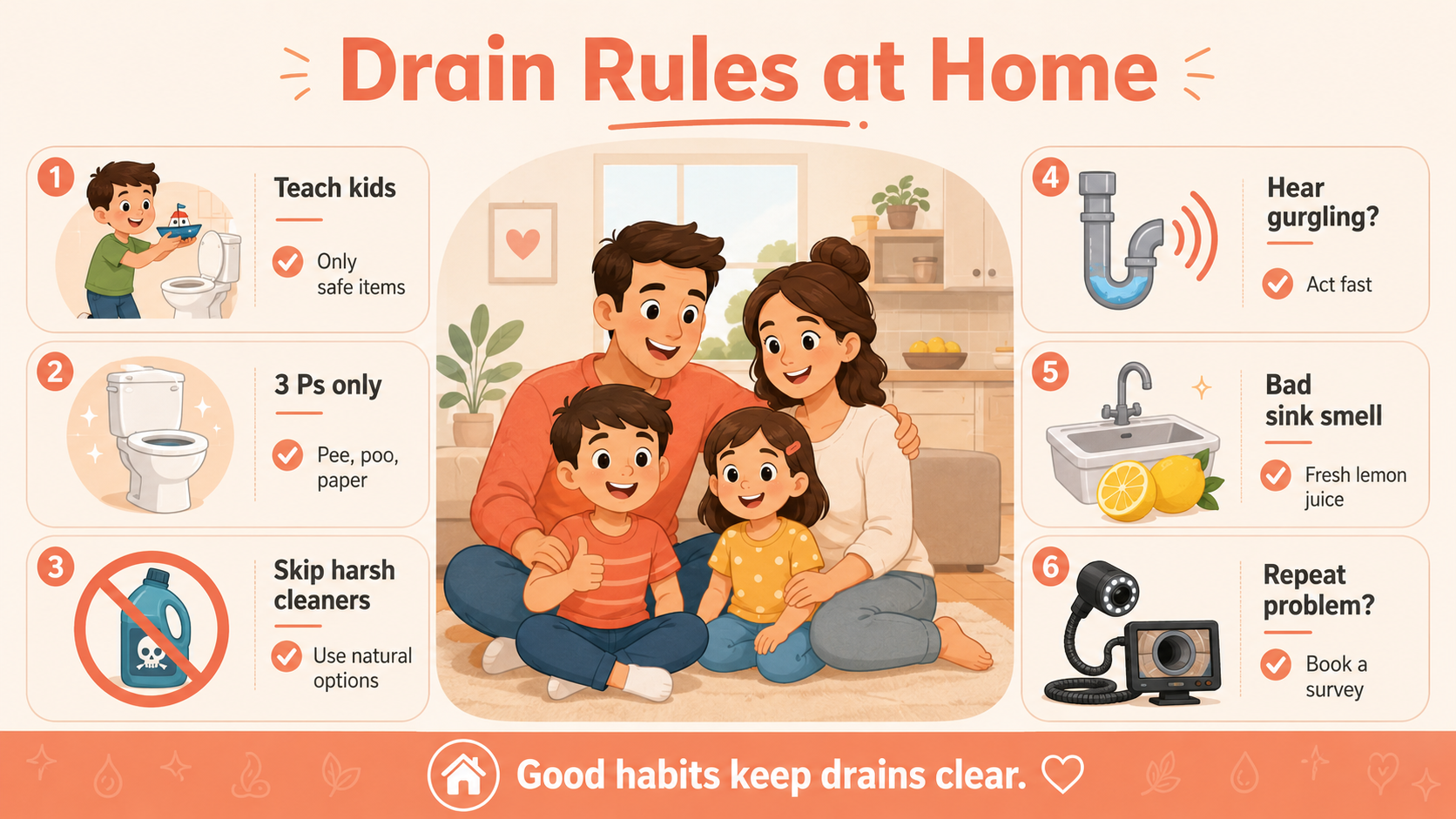
Everyone in the house must follow the same drainage rules. After all, children often flush toys or wipes down the toilet by accident. So, explain the importance of the three Ps to every family member. This way, good habits help prevent many common plumbing problems before they start. In the long run, a team effort keeps your home’s drainage system working properly.
- Discard hazardous chemical cleaners and use natural options.
- Book a CCTV survey for any recurring pipe problems.
- Act immediately when you hear gurgling in the walls.
- Use fresh lemon juice to remove sour sink smells.
- Teach children which items are safe for the toilet.
How Do You Protect Your Home During Winter?
Frozen pipes can crack and cause major flooding in your home. Insulate any exposed outdoor pipes with foam tubes before the cold. Keep your heating on low to prevent water freezing inside pipes. Check your external drains for ice buildup during the winter months. Proper winter care protects your plumbing from expensive burst pipe repairs.
Why Does Soap Type Affect Your Drainage Speed?
Traditional bar soaps often leave a heavy residue in your pipes. This residue builds up and slows the flow of waste water. Liquid soaps and gels dissolve much more easily in the water. They leave fewer deposits behind and keep your pipes cleaner longer. Switching soap types is an easy way to improve your drainage.
How Do You Properly Maintain Your Garbage Disposal?
Run cold water while you use the garbage disposal unit today. This helps move the food waste through the pipes more easily. Never put fibrous foods or large bones in the machine ever. Clean the unit regularly with ice cubes and lemon peel bits. Proper use extends the life of your kitchen plumbing system significantly.
Can Baking Soda Neutralise Odours in Your Pipes?
Baking soda absorbs foul odours from deep inside your kitchen plumbing. It also helps break down small bits of grease and grime. Pour half a cup down the drain and leave it alone. This natural powder keeps your pipes smelling fresh without any chemicals. It is a cheap and effective way to maintain your home.
Why is Prevention Better Than a Professional Repair?
Prevention always costs less than a major repair. More importantly, simple habits keep your drains clear, protect your plumbing and help you avoid sudden breakdowns. Over time, small issues can quickly turn into expensive emergencies. As a result, a few minutes of maintenance today can save you time, money and stress later.
Final Thoughts
Finally, preventing blocked drains starts with a few simple habits. Regular care keeps water flowing, reduces plumbing problems and helps you avoid costly repairs. Watch what goes down your drains, clean them often and act quickly if you notice slow drainage. Small steps today can protect your home’s plumbing for years.