
A noisy central heating pipe can turn a peaceful home into a frustrating one. Strange sounds, like banging or whistling, often mean your system needs attention. The good news is that most pipe noises have simple causes and practical fixes. In this guide, you will learn why these sounds happen and how to fix them easily.
More than 23 million UK homes use gas boilers for heating and hot water. This makes pipe noise a very common issue for many families. Trapped air, sludge, and loose fittings are often the main causes of these sounds.
Let’s explore the common causes and simple fixes for noisy central heating pipes.
Why is Your Central Heating System Making So Much Noise?
Air bubbles and loose fittings cause most pipe noises in UK homes. This is a common problem in many houses today. When the water in your pipes gets hot, the metal grows slightly. Furthermore, if pipes are too close to wood, they rub and click. This creates the sounds you hear throughout the day. It is a sign that your system needs a little bit of care.
What Does a Clicking Sound in Your Pipes Actually Mean?
A clicking sound usually means your copper pipes are rubbing against wooden floorboards. Metals grow when they get hot and shrink when they cool down. When the pipe moves, it scratches against the joists. In addition to this, the noise usually stops once the pipes heat up fully. Tightly packed pipes can also create this sharp jumping sound in your walls.
Why is Air Trapped Inside Your Radiators and Pipes?
Air enters the system through small leaks or when you first fill the pipes. This air gets trapped at the top because it is lighter than water. It creates a space where water cannot flow easily. Looking at the bigger picture, this leads to cold spots and gurgling sounds. Trapped air causes the pump to work much harder than it should.
How Does High Water Pressure Cause Pipe Whistling?
High water pressure can cause loud whistling sounds in your heating pipes. Keeping your boiler pressure between 1 and 1.5 bar helps you avoid this. If the pressure is too high, the water moves too fast and vibrates. Furthermore, lowering the excess pressure quickly reduces noise. Steady pressure protects your system from long-term damage and keeps things quiet.
How Can You Successfully Bleed Your Radiators to Stop Noise?
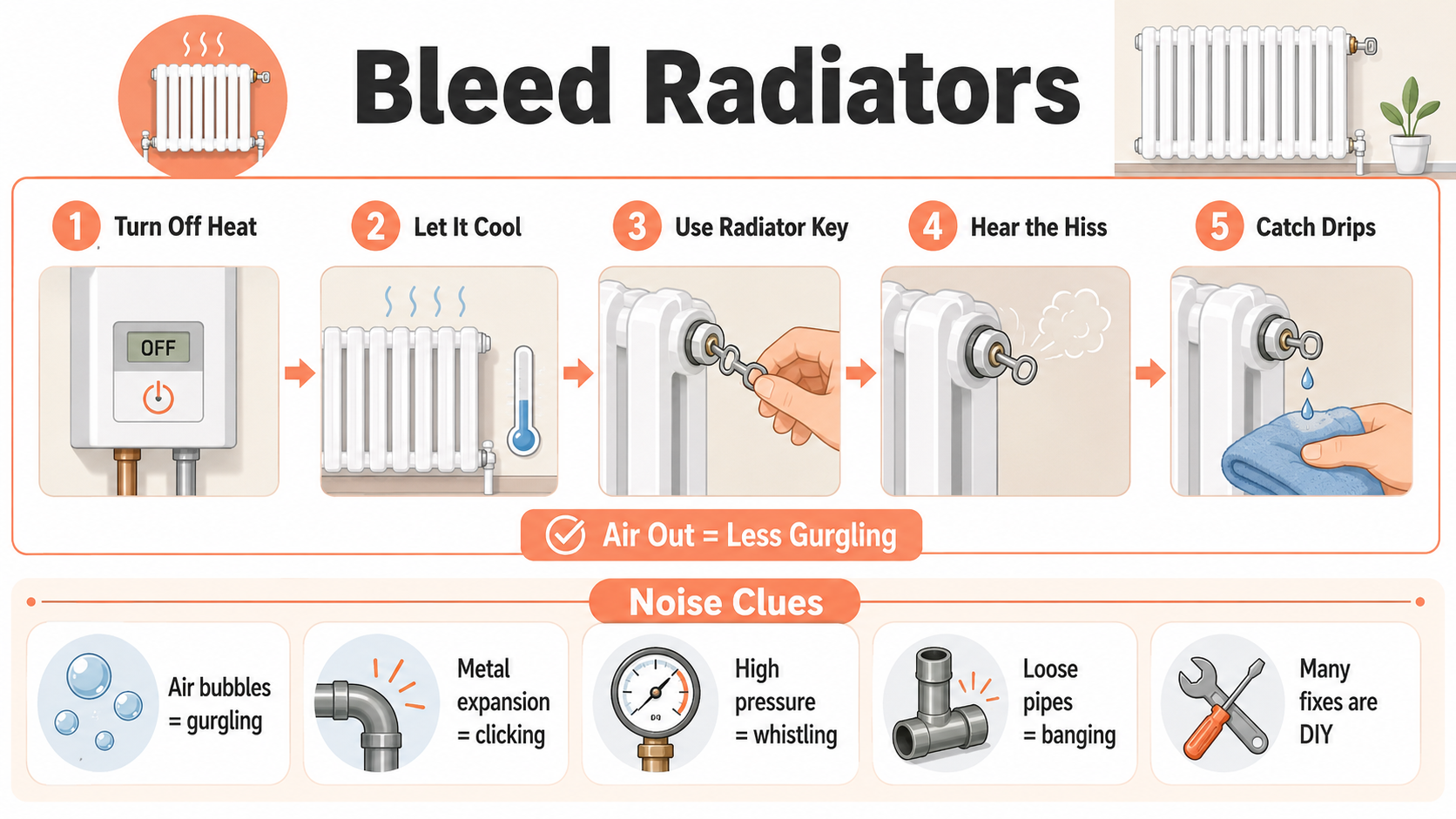
You can bleed radiators by using a key to open the small air valve. First, turn off your heating and wait for the radiators to cool down. Insert the key and turn it slowly until you hear a hiss. In addition to this, have a cloth ready to catch any water drips. This process removes the air that causes gurgling.
Important Facts About Pipe Noise
- Air bubbles cause gurgling and splashing sounds in your radiators.
- Metal expansion leads to clicking or ticking when the heat starts up.
- High water pressure creates high-pitched whistling or humming noises in walls.
- Loose pipes can bang against the floorboards or walls when water flows.
- Most noise issues can be fixed at home without calling a professional plumber.
What is Water Hammer and Why Does it Cause Banging?
Water hammer happens when a valve closes quickly and stops the water flow suddenly. This generates a shock wave that travels through the entire pipe system. The energy makes the pipes shake and hit the wood. Looking at the bigger picture, this can happen if your taps are turned off too fast. A shock arrestor can fix this problem easily.
Why Do Loose Pipe Clips Lead to Constant Rattling?
Loose pipe clips allow the metal pipes to vibrate when water flows through them. Every time the pump turns on, the pipes move a tiny bit. If they are not held down, they hit nearby objects. Furthermore, this creates a constant rattling sound. Adding new plastic clips keeps the pipes steady and much quieter while you sleep.
How Does Boiler Kettling Create Loud Whistling Sounds?
Kettling is a loud whistling noise from the boiler, similar to a boiling kettle. It happens when mineral build-up blocks water flow in the heat exchanger. This causes steam bubbles to form and burst. In addition to this, a chemical cleaner can help remove this sludge. It helps your boiler run quietly for a much longer time.
How Can Pipe Lagging Help Quiet Your Central Heating?
Pipe lagging is foam insulation that you wrap around your heating pipes. It acts as a muffler for the sounds of moving water inside. The foam tube fits snugly and keeps pipes from hitting the floor. Looking at the bigger picture, lagging helps keep your water hot for longer. It also prevents pipes from clicking against wooden joists.
Why Should You Use Felt Strips for Ticking Pipes?
Felt strips are small pieces of soft fabric that stop pipes from clicking. When a pipe sits on a beam, it creates friction when it moves. The metal jumps against the wood as it expands. Furthermore, placing felt between the pipe and the wood stops this friction. The pipe now slides silently on the soft fabric strips.
Simple Fixes for Your Heating System
- Use a radiator key to let out trapped air pockets from the system.
- Replace old metal clips with modern plastic pipe clips to allow movement.
- Check your boiler pressure gauge to ensure it is in the green zone.
- Install a shock arrestor to stop the banging caused by water hammer.
- Clean the system with chemicals to prevent boiler kettling and sludge build-up.
How Do You Adjust Your Pump Speed to Reduce Noise?
A pump that is set too high will cause a constant humming noise. The pump pushes water through all the pipes and radiators. If it moves too fast, it creates vibration. In addition to this, most modern pumps have a small switch to change the speed. You can try turning the speed down to a lower setting.
What is a Power Flush and When Do You Need One?
A power flush deeply cleans your heating system using high-speed water and chemicals. It removes sludge and rust from the inside of the pipes. Looking at the bigger picture, this helps water flow smoothly and reduces noise. It also improves heating efficiency. A qualified plumber usually carries out this process for you once every few years.
Why are Thermostatic Radiator Valves Sometimes Noisy?
Thermostatic valves control the temperature of each radiator in your home. Sometimes, they create a buzzing sound as they close slowly. This happens when water flows through the valve in the wrong direction. Furthermore, people call it a “chattering” noise. Checking the flow direction arrow on the valve usually solves this problem very quickly.
How Does an Expansion Vessel Affect Pipe Stability?
The expansion vessel handles the extra pressure of hot water in your system. If the vessel is broken, the pressure will go up and down. In addition to this, this constant change causes the pipes to move and make noise. A healthy vessel keeps the pressure steady. This prevents the safety valve from leaking water outside.
Can You Use Spray Foam to Stop Pipe Vibrations?
Expanding spray foam is a great tool for holding loose pipes in place. If a pipe is vibrating inside a wall, foam can help. You can spray a small amount into the gap. Looking at the bigger picture, the foam expands and hardens to create a cushion. It stops the movement without you having to open the wall.
Tools You Might Need for the Job
- A standard radiator bleed key for air removal from radiators.
- Foam pipe lagging to insulate and quiet the pipes under floors.
- A screwdriver to tighten any loose pipe clips in the house.
- Felt strips or old carpet to cushion the pipes against wood.
- A chemical inhibitor to keep the water clean and prevent rust.
Why is a Magnetic Filter Important for Quiet Pipes?
A magnetic filter traps small metal and rust particles before they cause issues. Without it, sludge builds up and blocks the narrow pipes. Furthermore, this can lead to scratching or thumping noises. Cleaning the filter every year keeps the system clear. It helps your heating run smoothly and stay quiet for many years to come.
When Should You Call a Professional Plumber for Help?
You should call a plumber if the noises are very loud or scary. If you hear a loud “boom” when the boiler starts, turn it off. In addition to this, some noises mean a part is broken and could be dangerous. A professional has the right tools to fix it. Safety is the most important thing for your home.
How Does Using a Chemical Inhibitor Prevent Pipe Noise?
A chemical inhibitor stops the inside of your pipes and radiators from rusting. If there is no rust, there will be no sludge. Looking at the bigger picture, this keeps the water moving silently through the house. The inhibitor also prevents lime buildup in the boiler. It is a very cheap way to protect your pipes.
How Can You Check for Pipe Sludge at Home?
You can check for sludge by feeling the bottom of your radiators. If the bottom is cold but the top is hot, sludge is blocking it. Furthermore, this dirt stops the radiator from heating up. You can drain a little water to check the colour. If the water is black, your system needs a cleaning.
What are the Benefits of a Silent Heating System?
A silent heating system helps you sleep better and feel more relaxed. You won’t have to worry about loud bangs in the night. In addition to this, a quiet system is a sign that your boiler is working well. It saves you money on your bills. Taking care of your pipes prevents expensive repairs later.
Maintenance Tips for a Silent Home
- Clean your magnetic filter every year to remove rust and metal bits.
- Check the expansion vessel air pressure to keep the water steady.
- Ensure thermostatic valves are installed in the right flow direction.
- Use expanding foam for pipes hidden inside your walls to stop rattles.
- Keep the system water clean with inhibitors to prevent blockages and noise.
Can Cold Weather Make Your Pipes Noisier?
Cold weather makes your heating system work much harder than usual. The metal pipes go from very cold to very hot quickly. Looking at the bigger picture, this rapid change causes more expansion and clicking. The pump often runs longer to keep the house warm. Winter is when most pipe noises will start appearing.
Is it Safe to Ignore a Small Tapping Sound?
A small tapping sound is usually not wever, it can be a sign that a pipe is rubbing against wood. Furthermore, over many years, this rubbing can wear a hole in the pipe. It is much better to fix the noise early. Small fixes prevent big and expensive leaks later on.
How Do You Locate Which Pipe is Making Noise?
You can locate a noisy pipe by listening carefully while the heating is on. Use your ears to follow the sound to a specific floorboard. In addition to this, you can use a long screwdriver to listen to the walls. Touching the pipes carefully can help you feel vibrations. It takes some time and patience to find.
Why Do Pipes in the Attic Make Loud Sounds?
Pipes in the attic are often not supported as well as pipes downstairs. They sit on open joists and may move around more. Looking at the bigger picture, the attic is very quiet, so you hear every rattle. Adding lagging and clips in the attic is very effective. These pipes are usually very easy to reach.
Does a Dirty Boiler Heat Exchanger Cause Banging?
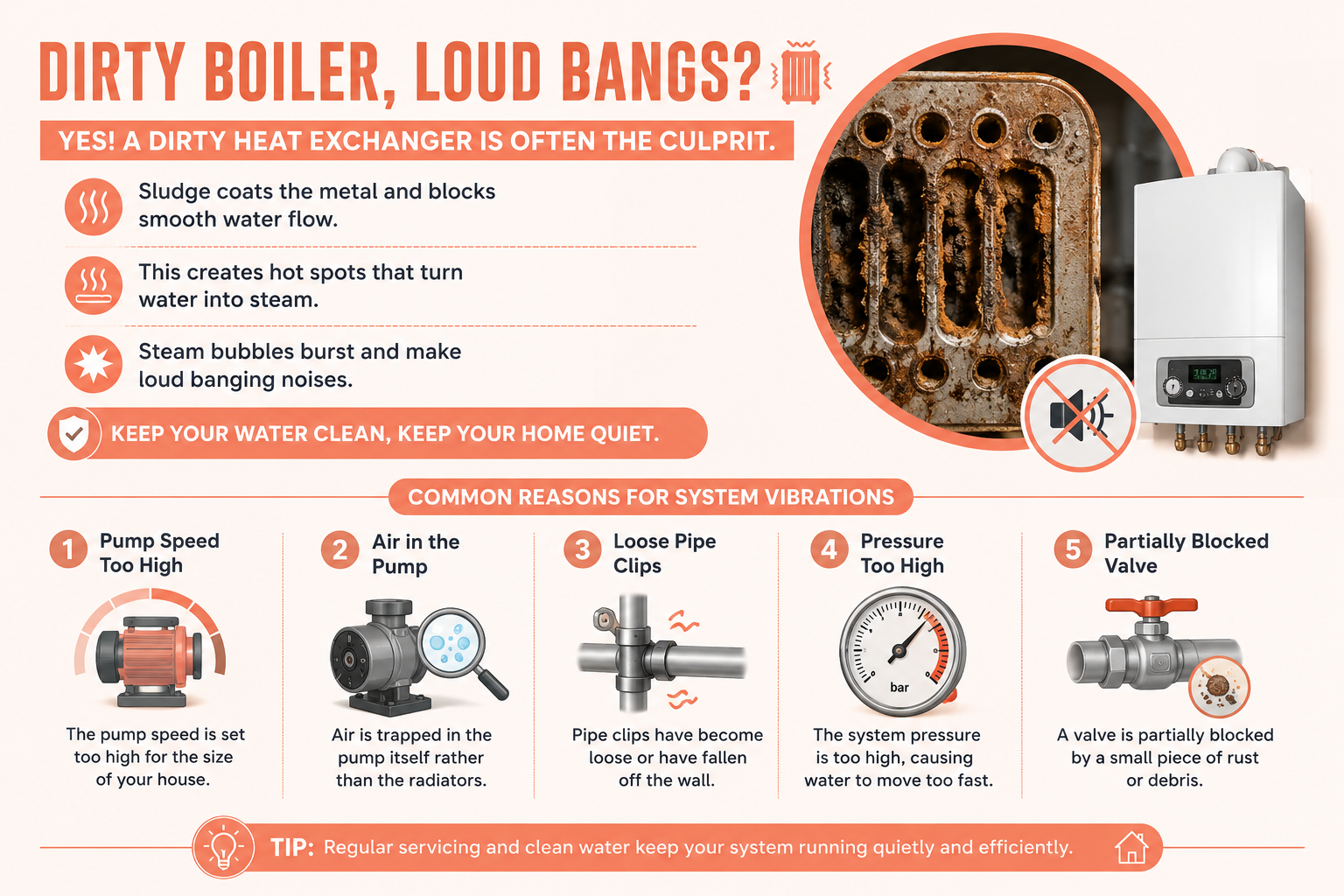
A dirty heat exchanger is the main cause of loud banging noises. Sludge coats the metal and stops water from flowing through smoothly. Furthermore, this creates hot spots that turn water into steam. The steam bubbles burst and make a loud noise. Keeping the water clean prevents this major problem from happening to you.
Common Reasons for System Vibrations
- The pump speed is set too high for the size of your house.
- Air is trapped in the pump itself rather than the radiators.
- Pipe clips have become loose or have fallen off the wall.
- The system pressure is too high, causing water to move too fast.
- A valve is partially blocked by a small piece of rust or debris.
How Do Plastic Pipes Compare to Copper for Noise?
Plastic pipes are generally much quieter than old copper pipes. They are more flexible, so they don’t click as much when they expand. In addition to this, plastic doesn’t carry sound as far as metal does. They are less likely to rattle against floorboards. Many modern UK homes now use plastic for quiet heating.
Can You Fix Noisy Pipes Behind a Tiled Wall?
Fixing pipes behind tiles is difficult but not impossible to do. You can sometimes reach them from the other side of the wall. Looking at the bigger picture, injecting expanding foam through a small hole can stop vibrations. Checking the pressure can often stop the noise without moving tiles. Try the easy fixes before you break any tiles.
Why Does the Heating Pump Hum All Night Long?
The heating pump may hum if it is failing or full of dirt. A constant hum means the motor is struggling to turn properly. Furthermore, it could be that the pump is not secured tightly to the wall. Turning the speed down can often stop the hum. A humming pump uses too much electricity every month.
How Does Balancing Your Radiators Reduce System Noise?
Balancing means adjusting the valves so water flows equally to every room. If one radiator gets too much water, it can whistle. In addition to this, balancing prevents the pump from pushing too hard against one area. It makes the whole house warm up evenly. A balanced system is much quieter and more efficient.
What Should You Do if the Boiler Pressure Keeps Rising?
If your boiler pressure keeps rising, you must check the filling loop. This is the silver hose that lets water into the system. Looking at the bigger picture, make sure the valves are turned off completely. A broken expansion vessel can also cause the pressure to rise. High pressure causes many different types of pipe noises.
How to Maintain Your System Yearly
- Check the boiler pressure gauge and refill it if it is below 1 bar.
- Bleed every radiator in the house starting from the ground floor.
- Add a bottle of chemical inhibitor to the system to prevent rust.
- Listen for any new clicking or banging sounds as the weather gets colder.
- Have a Gas Safe engineer service the boiler and check the expansion vessel.
Can a Broken Valve Cause a Buzzing Sound?
A broken or worn-out valve can certainly cause a buzzing sound. As water passes through a loose part, it makes it vibrate fast. Furthermore, this vibration sounds like a bee trapped inside the pipe. Replacing the valve is usually the only way to stop it. Valves are quite cheap to buy and replace today.
Why Does Turning Off the Tap Create a Bang?
Turning off a tap creates a bang because of the sudden stop in water. This is the water-hammer effect we talked about before. In addition to this, it sends a wave of energy back through the pipes. Securing the pipes near the tap can help stop this. It is a very common plumbing issue.
How Do You Refill the System Water Without Noise?
You should refill the system slowly to avoid creating large air bubbles. Open the filling loop valve just a little bit at first. Looking at the bigger picture, listen for the water entering the pipes quietly. Bleeding the radiators as you fill can help. Slow filling prevents air locks from forming in the boiler unit.
Is it Worth Replacing Old Metal Pipe Clips?
Replacing old metal clips with plastic ones is definitely worth the effort. Metal clips often rust and grip the pipe too tightly. Furthermore, this is what causes the clicking sound when pipes get hot. Plastic clips allow the pipe to move silently. It is a very low-cost way to improve your home comfort.
How Do You Check Your Boiler Pressure Gauge?
You should look at the front of your boiler for a small dial. The needle should be in the green section when the heating is cold. In addition to this, if the needle is too low, your pipes might gurgle. If it is too high, they might whistle. Keeping it correct is very important for silence.
Does a Dirty Pump Cause Gurgling Noises?
A dirty pump can cause gurgling because it splashes the water. If dirt is stuck inside, the water cannot move in a smooth line. Looking at the bigger picture, this creates air bubbles that travel to your radiators. Cleaning the pump or the filter can stop this. It keeps the water flowing in a quiet way.
Why Does the Radiator Make a Hissing Sound?
A radiator might hiss if the air valve is loose or leaking. This allows air to enter or escape while the system is running. Furthermore, it can be a sign that the valve needs tightening with a key. Check for any small wet spots around the valve. A tight valve is a silent and safe valve.
How Can You Stop Pipes Rattling in Stud Walls?
Pipes in stud walls rattle because they are not touching anything solid. You can often stop this by using expanding foam through a small hole. In addition to this, you can try to secure the pipes from the top or bottom. This stops them from hitting the plasterboard. It makes the room feel much more peaceful.
Final Thoughts
In conclusion, a noisy central heating pipe is usually easy to fix. Simple actions like bleeding radiators and using felt strips can make a big difference. Furthermore, keeping your boiler pressure correct stops most whistling sounds. Regular maintenance keeps the system running quietly all year long. A silent home is a much happier place to live for everyone.