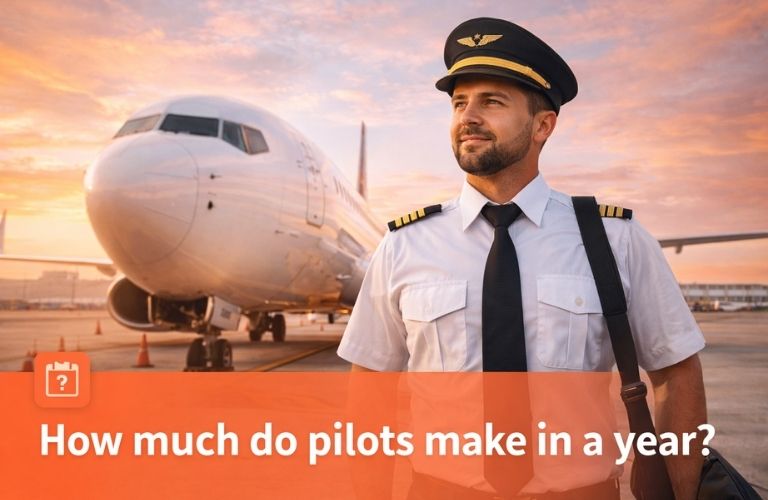
A pilot is more than just someone who flies a plane. They are responsible for getting passengers and cargo safely from one place to another. Pilots check their aircraft before take-off, plan routes, monitor weather and stay in constant communication with air traffic control. Moreover, during the flight, they control the plane and make quick decisions to handle any situation.
In the UK, pilot salaries can vary widely depending on experience, airline, and type of aircraft. First Officers usually start on around £30,000–£60,000. Captains earn much more, often £100,000 or higher at major airlines like British Airways or Virgin Atlantic. Senior Captains can reach £150,000–£500,000, and extra pay is often added for each flight. Entry-level pilots start smaller, but as they gain experience and move up to Captain, their pay rises significantly, with wide-body aircraft Captains earning the most.
In this article, we explain pilot salary in simple terms. You will learn how much pilots earn, what affects pay and what to expect in the future.
What Do Airline Pilots Do?
Airline pilots do more than fly a plane. They make sure passengers and cargo arrive safely and on time. They follow strict rules, use aircraft systems and react quickly when situations change.
Key duties include:
- Pre-Flight Planning: Pilots check weather conditions, review aircraft maintenance logs, calculate fuel needs and plan the safest route. This preparation is vital for a smooth flight.
- Flying the Aircraft: Pilots operate the plane during takeoff, landing and cruising. They often work with a co-pilot (First Officer), taking turns as the Pilot Flying (PF) and Pilot Monitoring (PM).
- Navigation & Safety: Pilots monitor instruments, manage autopilot systems and keep talking to air traffic control (ATC) to make sure the flight stays safe.
- Communication: They keep passengers and crew informed, handle in-flight issues calmly and make quick decisions during emergencies.
Additionally, flights are usually operated by a Captain and a First Officer, sharing responsibilities to maintain safety at all times. Finally, pilots need excellent focus, strong problem-solving skills and the ability to stay calm under pressure. Being an airline pilot is challenging, but it’s also highly rewarding, offering the excitement of travel, responsibility, and competitive pay as you gain experience.
Pilot Salary Overview
If you want to be a pilot, it’s good to know how much you can earn. First, pay depends on the airline, the type of plane and your experience. Starting salaries for Second Officers or First Officers are usually around £30,000 to £60,000. It may seem low at first, but this is just the start of your career. As you gain experience, your pay goes up. Senior First Officers and Captains can earn £100,000 or more, especially at big airlines like British Airways or Virgin Atlantic.
Pilots can also earn extra money for each flight and get allowances. In addition, many airlines offer benefits like pensions, health insurance and travel perks. With each promotion, your salary increases, rewarding your skill and hard work. Being a pilot is not easy, but it is exciting. The salary reflects the responsibility of the job and the thrill of flying around the world.
Pilot Salary in Different Airlines
Pilot salaries in the UK can be very different depending on experience, airline, and type of aircraft. First, starting First Officers usually earn between £30,000 and £60,000. Also, Captains at major airlines like British Airways or Virgin Atlantic can earn over £100,000. In addition, senior Captains on wide-body aircraft may earn £150,000 to £500,000+, often with extra pay for each flight.
Salary by Experience & Rank (UK Examples):
- First Officer (Starting): £30,000 – £60,000
- First Officer (Senior): £75,000 – £85,000
- Captain (Medium Airline): £55,000 – £75,000
- Captain (Major Airline): £100,000 – £150,000+, with senior long-haul pilots sometimes earning over £500,000
What Affects Pilot Pay:
- Experience: More flying hours and seniority increase pay.
- Airline: Major airlines usually pay more than regional or budget carriers.
- Aircraft Type: Flying larger planes earns higher pay.
- Sector Pay: Pilots often get extra pay per flight leg, increasing with distance.
Other Examples:
- RAF Pilots: Start at around £34,600, rising with rank and experience. For example, a Flight Lieutenant can earn £50,500+.
- Training Costs: Pilot training is expensive. However, the potential salary makes it worthwhile.
Overall, being a pilot is challenging, but the pay can be very rewarding, especially with experience and promotions.
Skills and Experience Needed
Pilots need strong skills and quick thinking. They must understand how planes work, read instruments, and know about the weather. They also need to make fast decisions, stay alert and stay calm under pressure.
Key Skills for Pilots:
- Technical Skills: Understand aircraft systems, navigation and flight rules.
- Thinking Skills: Make decisions quickly, solve problems and stay aware during flights.
- Soft Skills: Communicate clearly, work in teams and lead when needed.
- Personal Traits: Be disciplined, pay attention to details, handle long hours, and enjoy travel.
Required Experience and Qualifications:
- Licence: A full Airline Transport Pilot Licence (ATPL) is required, usually starting with a “frozen” ATPL after training.
- Medical Fitness: A Class 1 Medical Certificate proves good health, eyesight and hearing.
- Flight Hours: Senior roles often need around 1,500 hours, including night and instrument flying.
- Education: A degree in STEM subjects (Physics, Maths and Engineering) helps, along with strong English and Science skills.
Training Pathways:
- Integrated Course: Full-time, intensive training for about 16–18 months.
- Modular Course: Step-by-step training, which can be done part-time.
- Military Training: Gives valuable experience but extra licences are m needed to fly commercially.
Finally, pilots must keep learning and practising to stay safe and skilled.
Top Employers and Job Opportunities for Pilots in 2026
The pilot job market in 2026 is strong. First, demand comes from pilots retiring, especially in the US. Also, airlines are adding more planes, so they need more staff. Even though the post-pandemic hiring rush has slowed, there is still steady demand for experienced Captains and First Officers. This means it is a good time for pilots looking for work.
Major Employers in 2026:
- Europe & UK: easyJet, Aer Lingus, British Airways, Wizz Air, Virgin Atlantic, Loganair, Ryanair.
- Middle East & Asia: Emirates, Vietnam Airlines, Air Mauritius, SriLankan Airlines.
- North America: United Airlines, American Airlines, Delta Air Lines.
Key Job Opportunities and Trends:
- High Demand Roles: Captains and First Officers with type ratings on A320neo, Boeing 737 MAX and widebody aircraft.
- Fast-Track Command: Many airlines offer quicker promotion to Captain for experienced First Officers.
- Alternative Jobs: Cargo airlines like Kalitta Air or charter services like AirX Charter have openings.
- Training Roles: Jobs for Type Rating Instructors (TRI) and Examiners (TRE) are available.
2026 Pilot Hiring Landscape:
- Retirement Wave: Over 16,000 US airline pilots will retire in the next five years, creating a big shortage by 2030.
- Better Terms: Airlines now offer higher salaries and improved work-life balance, especially in the Middle East and the UK.
- Requirements: Most jobs need a valid ATPL, Class 1 Medical and usually 3,000–7,000 flying hours. Finally, pilots must keep learning and gaining experience to stay competitive.
Professional Development and Career Progression
In 2026, the aviation industry is growing fast. There is a big need for pilots. First, many pilots are retiring, especially in the US. Also, airlines are adding more planes, so they need more staff. Pilots can get better pay and faster promotions. This means it is a great time to grow your career.
1. Market Outlook and Demand
- Airlines need pilots for new planes like the A320neo, 737 MAX and widebody jets.
- Big airlines like Delta, United, and American are hiring thousands of pilots.
- Many pilots are moving to airlines with better pay, better schedules and faster promotions.
2. Career Progression Pathways
- Traditional Route: Second Officer → First Officer → Senior First Officer → Captain.
- Fast Promotions: Some airlines, like Ryanair and Wizz Air, offer quick promotions to Captain.
- Direct Entry Captains: Experienced pilots can start directly as Captains, especially on widebody planes.
- Special Roles: Pilots can become Training Captains, Type Rating Instructors (TRI), or Examiners (TRE).
3. Skills and Development
- Type Ratings: Learn to fly new, high-demand aircraft.
- Leadership & CRM: Make good decisions, lead teams and work well with others.
- Digital Skills: Understand modern cockpit systems and AI tools.
- Continuous Learning: Keep learning new rules and safety procedures.
4. Factors Affecting Career Choices
- Moving to a new airline may reset your seniority, which affects schedules.
- Better schedules, more nights at home and work-life balance are very important.
- New pilots can join cadet programs like BA Speedbird Academy or easyJet/CAE to get their first job.
5. Pay and Benefits
- Airlines are offering higher pay. Some UK Captains can earn up to £191,000.
- Sign-on bonuses are common for type-rated pilots.
- Airlines often pay for training, which can cost £80,000–£120,000.
Working Hours and Lifestyle
Being a pilot comes with high responsibility, irregular hours, and lots of time off. Pilots are often away from home 13–16 days a month. First, the job needs flexibility to handle changing schedules and time zone differences.
Working Hours and Rules
- Flight Limits: Regulations (like EASA or FAA) prevent fatigue. Pilots usually fly about 100 hours every 28 days and 900–1,000 hours per year.
- Duty Time vs. Flight Time: Flying hours may seem low, but a duty day includes briefings, taxiing, and turnarounds. This means a typical workday lasts 10–13 hours.
- Shift Patterns: Short-haul pilots often work 5 days on, 3 or 4 days off and return home each night. Long-haul pilots spend several days away on trips.
- Rest Periods: Pilots must rest at least 10–11 hours between duty periods, and sometimes longer.
Lifestyle and Conditions
- Unsocial Hours: Pilots often work nights, weekends and holidays, especially early in their careers.
- Health: Early or late flights can affect sleep and cause fatigue.
- Seniority: Captains usually have more control over schedules, while junior pilots may work more difficult hours or be on reserve.
- Commuting: Some pilots live far from their base and may travel on days off.
- Perks: The job offers good pay, paid time off and staff travel privileges.
Short-Haul vs. Long-Haul
- Short-Haul: Many flights each day, but usually home every night.
- Long-Haul: Fewer, longer flights (6+ hours) with hotel stays, but more consecutive days off afterwards.
Impact on Family Life
Pilots need supportive and flexible families. They may miss birthdays and events. However, they sometimes have more quality time at home than a standard 9–5 job. Finally, being a pilot is challenging. Although the rewards and lifestyle can be very satisfying for those who enjoy travel and flexibility.
Pilot Training and Qualifications
Becoming a pilot takes several steps and proper training. Most number of pilots start with a Private Pilot License (PPL), then move on to Instrument Ratings (IR), Commercial Pilot License (CPL), and Multi-Engine Rating (MER). First, to fly for airlines, pilots usually need about 1,500 flying hours.
Pilots must also pass Class 1 medical exams, background checks, and many theory exams for the Airline Transport Pilot License (ATPL). Also, training usually takes 16–24 months and costs between £70,000 and £130,000.
Key Requirements & Qualifications:
- Age: Minimum 18 for CPL and 21 for ATPL.
- Medical: A valid Class 1 Medical Certificate is required.
- Education: High school maths and physics (60%+) or relevant A-levels help.
- Background: Enhanced background checks are needed.
Key Stages of Training:
- PPL: Learn basic flying skills (minimum 45 hours in the UK).
- IR: Fly using instruments only, needed for bad weather.
- CPL: Train to fly professionally, usually 150–200 hours total.
- MER: Fly aircraft with more than one engine.
- ATPL Theory: 13–14 exams on navigation, meteorology, and air law.
- MCC / APS MCC: Training to fly in a multi-crew environment using simulators for planes like A320 or 737.
- Time Building: Many pilots work as flight instructors to gain hours for airlines. In addition, this helps build experience quickly.
Training Time and Costs:
- Duration: 16–18 months to 2.5 years, from zero experience to job-ready.
- Cost: Usually between £70,000 and £130,000 ($90,000–$165,000+). Finally, pilots must plan carefully to manage costs and time.
Overall, pilot training is challenging but rewarding. However, with dedication, anyone can reach airline-ready skills.
Final Thought
Being a pilot is a hard job, but it is also exciting. For example, you get to travel and see the world from above. The training takes time, and the hours can be long. In addition, pay and rewards grow as you get more experience. Pilots need to be careful, patient, and calm under pressure. Meanwhile, you also need to work well with your team and follow rules. Overall, if you like flying and learning new things, being a pilot can be a good job. It takes hard work, but it is worth it. You can enjoy new places, meet new people, and have a career full of adventure.
FAQs
What is the pilot salary in the UK?
In the UK, pilot salaries usually range from £30,000 to £150,000+ a year. Pay depends on experience, airline, and aircraft type.
Is a pilot a millionaire?
Most pilots are not millionaires. However, some senior captains with long careers and smart savings can become very wealthy.
What’s the average pilot’s salary?
The average pilot in the UK earns around £70,000–£90,000 per year.
How much do pilots get paid?
New pilots earn about £30,000–£60,000. Experienced captains can earn £100,000 or more, plus bonuses and benefits.
What does a Ryanair pilot earn?
A Ryanair First Officer earns around £50,000–£80,000. Captains can earn £120,000–£150,000, depending on experience.
Who is the highest paid pilot?
The highest paid pilots are usually senior captains flying wide-body aircraft at major airlines or private jets. Some earn £200,000+ a year.