In an emergency, the first few minutes can make a big difference. That is why knowing the right first aid steps matters. So, what are the three aims of first aid? They are to preserve life, prevent deterioration and promote recovery. First, you help keep the person alive. Next, you stop their condition from getting worse. Then, you support their recovery while waiting for medical help. These three aims are also known as the Three Ps of first aid.
So, let’s dive into this guide and explain each aim with simple examples and clear first aid steps.
What Are the Three Aims of First Aid?
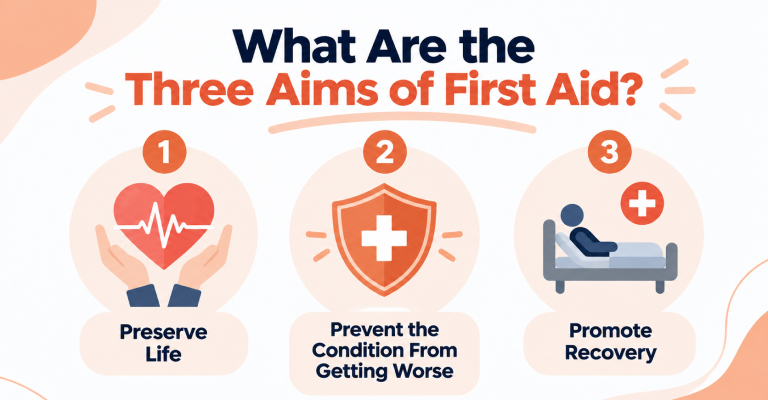
First aid has three main aims. We call them the Three Ps. They help you know what to do when someone gets hurt or feels ill.
1. Preserve Life
The first aim is to keep the person alive. Act quickly if their life is in danger. For example, if someone is not breathing, call for help and start CPR if you know how.
2. Prevent the Condition From Getting Worse
The second aim is to stop the injury or illness from getting worse. Keep the person safe and avoid causing more harm. For example, if someone breaks their arm, keep the arm still and support it.
3. Promote Recovery
The third aim is to help the person feel better and recover. Keep them calm and comfortable while they wait for help. For example, you can talk to them calmly and keep them warm.
What Does “Preserve Life” Mean in First Aid?
“Preserve life” means helping a person stay alive in an emergency. It is the first aim of first aid. Quick action can help protect the person until medical help arrives.
- Check if the person responds: Talk to the person and gently tap their shoulder. See if they answer or move.
- Check their breathing: Look at their chest to see if it moves. Check if they breathe normally.
- Call 999: If the person does not respond or has a serious injury, call 999. Ask someone nearby to call if you can.
- Start CPR: If the person is not breathing normally, start CPR if you know how. Keep going until help arrives or they start breathing normally.
- Use an AED: If you find an AED nearby, turn it on and follow the voice instructions. It will tell you what to do.
How Does First Aid Prevent Further Harm?
First aid helps stop a person’s injury or illness from getting worse. Once you make sure the person is safe, give simple help and avoid actions that may cause more harm.
If there is danger nearby, move the person to a safe place only when it is safe for you to do so. For example, move them away from traffic, fire, or falling objects. Never put yourself in danger while helping someone.
If the person has heavy bleeding, press a clean cloth or dressing firmly on the wound. Keep pressing until the bleeding stops or medical help arrives. This can help reduce blood loss.
For a burn, cool the area under cool running water for at least 20 minutes. Do not use ice, butter, or creams on the burn. These can make the injury worse.
If you think the person has a broken bone, ask them to keep it still. Do not try to straighten or move the injured part. Finally, avoid giving food or drink to someone who needs urgent medical help.
How Does First Aid Promote Recovery?
First aid helps a person feel safe and start to get better. After you deal with the main danger, stay with the person if you can. Your calm support can help them feel less scared. First, comfort the person. Speak in a calm voice and tell them that help is coming. Listen to them and let them know that you are there to help.
Next, keep them warm and comfortable. Use a coat or blanket if they feel cold. However, do not move them if they have a serious injury unless you need to keep them safe. If the person does not respond but breathes normally, put them in the recovery position when it is safe. This helps keep their airway clear while you wait for help.
Keep watching the person until help arrives. Check their breathing and look for any changes. If their condition gets worse, call 999 and follow the operator’s advice. Finally, encourage them to get medical help when needed. A doctor or nurse can check them and give the right care.
What Should You Do First in a First Aid Emergency?
An emergency can feel scary. Try to stay calm and follow simple steps. This can help you give the right care.
1. Check that the area is safe.
- Look around before you help. Check for fire, traffic, broken glass, or other dangers. Do not put yourself in danger.
2. Check the person’s response.
- Talk to the person. Gently tap their shoulder. See if they respond.
3. Check their breathing.
- Look at their chest. Check if it moves normally. Listen for normal breathing.
4. Call 999 or ask someone else to call.
- Tell the operator what happened. Give the correct location. Follow the operator’s advice.
7. Give suitable first aid.
- Give the help the person needs. For example, you may need to give CPR or help stop heavy bleeding.
8. Stay with the person and watch them.
- Stay with them until help arrives. Keep them calm and comfortable. Watch for any changes in their condition.
What Are the Three Aims of First Aid in the Workplace?
First aid also plays an important role at work. Accidents can happen without warning. Quick help can make a big difference. First aid can protect workers from further harm. Move the person away from danger if it is safe to do so.
Next, first aid gives quick help while the person waits for medical care. This may include helping with cuts, burns, or heavy bleeding. First aid can also support a safe recovery. Stay with the person and keep them calm while they wait for help.
Workplaces should also have trained first aiders and first aid kits. Training helps workers know what to do in an emergency. A good first aid kit also keeps useful supplies ready when someone needs them.
What Is the Difference Between First Aid and Medical Treatment?
First aid gives quick and simple help during an emergency. It can help keep someone safe until professional help arrives. For example, you can give first aid for bleeding, burns, or small injuries.
Medical treatment comes from trained healthcare workers. Doctors, nurses, and paramedics check the person and provide the care they need. However, first aid does not replace medical treatment. Serious injuries or illnesses may need treatment from a doctor or paramedic.
Common First Aid Mistakes to Avoid
- Your safety comes first. Do not enter a dangerous area to help someone.
- Unnecessary movement can cause more harm. Keep a seriously injured person still when possible.
- Food and drinks can cause problems. Avoid giving them to someone who may need urgent medical care.
- Changes in their condition matter. Keep watching the person and look for signs that they feel worse.
- Quick action can save time. Call 999 without delay when someone needs urgent medical help.
What Are the Responsibilities of a First Aider?
A first aider has an important job during an emergency. First, they should stay calm and avoid panic. A calm approach can help the injured person feel safe. Next, they should check for danger before giving help. They need to make sure the area is safe for both people.
The first aider should then check the casualty. They can see if the person responds and check their breathing. They should also look for serious injuries. If the person needs urgent help, the first aider should call 999 or ask someone nearby to call. Quick action can make a big difference.
After that, they should give suitable first aid based on the person’s needs. They should only do what they know how to do safely. Finally, the first aider should stay with the person and keep checking them. They should watch for any changes and give more help if needed until medical help arrives.
What Are the Most Important First Aid Skills to Learn?
Knowing a few first aid skills can make you feel more confident in an emergency. You may not use these skills often, but they can help when someone needs care. CPR can help keep blood moving when a person is not breathing normally. It can give them a better chance while you wait for help.
Learning how to use an AED can also save valuable time. The device gives clear instructions, so you can follow the steps even if you feel nervous. The recovery position helps an unconscious person who is breathing normally. It helps keep their airway clear. You should also know how to control heavy bleeding. Quick pressure on a wound can help reduce blood loss.
Choking first aid can help when food or another object blocks someone’s airway. It is a skill worth learning because choking can happen suddenly. It is also useful to learn basic care for burns and small injuries. Finally, learn how to spot shock, such as pale skin, weakness, cold skin, or dizziness.
Three Aims of First Aid: Quick Summary
Emergencies can occur without warning, so basic first aid skills are worth learning. What are the three aims of first aid? They are to preserve life, prevent further harm and promote recovery. These three aims help you know what to do when someone needs help. Stay calm, check for danger and give safe first aid. Call 999 if the person needs urgent medical help. Remember, first aid cannot replace proper medical care. However, quick action can help keep someone safe until professional help arrives.
FAQs
1. What are the three principles of first aid?
- The three principles are preserve life, prevent further harm and promote recovery.
2. What are the 3 Ps of first aid?
- The 3 Ps are Preserve life, Prevent deterioration, and Promote recovery.
3. What are the three main priorities of first aid?
- The main priorities are to keep the person alive, stop their condition from getting worse, and support recovery.
4. What does the 3 P’s stand for in first aid?
- The 3 P’s stand for Preserve life, Prevent deterioration and Promote recovery.
5. What are the 3 aims and 4 rules of first aid?
- The 3 aims are preserve life, prevent deterioration, and promote recovery. The 4 rules focus on staying safe, getting help, giving suitable care, and monitoring the person.
6. What are the three main goals of first aid?
- The three main goals are to save life, prevent further injury and help the person recover.
7. What are the aims and principles of first aid?
- The aims are to preserve life, prevent deterioration, and promote recovery. The principles focus on giving safe and suitable help.