Henna has become a popular choice for people who want a natural hair dye. However, not every product sold as henna is truly pure. Some products contain added chemicals, artificial colours or components that may irritate the skin and scalp. This is why checking the ingredient list matters before you buy.
The demand for natural henna continues to grow. The global henna powder market is valued at around USD 1.7 billion, driven by rising interest in plant-based and chemical-free beauty products. More people now prefer natural hair dyes as they look for gentler alternatives to synthetic colouring products.
This guide explains the ingredients to look for, the additives to avoid and how to choose high-quality pure henna hair dye.
What is the Main Ingredient in Pure Henna Hair Dye?
Lawsonia inermis leaf powder serves as the primary component in every genuine henna product. This botanical name identifies the only plant capable of producing a true henna stain. The leaves contain lawsone molecules that bind naturally to the protein in your hair.
To start with, pure powders contain no extra chemicals or hidden fillers. You should always verify this Latin name on the ingredient list before purchasing. High-quality brands ensure their Lawsonia is fresh and potent for the best results.
Why Do Botanical Names Matter for Product Transparency?
Botanical names tell you exactly which plants a product contains. They use the same names around the world. As a result, you can check the ingredients more easily. Some brands use common names that can be unclear. However, botanical names give clearer information.
UK rules also require brands to use official ingredient names on cosmetic labels. This helps you spot unwanted ingredients. It also helps you choose safer products. Trusted brands always show these names clearly on their packaging.
What Colour Does Pure Lawsonia Inermis Produce on Hair?
True henna only creates a vibrant reddish-orange or copper tint on the hair strands. This natural pigment results from the lawsone molecules interacting with your hair’s keratin. Notably, pure henna cannot lighten your hair or produce other colours like brown or black by itself.
The final shade depends heavily on your original hair colour and the duration of the application. Light hair often turns a fiery orange, while dark hair gains a subtle red glow. This single-colour truth is the best way to identify real henna from fakes.
Why Should You Search for Indigofera Tinctoria in Blends?
Indigofera tinctoria provides the deep blue pigment necessary for achieving darker hair shades naturally. This plant works alongside henna to create various tones of brown and jet black. Specifically, indigo lacks the ability to bind to hair effectively on its own without a henna base.
Mixing these two plants allows you to avoid the harsh chemicals found in traditional dark dyes. It offers a safe solution for people wanting to cover grey hair with darker tones. You must check for this name if you desire an earthy, dark result.
How Does Indigo Create Different Natural Hair Tones?
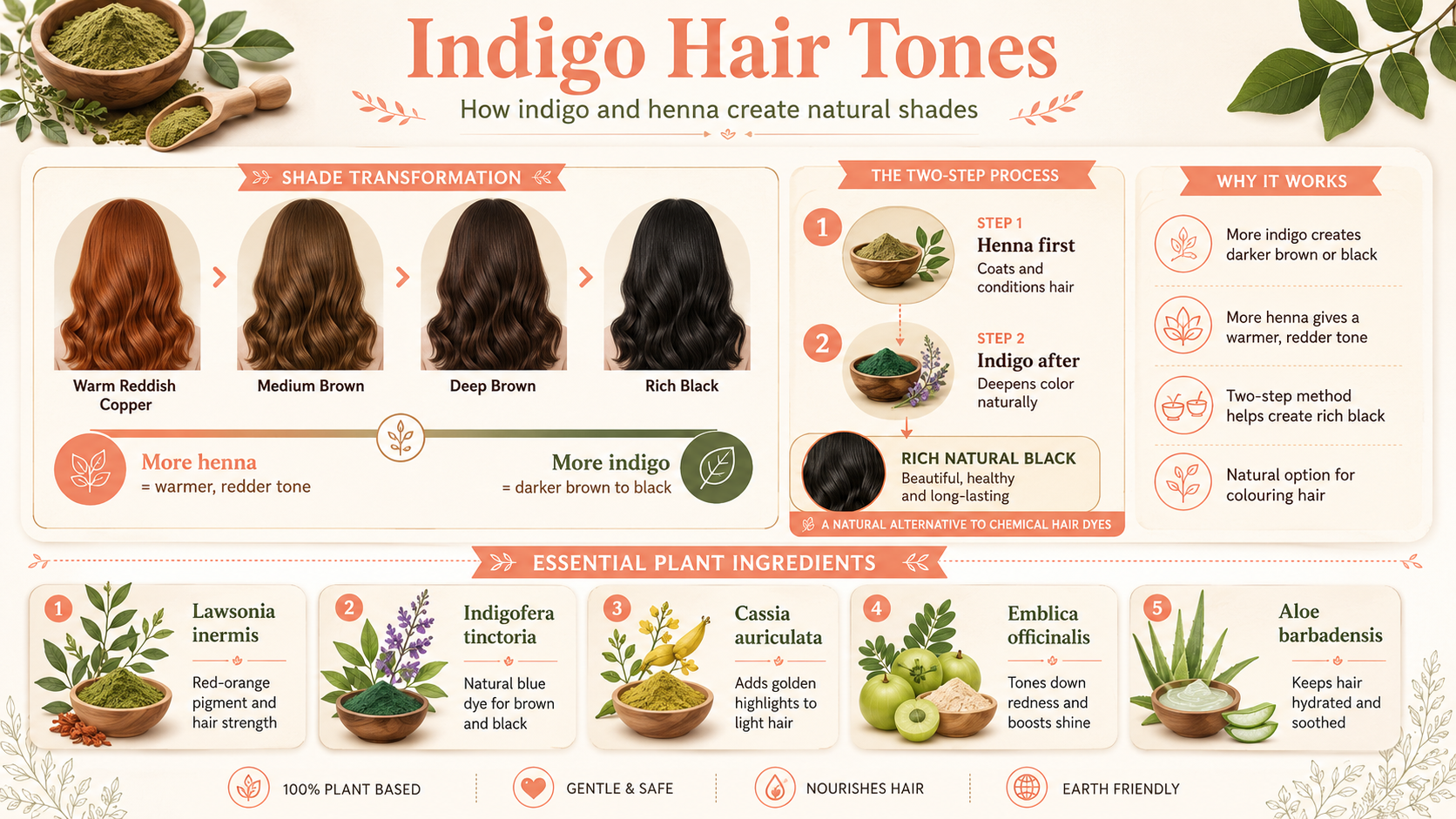
The amount of indigo and henna changes the final hair colour. More indigo creates a darker brown or black shade. More henna gives a warmer and redder tone. Many people use henna first and then apply indigo. This simple two-step method helps create a rich black colour and provides a natural alternative to chemical hair dyes.
Essential Plant Ingredients for Natural Colour
- Lawsonia inermis: The core plant for red-orange pigment and hair strength.
- Indigofera tinctoria: The natural blue dye used to create brown and black.
- Cassia auriculata: Conditioning herb that adds golden highlights to light hair.
- Emblica officinalis: A fruit powder that tones down redness and boosts shine.
- Aloe barbadensis: Soothing plant that keeps hair hydrated during the process.
Is Cassia Auriculata the Same as Red Henna?
Cassia auriculata acts as a conditioning treatment and does not contain red dye. People frequently call it “neutral henna”, but it comes from a completely different plant family. Additionally, this herb provides a light yellow tint that benefits blonde or grey hair.
It shares the same strengthening properties as henna without the permanent colour change. You can use it alone as a deep conditioning mask for added volume. It serves as an excellent option for those who want healthy hair without red tones.
What are the Benefits of Cassia for Thin Hair?
Cassia powder coats the hair shaft and fills in damaged areas of the cuticle. This process makes individual strands feel significantly thicker and more resilient to breakage. As a result, fine hair gains noticeable volume and a healthy, glossy appearance.
Many UK organic salons use cassia as a natural alternative to chemical gloss treatments. It leaves the hair feeling smooth and much easier to style after just one use. Regular applications help maintain the strength of long or brittle hair.
Why is Emblica Officinalis Vital for Tone Control?
Emblica officinalis, commonly known as Amla, functions as a powerful natural toner in henna mixes. This sour fruit is exceptionally high in Vitamin C and possesses acidic properties. Consequently, amla helps the henna dye develop into a cooler, more ash-toned red.
It prevents the copper colour from becoming too bright or “neon” on the hair. Many people use it to ensure their brown shades stay deep and earthy. It remains a staple ingredient for anyone wanting a sophisticated and muted colour.
How does Amla Protect your Natural Curl Pattern?
Henna can sometimes relax the natural curl of your hair due to the weight of the lawsone. Amla powder prevents this relaxation by supporting the hydrogen bonds in your hair. Similarly, it promotes a healthy environment for hair follicles to grow stronger.
It reduces shedding and keeps the scalp feeling refreshed and clean. Curly-haired users in the UK often insist on adding amla to their henna routine. This ensures they keep their bounce while enjoying the benefits of natural colour.
Why should You Look for Aloe Barbadensis?
Aloe barbadensis, or aloe vera, adds moisture to the henna paste and your hair. Henna can sometimes leave hair feeling dry after rinsing. Aloe vera helps keep it soft and smooth. It also calms the scalp and may reduce irritation. In addition, it makes the paste easier to apply. The smoother texture helps the paste spread evenly. As a result, your hair stays more manageable during the colouring process.
Beneficial Herbs for Scalp and Growth
- Azadirachta indica: A potent herb that treats dandruff and itchy scalp issues.
- Acacia concinna: A mild cleanser that removes dirt without stripping natural oils.
- Eclipta alba: A traditional Ayurvedic plant used to promote thick hair growth.
- Hibiscus rosa-sinensis: Adds a soft pink tint and improves hair texture.
- Curcuma longa: Provides golden warmth and protects the scalp from bacteria.
How does Azadirachta Indica Protect your Scalp?
Azadirachta indica, known as Neem, offers anti-fungal and anti-bacterial benefits for the skin. It effectively treats dandruff and keeps the scalp clear of infections or blockages. In fact, neem is a common addition to high-quality henna blends designed for scalp health.
It soothes any itching that might occur during the long development time of the dye. This herb ensures that your hair colouring session also functions as a medicinal scalp treatment. It is a fantastic choice for anyone prone to oily or sensitive skin.
What Role Does Acacia Concinna Play?
Acacia concinna, or Shikakai, serves as a natural and gentle hair cleanser. It contains plant saponins that create a light lather to remove excess oil and debris. Following this, the herb leaves the hair feeling incredibly soft and very easy to detangle.
It does not affect the natural pH balance of your scalp like chemical shampoos. Many people find that they do not need a separate cleanser after using a henna-shikakai blend. It simplifies your hair care routine while enhancing the natural shine.
Why is Hibiscus Rosa-Sinensis Used for Colour?
Hibiscus rosa-sinensis provides a beautiful burgundy or pinkish undertone to the henna mix. This flower is rich in amino acids that nourish the hair from the roots to the tips. Interestingly, hibiscus also helps to prevent premature greying and reduces hair fall significantly.
It gives the hair a vibrant, multi-dimensional look that appears very natural in the sun. Many users combine it with henna to achieve a deeper and more luxurious red. It acts as both a colour enhancer and a health booster.
How do Turmeric and Rhubarb Root add Warmth?
Curcuma longa and Rheum palmatum act as natural yellow dyes to brighten henna shades. Turmeric adds a sunny, golden glow that makes copper colours look much more vibrant. To illustrate, rhubarb root provides a warm yellow stain that perfectly complements blonde hair.
These ingredients allow you to customise your henna mix for a lighter and warmer finish. They are safe and gentle alternatives to synthetic yellow dyes found in cheap products. These plants ensure your hair looks lively and full of warm highlights.
Why is PPD a Dangerous Ingredient to Avoid?
PPD (para-phenylenediamine) is a harmful chemical often found in fake or black henna products. It creates a dark colour quickly, unlike pure henna, which takes several hours to develop. PPD can cause serious allergic reactions, skin damage and other health problems. Avoid any henna product that promises instant results or a jet-black colour. Pure henna should never contain PPD.
Common Chemical Ingredients to Avoid
- PPD (Para-phenylenediamine): A harsh chemical dye that causes severe allergies.
- Metallic Salts: Harmful minerals that damage hair and react with salon dyes.
- Ammonia: A toxic gas that strips moisture and weakens the hair shaft.
- Sodium Picramate: A chemical used to force a faster and darker red colour.
- Silver Nitrate: A metallic additive that makes hair extremely brittle.
What are Metallic Salts in Low-Quality Henna?
Metallic salts are chemical compounds, like lead acetate or copper, that companies add to cheap henna. These minerals stay on the hair and make it feel stiff, dry, and very brittle over time. For instance, metallic salts are famous for causing hair to break off at the root during future treatments.
They stop moisture from getting into the hair shaft, leading to long-term damage and dullness. Pure henna should only contain dried plant leaves and absolutely no minerals or metals. Always choose brands that explicitly state their products are free from metallic salts.
Why Do Metallic Salts React with Salon Dyes?
Metallic salts cause a violent and dangerous chemical reaction when they contact salon bleach or peroxide. This reaction can cause the hair to smoke, turn green, or even melt entirely. As a consequence, professional hairdressers in the UK often refuse to colour hair that has been treated with unknown henna.
Pure plant-based henna does not have this problem and remains safe for future styling. You must use only botanical powders to keep your hair healthy and your styling options open. Transparency in the ingredient list protects your hair from these hidden disasters.
What is Sodium Picramate and Why is it Dangerous?
Sodium picramate is a synthetic salt used to intensify the red colour in henna products. It acts as a shortcut to make the hair appear dark red in a very short amount of time. Furthermore, this chemical can cause scalp sensitivity and long-term health concerns if used frequently.
Pure henna provides a rich colour through a slow and natural biological process. Any product that promises a deep red in less than an hour likely contains this synthetic booster. Stick to pure powders to ensure your beauty routine stays completely non-toxic.
Why Should You Avoid Ammonia and Peroxide?
Ammonia and peroxide are common in chemical hair dyes. They can make hair dry and damaged. Pure henna does not need these harsh ingredients. Instead, it coats the hair shaft and adds long-lasting colour while helping hair stay strong and healthy.
Dangerous Additives and Fillers to Watch Out for
- Toluene: A toxic solvent found in some dyes that can harm the nervous system.
- Chromium: A heavy metal additive that can cause skin irritation and health issues.
- Synthetic Fragrance: Artificial scents that often hide other undisclosed chemicals.
- Sodium Bromate: A chemical oxidising agent that weakens the hair’s natural strength.
- Sand and Stems: Cheap fillers used to add weight to low-quality henna powders.
How Does the pH Level of Henna Protect Hair?
Pure henna possesses a natural pH level of around 5.5, which matches the acidity of your scalp. This balance allows the hair cuticle to stay flat and smooth throughout the dyeing process. On the other hand, most chemical dyes have a very high alkaline pH of 9 or above.
High alkalinity causes the hair to swell and lose its natural protective oils. Henna seals the hair, making it look incredibly shiny and feel much smoother than before. It serves as a protective treatment that actually improves the quality of your hair.
How Does Lawsone Bind to Your Hair Keratin?
The lawsone molecule in henna has a unique affinity for the keratin protein in your strands. It migrates into the outer layer of the hair and forms a permanent bond through a natural process. Following on, this bond acts like a protective shield against the sun, wind, and pollution.
It does not wash out with shampoo, making henna a truly permanent colour choice. Each application adds another layer of Lawsonia, which makes the hair feel thicker and stronger over time. This scientific reaction is why hennaed hair often looks so healthy.
Why is Triple-Sifted Quality Important for Users?
Manufacturers pass triple-sifted henna powder through a fine mesh screen three times. This removes sand, stems and other small particles. As a result, the powder feels very smooth and mixes easily with liquid. The smooth texture also makes the paste easier to apply.
In addition, it rinses out of the hair more quickly. Low-quality henna can feel gritty and may irritate the scalp. Therefore, many people choose triple-sifted henna for a cleaner and more comfortable colouring experience.
How do You Identify Fresh Henna Powder?
Fresh henna powder always displays a vibrant, bright green colour similar to dried herbs or grass. It should have a strong, pleasant herbal scent that reminds you of a fresh meadow or hay. Notably, old henna powder looks brownish or grey and has very little to no smell.
Brown powder indicates that the dye molecules have died and will not colour your hair well. You should always buy henna that is stored in light-proof and airtight packaging to ensure potency. Freshness is the most important factor in achieving a deep and lasting stain.
What is the Dye Release Process for Pure Henna?
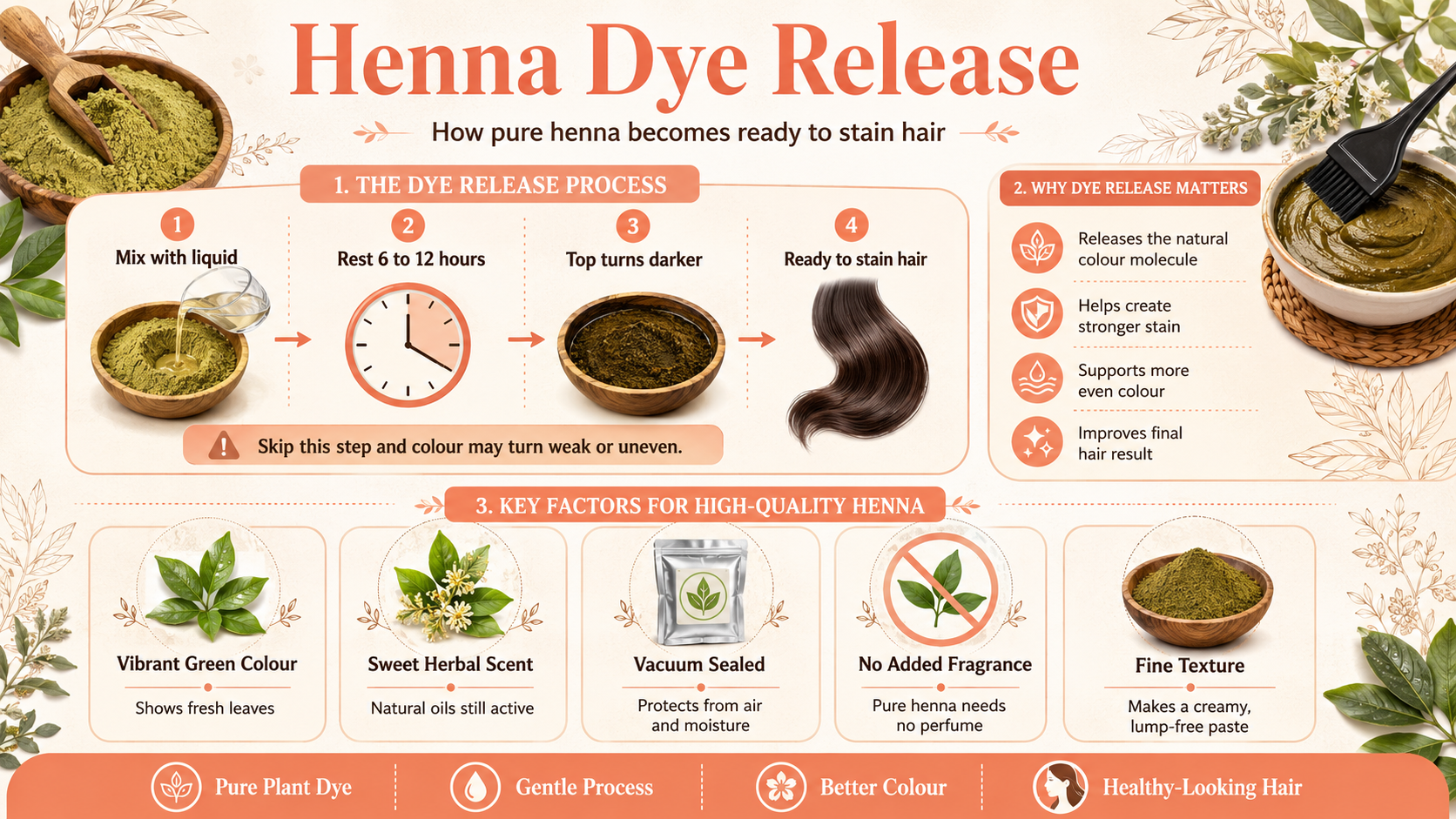
Dye release happens when henna powder is mixed with liquid and left to rest. This process releases the natural colour molecule that stains the hair. For best results, let the paste sit for 6 to 12 hours. The top layer will turn darker when it is ready. Skipping this step can lead to weaker or uneven colour.
Key Factors for High-Quality Henna
- Vibrant Green Colour: A sign that the leaves were fresh when they were ground.
- Sweet Herbal Scent: Indicates that the natural oils and dyes are still active.
- Vacuum Sealed: Essential for protecting the powder from moisture and air.
- No Added Fragrance: Pure henna does not need perfume to smell good.
- Fine Texture: The powder should mix into a creamy, lump-free paste easily.
How Does Oxidation Affect the Final Hair Colour?
Oxidation is the natural process where henna colour darkens and settles after the first wash. When you first rinse the paste, your hair may look very bright or “hot” orange. Afterwards, exposure to the air causes the colour to deepen into a rich, earthy red over 48 hours.
You should avoid using shampoo during this initial two-day period to allow the colour to set. This transition is a normal part of natural dyeing and shows that the henna is working correctly. The final result is always much more sophisticated than the initial bright glow.
Why is a Patch Test Necessary Before Dyeing?
A patch test helps check for allergic reactions before you colour your hair. Apply a small amount of henna paste to your inner arm. Then wait 48 hours and watch for any reaction.
This simple step can help prevent scalp irritation and discomfort. Even natural products can cause sensitivity in some people. Therefore, it is always best to test first. Most hair care professionals recommend patch testing before every new hair dye treatment.
Why should You Perform a Strand Test First?
A strand test helps you see the final colour before applying henna to all your hair. Apply the mixture to a small section of hair from a brush or a hidden area. This shows how henna reacts with your natural hair colour. It also helps you adjust the mix if needed. A quick strand test can prevent unwanted colour surprises.
Important Steps for a Perfect Application
- Use Warm Liquid: Water or mild tea helps the dye release effectively from the plant.
- Clean Your Hair: Remove oils and styling products before applying the henna paste.
- Wear Gloves: Henna stains skin very quickly and the colour can last for weeks.
- Section the Hair: Apply the paste in small sections to ensure every strand is covered.
- Keep it Warm: Use a shower cap to prevent the paste from drying out during development.
What are the UK Labelling Standards for Henna?
UK rules require henna brands to list all ingredients on the label. They must use the official botanical names for each ingredient. This helps you see exactly what the product contains.
In addition, trusted brands include a batch number and a best-before date. These details help you check the product’s freshness. Always choose brands that provide clear and complete information. A full ingredient list is often a good sign of a safe and reliable product.
Why Choose Organic and Cruelty-Free Henna Brands?
Organic henna grows without harmful pesticides or synthetic fertilisers. As a result, the powder stays clean and pure. This makes it a good choice for your hair and scalp. In addition, cruelty-free brands do not test on animals.
These labels show that a company cares about quality and ethical practices. Many trusted henna brands carry these certifications. Therefore, you can buy their products with more confidence. At the same time, you support a better choice for animals and the environment.
Can You Use Pure Henna Over Chemical Hair Dye?
Pure, plant-based henna is safe to use on hair that has been previously coloured at a salon. Many people switch to henna to help repair the damage and dryness caused by chemical treatments. Surprisingly, the conditioning properties of henna can make chemically treated hair feel soft and strong again.
You must be certain that your henna contains no metallic salts before applying it over salon colour. Pure henna will simply add a beautiful tint on top of your existing shade without any trouble. It is a fantastic way to transition into a more natural beauty routine.
What are the Long-Term Benefits of Using Henna?
Regular henna use leads to hair that is significantly thicker, shinier, and much less prone to split ends. Each application acts as a permanent conditioning treatment that builds up the strength of your strands.
In the long run, your hair will become easier to manage and will grow longer without breaking. Many users find that they no longer need expensive masks or hair growth serums after switching to henna. It provides a natural, healthy glow that chemical dyes simply cannot replicate. It is a lifelong investment in the health and beauty of your hair.
Final Thoughts on Pure Henna Hair Dye
Pure henna hair dye is a safe and natural choice for colouring your hair. However, not all products are the same. Always check the component list before you buy. Look for pure henna leaf powder and avoid products with hidden chemicals, artificial colours or PPD. A little extra care can help you find a high-quality product. As a result, you can enjoy rich, natural colour while keeping your hair and scalp in better condition.