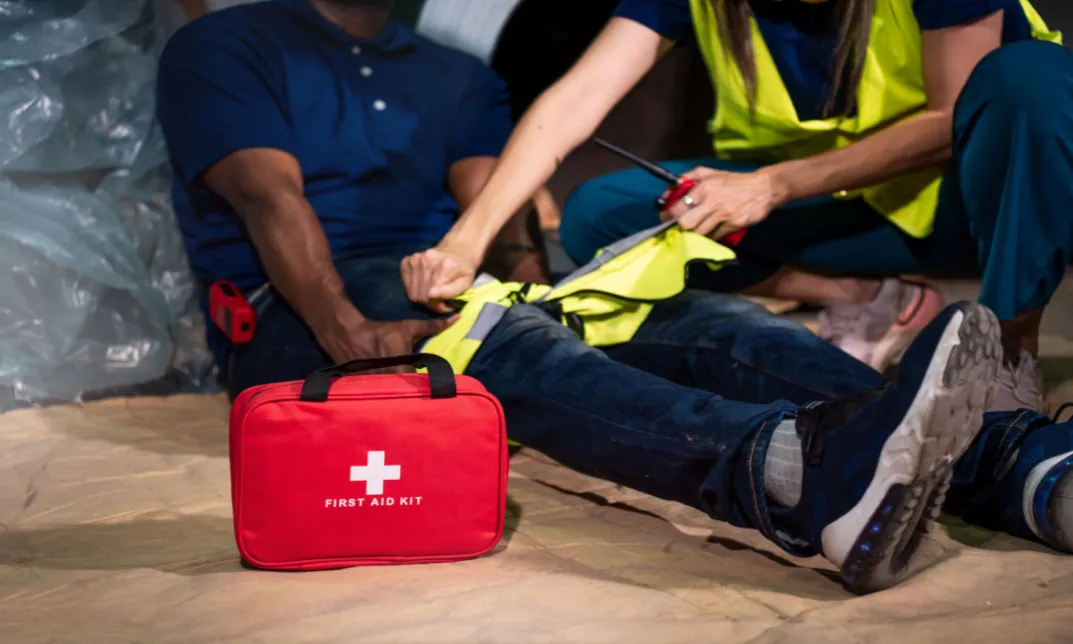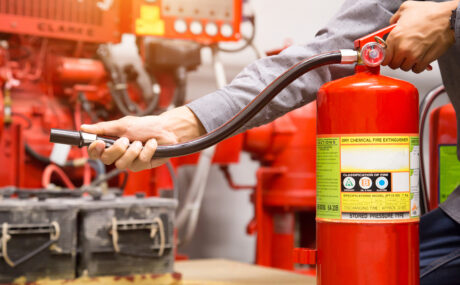
Accidents can happen at home, school or work without warning. So, it is important to know what needs to be in a first aid kit. A well-stocked kit helps treat small injuries quickly and safely. Also, it helps you stay calm during sudden emergencies. Most importantly, the right supplies can stop problems from getting worse.
Every first aid kit should have simple and useful medical items. For example, bandages, gloves and antiseptic wipes help treat small injuries quickly. In addition, scissors and tape help fix dressings in the right place. Meanwhile, pain relief tablets help reduce discomfort after minor accidents. Therefore, a full kit helps keep families, workers and children safe and ready every day.
Why Does Your Home Need a Safety Box?
Every home needs a safety box for quick help during emergencies. Small accidents can happen at any time. For example, children may fall or cut their fingers while playing. So, a safety box helps families act quickly without panic. It also keeps important medical items in one safe place.
In addition, a safety box saves time during stressful moments. You can quickly find bandages, wipes or pain relief tablets when needed. Moreover, it helps parents care for children before medical help arrives. A well-prepared box also supports daily safety at home. Therefore, every family should keep a clean and fully stocked safety box nearby.
What Needs to Be in a First Aid Kit for Families?
Every family should keep a first-aid kit at home. It helps during small accidents and sudden emergencies. For example, children may get cuts, burns or nosebleeds while playing. So, a family first aid kit should contain simple medical supplies. Include plasters, bandages, antiseptic wipes and medical tape.
Also, keep scissors, gloves and a digital thermometer inside the kit. In addition, pain relief tablets can help adults and older children. However, always store medicine safely away from young children. Many families also add allergy tablets and burn cream for extra safety. Finally, check the kit often and replace expired or used items quickly.
What are Workplace First Aid Kit Requirements?
Workplaces must keep a first-aid kit ready at all times. This helps staff handle emergency situations and injuries quickly and safely. Also, the kit must match the size and risk level of the workplace. Larger or high-risk sites need more items. In addition, employers must check kits often. So, they always stay complete and ready.
Why is a Workplace First Aid Kit Mandatory?
A workplace first aid kit is mandatory because accidents can happen anytime at work. People may get cuts, burns or small injuries during daily tasks. So, employers must keep workers safe with quick treatment tools.
Also, safety laws in many countries require first-aid kits in every workplace. This helps reduce risk and protect health until medical help arrives. In addition, a ready kit saves time during emergencies. It also helps prevent small injuries from getting worse. Therefore, every workplace must keep a proper first-aid kit and make sure workers can access it easily.
Learn how first aid actually saves lives at work? Explore our another blog on Understanding the 3 Aims of First Aid.
Which Cleaning Supplies Should You Include?
Cleaning supplies in a first aid kit help prevent infection quickly. So, you should always keep a few basic items ready. First, include antiseptic wipes to clean cuts and wounds. Add alcohol-free cleansing pads for sensitive skin. In addition, keep sterile saline solution for washing dirt from the eyes or small injuries.
Also, keep disposable gloves in your kit. Gloves protect you from infection and save the injured person. Next, add cotton pads and gauze swabs. You can use them to clean small cuts gently. Then, include medical tape. It helps you keep bandages in place. Finally, keep hand sanitiser. It helps you clean your hands before you treat a wound.
These simple items make first aid safer. They also help reduce the risk of infection in emergencies.
How Do You Handle Heavy Bleeding?
Heavy bleeding needs quick and calm action. First, press a clean cloth or bandage onto the wound. Then, apply firm pressure without stopping. This helps slow the blood flow quickly.
Next, keep the injured part raised if possible. This step reduces blood loss. Also, call emergency help if bleeding does not stop quickly. Meanwhile, keep pressure on the wound at all times.
If blood soaks through, add another cloth on top. Do not remove the first layer. Instead, keep building pressure. Finally, stay with the person and keep them calm. Quick action can save a life in serious bleeding cases.
Why are Disposable Gloves So Important?
Disposable gloves play a key role in any first-aid kit. First, they protect you from blood and germs during treatment. So, they reduce the risk of infection for both you and the injured person. Also, they help you stay clean while handling wounds.
Gloves stop you touching blood or body fluids directly. This keeps first aid safe and clean. Also, they help you feel ready when helping someone in an emergency. So, you can act fast without worry. Always use a new pair of gloves for each person. This keeps everyone safe. It also stops germs from spreading.
What Needs to Be in a First Aid Kit for Emergencies?
Problems can happen at any time without warning. So, a first aid kit helps you act fast. Quick treatment can reduce pain and prevent injuries from getting worse. Also, it gives you confidence in tough situations. Most importantly, it keeps people safe until help arrives. In an emergency first aid kit, you should include:
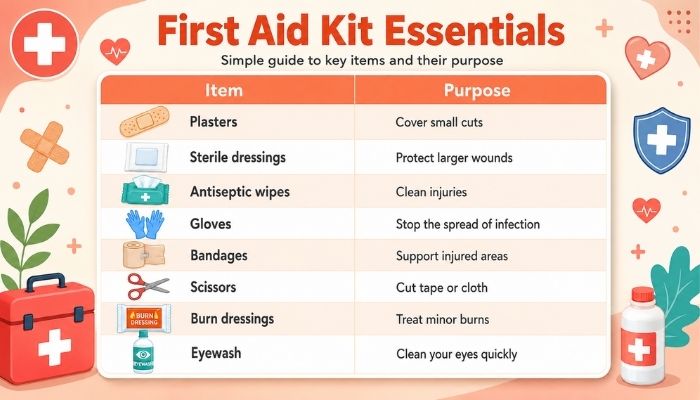
- Sterile bandages: Cover cuts and stop bleeding.
- Antiseptic wipes: Clean wounds and prevent infection.
- Disposable gloves: Protect from germs and blood.
- Medical tape: Holds dressings in place.
- Scissors: Cut bandages or tape easily.
- Pain relief tablets: Reduce pain quickly.
- CPR face shield: Helps during rescue breathing safely.
- Emergency contact card: Gives quick access to help numbers.
What Tools Make Healing Much Easier?
Small tools make healing faster and easier after an injury. First, scissors help you cut bandages and tape quickly. Next, tweezers remove dirt or small objects from wounds. Also, a digital thermometer checks body temperature in seconds. In addition, gloves keep hands clean and stop infection spread.
A cold pack helps reduce pain and swelling fast. Next, safety pins help you fix loose bandages in place. Also, a torch helps you see wounds clearly when it is dark. These small tools make first aid simple and easy. So, every first aid kit should include them for quick and safe care.
How Do You Manage Your Kit Monthly?
Start by checking your first aid kit every month. Look at all items one by one. Make sure nothing is missing or expired. Also, replace used or old items quickly.
Next, clean the box and keep it tidy. This helps you find things fast during an emergency. In addition, check bandages, gloves, and wipes for damage. Then, add new stock if something is low.
After that, keep the kit in a safe and easy place. Everyone in the home or workplace should know it. Therefore, regular checks keep your kit ready and useful at all times.
When Should You Call for Expert Help?
You should call expert help when an injury looks serious. For example, call emergency services if someone cannot breathe or stay awake. Also, get help if heavy bleeding does not stop after pressure. In addition, contact a doctor if pain gets worse over time.
Sometimes, an injury looks small at first. But it can become serious later. So, do not wait if you feel unsure. Call for help if you see a broken bone or a deep cut. Also, get help quickly if a child or an older person gets hurt. They need more care. Act quickly in these cases. It can protect health and save a life.
Final Thoughts
Overall, understanding what needs to be in a first aid kit keeps you prepared for everyday accidents. A well-stocked kit treats small injuries quickly and safely. So, always check and refill items on time. In addition, keep it in an easy place. Therefore, you protect yourself, your family and others during sudden accidents.
ready to complete your safety with proper workplace first aid training? Enrol in our Workplace First Aid Training.
Frequently Asked Questions (FAQs)
1. What is 10 items in a first aid kit?
- A basic first aid kit includes bandages, plasters, antiseptic wipes, gloves, scissors, tape, gauze, pain-relief tablets, safety pins and a thermometer.
2. What are the 20 items in a first aid box?
- A 20-item kit adds sterile dressings, eye pads, burn cream, a CPR mask, tweezers, cotton pads, saline solution, a cold pack and a first aid guide.
3. What are the mandatory items in a first aid kit?
- Mandatory items include plasters, sterile dressings, bandages, gloves, scissors, wipes and basic pain relief medicines.
4. What are 50 items in a first aid kit?
- A 50-item kit expands with extra dressings, medical tape, burn gel, splints, masks, wipes, medications and advanced emergency tools.
5. What are 20 items in an emergency kit?
- An emergency kit includes food, water, a torch, batteries, a blanket, first aid items, a whistle, a radio, a charger and basic medicines.
6. What is in the NHS first aid kit?
- An NHS-style kit includes sterile dressings, plasters, gloves, bandages, wipes, scissors and clear instruction cards.
7. What are 18 items in a first aid kit?
- An 18-item kit includes plasters, gauze, bandages, wipes, gloves, scissors, tape, a thermometer, pain relief and burn dressing.
8. How do I assemble a basic first aid kit?
- You assemble a kit by collecting essential medical items, storing them in a clean box and checking them regularly.
9. What are the 12 contents of a first aid kit?
- A 12-item kit includes plasters, bandages, gauze, wipes, gloves, scissors, tape, a thermometer, painkillers and antiseptic cream.
10. What is a 25 person first aid kit?
- A 25-person first aid kit includes extra dressings, plasters, bandages, gloves, wipes and supplies designed for small groups or offices.