
Workplace safety means keeping employees safe while they work. It helps prevent injuries, accidents and health risks. Employers take steps to reduce danger in the workplace. This includes safe tools, clear rules and emergency support. Workplace first aid kit requirements guide what every workplace must keep for emergencies.
These rules help workers get quick help during injuries or accidents. A first aid kit gives basic treatment before a doctor arrives. There is no fixed list for every workplace. However, HSE gives simple minimum rules based on risk and the number of staff.
Let’s take a full look at what every workplace needs for a safe first aid setup.
What are Workplace First Aid Kit Requirements under UK Law?
The Health and Safety Regulations 1981 set the main UK rules. These rules explain what employers must do for workplace safety. Every employer must provide proper first aid support at work.
Employers must provide adequate first-aid equipment, suitable facilities and trained or appointed personnel. This helps workers get quick help during accidents or illness. The rule applies to all UK workplaces, even small teams with under five employees.
There is no single fixed checklist for first-aid kits. Instead, employers must follow a risk assessment. This decides what level of equipment and support a workplace needs.
Why Do Workplace First Aid Kit Requirements Matter?
A workplace first aid kit helps keep workers safe during sudden injuries or accidents. It gives quick help before a doctor arrives. This can make injuries less serious and easier to treat.
These requirements also support legal safety duties for employers. A proper first aid kit reduces risk, panic and confusion during emergencies. It also improves response time and workplace confidence. Every workplace has different risks. So a well-prepared kit helps match those risks with the right supplies.
What Must Every Workplace Provide for First Aid?
A workplace first aid kit includes three basic legal needs in every UK workplace. These steps help ensure fast support during accidents and emergencies.
3 Legal Basics for All Workplaces
- A stocked first aid kit for emergency use.
- An appointed person to manage first aid duties.
- Clear first aid information is shared with staff.
Why These Rules Matter
- Quick response reduces injury impact.
- Confusion stays low during emergencies.
- Overall, safety improves across the workplace.
How does first aid save lives in three simple steps? Read our blog on Understanding the 3 Aims of First Aid and learn how quick actions can protect life.
What Needs to be in a First Aid Kit?
Every workplace must keep a properly stocked kit to handle small injuries quickly and safely. Low-risk workplaces like offices usually follow a simple HSE minimum list.
HSE recommends an instruction leaflet, sterile plasters, two eye pads and two large sterile dressings. It also includes 6 medium sterile dressings, 2 triangular bandages and 6 safety pins. Include at least 3 pairs of disposable gloves in the kit.
Each item has a clear purpose. Plasters and dressings stop bleeding and cover wounds. Eye pads protect injured eyes. Bandages support injured arms or joints. Gloves prevent infection and keep treatment safe during emergencies.
What Needs to be in a First Aid Kit for High-Risk Workplaces?
High-risk workplaces face more serious injuries than normal offices. That is why they need extra supplies in their first aid kits. Jobs on construction sites, in factories, kitchens and warehouses often involve tools, heat and heavy materials.
These workplaces should include burn dressings to treat heat or fire injuries quickly. Conforming bandages help secure wounds that move a lot. Finger dressings protect small but painful hand injuries.
Face shields or oxygen masks help with safe breathing in an emergency. Foil blankets keep the injured person warm and help prevent shock. Scissors and tape help cut and fix bandages quickly.
High-risk jobs can cause more serious injuries. So extra items are very important. A better first aid kit helps control the injury before medical help arrives.
How Do Workplace First Aid Kit Sizes Change by Staff?
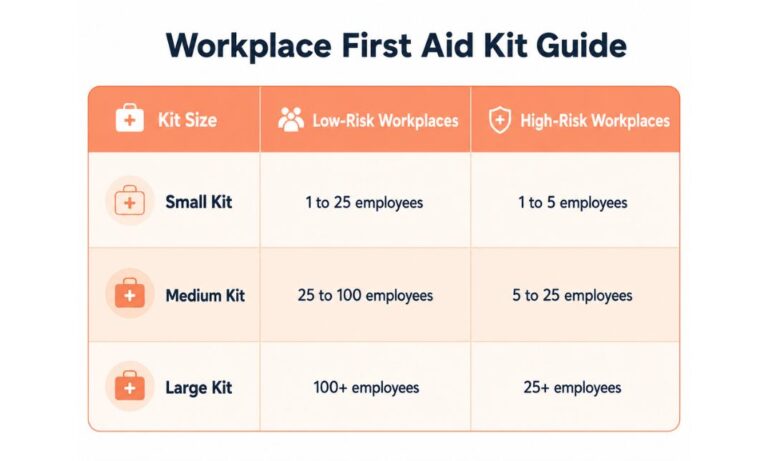
Workplace first aid kit contents change based on both staff numbers and risk levels. Larger teams face more incidents, so they need bigger kits. High-risk jobs also need more supplies, even with fewer workers.
Risk level plays a big role in kit size. Low-risk offices need fewer items. Construction sites or factories need more stock because injuries happen more often. Travel or mobile workers also need compact kits for quick access.
First Aid Kit Sizes by Staff and Risk Level
What Should Not Be in a Workplace First-Aid Kit?
A workplace first aid kit also includes clear limits on what must stay out of the kit. This helps keep first aid safe, simple and standard across all workplaces.
Workplaces should not keep medicines or tablets in a first aid kit. They should also avoid random drugs because they can be used the wrong way or cause harm. Each worker should keep their own medicine and use it when needed.
First aid kits do not have medicines. They only help with basic emergency care. Employers do not keep items that need a doctor’s advice. Sometimes, advice like aspirin may be given, but it is not usually used in workplace kits.
How Frequently Should a Workplace First Aid Kit Be Inspected?
Every workplace first aid kit is routinely inspected to ensure that it is prepared for any emergency. Employers must make sure the kit stays fully stocked and safe to use at all times.
Replace items immediately after use and remove expired products without delay. Regular checks also help restock missing supplies quickly before any emergency happens.
The kit must stay clean, sealed and easy to reach. Place the kit in a visible location so staff can find it fast. Responsibility usually sits with the appointed person, who checks and maintains the kit as part of their role.
What is the Role of a First Aider or Appointed Person?
A workplace first aid kit also defines who manages emergency care at work. An appointed person handles basic tasks like checking and restocking kits. They also call emergency services when needed. This role does not need formal training.
A first aider has full responsibility for emergency treatment. They complete FAW or EFAW training before starting their role. Also, they provide immediate care until medical help arrives. This includes treating cuts, burns or injuries.
Workplaces choose the role based on risk level. Low-risk offices may use appointed persons. High-risk places like factories usually need trained first aiders for better safety support first.
What are Common Workplace First Aid Kit Mistakes?
Many workplaces make simple errors that reduce safety during emergencies. These mistakes can slow down help and make treatment less effective.
- Missing essential items: Some kits lack key supplies like gloves, plasters or dressings. This can delay basic treatment when injuries happen.
- Not replacing expired products: Expired items may not work properly. This can make the kit unreliable when it is needed most.
- Poor kit placement: Kits kept in hidden or locked areas take longer to reach. Quick access is very important in emergencies.
- No staff awareness of kit location: Workers may not know where the kit is stored. This wastes valuable time during accidents.
- Ignoring risk checks for all workplaces: Every workplace has different risks. Without proper checks, safety gaps can appear easily.
How Do You Choose the Right Workplace First Aid Kit?
Choosing the right kit depends on real workplace needs. Every workplace has different risks, so one kit does not fit all. The first step is to check the risk level. Offices are usually low risk. Factories and construction sites have higher risks.
The second step is ‘staff number’. More employees mean more chances of injuries, so a larger kit is needed. The third step is the type of work. Heavy tools, chemicals or heat increase the need for extra supplies.
Low-risk workplaces can manage with basic kits. High-risk workplaces need more advanced items for faster treatment. Certified kits also help meet safety standards and reduce mistakes during emergencies.
Final Thoughts
Overall, workplace first aid kit requirements follow UK law and HSE guidance. Employers utilise a risk-based method since there is no set list. Workplace dangers and crew size must be taken into account when designing kits. Basic items include plasters, dressings, gloves and bandages. Employers must meet legal duties and choose the correct kit sizes. Always keep kits ready, checked and fully stocked for safety.
Need confidence in handling emergencies? Enrol in Workplace First Aid Training and improve your response skills.
FAQs
1. What is the legal requirement for first aid kits at work?
- According to UK legislation, employers are required to supply an appropriate first-aid kit depending on the demands and risks at work.
2. What should be included in a workplace first aid kit?
- It should include plasters, dressings, bandages, gloves and basic first aid guidance.
3. What is the minimum requirement for a first aid kit in the workplace?
- The minimum kit should have basic items like plasters, dressings, gloves, eye pads and bandages.
4. What needs to be in a first aid kit for a business?
- A business kit should contain essential supplies to treat minor injuries until medical help arrives.
5. What is the British standard for first aid kits?
- British Standard BS 8599-1 guides the recommended contents and sizes of workplace first aid kits.
6. Which 3 items should not be in your first aid kit?
- Medicines, tablets and random drugs should not be included in a workplace first-aid kit.
7. What are the mandatory items in a first aid kit?
- Mandatory items usually include plasters, dressings, gloves, bandages and eye pads as standard basics.
8. What are the 3 C’s in basic first aid?
- The 3 C’s are Check, Call and Care for handling emergencies safely.